
What Is Coptis Root? Medicinal Parts, Identification, and Common Formulas
Many people have heard the saying “like a mute eating coptis root — suffering in silence” when they first encounter Chinese medicine, but not many have actually seen the herb or understand its uses. Precisely because its bitterness is so distinctive and it often appears in heat-clearing formulas, many overseas readers want to know what coptis root really is, what it looks like, and how it is used.
This article will address these common questions, clarifying the plant source of coptis root, its medicinal parts, key identification points, how it differs from scutellaria and phellodendron, and introducing common directions of use in traditional formulas.
What Does Coptis Root Look Like? How to Identify It
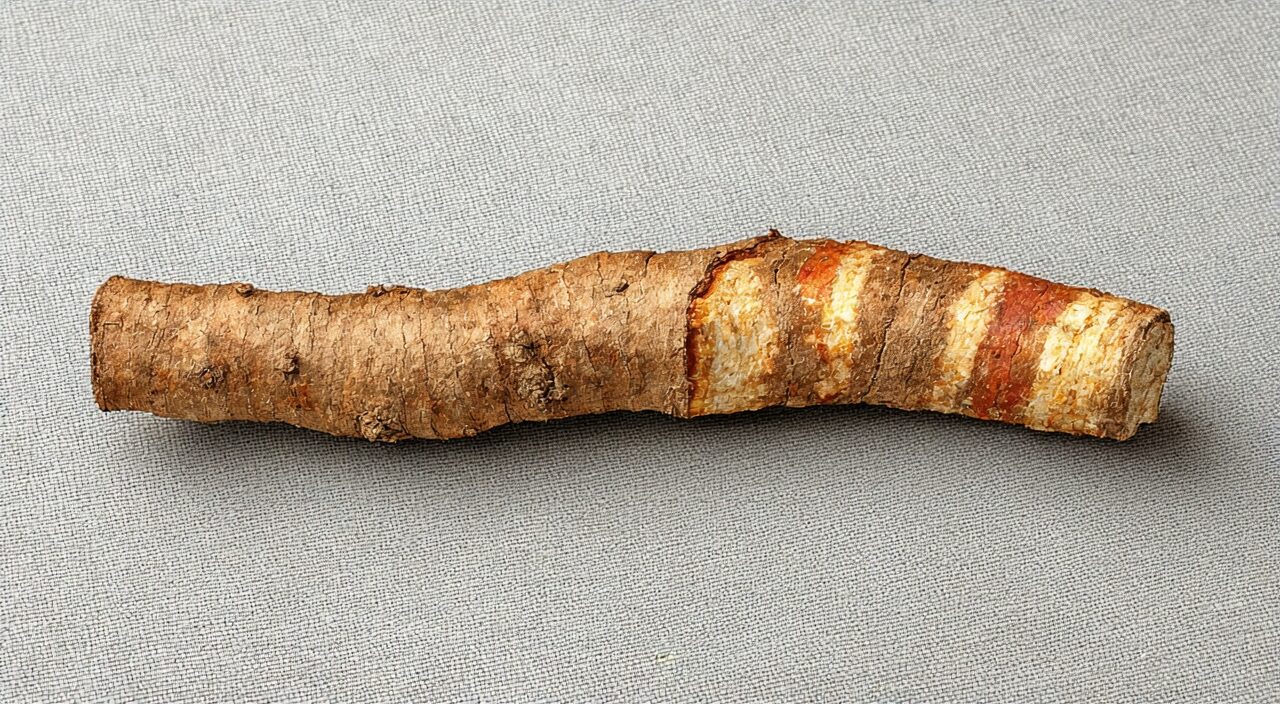
Coptis root is the dried rhizome of plants in the buttercup family — Coptis chinensis, Coptis deltoidea, or Coptis teeta. Different original species all circulate as coptis root in the marketplace. Its appearance is fairly distinct; grasping a few key points makes it hard to confuse with other herbs.
Rhizome Form and Surface Features
Coptis root pieces are often clustered or curved-cylindrical, with a grayish-yellow or yellowish-brown surface. You can see irregular knobby swellings as well as some fine rootlets or root scars. Some prepared slices retain short leaf-stalk remnants, giving a “chicken claw” impression, hence the common market name “chicken-claw coptis.”
Cross-Section Characteristics
When broken or cut open, the fracture surface is not smooth. The cortex is orange-red or dark brown, while the wood is bright yellow or orange-yellow, sometimes showing radiating striations. The pith may be reddish-brown, occasionally hollow. These color layers are important for identification.
Extremely Bitter Taste
Chew a small piece of coptis root, and almost everyone will remember its taste — intensely bitter. The bitterness lingers on the tongue, and the saliva becomes stained yellow. In traditional experience, the more bitter it is, the better the quality is thought to be.
What Part of the Plant Is Used Medicinally?
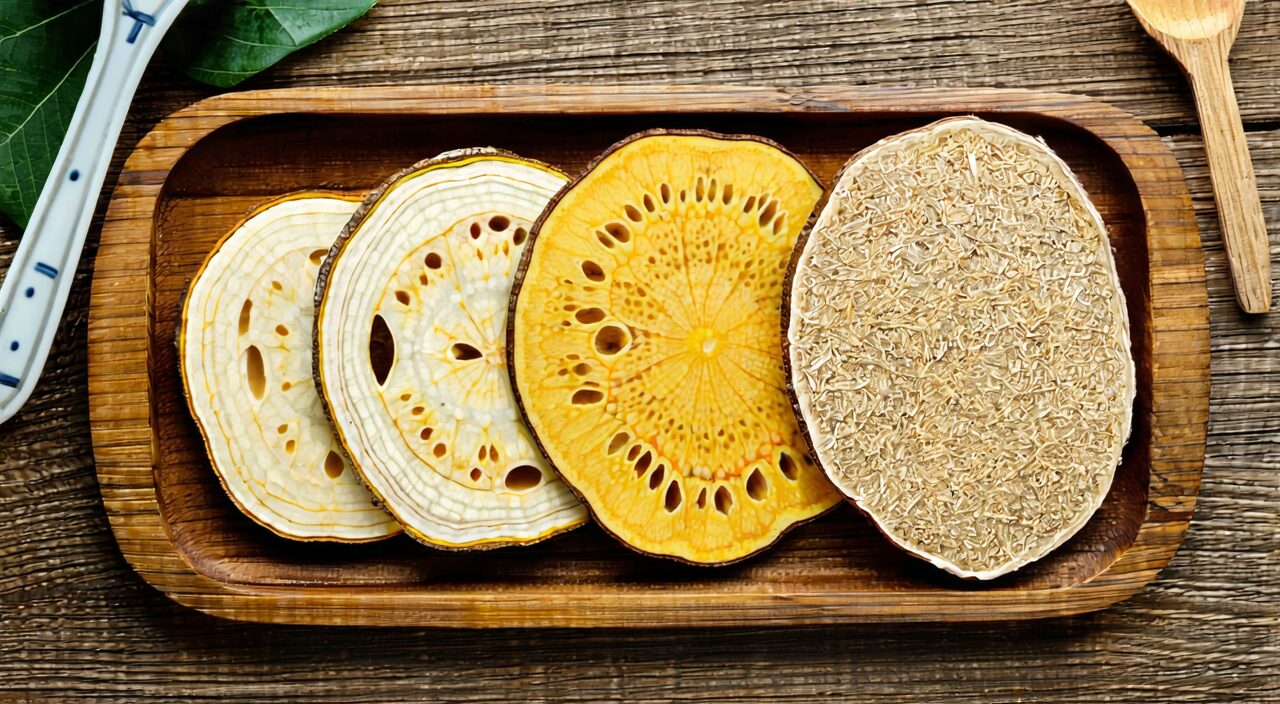
The medicinal part of coptis root is its dried rhizome. It is usually collected in autumn; the fibrous roots and sediment are removed before drying to yield the crude herb. Depending on the original plant, commercial material is divided into wei lian, ya lian, and yun lian, which differ slightly in shape but all use the rhizome as medicine.
During harvesting and processing, some is simply sun-dried or baked dry, while some undergoes simple removal of fine hairs. Common prepared slices include raw coptis slices, wine-fried coptis, ginger-fried coptis, and evodia-fried coptis. These are processed with different auxiliary ingredients to moderate its bitter-cold nature and guide its action to different channels.
How Does Chinese Medicine Understand Coptis Root?
From the perspective of traditional Chinese medicine, coptis root is cold in nature and bitter in taste, entering the Heart, Spleen, Stomach, Liver, Gallbladder, and Large Intestine channels. Its core actions center on “clearing heat and drying dampness” and “draining fire and resolving toxicity.”
The Thinking of Clearing Heat and Drying Dampness
When damp-heat accumulates in the middle burner or large intestine, coptis root is traditionally used to clear it. For conditions such as damp-heat epigastric stuffiness, vomiting, or dysentery, coptis often appears as an important ingredient in relevant formulas.
Applications for Draining Fire and Resolving Toxicity
For patterns where fire-heat predominates, causing vexation, insomnia, mouth and tongue sores, or red, swollen, and painful eyes, Chinese medicine may consider using coptis from the perspective of draining fire. However, it must be emphasized that such treatment directions need to be tailored to specific constitution and symptoms; individuals should not self-select it based on a single presentation.
What Components and Actions Are Highlighted in Modern Research?
Modern research pays considerable attention to berberine (also called coptisine), as well as other alkaloids such as coptisine, jatrorrhizine, and palmatine found in coptis root. In some in vitro or animal studies, berberine has shown antimicrobial, anti-inflammatory, and gut-regulating potential, but this does not mean that directly consuming coptis root can substitute for medical treatment of disease.
These studies offer new perspectives for understanding coptis root, yet in practice it is still primarily applied in traditional compound formulas and rarely used alone over the long term. If there are related health concerns, professional diagnosis should still be the priority rather than self-regulating based on conclusions from single-component research.
How Does Coptis Root Differ from Scutellaria and Phellodendron?
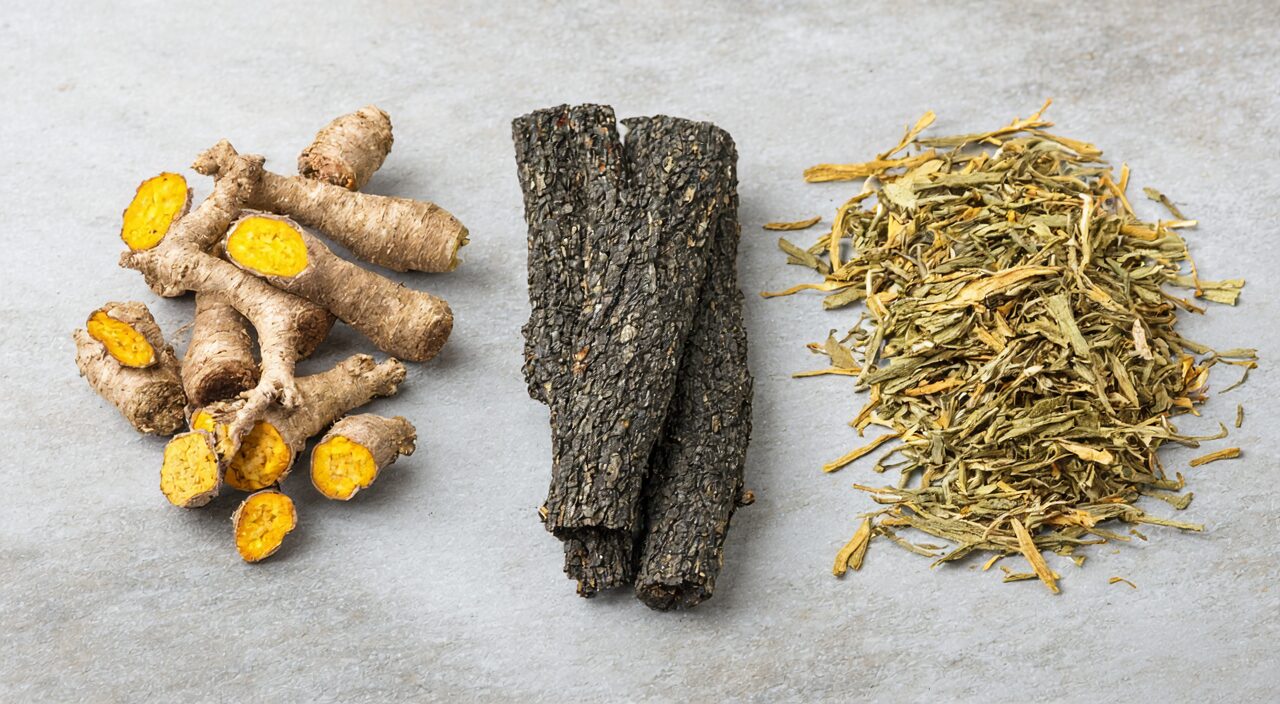
Coptis root, scutellaria root, and phellodendron bark are three commonly used Chinese herbs with yellowish tints, easily confused by beginners. Yet their sources, parts used, and traditional emphasis all differ. The following comparison can help differentiate them quickly:
| Herb | Source and Medicinal Part | Key Appearance | Traditional Application Focus |
|---|---|---|---|
| Coptis Root | Rhizome of buttercup family plants, e.g., Coptis chinensis | Rhizome deeper in color; cut surface markedly orange-yellow; often “chicken claw” shape | Tends to clear Heart and Stomach fire; stronger dampness-drying effect |
| Scutellaria Root | Root of the mint family plant Scutellaria baicalensis | Root outer bark brownish; fracture surface yellowish-green or deep yellow | Tends to clear Lung heat; often used for lung-heat cough, sore throat, etc. |
| Phellodendron Bark | Bark of the rue family tree Phellodendron chinense | Slab-like; outer surface yellowish-brown; inner surface dark yellow | Tends to clear damp-heat from the lower burner; often seen in lower-jiao damp-heat symptoms |
Knowing these differences helps avoid confusion when encountering herbs with “huang” (yellow) in their names.
Which Formulas Use Coptis Root?
Coptis root appears in many classic formulas. Here are several common ones so that readers can recognize coptis root’s role in traditional formula names. However, whether these formulas are needed depends on specific patterns and constitution and must be judged by a Chinese medicine professional; they are not meant for self-application.
Huang Lian Jie Du Tang (Coptis Detoxification Decoction)
Composed of coptis root, scutellaria root, phellodendron bark, and gardenia fruit, this formula is traditionally used for triple-burner fire-toxin exuberance patterns. It has a strong heat-clearing and fire-draining force and is suitable for pronounced excess-heat conditions; its bitter-cold nature is quite heavy.
Ban Xia Xie Xin Tang (Pinellia Heart-Draining Decoction)
In this formula, coptis root is used together with scutellaria, dried ginger, and pinellia to address mixed cold-and-heat glomus patterns, commonly involving epigastric stuffiness, vomiting, and borborygmus. Here, coptis root acts to clear and drain stifling heat from the middle burner.
Zuo Jin Wan (Left Metal Pill)
Comprising only coptis root and evodia fruit, with coptis root vastly outweighing the evodia, this is a representative formula for clearing liver fire and downbearing counterflow to stop vomiting. It is traditionally used for liver fire invading the stomach, causing rib-side pain, acid swallowing, and bitter taste.
Ge Gen Qin Lian Tang (Kudzu, Scutellaria, and Coptis Decoction)
Made of kudzu root, scutellaria root, coptis root, and licorice, it is traditionally used when external pattern is unresolved and pathogenic heat enters the interior, presenting with fever, diarrhea, and related signs. Coptis root clears stomach-intestine heat, coordinating with kudzu so the whole formula addresses both releasing the exterior and clearing interior heat.
In these formulas, coptis root is often paired with scutellaria or other bitter-cold herbs, and the application logic revolves around clearing heat, drying dampness, and resolving toxicity. Should a reader be interested in any particular formula, it can serve as a starting point for further understanding, but one must never self-prescribe based solely on a formula name and symptoms.
What Precautions Should Be Observed When Using Coptis Root?
Although coptis root is a common Chinese medicinal, its bitter-cold nature imposes several restrictions on its use.
- Caution in spleen-stomach deficiency-cold: For those with spleen-stomach deficiency-cold, prone to diarrhea, or with poor appetite, long-term or large-dose use of coptis root may worsen the discomfort. Traditionally, when encountering such constitutions, doctors carefully weigh the dosage and combination or use processing to reduce the cold nature.
- Long-term self-use not recommended: Some people purchase berberine or drink coptis water for certain health maintenance purposes, which may cause gastrointestinal discomfort or impair digestive function. Whether using the crude herb or its extracts, long-term use without professional guidance is not advised.
- Seek medical attention for serious symptoms: If physical discomfort recurs or is accompanied by marked weight loss, persistent vomiting, severe abdominal pain, black stools, chest tightness, palpitations, anxiety, or depression, one should not rely on coptis root or any single herb but should seek medical care promptly for a clear diagnosis.
Summary
Coptis root is a rhizome medicinal famed for its extreme bitterness and traditionally used to clear heat, dry dampness, drain fire, and resolve toxicity. Its appearance, medicinal parts, traditional understanding, and differences from scutellaria and phellodendron form the basis for knowing this herb. Although modern research has revealed active constituents in coptis root, this is not equivalent to casual daily use.
Classic formulas such as Huang Lian Jie Du Tang, Ban Xia Xie Xin Tang, Zuo Jin Wan, and Ge Gen Qin Lian Tang all employ coptis root, but their application corresponds to different patterns and must be assessed in light of individual circumstances. The bitter-cold property of coptis root reminds us that while respecting traditional applications, we should also be cautious about long-term or unsupervised use.
This article is for informational reference only and cannot replace professional diagnosis or treatment advice. When considering products that contain coptis root, it is recommended to carefully read product instructions and make a decision based on personal constitution and the opinion of a qualified professional.