
What Is Rehmannia? Medicinal Parts, Identification, and Common Formulas
Rehmannia is one of the most frequently used herbs in Chinese medicine prescriptions, especially when addressing blood disorders, heat patterns, and yin deficiency. The original plant belongs to the Rehmannia genus within the Scrophulariaceae family, and the medicinal part is the underground tuberous root. Many people encountering rehmannia for the first time often struggle to tell the difference between fresh rehmannia, raw rehmannia, and prepared rehmannia, and they are unsure how to recognize the herb among a pile of dried ingredients. This article will address these questions in a straightforward manner, helping overseas readers interested in Chinese medicine build a basic framework for understanding rehmannia.
What Does Rehmannia Look Like? How to Identify It
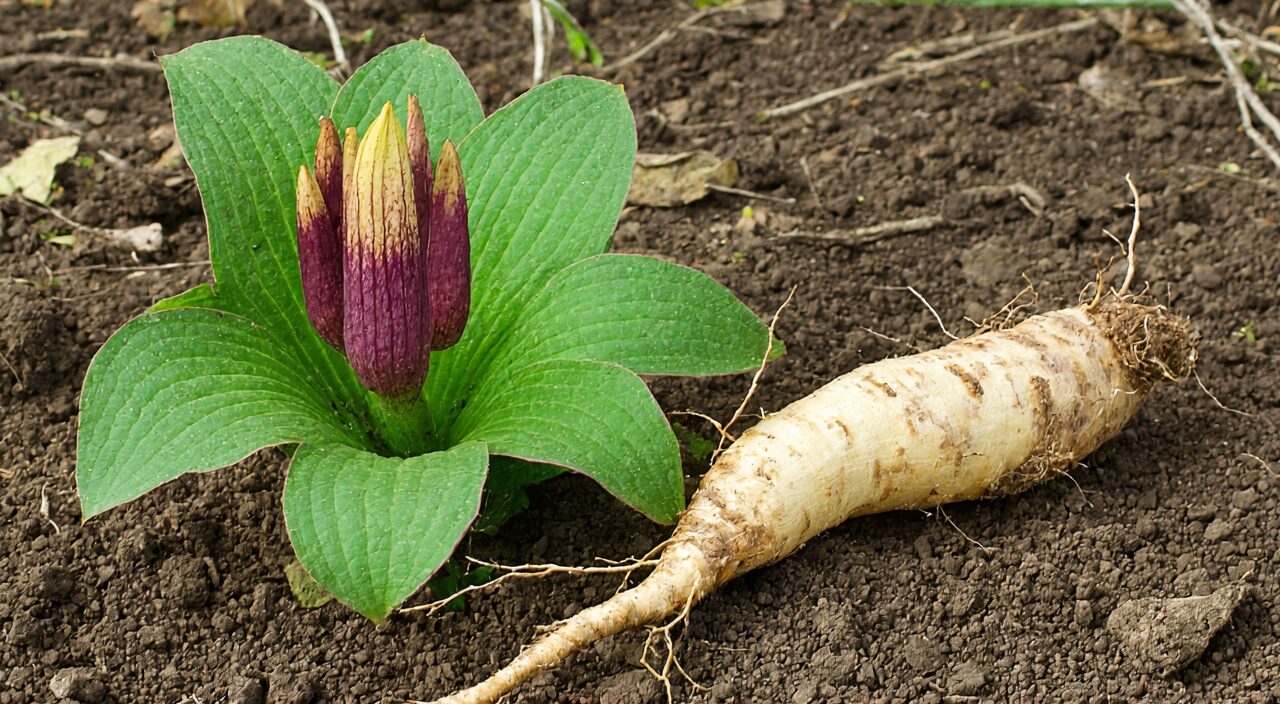
The rehmannia plant is a perennial herbaceous species. It is not tall and usually spreads close to the ground. The leaves mostly emerge directly from the base in a rosette arrangement. They are oblong-elliptic or obovate-lanceolate in shape, with a prominently wrinkled surface and irregularly serrated margins, feeling slightly rough to the touch. During the flowering period, the plant produces a raceme inflorescence. The corolla is tubular and slightly curved, typically purplish-red or pale purplish-red on the outside and yellowish on the inside, sometimes with purple spots. The whole flower looks somewhat like a small trumpet.
However, what people more commonly encounter in herbal medicine is the tuberous root. The appearance of rehmannia tuberous roots varies significantly depending on the processing method:
- Fresh Rehmannia: Shaped like a small carrot, fusiform or strip-like, with a very thin outer skin that is pale yellow or pale reddish-yellow. When broken open, the cross-section is fleshy and yellowish-white, showing faint textural lines.
- Raw Rehmannia: After drying, the root shrinks noticeably, forming irregular oblong or bulky masses. The outer skin turns brownish-black or brownish-grey, with deep longitudinal wrinkles. Although dried, it retains some flexibility and is not easily snapped. The cut surface is brownish-black or jet-black, with a moist luster, slightly glossy when held up to light, and has a distinctive aroma. The taste is slightly sweet and slightly bitter.
Grasping these color and texture characteristics can help, to a certain extent, in identifying raw rehmannia on the market.
What Is the Medicinal Part of Rehmannia?
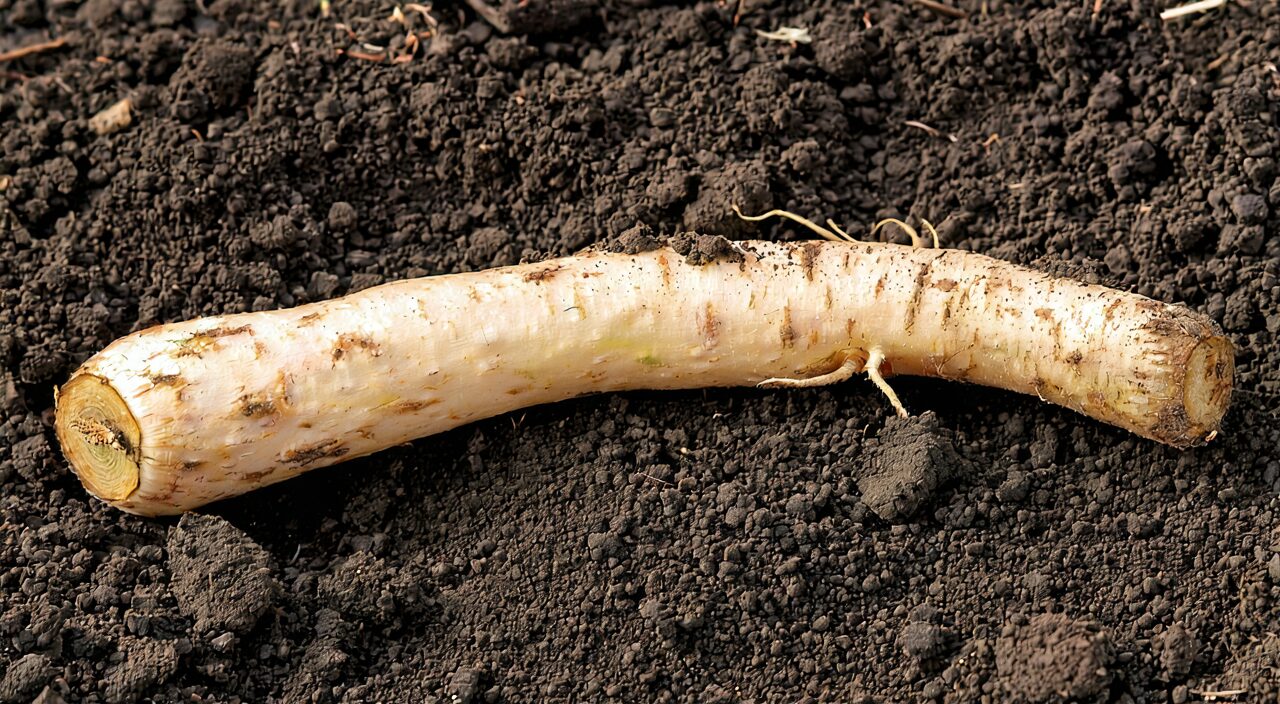
The medicinal part of rehmannia is its tuberous root. It is typically harvested in autumn when the leaves begin to wither. Care must be taken during harvesting to avoid breaking the root. The fresh root, used directly after removing the root head, fibrous roots, and soil, is known as fresh rehmannia. Because it has a high water content and spoils easily, raw rehmannia is more commonly used in daily storage and dispensing practices.
Raw rehmannia is made by slowly baking or air-drying fresh rehmannia until it is about 80% dry. After processing, it no longer has the crisp, juicy texture of the fresh product but retains a certain degree of softness and pliability. Traditional experience holds that fresh rehmannia has a stronger heat-clearing and blood-cooling effect, while raw rehmannia, while still clearing heat, places more emphasis on nourishing yin and generating fluids, making it the commonly used form in formulas.
There is also another processing method where raw rehmannia is further stewed with yellow rice wine or steamed with wine to make prepared rehmannia. Its appearance and application direction change significantly, which will be detailed later.
How Does Chinese Medicine Understand Rehmannia?
From the perspective of traditional Chinese medicine, raw rehmannia is sweet and bitter in taste, and cold in nature. It mainly enters the Heart, Liver, and Kidney meridians. Its core actions are clearing heat, cooling the blood, nourishing yin, and generating fluids. Here, “clearing heat” does not simply equate to reducing fever or inflammation. Rather, based on Chinese medical theory, it is believed to guide excessive “heat” downward in the body. It is particularly suitable for cases where yin fluids have been consumed in the later stages of febrile diseases, or where there is heat in the blood aspect. For example, when a person has a deep red tongue, dry mouth with thirst, body heat without sweating, or some bleeding tendency, raw rehmannia is traditionally taken into consideration.
In contrast, prepared rehmannia, after being processed with wine, has its cold nature mitigated and becomes sweet and slightly warm. It mainly enters the Liver and Kidney meridians and focuses more on tonifying blood, nourishing yin, and replenishing essence and marrow. Therefore, when Chinese medicine practitioners address issues such as a sallow complexion, soreness and weakness of the lower back and knees, and premature graying of the hair caused by liver blood deficiency or kidney yin deficiency, they often turn to prepared rehmannia. Simply put, raw rehmannia leans toward “clearing,” while prepared rehmannia leans toward “tonifying.” This distinction is key to understanding how rehmannia is applied.
What Components and Effects of Rehmannia Are the Focus of Modern Research?
Modern research on rehmannia has primarily focused on its iridoid glycosides, among which catalpol has been relatively well studied. Additionally, it contains polysaccharides, rehmanniosides, amino acids, trace elements, and other components.
Some laboratory studies and animal experiments suggest that these constituents may be involved in antioxidant activity, immune modulation, neuroprotection, and the auxiliary improvement of cognitive function. There is also research exploring the differences in polysaccharide content and certain active substances between raw and prepared rehmannia, attempting to explain the distinction in their traditional uses from a compositional perspective.
However, most of these findings are currently at the basic research stage and there is still a long way to go before they can be translated into clear clinical applications. They mostly offer a modern lens through which to understand rehmannia.
What Are the Differences Between Raw Rehmannia and Prepared Rehmannia?
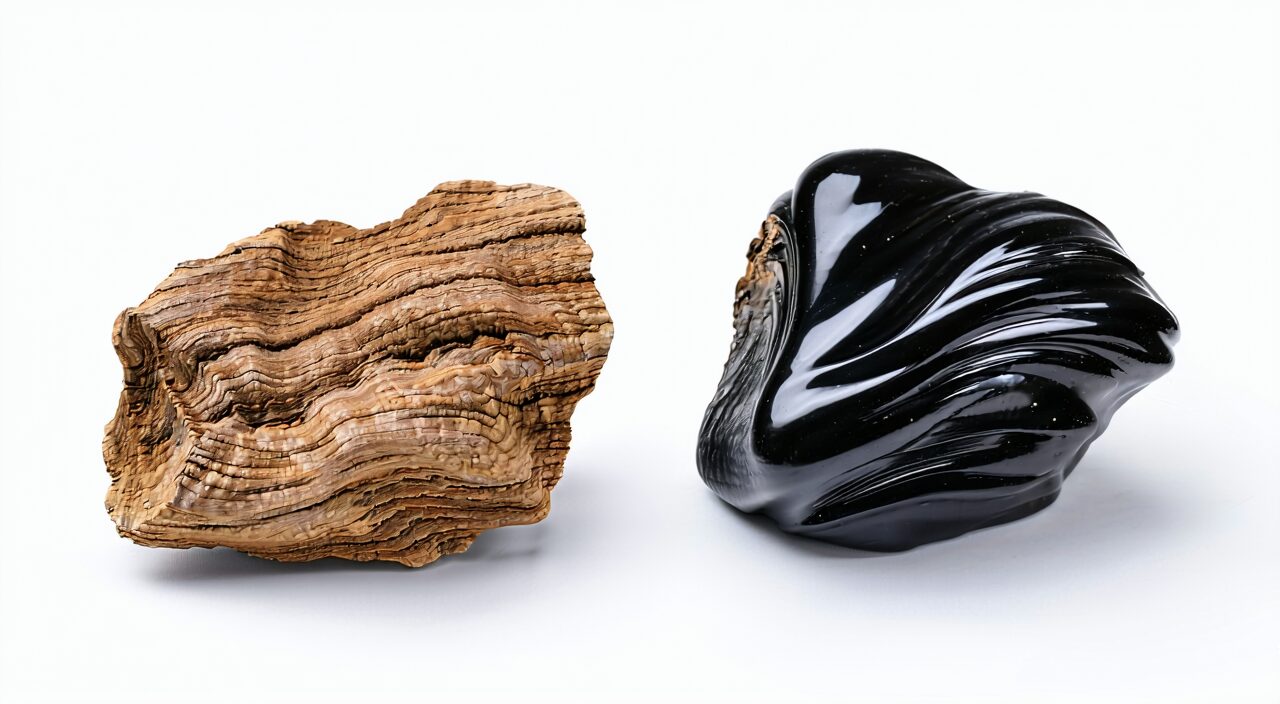
The most fundamental difference between raw rehmannia and prepared rehmannia lies in processing, which directly changes their color, texture, and traditional application emphasis. The table below provides a more intuitive display of their differences:
| Comparison Item | Raw Rehmannia | Prepared Rehmannia |
|---|---|---|
| Processing Method | Fresh rehmannia slowly dried at low temperature | Raw rehmannia stewed with yellow rice wine or repeatedly steamed with wine |
| Appearance and Color | Surface brownish-black; cross-section brownish-black and glossy | Jet black; cross-section jet black with noticeable luster |
| Texture | Flexible and pliable; cut surface fine and smooth; not easily broken | Soft and sticky; easily deformed; cut surface often adhesive |
| Nature, Taste, and Meridian Tropism | Sweet, bitter, cold; enters Heart, Liver, Kidney meridians | Sweet, slightly warm; enters Liver, Kidney meridians |
| Core Direction | Clear heat, cool blood, nourish yin, generate fluids | Tonify blood, nourish yin, replenish essence and marrow |
| Traditional Applications | Febrile disease damaging yin; blood-heat causing macules and bleeding; yin deficiency with internal heat; fluid deficiency constipation and dry mouth | Liver and kidney insufficiency; qi and blood dual deficiency causing menstrual irregularities, premature graying of hair, and soreness and weakness of the lower back and knees |
Precisely because one clears and the other tonifies, their directions are completely different. Therefore, without professional guidance, never substitute raw rehmannia and prepared rehmannia for each other arbitrarily, lest it affect the intended therapeutic direction or add burden to the body.
Which Formulas Use Rehmannia?
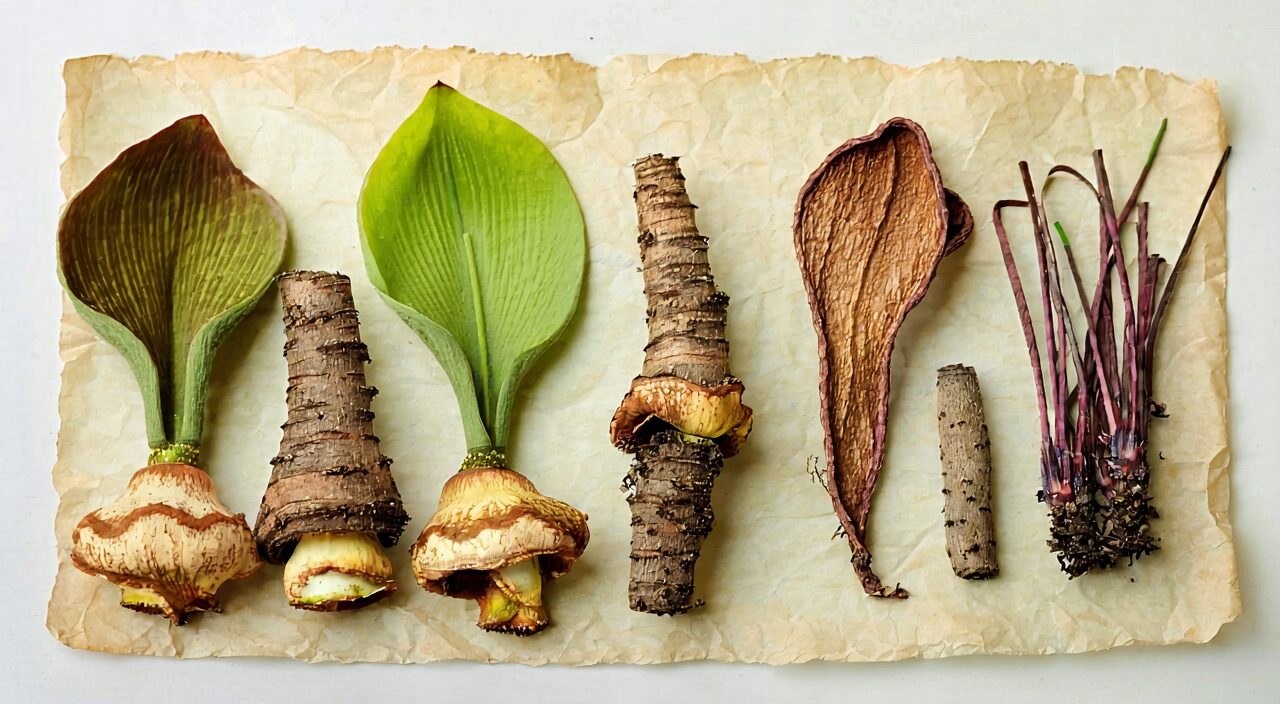
Rehmannia appears very frequently in classical formulas. Several common ones are listed below to help understand its usage scenarios:
- Dao Chi San (Red-Heat Guiding Powder): Uses raw rehmannia combined with herbs like Akebia stem. Traditionally often used for patterns of heart meridian heat with mouth and tongue sores, dark and painful urination, etc., employing raw rehmannia’s heat-clearing and blood-cooling properties to help guide the heat out through the urine.
- Qing Ying Tang (Clear the Nutritive Level Decoction): A representative formula centering on raw rehmannia’s heat-clearing and blood-cooling action, combined with rhinoceros horn (now commonly replaced by water buffalo horn), Scrophularia, Ophiopogon, and others. Traditionally used when heat enters the nutritive and blood levels, with body heat worse at night and a crimson, dry tongue. Raw rehmannia plays the role of clearing heat from the nutritive level and nourishing yin to generate fluids.
- Zeng Ye Tang (Increase the Fluids Decoction): A more straightforward embodiment of the nourishing-yin and fluid-generating concept, composed of raw rehmannia, Scrophularia, and Ophiopogon. It is suitable for manifestations of fluid deficiency, dry bound stools, and dry mouth and tongue, working via the method of “increasing water to float the boat” to help improve the condition.
- Bai He Di Huang Tang (Lily Bulb and Rehmannia Decoction): Uses only two ingredients: lily bulb and raw rehmannia. Traditionally used for lily disease (a Chinese medicine disease concept), which manifests as heart and lung yin deficiency, mental restlessness, bitter taste in the mouth, and dark urine. Raw rehmannia and lily bulb work together, with emphasis on nourishing yin and blood, clearing the heart and calming the spirit.
These formulas each have their own focus. Whether they are suitable for an individual’s condition needs to be determined by combining the specific constitution and symptom presentation and under the comprehensive evaluation of a professional.
What Precautions Should Be Taken When Using Rehmannia?
Although rehmannia is widely used, it is not suitable for everyone. Several points require particular attention when using it:
- Rich and Cloying, Hindering the Spleen and Stomach: Both raw and prepared rehmannia are relatively rich and cloying in nature, easily affecting the spleen and stomach’s transportation and transformation functions. If a person is currently experiencing spleen and stomach weakness, indigestion, abdominal fullness, loose stools, or a thick greasy tongue coating, using rehmannia may actually worsen the discomfort. Traditionally, herbs that move qi and strengthen the spleen are often combined to reduce the cloying sensation.
- Raw and Prepared Must Not Be Mixed Up: Raw and prepared rehmannia must not be casually interchanged without guidance. Raw rehmannia is cold while clearing heat and cooling blood; if a person has no heat pathogen internally or has spleen and stomach deficiency cold, using it may cause abdominal distension and diarrhea. Prepared rehmannia is strongly nourishing; for those with heavy phlegm-dampness, using it can easily lead to stagnation of qi. The two can never be treated as equivalent.
- Not to Be Used as a Daily Health Supplement: Although raw rehmannia is a commonly used medicinal herb, it is not a daily health supplement. If persistent unexplained fever, bleeding, severe insomnia, weight loss, or black stools occur, priority should be given to seeking medical diagnosis rather than self-medicating with Chinese herbal medicine.
Under any circumstances, you should only decide whether to use it after understanding the product’s source and quality standards and consulting a qualified Chinese medicine practitioner or pharmacist.
Summary
As a root-type medicinal herb, rehmannia appears in three forms—fresh rehmannia, raw rehmannia, and prepared rehmannia—depending on the processing method, but its core medicinal part is always the tuberous root. Raw rehmannia tends to clear heat, cool blood, and nourish yin, while prepared rehmannia leans toward tonifying blood, nourishing yin, and replenishing essence. There is a clear difference in their traditional application directions. When using rehmannia, the risk of cloying and hindering the spleen and stomach and the strict prohibition against mixing up raw and prepared forms are key points requiring special attention. This article is for informational reference only and cannot replace professional diagnosis or treatment advice. Specific use should always be combined with individual circumstances and the judgment of a professional.