
What Is Pollen Typhae? Medicinal Parts, Identification, and Common Formulas
Many people encountering Pollen Typhae for the first time are drawn to its vivid, fine, yellow powder. In traditional Chinese medicine, Pollen Typhae has a long history of application, but for overseas Chinese readers wanting to learn about it, this pollen-based medicinal substance often raises questions: Where exactly does it come from? Why does it look like this? Under what reasoning is it used? This article will focus on the source of Pollen Typhae, key identification features, common formulas, and points that need attention during use, helping to build a relatively clear foundational understanding.
What Does Pollen Typhae Look Like? How to Identify It?
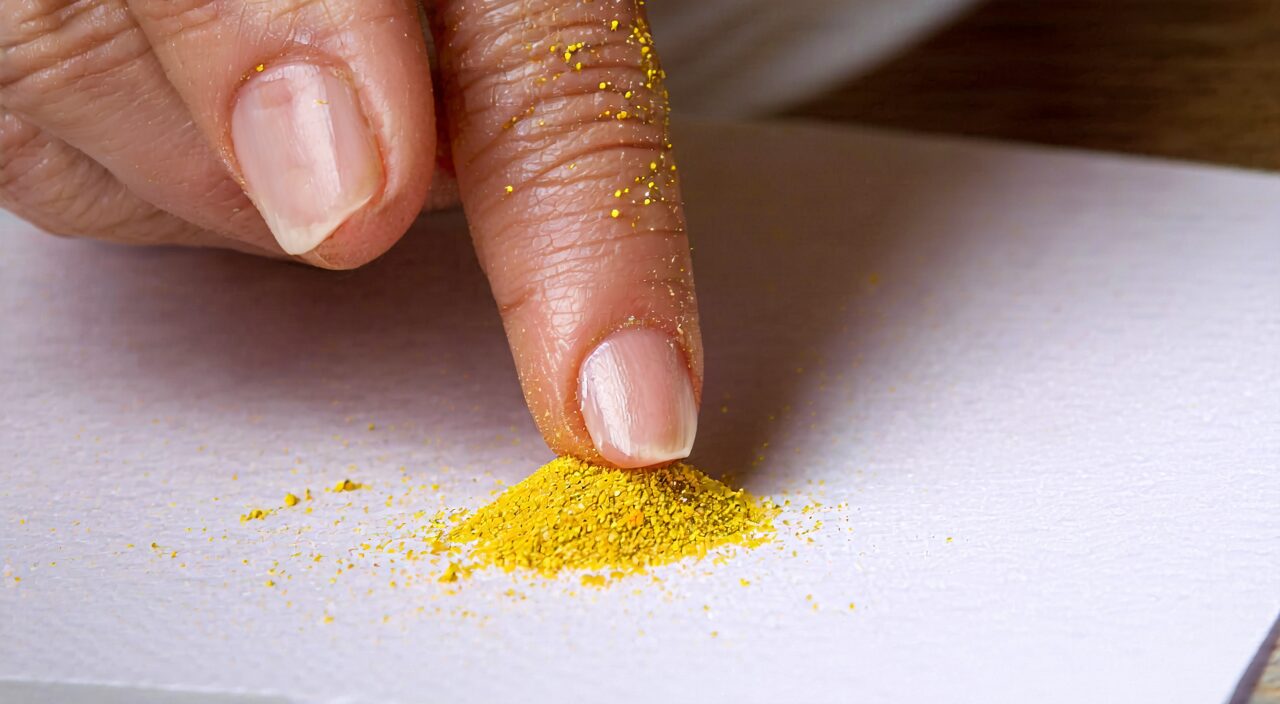
Authentic Pollen Typhae is an extremely fine powder, bright yellow or pale yellow, with a bright yet soft luster and very lightweight. When placed in the palm or on white paper for close observation, it feels as smooth and fine as flour, without noticeable rough granules or hard lumps.
When gently rubbed between the fingers, it has a distinctive slippery, smooth feel; the powder easily adheres to the texture of the skin, but because it is so light, a slight shake makes it drift away.
Another typical feature is that Pollen Typhae becomes airborne extremely easily. If the package is opened carelessly or a slight breeze passes over it, large amounts of powder will float in the air.
When a small amount of Pollen Typhae is sprinkled onto the surface of water, most of the powder floats rather than sinking quickly – this is often used as a reference point in empirical identification.
If the powder is dull in color, yellowish with dark tints, or has obvious clumps and a moldy odor, it is likely that storage was improper or the quality has changed, and it should not be used.
It is also worth noting that commercially available Pollen Typhae is sometimes mixed with small amounts of non-medicinal parts such as spikelet axes and filaments. These impurities are usually visible to the naked eye as fine fibers or yellowish-brown fragments. Careful observation when purchasing can help improve identification accuracy.
What Is the Medicinal Part of Pollen Typhae?
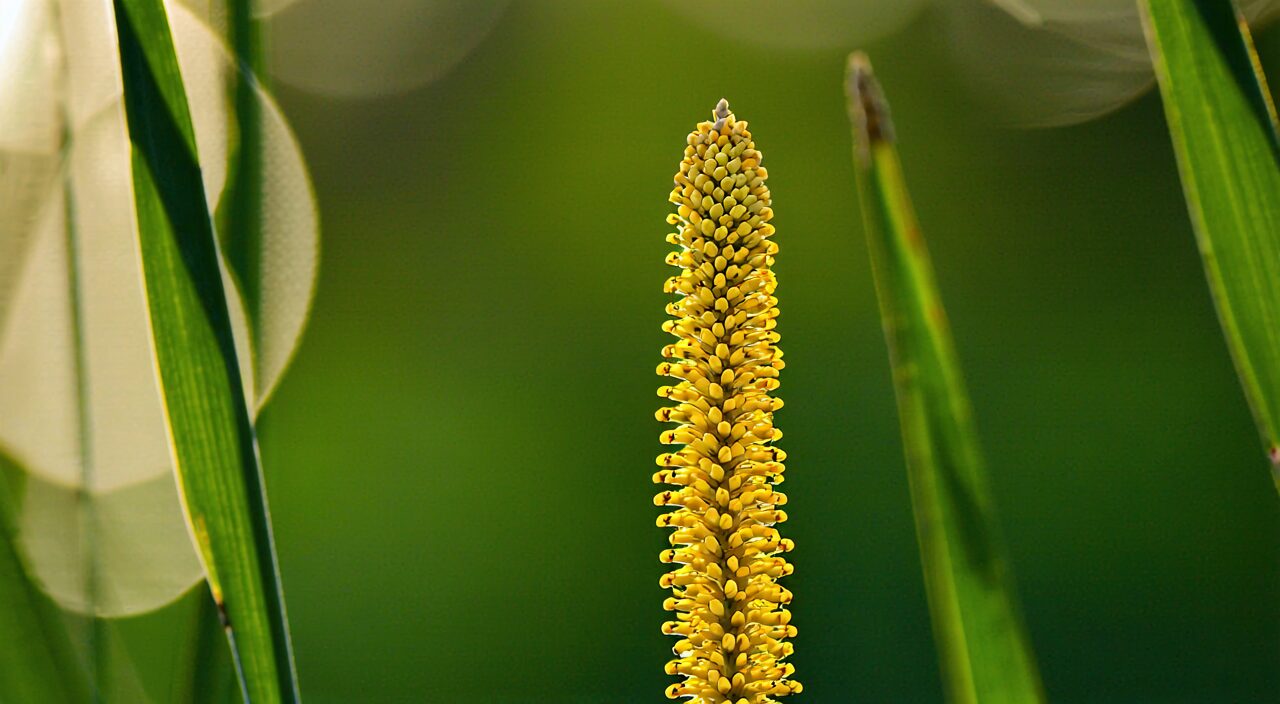
The medicinal part of Pollen Typhae is very specific – it is the dried pollen of plants in the Typhaceae family, such as Typha angustifolia (narrowleaf cattail), Typha orientalis (broadleaf cattail), or other species within the same genus. In other words, what is used is not the whole plant, nor the entire spike of the cattail, but the mature pollen grains from the staminate inflorescence.
Harvesting generally takes place in summer, when the male flowers on the upper portion of the cattail spike are fully mature but before the pollen has been shed in large quantities. The staminate inflorescences are cut, sun-dried or dried at low temperature, then crushed and carefully sifted to remove the rachis, filaments, and other impurities. The fine powder ultimately collected is the Chinese medicine Pollen Typhae. The entire process emphasizes maintaining the purity and fineness of the pollen.
Precisely because the medicinal part is restricted to the pollen itself, Pollen Typhae manifests as such a light, fine, uniformly yellow powder.
How Does Chinese Medicine Understand Pollen Typhae?
Within the traditional Chinese medicine framework of nature, flavor, and meridian tropism, Pollen Typhae is generally described as sweet in flavor, slightly acrid, neutral in nature, and entering the Liver and Pericardium meridians. Its core actions are stopping bleeding, resolving stasis, and to a certain extent freeing strangury.
For Chinese medicine, a highly valued characteristic of Pollen Typhae is that it “stops bleeding without causing blood stasis” – meaning it can help stop bleeding while not allowing static blood to accumulate. This dual-direction regulatory nature makes it a candidate for consideration in many bleeding conditions complicated by stasis when traditionally selecting therapeutic options.
In practical application, raw Pollen Typhae and charred Pollen Typhae have different orientations:
- Raw Pollen Typhae: Tends to invigorate blood and resolve stasis, free strangury and relieve pain; traditionally considered more for conditions such as bloody strangury with stabbing pain or blood stasis obstruction.
- Charred Pollen Typhae (Pollen Typhae Carbonisatus): Prepared by stir-frying raw Pollen Typhae over a gentle fire until it turns charred brown. After this processing, its astringent and stanching properties increase, and it focuses more on containing and stopping bleeding; it is often used for bleeding conditions such as hemoptysis, hematemesis, hemafecia, and metrorrhagia when there is no pronounced stasis.
Of course, the choice of which processed form to use and whether to combine it with other medicinal substances needs to be based on the individual’s specific presentation and constitutional characteristics, comprehensively determined by a professional Chinese medicine practitioner. It is not appropriate to decide on one’s own simply by consulting books or articles.
What Components and Effects Does Modern Research Focus On for Pollen Typhae?
Modern research on Pollen Typhae primarily focuses on its flavonoid compounds, such as isorhamnetin, quercetin, and their glycosides. It also contains polysaccharides, amino acids, and small amounts of sterols.
Some in vitro experiments and animal studies have observed that the flavonoid constituents in Pollen Typhae may have certain regulatory effects on microcirculation, platelet function, and blood lipid metabolism. Some researchers are also exploring directions related to the protection of vascular endothelium.
However, these studies mostly remain at the stage of experimental observation, and there is still a considerable gap before directly extrapolating specific effects in the human body. At present, these compositional clues are more helpful for understanding the material basis behind traditional applications rather than being simplistically equated with “a certain health function.”
Therefore, understanding these modern research perspectives can help build a more multidimensional awareness but cannot replace professional diagnosis and treatment, nor is it advisable to pursue a particular direction on one’s own simply because certain compositional data have been noted.
What Is the Difference Between Pollen Typhae and Pine Pollen?
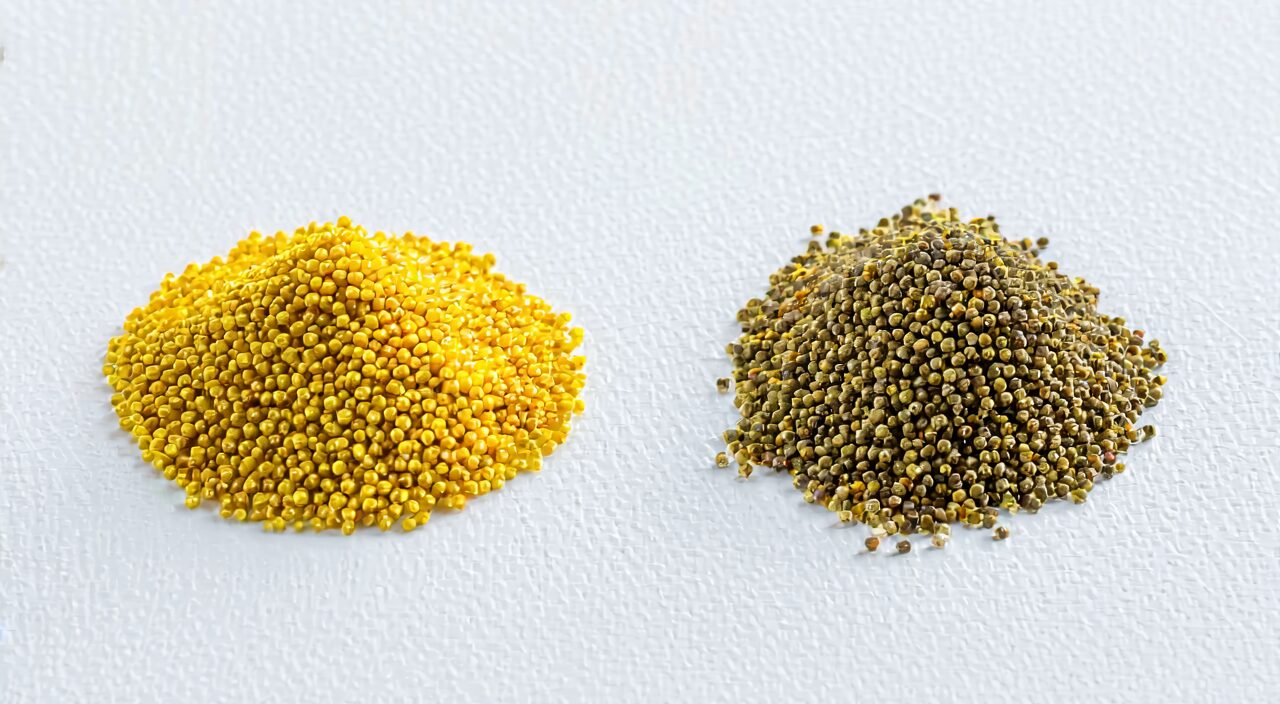
Pollen Typhae and pine pollen are often compared because both are plant pollens and both belong to the pale yellow color family, which can easily confuse the average consumer visually. However, the actual differences are not small.
First, the botanical sources are completely different. Pollen Typhae comes from aquatic or marsh plants of the Typhaceae family, while pine pollen comes from trees of the Pinaceae family, commonly the pollen of species such as Masson pine (Pinus massoniana) and Chinese red pine (Pinus tabuliformis). This fundamental difference also dictates the distinct characteristics in morphology and odor.
| Comparison dimension | Pollen Typhae | Pine Pollen |
|---|---|---|
| Botanical source | Pollen of Typhaceae plants | Pollen of Pinaceae plants (Masson pine, Chinese red pine, etc.) |
| Color and appearance | Bright yellow or pale yellow, extremely fine powder | Pale yellow or lemon yellow, may feel slightly granular |
| Odor | Almost no distinctive aroma | Has a slight fresh scent reminiscent of pine resin |
| Touch when rubbed between fingers | Noticeably smooth and slippery, easily adheres to skin | Relatively less pronounced slippery feel |
| Behavior in water | Mostly floats on the water surface | Mostly floats on the water surface, may carry a trace of waxy material |
In terms of traditional usage direction, Pollen Typhae is primarily used as a medicinal substance for invigorating blood and resolving stasis, stopping bleeding, and freeing strangury, while pine pollen also occasionally appears in traditional herbals but is more often encountered as a food ingredient or in pollen-based products.
In daily situations where differentiation is needed, a relatively reliable judgment can generally be made by comprehensively assessing the botanical source, visual color impression, aroma, and touch.
Which Formulas Use Pollen Typhae?
In historical Chinese medicine formula compendiums, formulas containing Pollen Typhae are not uncommon. The following three are quite representative and can serve as a window for understanding the application thinking behind Pollen Typhae.
Shi Xiao San (Sudden Smile Powder/Lost Smile Powder) is a classic combination within the category of formulas that invigorate blood and resolve stasis, composed of only two ingredients: Pollen Typhae and Trogopterori Dung. Traditionally, it is believed to invigorate blood, dispel stasis, disperse binds, and relieve pain. It is often considered for prickling pain in the chest and abdomen caused by blood stasis obstruction, or for such presentations as postpartum lochia retention and acute lower abdominal pain. Because the formula has few ingredients and a concentrated direction of action, it is highly recognizable in clinical Chinese medicine, but precisely for this reason, it must tightly focus on the core issue of “blood stasis” and should not have its range of application arbitrarily expanded.
Shi Hui San (Ten Ashes Powder) leans more toward cooling the blood and stopping bleeding. Its formulation is larger, generally including ingredients such as Cirsium Japonicum (Japanese thistle), Cirsium Setosum (field thistle), Nelumbinis Folium (lotus leaf), Platycladi Cacumen (biota leaf), Imperatae Rhizoma (imperata rhizome), Rubiae Radix et Rhizoma (madder root and rhizome), Gardeniae Fructus (gardenia fruit), Rhei Radix et Rhizoma (rhubarb root and rhizome), Moutan Cortex (tree peony bark), and Trachycarpi Petiolus (windmill palm petiole). All ingredients are usually processed by charring to preserve their nature. Within this formulaic meaning, Pollen Typhae usually appears in the form of charred Pollen Typhae, aiming to astringe and stop bleeding, while cooperating with other substances to clear heat from the blood level. Shi Hui San is primarily used in the traditional regulation direction for bleeding patterns due to frenetic movement of hot blood; its nature is somewhat cold, making it unsuitable for deficiency-cold constitutions.
Pollen Typhae Powder (Pu Huang San) has various modified versions recorded in texts such as the Formulary of the Bureau of People’s Welfare Pharmacies (Taiping Huimin Heji Ju Fang). A common combination is Pollen Typhae used together with Sanguisorbae Radix (garden burnet root) for bleeding from the lower body such as metrorrhagia and hemafecia. Different versions also have varying emphases on whether Pollen Typhae is used raw or charred.
Regardless of which formula containing Pollen Typhae is being considered, it must be determined by a Chinese medicine professional on the basis of accurate pattern identification whether it is suitable. It must not be self-prescribed simply by matching symptoms.
What Precautions Should Be Observed When Using Pollen Typhae?
Although Pollen Typhae belongs to the relatively gentle category of pollen-based medicinal substances, there are still some points that cannot be ignored during use, which can be summarized as follows:
- Traditionally, Pollen Typhae is considered to have the effect of invigorating blood and resolving stasis, therefore pregnant women should use it with caution or avoid it to prevent unnecessary risks.
- There is a clear difference between the use directions of raw Pollen Typhae and charred Pollen Typhae. If there is bleeding without obvious stasis, or if it is a chronic bleeding condition attributable purely to deficiency patterns, large-dose use of raw Pollen Typhae alone may not be appropriate and should be considered in combination with other substances.
- Improperly processed charred Pollen Typhae may lack sufficient hemostatic power and can also affect the expected outcome; therefore, household stir-frying is generally not recommended.
- Pollen Typhae is an extremely fine powder; when the package is opened and the powder is being retrieved, it easily becomes airborne. Special care should be exercised to avoid inhalation, as it may irritate the respiratory tract, causing coughing or discomfort.
- Individuals who are inherently allergy-prone, especially those with a history of pollen allergies, should be extra vigilant during initial contact with Pollen Typhae.
- Under any circumstances, for sudden massive bleeding, internal organ hemorrhage, bleeding accompanied by severe pain or unstable vital signs, emergency medical help must be sought immediately. Pollen Typhae must not be regarded as an emergency hemostatic agent.
- For daily storage, it should be kept sealed in a dry, cool place to prevent moisture absorption and mold.
Summary
Pollen Typhae is a traditional Chinese medicinal substance derived from the pollen of plants in the Typhaceae family. It can be distinguished from pine pollen and others by its bright yellow, smooth, fine powder appearance, extreme lightness, and tendency to become easily airborne. From the perspective of Chinese medicine logic, raw Pollen Typhae tends to resolve stasis and free strangury, while charred Pollen Typhae leans toward astringing and stopping bleeding. These aspects are reflected in formulas such as Shi Xiao San and Shi Hui San.
Understanding its appearance, source, and precautions for use helps build a more rational awareness, but any specific application should be conducted under professional pattern identification and guidance and should not be decided independently. This article serves only as objective popular science information and cannot replace professional diagnosis or treatment advice.