
What Is Codonopsis? Medicinal Parts, Identification Methods, and Common Formulas
Codonopsis is a commonly used herb in the tonifying and replenishing category. Many people associate it simply with the word “qi‑tonifying,” yet often confuse it with ginseng or Pseudostellaria. For readers who want a clearer understanding of Codonopsis from the perspectives of appearance, medicinal parts, and traditional usage ideas, this article organizes several common directions for learning.
What Does Codonopsis Look Like? How to Identify It?
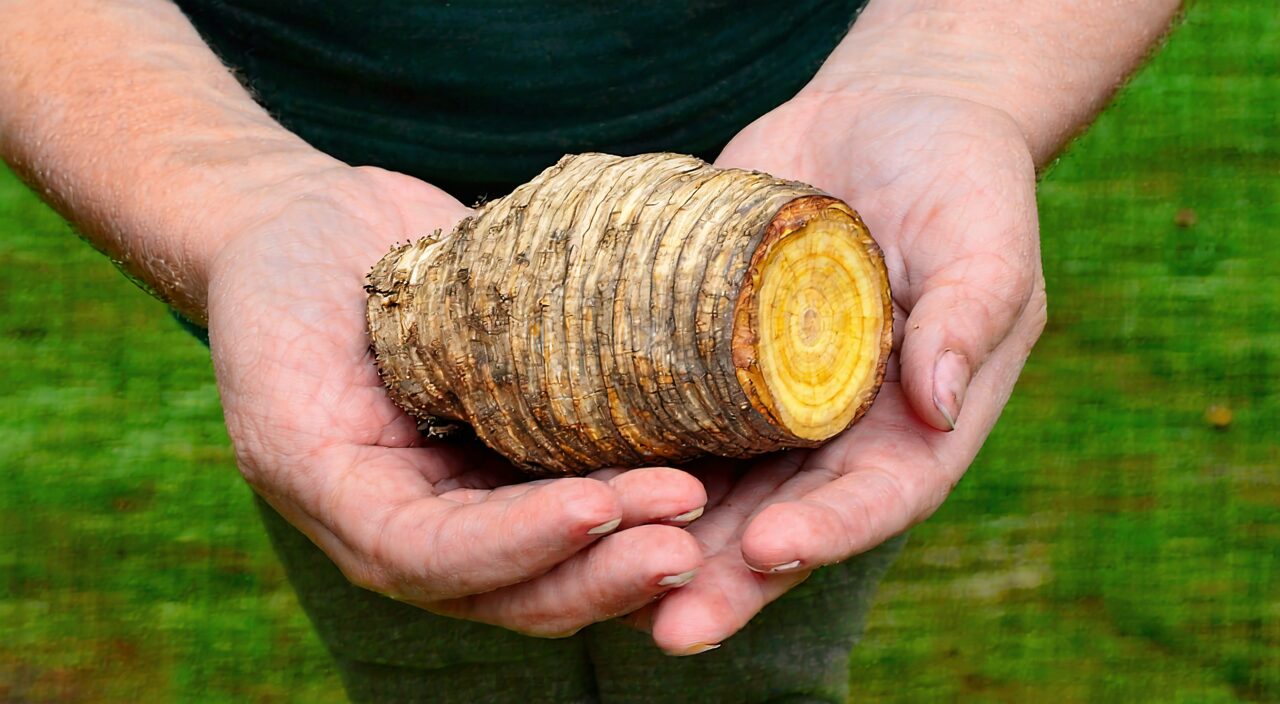
The medicinal appearance of Codonopsis is mainly the root, usually a long cylindrical shape, slightly curved, with a length mostly between 10–35 cm. A rather typical feature is the densely packed annular lines at the root head, looking like rows of protruding granules, commonly called the “lion’s head.” This is one of the most intuitive reference points for identifying Codonopsis.
The root surface is yellowish‑brown to grayish‑brown, with coarse longitudinal wrinkles, and sometimes transverse lenticel‑like protrusions are visible. The texture is somewhat hard but with a certain toughness. The cut surface is relatively flat, where you can see a yellowish‑white bark and a pale‑yellow wood portion. Between them there is often a slightly darker cambium ring, resembling a “chrysanthemum heart” pattern.
The odor is slightly fragrant, the taste mildly sweet, and it becomes sticky when chewed. Codonopsis from different producing areas and processing methods may show slight differences in appearance, but usually you can make a preliminary judgment by starting from the following features:
- Root shape: long cylindrical, slightly curved
- Root head: distinct “lion’s head”‑like annular lines
- Surface: yellowish‑brown to grayish‑brown, with coarse longitudinal wrinkles
- Cut surface: visible “chrysanthemum heart” pattern
What Is the Medicinal Part of Codonopsis?
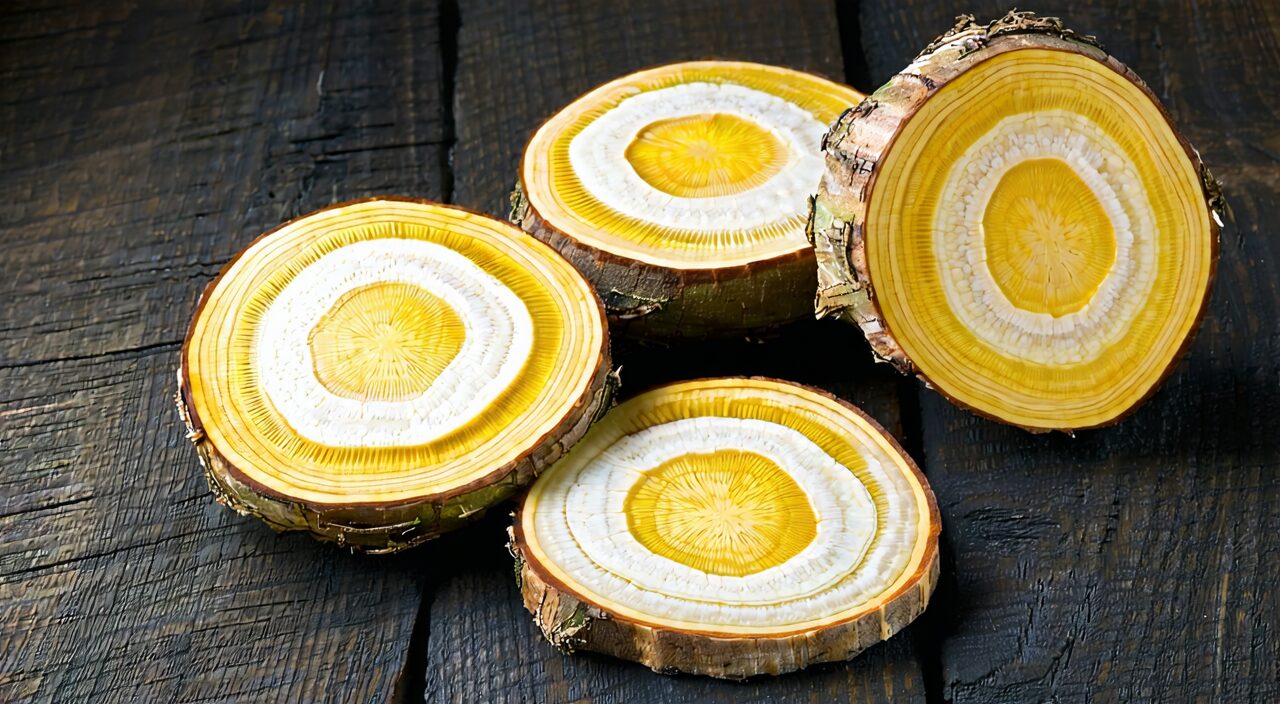
The medicinal part of Codonopsis is mainly the dried root. It is usually harvested in autumn, when the aerial parts and fibrous roots are removed, the dirt is washed off, and it is processed according to requirements. Common prepared forms include raw Codonopsis, stir‑fried Codonopsis, or honey‑processed Codonopsis.
After harvesting, it generally undergoes repeated kneading and air‑drying, making the root body firm and giving it a tight skin‑flesh appearance. Commercially available Codonopsis decoction pieces are mostly thick slices or short segments. The cut surface is yellowish‑white, and you can see the textures formed by rays and vascular bundles. If you buy whole Codonopsis roots, it is easier to observe the lion’s head and the complete longitudinal wrinkles.
Understanding the medicinal part and processing methods helps you make a comprehensive judgment based on your usage direction and product instructions, rather than determining suitability by appearance alone.
How Does Chinese Medicine Understand Codonopsis?
In traditional Chinese medicine’s understanding of nature, flavor, and channel tropism, Codonopsis is sweet in flavor, neutral in nature, and enters the Spleen and Lung channels. Its action direction mainly revolves around fortifying the spleen and boosting the lung, nourishing the blood, and generating fluids.
- For situations such as poor appetite, easy fatigue, or loose bowels caused by spleen‑qi insufficiency, Codonopsis has traditionally been one of the common regulating options.
- Regarding supplementing lung qi, if there are manifestations like shortness of breath, a weak and low voice, or easy sweating, it may also be considered in formula or dietary therapy approaches.
- Additionally, Codonopsis is often used for regulating dual deficiency of qi and blood or thirst due to fluid damage. Tradition holds that it can assist in generating fluids and moistening dryness.
Whether these regulating directions are suitable for an individual still needs to be referenced against their specific constitution and symptom presentations. For persistent or recurring discomfort, a professional evaluation should be sought rather than relying on a single herb on one’s own.
What Components and Effects of Codonopsis Are Focused on in Modern Research?
Modern research on Codonopsis mainly concentrates on its contained components such as polysaccharides, glycosides, and alkaloids. Some in‑vitro experiments and animal experiments have observed that Codonopsis polysaccharides may have a certain regulatory effect on immune function, and some studies have also focused on its influence on fatigue states.
Other experiments have explored directions such as gastrointestinal protection and promotion of blood‑producing related indicators. It should be specifically noted that most of these are still at the stage of component research and experimentation, and there is still a distance from definite evidence in humans. Therefore, one should not directly equate experimental research conclusions with daily‑use effects; they should only be understood as the current focus directions of scientific research.
How Does Codonopsis Differ from Similar Herbs?
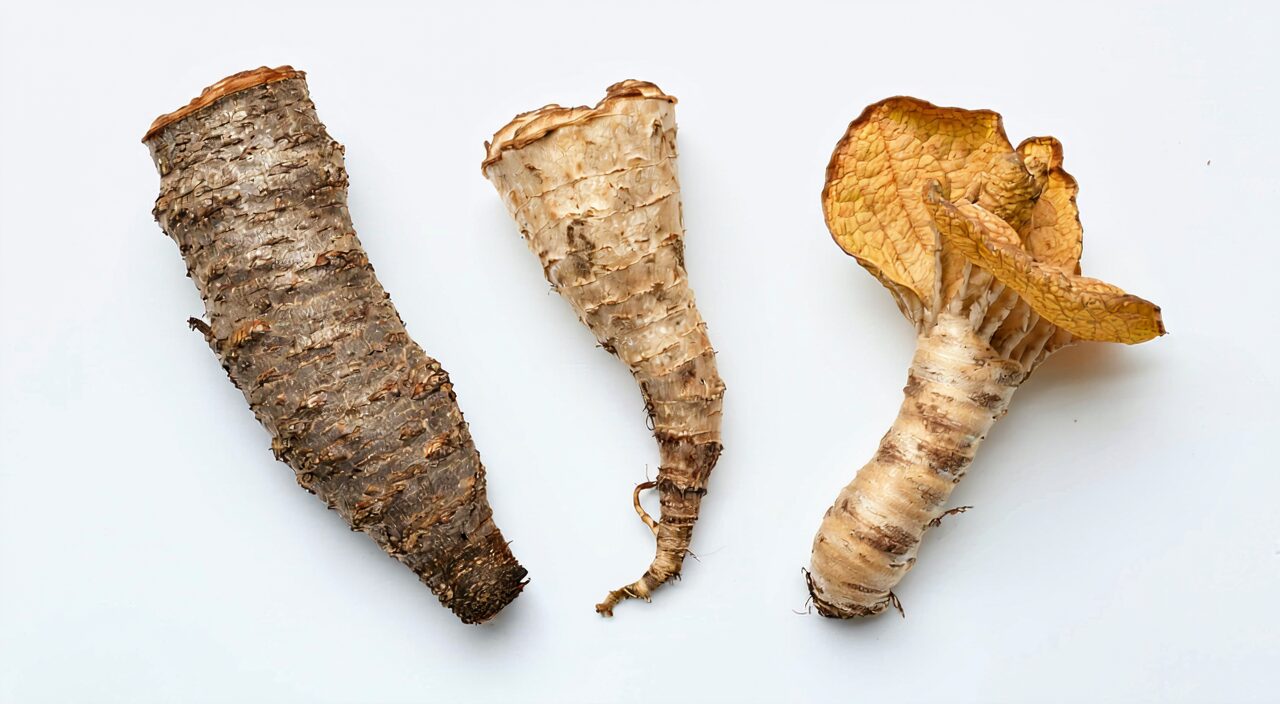
Many readers easily confuse Codonopsis with ginseng and Pseudostellaria. Although they are all commonly used in the qi‑tonifying direction, they have distinct differences in source, appearance, and traditional application emphasis. The table below summarizes their main differences for easy comparison.
| Herb | Source | Appearance Characteristics | Traditional Application Emphasis |
|---|---|---|---|
| Ginseng | Root of Panax ginseng (Araliaceae) | Main root spindle‑shaped or cylindrical, with intermittent transverse wrinkles on the upper part; firm texture; strong aroma | Stronger tendency to greatly tonify original qi |
| Codonopsis | Root of Codonopsis pilosula (Campanulaceae) | Root head has a “lion’s head”; longitudinal wrinkles are obvious; cut surface shows a “chrysanthemum heart”; aroma is relatively mild | Focuses on fortifying the spleen and benefiting the lung |
| Pseudostellaria (Tai Zi Shen) | Tuberous root of Pseudostellaria heterophylla (Caryophyllaceae) | Slender spindle‑shaped; root head lacks “lion’s head”; texture is relatively hard and brittle | Often used for qi and yin deficiency with a tendency toward deficiency heat; tonifying force is relatively mild |
The three come from different sources, have distinct appearance characteristics, and the starting points in traditional use also differ. When selecting, they should not be substituted for one another without distinction.
Which Formulas Use Codonopsis?
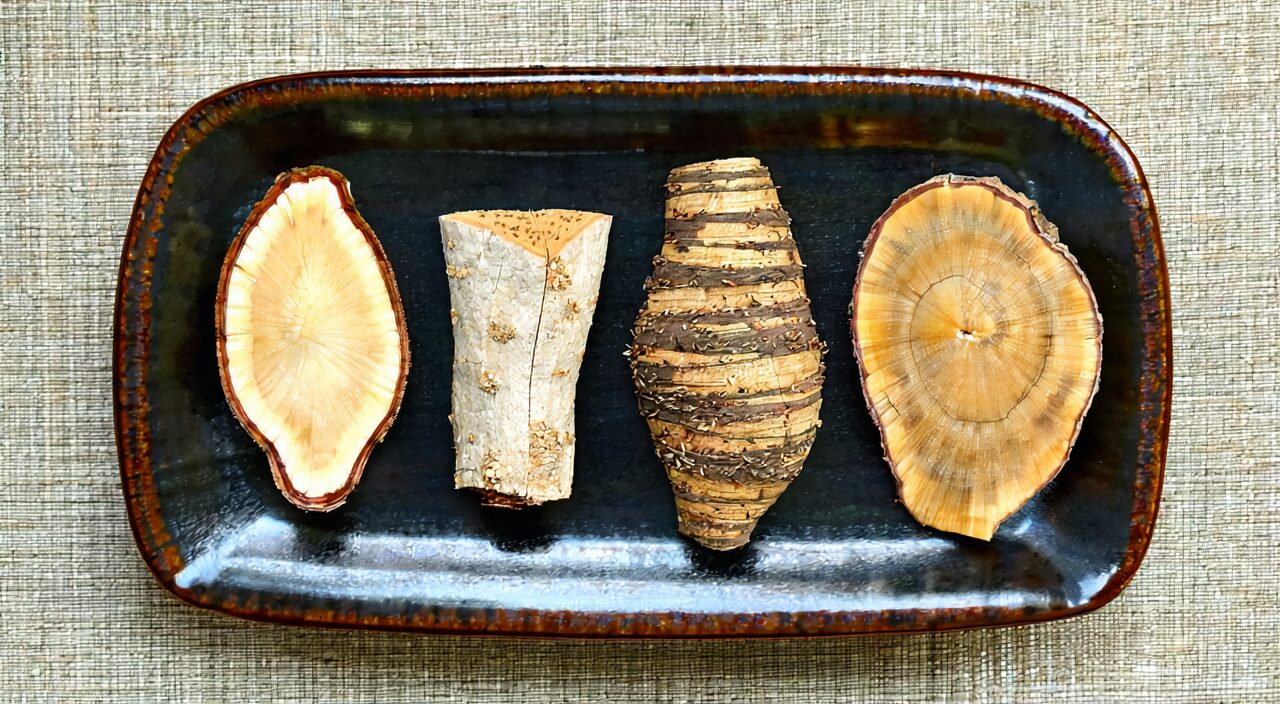
Codonopsis appears as a compatible herb in many classic formulas, traditionally used to assist in supplementing spleen qi and boosting lung qi. The following gives several common examples, only as a reference for understanding traditional formula‑combination thinking.
- Four Gentlemen Decoction (Si Jun Zi Tang): Based on ginseng, Atractylodes, Poria, and licorice. When ginseng is replaced by Codonopsis, it becomes a gentler qi‑tonifying combination, traditionally used for directions such as spleen‑stomach qi deficiency, sallow complexion, poor appetite, and loose stools.
- Ginseng, Poria, and Atractylodes Powder (Shen Ling Bai Zhu San): Adding Chinese yam and hyacinth bean to the base of Four Gentlemen Decoction, Codonopsis plays the role of fortifying the spleen and boosting qi, often used in regulating approaches for spleen deficiency with pronounced dampness, poor digestion, and watery stools.
- Center‑Supplementing and Qi‑Boosting Decoction (Bu Zhong Yi Qi Tang): With astragalus, Codonopsis, and Atractylodes as the core, traditionally understood for regulating issues like sinking of center‑qi, qi‑deficiency fever, and a state of fatigue with lack of strength. Codonopsis and astragalus work together to assist in raising the clear yang qi.
- Generate the Pulse Powder (Sheng Mai San): Originally composed of ginseng, ophiopogon, and schisandra. In some preparations, Codonopsis is used in place of ginseng, applied in regulating directions for dual deficiency of qi and yin, dry mouth, and slight panting.
It should be reminded that the use of formulas needs to be judged based on constitution and the severity of symptoms; simply applying a formula based on a single symptom may not be appropriate.
What Precautions Should Be Taken When Using Codonopsis?
Although Codonopsis is relatively gentle in nature, not everyone is suited for long‑term, large‑dose use. The following points are worth noting:
- If one belongs to patterns of qi stagnation, fullness‑distention, distinct excess heat, or fire effulgence—such as recurrent mouth sores, dry and bitter mouth, dry hard stools in a robust person with a red complexion—traditionally it is recommended to temporarily avoid use, or to combine it with other herbs in a rational way to balance the formula.
- Some people may experience abdominal bloating or discomfort when using large amounts. If this phenomenon occurs, the dosage should be adjusted or use paused.
- For long‑term, recurrent fatigue, emaciation, or markedly decreased appetite, one cannot rely on a single herb for self‑treatment; a professional must first rule out other potential problems.
- The dosage and duration of Codonopsis use are also recommended to be combined with product instructions and the specific advice of a TCM practitioner or pharmacist, rather than being adjusted arbitrarily based on other people’s experiences.
Summary
Codonopsis is a common herb in the direction of fortifying the spleen and boosting the lung. Features such as the “lion’s head” on the root, longitudinal wrinkles, and the “chrysanthemum heart” pattern are frequent reference points for external identification. Traditional Chinese medicine considers it sweet and neutral, entering the Spleen and Lung channels, and it is commonly used for qi‑deficiency patterns. Codonopsis, ginseng, and Pseudostellaria have clear differences in source and traditional application emphasis and should not be casually confused. Common formulas such as Four Gentlemen Decoction and Ginseng, Poria, and Atractylodes Powder also frequently include Codonopsis, but actual use needs to be judged based on individual constitution and symptoms. For long‑term discomfort, excess heat, or qi stagnation, consult a doctor or professional first; do not take large doses over a long period on your own.