
What Is Licorice? Medicinal Parts, Identification, and Common Formulas Explained
Many people have tasted the mild sweetness of licorice in herbal formulas, herbal teas, or even snacks. This seemingly ordinary yet versatile herb often acts as a “harmonizer” in traditional formulas. So what exactly is licorice? What does it look like, which part is used medicinally, and how does it differ from the commonly mentioned “honey-fried licorice”? This article will systematically examine these points from the perspectives of herb identification, traditional Chinese medicine understanding, and common formulas.
1. What Does Licorice Look Like? How to Identify It
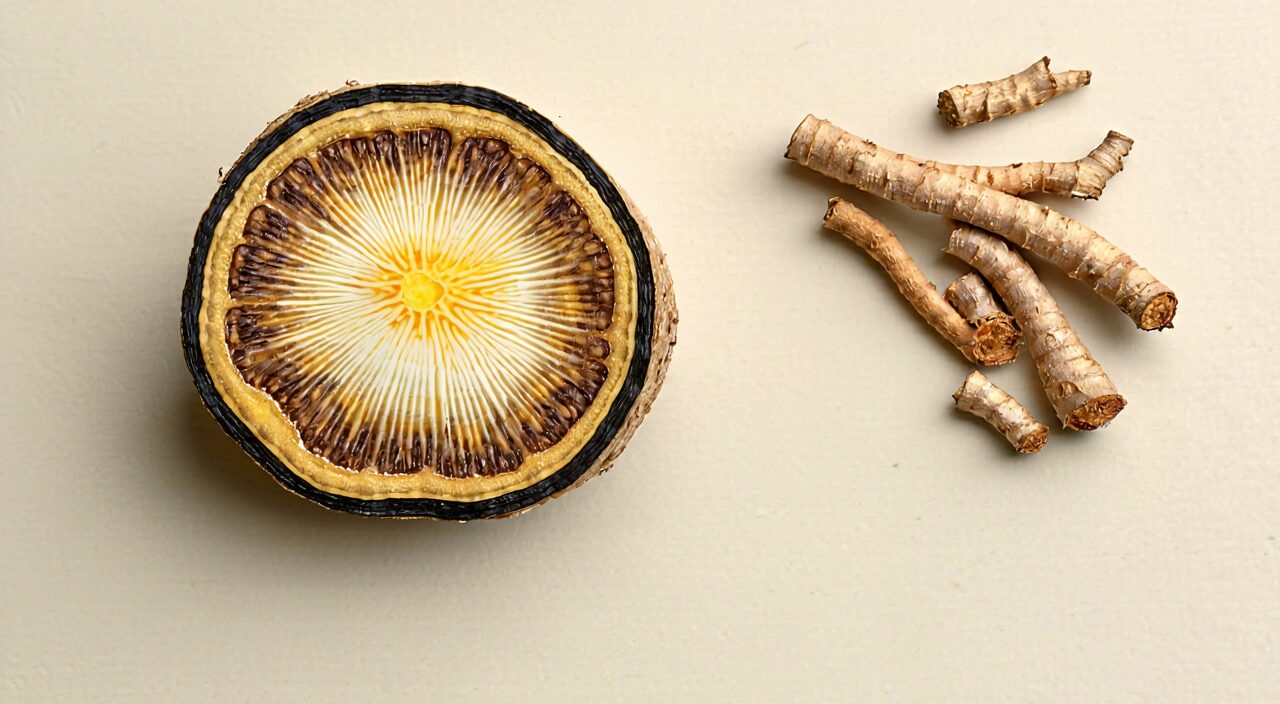
The medicinal part of licorice consists mainly of cylindrical roots or rhizomes, some cut into irregular oblique slices, round slices, or short segments. Identification can be based on several key features.
External Color and Texture
- The dry outer bark is mostly reddish-brown or grayish-brown, sometimes with traces of peeling in patches.
- The texture is hard and tough, and the cut surface is distinctly fibrous.
- If the color is blackish, overly moist, or too spongy, the quality may be poor or the processing inadequate.
Cross-Section Characteristics
- After slicing, the cut surface is mainly yellowish-white.
- Typical feature: distinct radial striations can be seen, resembling wheel spokes radiating from the center outward.
- Sometimes cracks or small cavities appear, which relate to nutrients accumulated in the root and the drying method.
Odor and Taste
- The sweet taste is sustained and mild, not vanishing immediately after chewing.
- The odor is faint and non-irritating.
- These sensory features serve only as auxiliary identification clues; suitability for use still requires a more comprehensive assessment.
2. What Are the Medicinal Parts of Licorice?
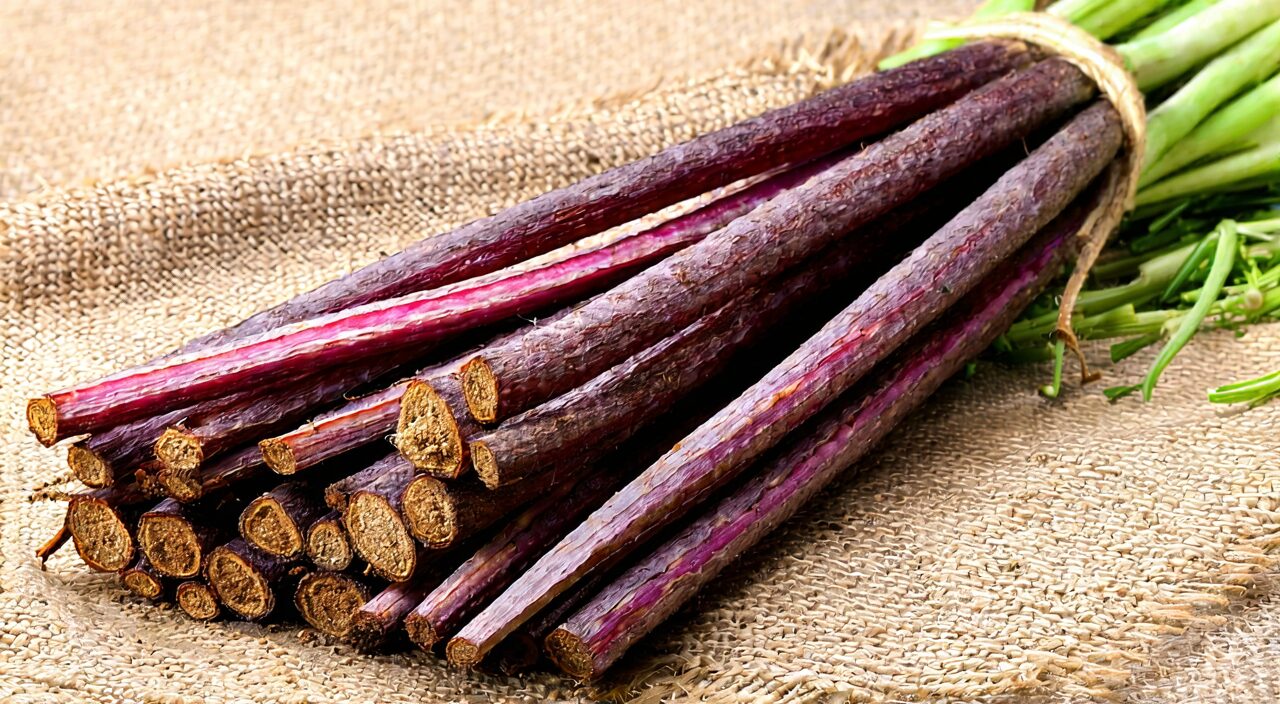
The medicinal parts of licorice are the dried roots and rhizomes of the legume plants Glycyrrhiza uralensis, Glycyrrhiza inflata, or Glycyrrhiza glabra. Although the root and rhizome are connected, they are sometimes collected and used together as medicinal material.
Harvesting and Processing
- Harvested in spring or autumn; soil, sand, and fibrous rootlets are removed.
- Cut into segments or slices and dried in the sun; this is often called “raw licorice.”
- Common prepared slices appear as round slices, oblique slices, or short segments, basically retaining a reddish-brown or yellowish-white color.
Different Forms Correspond to Different Usage Conventions
- Raw licorice slices tend toward clearing heat; when the aim is mainly to resolve toxins or clear the lung, the raw product is generally preferred.
- The aerial parts and seeds of the plant are normally not used as medicinal materials.
- Understanding the medicinal parts, harvesting, and processing background helps build a clearer picture when handling the herb.
3. How Does Traditional Chinese Medicine Understand Licorice?
From the perspective of traditional Chinese medicine, the nature and flavor of licorice are commonly summarized as “sweet, neutral; enters the heart, lung, spleen, and stomach meridians.” The sweet flavor can tonify, harmonize, and moderate, and combined with its neutral nature, this makes it very flexible in formula combinations.
Tonifying the Spleen and Boosting Qi
- Spleen qi deficiency often manifests as fatigue, poor appetite, and loose stools.
- It is frequently combined with herbs such as ginseng and white atractylodes to strengthen the spleen and harmonize the middle burner, as in Si Jun Zi Tang (Four Gentlemen Decoction), which includes licorice.
- It does not directly “boost physical strength” but rather assists the spleen and stomach in transportation and transformation within the formula.
Clearing Heat and Resolving Toxins
- It is often used in approaches related to sores, swellings, throat discomfort, or food and drug poisoning.
- Raw licorice leans slightly cool in nature and can clear heat; ancient physicians often used it to “resolve the toxicity of numerous drugs.”
- This action is mainly realized in combination formulas; using it alone has limited significance.
Dispelling Phlegm and Relieving Cough
- When there is cough with profuse phlegm, licorice may help moisten the lung and soothe the airways, making it easier to expel phlegm.
- Many cough-and-phlegm formulas include licorice, but not every type of cough is suitable for licorice alone.
- It should be considered in light of the individual’s constitution and the cause of disease.
Harmonizing Other Herbs
- In formulas containing multiple herbs, licorice can moderate the harsh nature of certain drugs and coordinate their pace of action.
- It makes the overall effect of the formula gentler and more sustained, which is why it appears frequently in a large number of classical formulas.
4. What Components and Activities Does Modern Research Focus On?
Modern research mainly focuses on constituents in licorice such as glycyrrhizic acid, glycyrrhetinic acid, and flavonoids. Many experimental studies suggest that these components may exhibit antitussive, anti-inflammatory, and immunomodulatory effects. It is worth noting that most of these results come from in vitro experiments or animal studies and cannot yet be taken directly as clinical treatment conclusions for humans.
Some components are also related to water and salt metabolism; for example, glycyrrhizic acid may affect the balance of sodium and potassium in the body, which is why caution is especially needed with long-term, high-dose use. Knowing about such research helps to understand the active basis of licorice, but in daily use, one should refer more to traditional application experience and product directions rather than simply treating experimental data as equivalent to bodily responses.
5. What Is the Difference Between Licorice and Similar Processed Products?
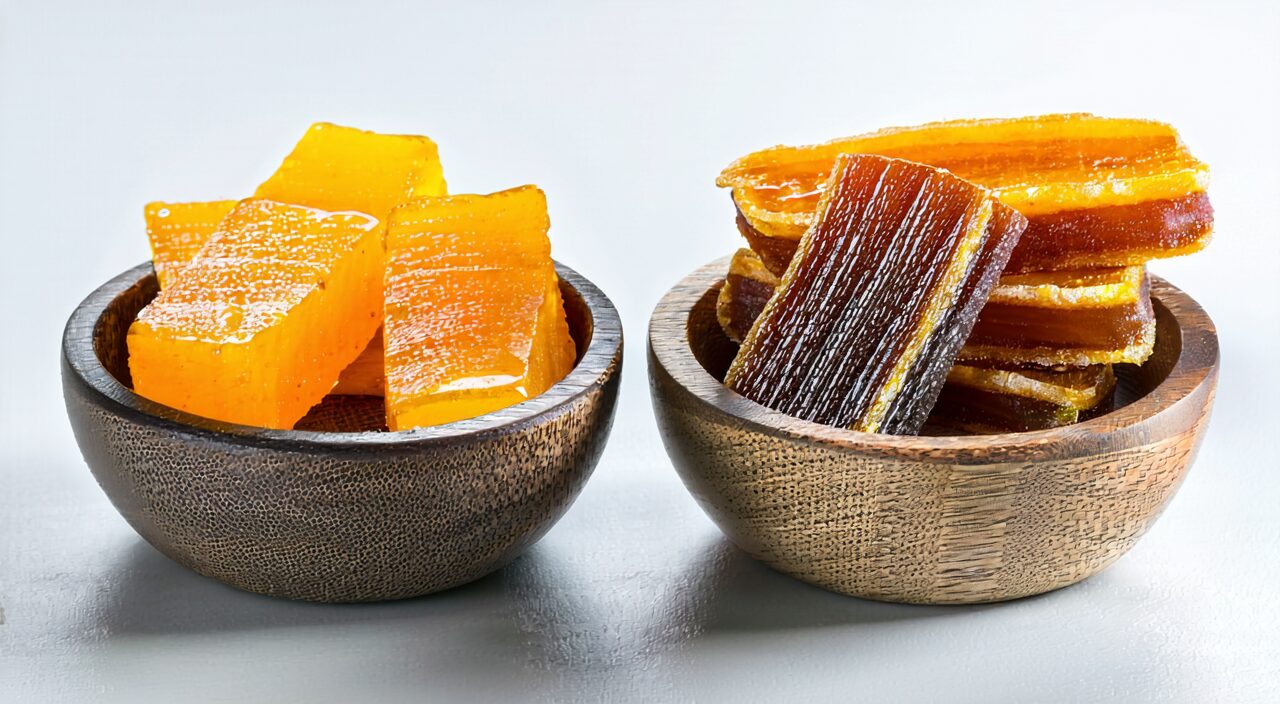
When licorice is mentioned, many people think of “honey-fried licorice.” Although both come from the same source, they have clear differences in appearance and traditional application focus.
| Comparison Aspect | Raw Licorice | Honey-Fried Licorice |
|---|---|---|
| Processing Method | Directly dried, not stir-fried with honey | Mixed with honey and stir-fried until no longer sticky |
| Appearance Color | Lighter in color, reddish-brown or yellowish-white | Deeper in color, dark yellow or brownish-yellow |
| Cut Surface Luster | Distinctly fibrous, average luster | Relatively strong sheen |
| Taste Characteristic | Sweet taste mild and lasting | Sweet taste richer and mellower, sweet and moderating after honey-frying |
| Traditional Emphasis | Leans toward clearing heat and resolving toxins, dispelling phlegm and relieving cough; suitable for heat-type conditions | Excels at tonifying the spleen and harmonizing the stomach, boosting qi and restoring the pulse; leans toward warming and tonifying |
| Common Formula Examples | Often combined in heat-clearing or cough-relieving formulas | Commonly found in formulas such as Gan Cao Xie Xin Tang (Licorice Heart-Draining Decoction) and Zhi Gan Cao Tang (Honey-Fried Licorice Decoction) |
It is necessary to note that the two cannot be casually substituted; the choice should be made based on individual circumstances and the formula composition. If one simply substitutes one for the other because only one kind is available, it may alter the formula’s directional effect. Such decisions are best left to experienced professionals.
In addition to honey-fried licorice, one may occasionally encounter a finer division into “licorice tips” or “licorice nodes,” but the most common forms on the market remain raw licorice and honey-fried licorice.
6. Which Formulas Use Licorice?
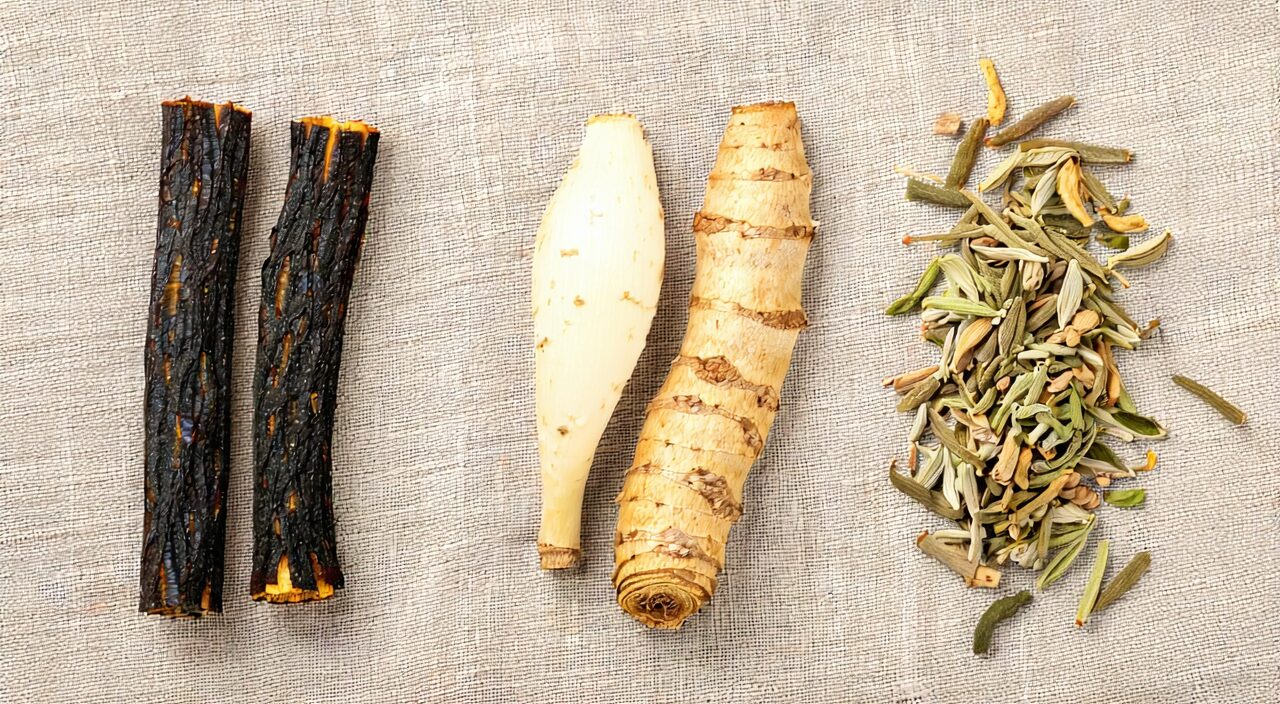
Licorice appears in formulas at a very high frequency. Several common formulas are listed below to help understand the role licorice plays in formula composition.
Si Jun Zi Tang (Four Gentlemen Decoction)
- A representative qi-tonifying formula, composed of ginseng, white atractylodes, poria, and licorice.
- Here, licorice tonifies the spleen, boosts qi, and harmonizes the herbal nature, allowing the whole formula to tonify without creating stagnation.
- Suitable for presentations such as shortness of breath, fatigue, and poor appetite due to spleen qi deficiency.
Ma Huang Tang (Ephedra Decoction)
- A classic formula for dispersing wind-cold, containing ephedra, cinnamon twig, apricot kernel, and licorice.
- Licorice can moderate the harsh nature of ephedra and cinnamon twig while also caring for the lung qi, preventing excessive dispersion from damaging the upright qi.
Gui Zhi Tang (Cinnamon Twig Decoction)
- Often used for external invasion of wind pathogen and disharmony between the nutritive and defensive aspects; composed of cinnamon twig, white peony, fresh ginger, Chinese dates, and licorice.
- Here, licorice harmonizes the nutritive and defensive, centers the middle and boosts qi; together with ginger and dates, it protects the spleen and stomach, allowing the formula to release the exterior without consuming the upright qi.
Gan Cao Xie Xin Tang (Licorice Heart-Draining Decoction)
- Named after licorice and using it in a larger dosage, the formula emphasizes tonifying the center, harmonizing the stomach, and clearing and transforming damp-heat.
- Traditionally used for presentations such as epigastric focal stiffness with hardness, retching, rumbling intestines, and diarrhea.
- Licorice highlights the role of supplementing deficiency and harmonizing; the overall approach differs from simply clearing heat.
The above formulas serve only as an understanding of traditional usage directions. Whether they are suitable for an individual case requires comprehensive judgment based on constitution, symptoms, and the assessment of a Chinese medicine practitioner or professional.
7. What Precautions Should Be Taken When Using Licorice?
Although licorice is commonly used, it is not suitable for everyone to take long-term or in large doses. Glycyrrhizic acid–type constituents may affect water and sodium metabolism in the body; long-term high-dose intake may cause water and sodium retention, manifesting as edema, elevated blood pressure, hypokalemia, and other issues.
Situations Requiring Caution or Avoidance
- Hypertension, abnormal kidney function, tendency toward low potassium, or those taking medications that affect blood potassium.
- Pregnant or lactating women, and people with serious heart problems should consult a professional before using licorice-containing products and should not self-administer large doses.
Drug Interactions
- Licorice may interact with certain diuretics, digitalis drugs, and some antihypertensives, leading to altered drug efficacy or increased risk of adverse reactions.
- If you are taking other medications long-term, it is advisable to understand potential interactions in advance and not casually use licorice products over a prolonged period as if they were ordinary food.
In summary, short-term use of licorice within a reasonable dosage range is relatively mild, but when long-term regulation is involved, professional guidance is necessary. Do not decide dosage and treatment course based solely on online information.
Summary
Licorice is a highly versatile herb in Chinese medicine with great formula compatibility value. From appearance identification to medicinal parts, and from nature, flavor, and meridian tropism to its role in common formulas, it embodies the characteristics of “sweetness” and “harmonization.” Its traditional understanding of tonifying the spleen and boosting qi, clearing heat and resolving toxins, dispelling phlegm and relieving cough, and harmonizing other herbs, together with the active components highlighted by modern research, provide us with a multi-faceted cognitive foundation. It is particularly important to note that raw licorice and honey-fried licorice have clear differences in application thinking, and long-term or high-dose use may cause risks such as water-sodium retention and blood pressure fluctuations; use should be tailored to individual circumstances and guided by a professional. This article is for informational reference only and cannot replace professional diagnosis or treatment advice.