
What Is Prepared Fleeceflower Root? Medicinal Parts, Identification, and Common Formulas
The name He Shou Wu (Fleeceflower Root) has a long history, and “Zhi He Shou Wu” (Prepared Fleeceflower Root) is a processed version derived from it. It comes from the tuberous root of Polygonum multiflorum, a plant of the knotweed family. After specific processing steps, it becomes a medicinal material, unlike the raw herb that can be used directly after harvesting from the soil. Many people initially confuse “He Shou Wu” and “Zhi He Shou Wu,” not knowing the real differences between them, let alone how to identify the processed slices by appearance, cross-section, or smell. This article addresses these common questions, sorting through the medicinal parts, identification methods, traditional understanding, differences from similar herbs, and the roles of several common formulas involving Prepared Fleeceflower Root, hoping to provide overseas Chinese readers with a clear framework for understanding.
What Does Prepared Fleeceflower Root Look Like? How to Identify It?

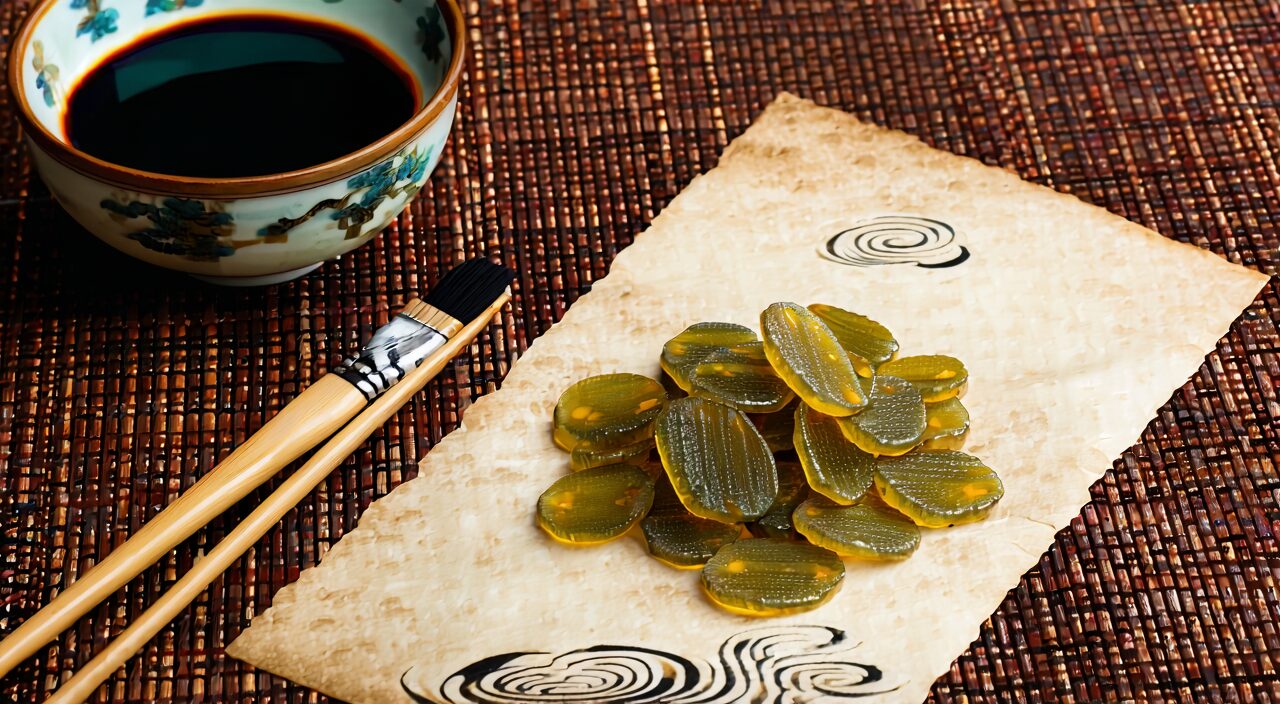
Prepared Fleeceflower Root slices are usually irregular chunks or thick pieces, primarily dark brown or brown, sometimes with a slight sheen on the surface. Compared with raw Fleeceflower Root, after processing the texture becomes harder; some pieces may feel slightly sticky or horny due to steaming or stewing, and pressing with a fingernail will not cause obvious powdery shedding.
The cross-section is a key identification feature. Raw Fleeceflower Root typically has a pale yellowish-brown or pale reddish-brown cut surface with a starchy texture, scattered with cloud-brocade patterns and a distinct outer ring. In contrast, Prepared Fleeceflower Root generally has a blackish-brown or dark brown cross-section, sometimes with a horny sheen, while the original cloud-brocade pattern becomes blurred or only faintly visible. When smelled, it often carries a caramel-like or slightly burnt aroma with reduced bean-like odor, without the obvious earthy smell of a raw herb. The taste is slightly sweet and somewhat astringent, occasionally with a hint of bitterness.
When purchasing or examining, if the cross-section appears light in color with strong starchy character, it is likely a raw product or insufficiently processed slices. Prepared Fleeceflower Root is characterized precisely by a darkened color, hardened texture, and hornified cross-section—this is the state sought in traditional processing methods such as “nine steaming and nine sun-drying” or preparation with black bean juice.
What Is the Medicinal Part of Prepared Fleeceflower Root?
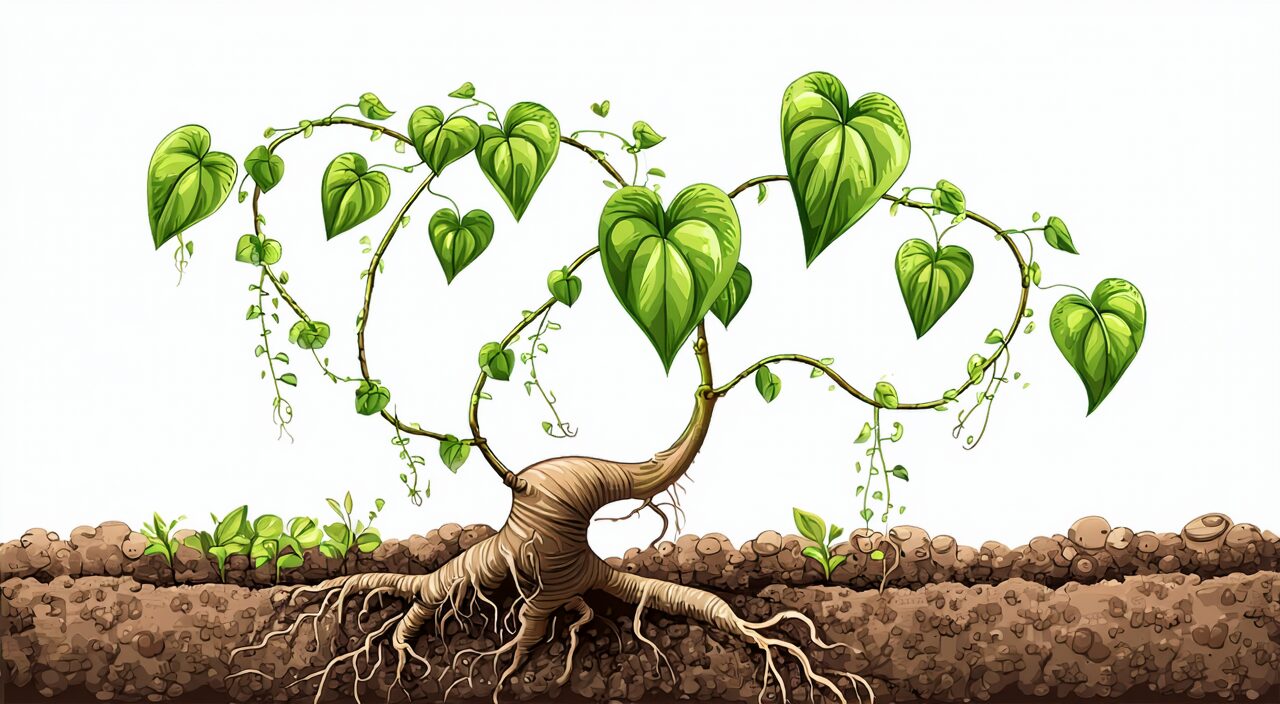
The medicinal part of Prepared Fleeceflower Root is the dried tuberous root of Polygonum multiflorum, but it must be used only after processing. The original plant is a perennial twining herb with enlarged tuberous roots, often irregularly spindle-shaped or lumpy, with skin ranging from reddish-brown to dark brown. Harvesting typically takes place in autumn and winter after the stems and leaves wither. The roots are dug up, rootlets removed, washed, and cut into thick slices or chunks. Then they undergo repeated steaming and drying with adjuvants such as black bean juice before being used as Prepared Fleeceflower Root slices.
Commercially available Prepared Fleeceflower Root commonly appears as dark, irregular thick slices or small chunks, some with knife-cut marks on the surface and a hard texture. It is sometimes further ground into coarse powder for use in proprietary Chinese medicines. Regardless of the form, the core concept is that “raw Fleeceflower Root is processed to alter its properties, reduce excessive purging effects, and shift toward nourishing and tonifying,” according to traditional views. Therefore, raw Fleeceflower Root cannot be directly substituted for the prepared form—a distinction that is very clearly maintained in customary practice.
How Is Prepared Fleeceflower Root Understood in Traditional Chinese Medicine?
In traditional Chinese medicine theory, Prepared Fleeceflower Root is slightly warm in nature, with a sweet and astringent taste, and enters the liver and kidney meridians. It is commonly understood within the framework of “tonifying the liver and kidney, and nourishing essence and blood.” Unlike raw Fleeceflower Root, which tends toward detoxifying, reducing abscesses, interrupting malaria, and moistening the intestines to relieve constipation, the processed form has more moderate properties. Traditionally, it is thought to be more focused on nourishing blood and yin, darkening gray hair, and strengthening sinews and bones, so it is often considered for patterns such as premature graying, soreness and weakness of the lower back and knees, and blood and essence deficiency.
This does not mean that Prepared Fleeceflower Root can directly “act on” a particular symptom. Rather, in these directions, TCM practitioners often include it as one ingredient in a formula, combined with other herbs to achieve overall regulation. For example, in cases of dry and brittle hair, slow recovery after staying up late, fatigue in the limbs, or a lusterless complexion, some practitioners may approach the pattern from “insufficient essence and blood,” and Prepared Fleeceflower Root is one of the common choices in such formulas. Such application must be based on individual constitution and holistic pattern differentiation rather than simply applied by rote.
What Components and Effects of Prepared Fleeceflower Root Attract Modern Research Attention?
Modern research on Prepared Fleeceflower Root mainly focuses on components such as anthraquinones, stilbene glycosides, lecithin, and certain polysaccharides. Among them, stilbene glycoside has shown some activity in antioxidant experiments, while lecithin and sphingomyelin have sparked associations with hair follicle and nervous system support from a nutritional perspective. During processing, the content of bound anthraquinones changes, which is often used to explain why the prepared root may pose a relatively lower potential burden on the liver compared to the raw herb, though this does not eliminate the risk entirely.
It must be emphasized that most mechanisms of action remain at the cellular or animal experimental level, and evidence directly applicable to human clinical effects is still limited. For instance, some in vitro experiments have observed that Prepared Fleeceflower Root extract promotes tyrosinase activity in melanocytes, but this is still a considerable distance from the practical application of “darkening gray hair.” Therefore, when reading such studies, one should not equate them with clinical efficacy, nor use them as a basis for self-administration or increased dosage.
How Does Prepared Fleeceflower Root Differ from Similar Herbs?
The most common confusion lies between Prepared Fleeceflower Root and raw Fleeceflower Root itself. Both come from the same source, but their processing methods and traditional application ideas differ significantly. Raw Fleeceflower Root is neutral or slightly cold in nature and is traditionally used more for detoxifying, dispersing masses, and moistening the intestines to relieve constipation, commonly applied in conditions like sores, abscesses, and dry-intestine constipation. Prepared Fleeceflower Root, through processing, reduces the laxative effect and shifts toward a warming and tonifying action, making it more suitable for patterns of essence and blood deficiency. In terms of appearance, the raw product is lighter in color, has a starchy cut surface with visible cloud-brocade patterns, while the dark brown to black color and horny cross-section of the prepared product provide a straightforward differentiating clue.
Additionally, some people may confuse Prepared Fleeceflower Root with similar-looking herbs like prepared Rehmannia root (Shu Di Huang) or black sesame, whose descriptions of effects overlap to some extent. Prepared rehmannia root is processed from the tuberous root of Rehmannia glutinosa, has a soft, moist texture, and a sticky blackish cross-section, but it does not originate from Polygonum multiflorum. Black sesame is a seed-based medicinal, much smaller in size. Through careful examination of shape, cut surface, and texture, they can generally be distinguished.
What Formulas Commonly Contain Prepared Fleeceflower Root?
Prepared Fleeceflower Root plays a role in darkening gray hair, tonifying the liver and kidney, and nourishing essence and blood in many traditional formulas and proprietary Chinese medicines. The following are a few common examples, provided only for reference on traditional combination principles rather than direct recommendation.
Qi Bao Mei Ran Dan (Seven Treasure Beauty Pellet) is a well-known formula, its name signifying black hair and ample essence and blood. In this formula, Prepared Fleeceflower Root usually serves as the chief ingredient, combined with Angelica sinensis (Dang Gui), goji berry, dodder seed, and Psoralea fruit, among others. It is traditionally used for patterns of liver and kidney deficiency leading to premature graying, loose teeth, and weakness of sinews and bones. Here, Prepared Fleeceflower Root primarily embodies the formula’s intent of “nourishing essence and blood” and “strengthening sinews and bones.”
Shou Wu Yan Shou Pian (Fleeceflower Root Longevity Tablet) is a preparation commonly used for middle-aged and elderly individuals. With Prepared Fleeceflower Root as the core, it combines other herbs that nourish yin, enrich blood, or consolidate essence, with a traditional emphasis on counteracting the sense of premature aging associated with essence and blood depletion. It has a certain traditional application basis in nourishing blood and slowing related declines.
Yang Xue Sheng Fa Capsule (Nourish Blood and Generate Hair Capsule) combines Prepared Fleeceflower Root with blood-nourishing and wind-expelling herbs, intended for hair loss patterns possibly caused by blood deficiency and wind-dryness. In this formula, Prepared Fleeceflower Root is used together with prepared rehmannia root and Angelica sinensis, aiming to provide support from the “nourishing blood” perspective so that the hair follicles can be properly nourished.
Whether these formulas are suitable varies from person to person. The decision to use them should be based on individual constitution, product instructions, and professional judgment rather than simply on their reputation.
What Precautions Should Be Taken When Using Prepared Fleeceflower Root?
Although Prepared Fleeceflower Root has undergone processing, it does not mean it is entirely risk-free. The greatest concern is its potential impact on the liver. There have been case reports of liver injury associated with Polygonum multiflorum products both domestically and internationally, some involving the raw herb, overdose, long-term use, or individual sensitivity. Even with the prepared form, this possibility cannot be completely ruled out. Therefore, individuals with a history of liver disease, those currently using other medications that may affect liver function, or those with a constitution marked by heavy damp-heat should be particularly cautious and consult a physician before considering products containing Prepared Fleeceflower Root.
In traditional usage, Prepared Fleeceflower Root is rarely used alone in large doses; it is generally prescribed in compound formulas at a certain proportion. It is also emphasized that one should avoid cooking with iron utensils and observe certain food and drug combination taboos. If any suspicious symptoms such as fatigue, reduced appetite, dark urine, or yellowing of the skin or sclera occur, discontinue use immediately and seek medical examination. Do not assume that “processed means safe.” Safety always depends on appropriate dosage, rational combination, and close observation.
Summary
Prepared Fleeceflower Root is the processed tuberous root of Polygonum multiflorum. Through processing, its appearance turns dark brown, its texture becomes hard, and its cross-section becomes horny. Traditionally, it is mainly used for patterns related to liver and kidney insufficiency and essence and blood deficiency. It differs clearly from raw Fleeceflower Root in both appearance and application approach, and is commonly found in classic formulas such as Qi Bao Mei Ran Dan. However, modern concerns remind users to be aware of the potential risk of liver injury, and that processing should never be equated with complete safety. This article serves only as a popular science introduction to Chinese herbal knowledge. Any decision regarding use should be made based on individual circumstances and in consultation with a professional.