
What Is Ginger? Its Medicinal Part, Identification, and Common Formulas
Many people come across fresh ginger in daily cooking overseas, but they may not be fully aware of how it is recognized and used in traditional Chinese medicine (TCM). In fact, ginger is not only a condiment; it also plays an important role in traditional herbal formulas. This article will walk you through ginger’s physical characteristics, medicinal part, the traditional concept of releasing the exterior and dispersing cold, as well as its differences from dried ginger and some common formulas. It aims to provide a clear reference framework for those interested in Chinese medicine.
What does ginger look like? How to identify it?
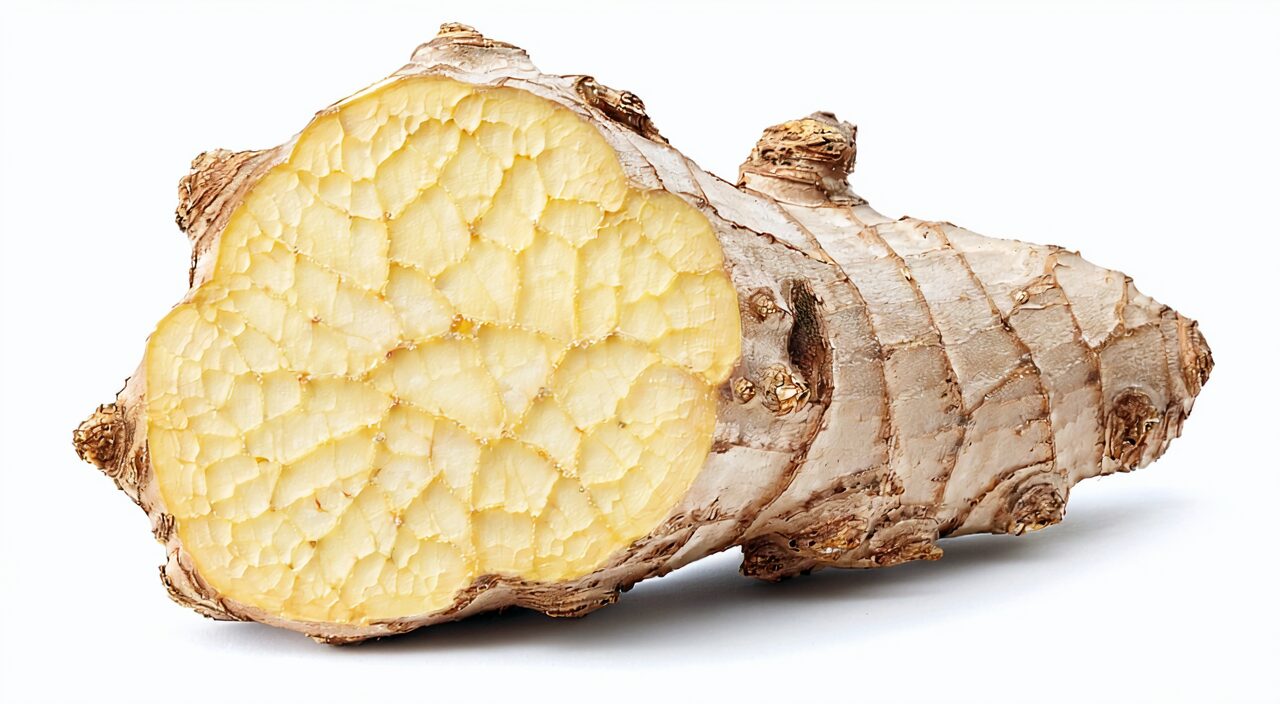
Ginger is the fresh rhizome of the ginger plant (Zingiber officinale). It appears as an irregular, slightly flattened tuberous mass, often with finger-like branches. The surface is yellowish brown or greyish brown, and the texture is relatively crisp and easily broken. When snapped, the cross-section reveals a pale yellow interior with distinct fibrous strands and scattered vascular bundles. Fresh ginger has a strong, pungent and aromatic smell that is both fragrant and slightly irritating; chewing it produces a spicy sensation. These are the more intuitive characteristics for identifying ginger. In the market, the ginger we commonly see may still have a slightly withered stem scar at the top. The overall shape is plump, and remnants of scale leaves often remain at the branching points.
It is worth noting that ginger can sometimes be confused with other similar-looking rhizomes. When selecting, therefore, it is helpful to judge comprehensively from the smell, the colour of the cross-section, and the multi-branched shape. Generally, ginger that is relatively full-bodied, highly aromatic, has a noticeably juicy cross-section, and whose fibres are not too coarse is preferred.
What is the medicinal part of ginger?
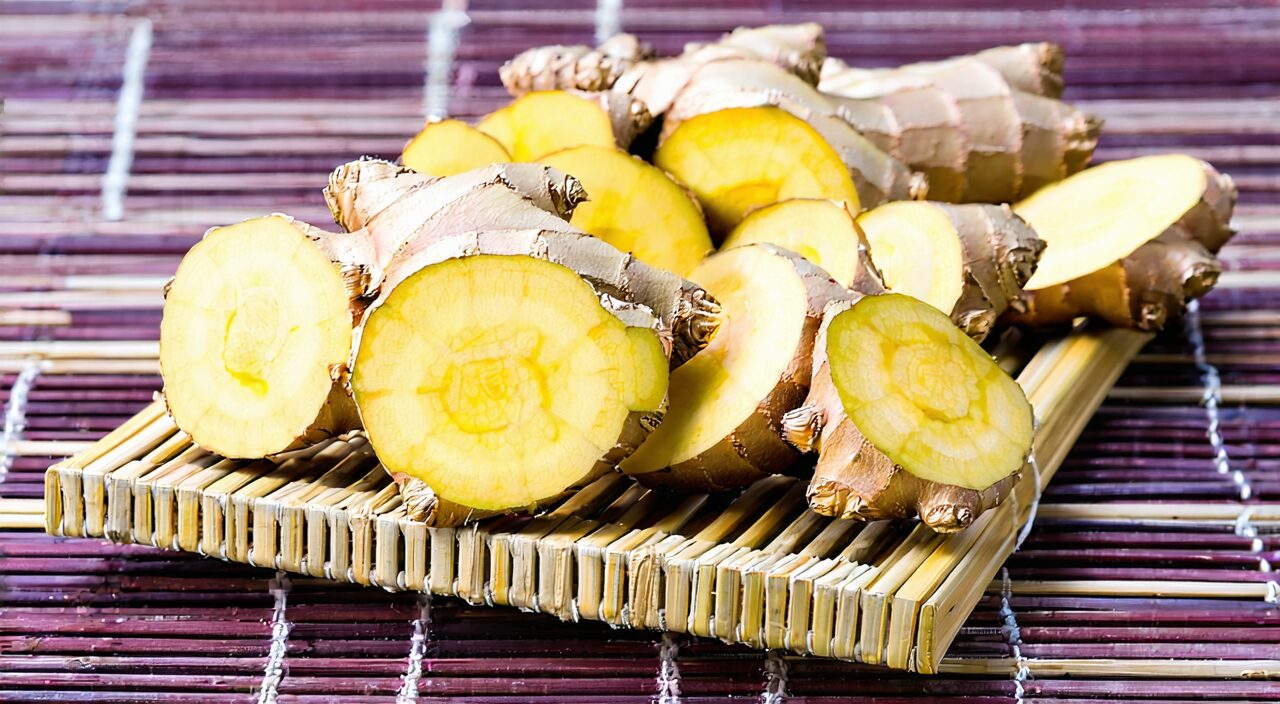
The medicinal part of ginger is its fresh rhizome. It is usually harvested in autumn and winter. After removing the fibrous roots and soil, it can be used fresh. Traditionally, ginger is most often cut into thick slices or crushed before use. The cut surface is pale yellow, and you can see clear ring patterns and scattered oil spots. In herbal formulas, ginger juice is sometimes used, or the ginger is decocted together with other medicinal substances.
Because the fresh rhizome is used, ginger has a high water content, which also means its texture and aroma are more readily released when heated. Therefore, compared with the dried product, fresh ginger tends more towards dispersing, making it more suitable for directions that require acting on the exterior and harmonizing the stomach. In the context of Chinese medicine, the emphasis on ‘using it fresh’ is an important prerequisite that distinguishes it from dried ginger.
How does TCM understand ginger?
Traditional Chinese medicine commonly understands ginger’s regulating approaches from several perspectives.
First is releasing the exterior and dispersing cold. At the initial stage of a wind-cold exterior pattern, when symptoms such as aversion to cold, a mild or absent fever, and nasal congestion appear, people commonly use ginger boiled in water or add it to brown sugar drinks. They rely on its acrid-dispersing nature to help the body produce a light sweat. This approach is also embodied in many traditional formulas.
Second is warming the middle and stopping vomiting. Ginger has a certain alleviating effect on discomfort caused by cold in the stomach, as well as nausea and vomiting. Whether it is stomach qi rebelling upward after exposure to cold, or motion-related discomfort, ginger is traditionally considered. This is why some TCM classics describe it as the ‘sovereign herb for vomiting’.
Third is transforming phlegm and stopping cough. For cold-phlegm coughs, which involve coughing up copious, thin, clear phlegm, ginger is often combined with other phlegm-resolving herbs to warm and transform cold phlegm and relieve the cough.
Fourth is relieving fish and crab poisoning. Based on traditional experience, ginger is believed to alleviate gastrointestinal discomfort that may arise after eating fish or crab. This is why many regions deliberately add ginger when cooking seafood. It is both a seasoning and a traditional preventive measure in dietary practice.
These understandings are all built upon the traditional framework of nature, flavour, and meridian tropism: ginger is slightly warm in nature, acrid in flavour, and enters the Lung, Spleen, and Stomach meridians. It leans more towards warming and dispersing, making it suitable when cold or damp stagnation is relatively obvious.
What components and effects of ginger are modern research focusing on?
Modern research mainly focuses on the volatile oils, gingerols, and other active components in ginger. Experiments have found that ginger volatile oils exhibit certain antioxidant and antibacterial potential, while gingerols are the material basis for its spicy sensation and some of its physiological activities. Some studies have observed that ginger extracts may help promote the secretion of digestive juices and relieve mild nausea, findings that to a certain extent align with the traditional antiemetic understanding.
At the same time, researchers have also explored ginger’s anti-inflammatory effects and its role in regulating blood circulation, but most of these are still at the experimental or preliminary clinical observation stage. Therefore, ginger should not currently be directly equated with a substance having a clearly defined pharmacological effect. Relevant conclusions still require more evidence-based support. As part of daily wellness, it can be viewed as a botanical material with a background of traditional use, rather than as a specific active ingredient.
What is the difference between fresh ginger and dried ginger?
Although fresh ginger and dried ginger come from the same plant, there are clear differences in their harvesting, processing, and traditional application emphasis.
In terms of appearance, fresh ginger contains a lot of moisture, has a crisp and tender texture that breaks easily, a juicy cross-section, and a relatively pale yellow colour. Dried ginger, on the other hand, is made by sun-drying or oven-drying fresh ginger; it is dry and hard, with a powdery cross-section and a deeper colour, ranging from yellowish-white to greyish-brown. It has a pronounced powdery texture, a stronger and more pungent odour, but its acrid-dispersing nature is reduced while its warming-heating nature is enhanced.
In traditional application, fresh ginger tends towards dispersing and is commonly used at the early stage of wind-cold exterior patterns and for stomach-cold vomiting. Dried ginger, by contrast, tends more towards warming the interior and is more often used for spleen and stomach deficiency cold, cold pain, cold limbs, and cold-fluid retention with wheezing and coughing. Simply put, fresh ginger moves without holding, while dried ginger holds without moving. This is an important basis of differentiation when TCM clinicians use these two substances. Therefore, even though both can be seen in the kitchen, when considering them as part of a regulating approach, it is still necessary to choose based on the specific situation and not to use them interchangeably.
Which herbal formulas use ginger?
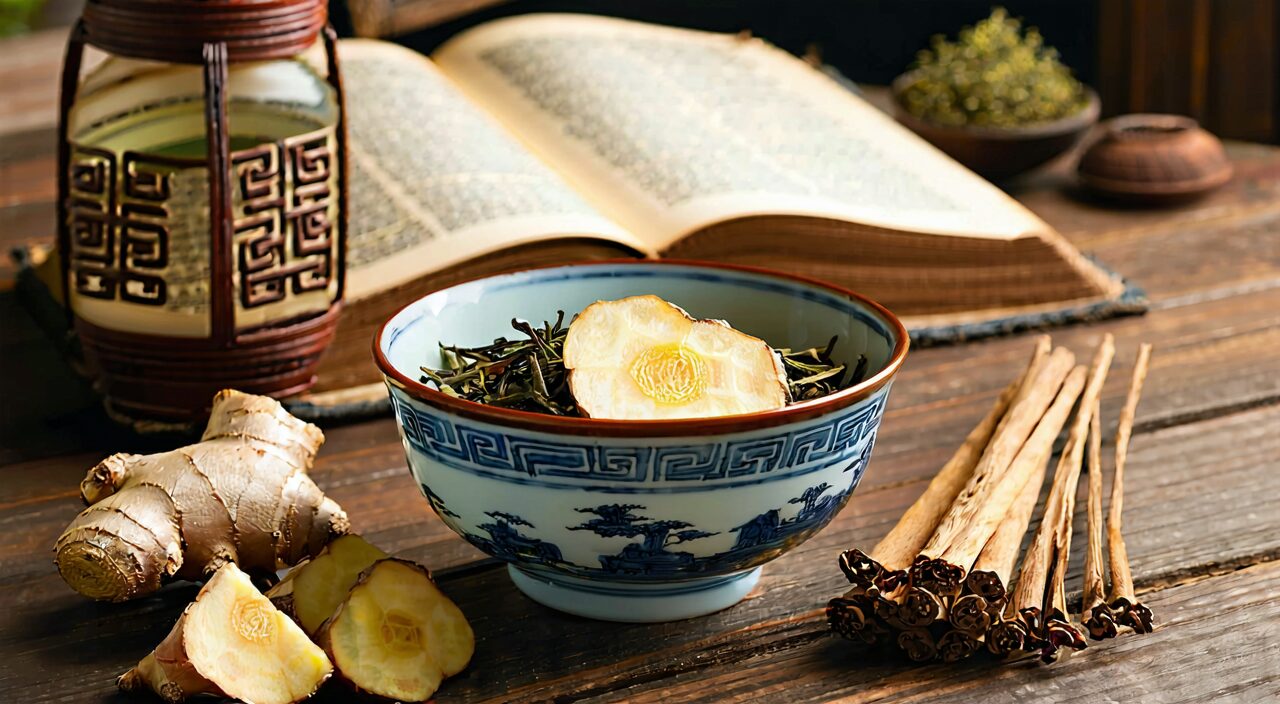
Ginger appears in quite a few traditional formulas. Below are several common directions.
Guizhi Tang (Cinnamon Twig Decoction): In this formula, fresh ginger is combined with Cinnamon Twig, White Peony Root, Licorice, and Jujube. It is commonly used for external wind-cold with exterior deficiency patterns, i.e., situations marked by aversion to wind, fever, sweating, and a floating, relaxed pulse. Here, fresh ginger mainly plays the role of assisting in dispersing wind-cold and harmonizing the stomach to stop vomiting. However, whether it is suitable needs to be judged based on individual constitution and specific presentations.
Xiao Banxia Tang (Minor Pinellia Decoction): Composed of only Pinellia Rhizome and fresh ginger, it is traditionally used for cold-fluid vomiting, meaning nausea and vomiting caused by cold in the stomach and retained fluid internally. Because its action is relatively clear, it is often regarded as a basic combination for warming and transforming cold fluid to stop vomiting, belonging to a relatively pure therapeutic direction.
Shengjiang Xiexin Tang (Ginger Heart-Draining Decoction): This formula contains fresh ginger, Licorice, Ginseng, dried ginger, Scutellaria, etc. It is commonly used for epigastric stuffiness and fullness, dry retching, and belching with a foul odour caused by mixed cold and heat with disharmony of stomach qi. Here, fresh ginger not only harmonizes the stomach and directs rebellious qi downward but also cooperates with other medicinals to regulate the middle energizer. The rationale of this kind of formula is rather complex and needs to be assessed by a professional.
Wuzhuyu Tang (Evodia Decoction): Containing Evodia Fruit, Ginseng, fresh ginger, and Jujube, it is traditionally used for headaches and vomiting caused by liver-stomach deficiency cold with turbid yin rebelling upward. Fresh ginger in such formulas plays the role of warming the stomach, dispersing cold, and directing rebellious qi downward to stop vomiting. Because it involves a relatively complicated mechanism of cold and heat, it should not be self-applied casually.
The scope of application for each of these formulas has its own emphasis. They demonstrate the thinking of traditional Chinese medicine in combining medicinals according to different patterns, and should not be simply understood as a direct symptomatic corresponding protocol.
What should be noted when using ginger?
Although ginger is widely used in daily diet, based on traditional understanding and its plant properties, the following points deserve attention.
Use with caution in cases of yin deficiency with internal heat. If one commonly experiences symptoms such as warm palms and soles, a dry mouth and throat, or night sweats, these may indicate a state of yin deficiency with internal heat or significant excess heat. In such cases, using substantial or long-term amounts of ginger, which is slightly warm in nature and acrid in flavour, may potentially aggravate internal heat and cause discomfort.
Be mindful of stomach irritation. Ginger contains stimulating components like gingerols. Consuming it in large quantities on an empty stomach may cause a burning sensation or stomach discomfort, especially in people with relatively sensitive gastric mucosa. It is advisable to use it in small amounts during or after meals.
Pay attention if there is a bleeding tendency. Traditionally, ginger’s acrid-dispersing nature may affect the stability of the blood aspect. For people with a tendency to bleed or those taking anticoagulant medication, it is best to consult a professional before consuming ginger in large quantities.
Avoid consuming large amounts all at once. Even in cooking, ginger should be used in moderation. Excessive pungent stimulation can burden the digestive system and even lead to signs of ‘rising fire’. Traditional usage always emphasizes proper combination and dosage, rather than the more the better.
If long-term or recurrent gastrointestinal discomfort is present, or if it is accompanied by significant abdominal pain, vomiting, weight loss, or black, tarry stools, you should seek medical help promptly and not delay the condition.
Summary
As a common plant used both as food and medicine, ginger is recognized in TCM mainly through traditional approaches such as releasing the exterior, dispersing cold, warming the middle, and stopping vomiting. There are clear differences in application between the fresh and dried products, and formulas such as Guizhi Tang and Xiao Banxia Tang demonstrate its value in different combinations. When using ginger in daily life, one should pay attention to constitutional bias and the principle of moderation, especially those with yin deficiency, internal heat, or stomach discomfort who need to be more cautious. The content of this article is for informational reference only and cannot replace professional diagnosis or treatment advice.