
What Is Perilla Leaf? Medicinal Parts, Identification, and Common Formulas
Many people encounter the name “perilla leaf” when dealing with medicinal cuisine salads or traditional Chinese patent medicines, but what exactly is perilla leaf, what does it look like, how does the leaf differ from the stem, and which common formulas use it? For many overseas Chinese readers, clarifying these basic herbal information points is more important than memorizing complex formulas. This article helps build a relatively complete understanding framework for perilla leaf, covering morphological identification, medicinal parts, traditional Chinese medicine understanding, and common formula applications.
What Does Perilla Leaf Look Like? How to Identify It
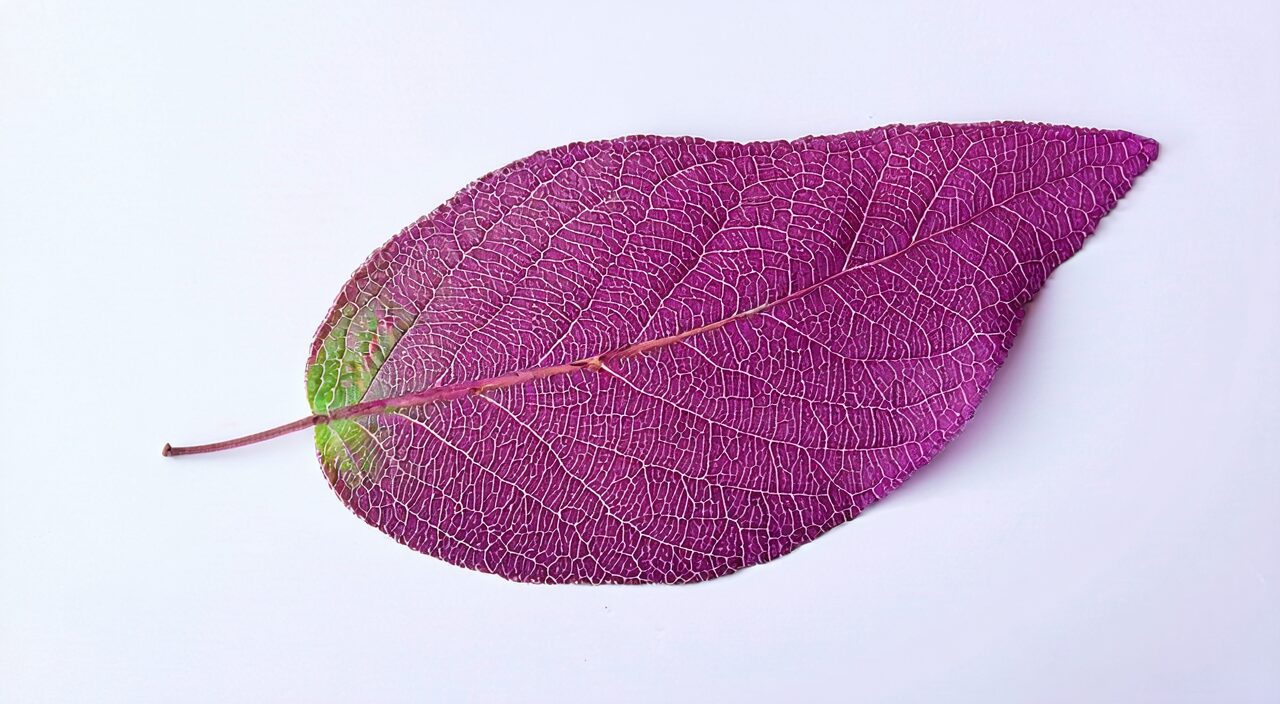
Perilla leaf comes from the plant Perilla frutescens of the Lamiaceae family and usually appears as dried leaves or leaves with tender branch tips in herbal medicine. The leaf blade is mostly ovate or broadly ovate, with a relatively pointed apex, a nearly rounded or slightly oblique base, and clearly visible serrations along the margin.
Color is an important identification feature. There are differences among varieties: some have leaves that are purple or purple-green on both surfaces, while others are green on the upper surface and slightly purplish on the lower surface. After drying, the leaf texture becomes brittle and often appears wrinkled or broken, but in most cases you can still observe fine soft hairs covering the surface. Regarding venation, the veins on the underside are more prominent and arranged in a net-like pattern.
Apart from visual inspection, there is a more intuitive method: smell. Perilla leaf has a rather strong aromatic odor, which becomes more pronounced when rubbed. This characteristic can help distinguish perilla leaf from other leaves with similar appearances. If you are encountering perilla leaf for the first time, you can start with the shape and color of intact leaves and then gradually build your impression by combining observation with the aroma.
What Is the Medicinal Part of Perilla Leaf?
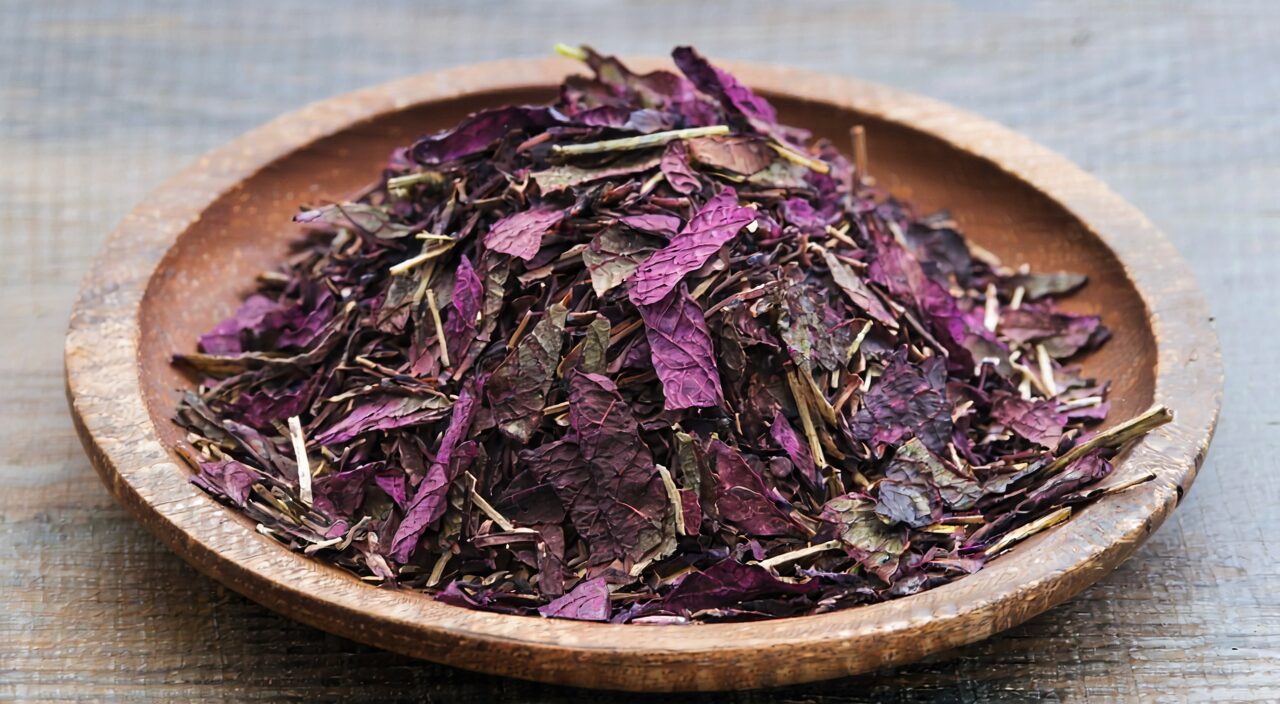
The medicinal part of perilla leaf is very clearly defined: it is the dried leaf of perilla, sometimes with a few tender stem tips attached. The harvest time is generally in summer when the branches and leaves are lush and the flowers have not yet opened. At this stage, the active components in the leaves are relatively concentrated, and the aroma is quite intense. After harvesting, old stems and impurities are removed, and the material is dried in the shade or at low temperature, yielding the common Chinese herbal decoction pieces.
In the dispensed herb state, perilla leaf often presents as crumpled and curled leaf fragments. Intact leaves may be uncommon in the package, but some fragments with petioles can still be seen. The upper surface of these fragments is mostly green-purple or purple, while the lower surface is usually a bit lighter in color. The texture is thin and brittle, easily crushed with a gentle pinch. As a medicinal part, the leaf is the most focused-on part of the whole perilla plant.
How Does Traditional Chinese Medicine Understand Perilla Leaf?
In traditional Chinese medicine, the understanding of perilla leaf mainly centers on three directions: releasing the exterior, moving qi, and harmonizing.
First, releasing the exterior and dispersing cold. Perilla leaf is pungent in flavor and warm in nature, and traditionally enters the Lung and Spleen meridians. It is commonly used during the initial stages of external wind-cold, when there are symptoms such as aversion to cold, a sensation of fever, or heaviness and soreness in the body. The emergence of this application approach is likely related to its pungent-dispersing, warm-unblocking characteristics.
Second, moving qi and harmonizing the stomach. When there is chest tightness, nausea, epigastric fullness, or loss of appetite, much traditional experience holds that perilla leaf can assist the smooth flow of qi in the gastrointestinal tract. For this reason, it is often combined with ingredients such as tangerine peel (chenpi) and amomum fruit (sharen) for patterns of stomach discomfort related to qi stagnation.
Third, calming the fetus. In traditional gynecological thinking, when threatened miscarriage is viewed as linked to disharmonious qi movement, perilla leaf may be used to rectify qi and calm the fetus. Naturally, this approach needs to be tailored to the individual’s constitution and conducted under the guidance of an experienced Chinese medicine practitioner.
In addition, perilla leaf has a very practical use in daily life – counteracting fish and crab toxins. Traditionally, adding perilla leaf when cooking fish or crab not only removes fishiness and enhances flavor but also can help relieve some of the discomfort that easily occurs after eating seafood. However, this refers to a mitigating effect at the dietary coordination level. If one has a clear history of allergy to fish or crab, perilla leaf alone cannot resolve the problem.
Which Components and Effects Are of Interest in Modern Research?
At the modern scientific research level, the components of perilla leaf that have received attention mainly include volatile oils (such as perillaldehyde and perilla ketone), flavonoids, and rosmarinic acid, among others. Some studies suggest that these components may help the body reduce oxidative stress and discomfort, and some research mentions possible influences on airborne allergens. However, these studies are largely in vitro experiments or animal studies. As for what the situation might be in humans, it cannot yet be directly extrapolated into clear-cut “therapeutic effects.” More often, these serve as modern annotations for the traditional directions of use.
What Are the Differences Between Perilla Leaf, Perilla Stem, and Perilla Seed?
The leaf, stem, and fruit of perilla are used as separate medicinal substances in Chinese medicine, namely perilla leaf (Zi Su Ye), perilla stem (Zi Su Geng), and perilla seed (Zi Su Zi). Although all three originate from the same plant, their medicinal parts differ, and there are clear differences in their traditional application emphases.
Perilla leaf uses the leaf blade and a small amount of tender branches, focusing on releasing the exterior and dispersing cold, moving qi, and harmonizing the stomach. It also appears in formulas that regulate qi dynamic and relieve early-stage externally contracted discomfort. Perilla stem is the dried stem collected in autumn; it can likewise regulate qi but is better at loosening the center and rectifying qi, and calming the fetus. It is used for chest tightness, stomach bloating, or early pregnancy discomfort. In comparison, perilla leaf’s dispersing nature is stronger, while perilla stem tends more toward rectifying qi and harmonizing the middle—showing a difference in addressing internal qi stagnation.
Perilla seed uses the dried ripe fruit, which is as small as millet. Its main directions are to direct qi downward and transform phlegm, moisten the intestines, and promote bowel movements. It is commonly used for patterns of cough with profuse phlegm, qi counterflow and wheezing, and dry-intestine constipation. Its emphasis on releasing the exterior or regulating qi is not quite the same as that of the leaf and stem. Therefore, even though they all come from perilla, they cannot be used interchangeably.
Which Formulas Use Perilla Leaf?
In many classic formulas, perilla leaf appears in the role of “minister” or “adjuvant,” and its action is mostly assisting the chief herb in dispersing exterior pathogens, harmonizing the stomach, and moving qi. Below are four relatively common formulas that can serve as references when understanding traditional application approaches.
- Xiang Su San: Composed of cyperus (xiangfu), perilla leaf, tangerine peel (chenpi), licorice (gancao), and others. Traditionally it is often used for externally contracted wind-cold complicated by qi stagnation, with manifestations such as mild chills, headache, stomach bloating, or poor appetite. In the formula, perilla leaf assists in inducing sweating to release the exterior, moving qi, and harmonizing the middle. Suitability needs to be judged on whether exterior cold and qi stagnation are both present.
- Xing Su San: With apricot kernel (xingren) and perilla leaf as the main ingredients, combined with peucedanum root (qianhu), platycodon root (jiegeng), and others, this is often used for manifestations of cool-dryness cough – that is, dry cough, scant phlegm, nasal congestion, and dry throat that appear after the weather turns cool. Here, perilla leaf mainly exerts the actions of gently dispersing cool dryness, regulating the lung, and harmonizing the stomach.
- Huoxiang Zhengqi San: This formula is relatively well known. Perilla leaf is used together with patchouli (huoxiang), angelica root (baizhi), magnolia bark (houpo), and others. It is traditionally applied to externally contracted wind-cold with internal damage from dampness, with symptoms such as aversion to cold, sensation of fever, nausea, diarrhea, and abdominal bloating. In it, perilla leaf assists in releasing the exterior, transforming dampness, moving qi, and harmonizing the stomach.
- Banxia Houpo Tang: Composed of pinellia rhizome (banxia), magnolia bark (houpo), poria (fuling), fresh ginger (shengjiang), and perilla leaf. The original formula targets “plum-pit qi,” a condition where one feels a foreign body sensation in the throat that cannot be spat out or swallowed down. In this formula, perilla leaf is employed for its actions of moving qi, dispersing binding, directing rebellious qi downward, and harmonizing the middle.
The above formulas are merely examples of traditional application directions and do not mean that whenever the corresponding manifestations appear the formula is suitable. Suitability must be determined by considering individual constitution, detailed symptomatology, tongue and pulse presentation, and the pattern differentiation of a professional Chinese medicine practitioner. One should not apply them mechanically without systematic evaluation.
What Precautions Should Be Taken When Using Perilla Leaf?
Although perilla leaf is widely used both medicinally and as food, there are still aspects that require attention.
Traditional experience widely holds that people with qi deficiency and an insecure exterior who tend to sweat spontaneously need to be more cautious when using perilla leaf, because its pungent-dispersing nature may exacerbate this condition. Likewise, during the early stage of warm-heat diseases or when there is pronounced interior heat – for example, high fever, obvious thirst, red, swollen, and sore throat – it is generally not advisable to use perilla leaf alone or in heavy doses.
Moreover, perilla leaf’s “counteract fish and crab toxins” is merely an auxiliary measure at the dietary therapy level. If a definite food allergy occurs, such as large areas of skin rash, swelling of the lips and tongue, or difficulty breathing, one must seek medical help as quickly as possible and not self-treat with perilla leaf. Those with a known allergy to perilla or its components should also try to avoid contact and use.
Summary
In traditional Chinese medicine, perilla leaf is a very representative pungent-warm exterior-releasing herb. It is easily recognized by its leaf shape, color, and aromatic odor. Its medicinal part is the dried leaf or leaf with tender branch tips. Compared with perilla stem and perilla seed, perilla leaf leans more toward releasing the exterior, dispersing cold, moving qi, and harmonizing the stomach. Many classic formulas, such as Xiang Su San, Xing Su San, Huoxiang Zhengqi San, and Banxia Houpo Tang, include it, but these applications are all based on pattern differentiation. Since individual constitutions vary, whether one needs to use perilla leaf should ultimately be determined by the professional judgment of a Chinese medicine practitioner.