
What Is Cang Er Zi? Medicinal Parts, Identification, and Common Formulas
Many people living abroad may notice small spiky fruits in grasslands or along roadsides that easily cling to clothing or pet fur. This plant is cocklebur, and its dried mature fruit with the involucre is known as Cang Er Zi in traditional Chinese medicine. For those with persistent nasal issues who are interested in herbal approaches, Cang Er Zi is a frequently mentioned name. However, it is also an herb that requires special caution regarding safety. This article will outline basic information about Cang Er Zi from aspects such as appearance identification, medicinal parts, traditional understanding, and common formulas.
What Does Cang Er Zi Look Like? How to Identify It?
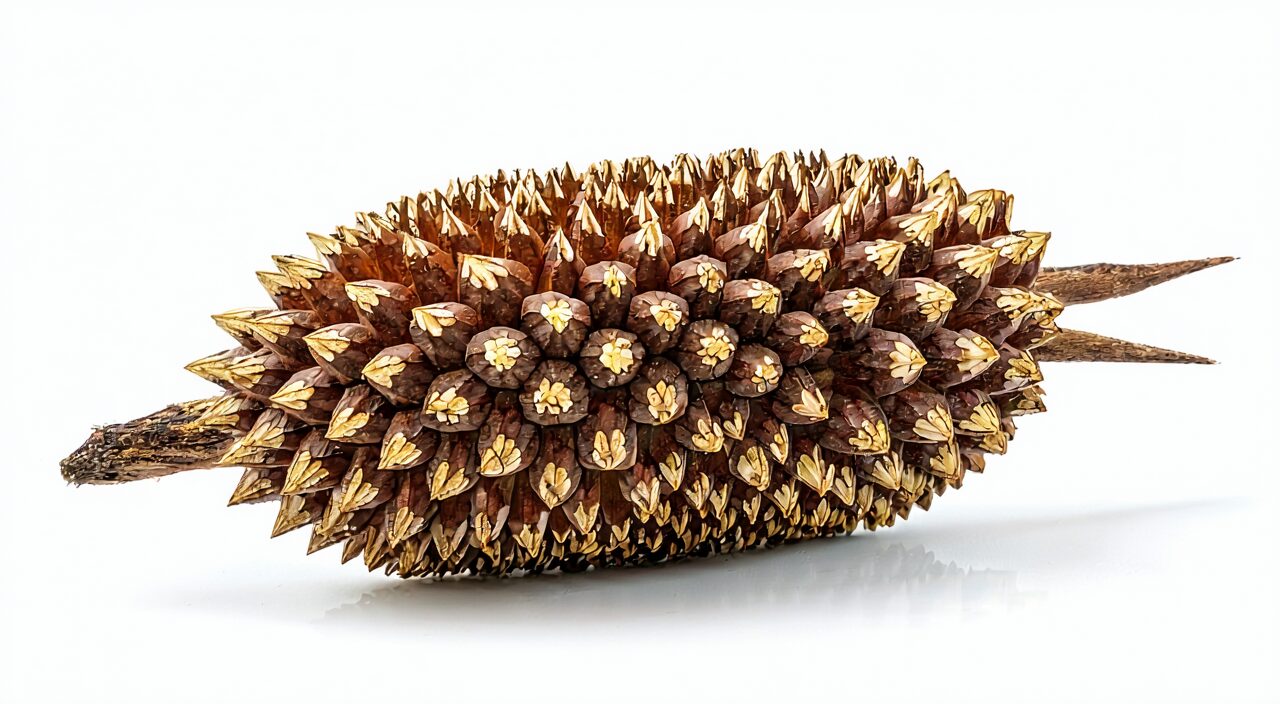
Cang Er Zi does not simply refer to the seed of the cocklebur plant, but to the whole fruit enclosed in its involucre. Its appearance is quite distinctive; remembering a few key features will help you recognize it in herbal pharmacies or in plant photographs.
Dried Cang Er Zi is spindle-shaped or oval, about 1–1.5 cm long and 0.5–0.8 cm in diameter. Its surface is yellowish-brown or yellowish-green, densely covered with hooked spines. These spines are sharp and stiff, easily catching onto fibers—this is how the cocklebur disperses its seeds. At the apex, two relatively large beak-like projections can be seen, resembling small horns; these are the bifurcation of the involucre. The base shows traces of the fruit stalk, and sometimes a short remnant stem is still visible.
If you cut open the spiny involucre, you will find the true fruit inside—an achene. The achene is spindle-shaped with longitudinal ridges on the surface, and after peeling off the seed coat, you can see the oily kernel. In herbal medicine, the fruit is usually not shelled; the whole fruit with its involucre is used directly. When identifying Cang Er Zi, note that the density of spines and shades of color may vary slightly depending on the region of origin, but the three characteristics—spindle shape, hooked spines, and the two beaks—are generally very consistent.
What Is the Medicinal Part of Cang Er Zi?
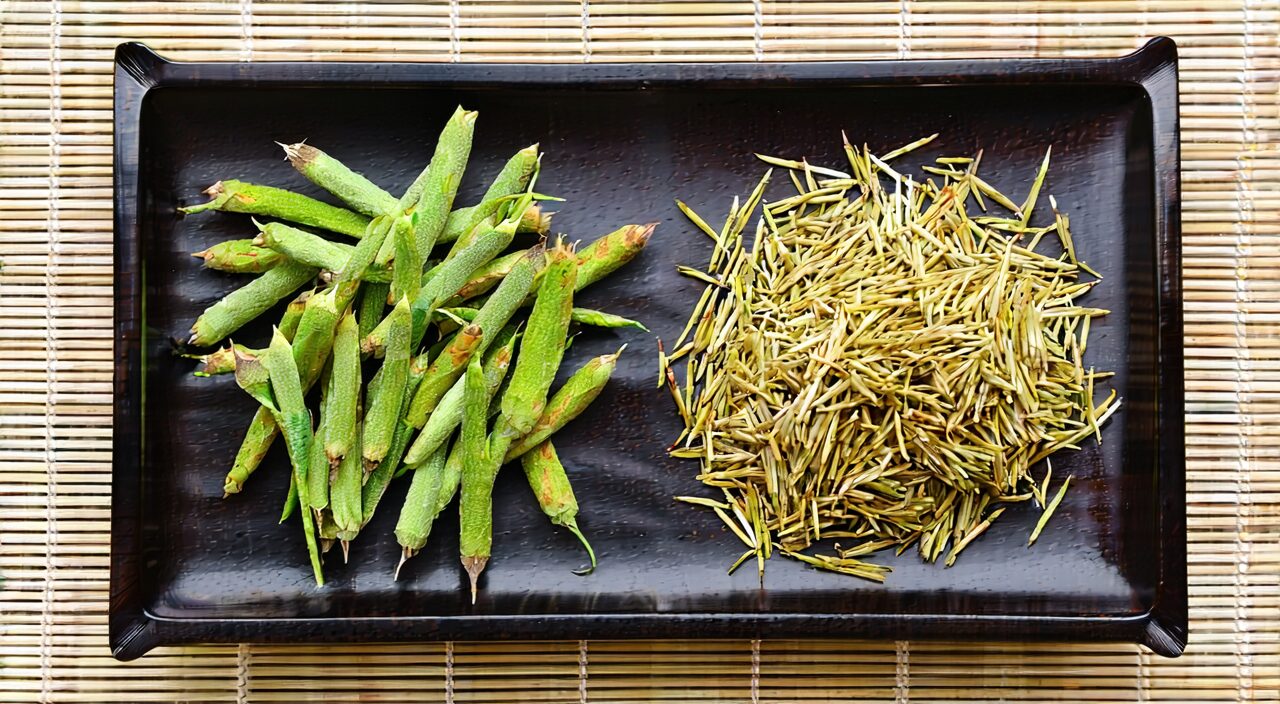
The medicinal part of Cang Er Zi is clearly defined: it is the mature fruit of the cocklebur plant with the involucre intact. It is harvested in autumn when the fruit matures and changes color from green to yellow. After cutting off the stems and branches and drying in the sun, it becomes the medicinal material. Because the hooked spines on the involucre are prickly to handle and the raw herb may possess some toxicity, raw Cang Er Zi is almost never used directly in clinical practice.
Traditionally, Cang Er Zi must be processed by stir-frying. The common method is dry-frying, which means stir-frying it over a gentle flame until the surface turns yellowish-brown and the spine tips become scorched and brittle. The stir-frying process can cause some of the hooked spines to break off or become blunt, making it easier to handle and decoct, while also reducing the potential adverse effects of the raw herb. Stir-fried Cang Er Zi has a deeper surface color, sometimes slightly puffed up, and exudes a distinctive aroma; the tips of the spines often have fallen off. In Chinese herbal formulas, when “Cang Er Zi” is listed without further specification, it generally refers to the stir-fried product. Understanding this detail is very important for the safe use of this herb.
How Does Traditional Chinese Medicine Understand Cang Er Zi?
In traditional Chinese medicine theory, Cang Er Zi is pungent and bitter in taste, warm in nature, and mainly enters the Lung meridian. Its actions are often summarized as dispersing wind-cold, unblocking nasal passages, and expelling wind-dampness.
The idea of dispersing wind-cold and unblocking nasal passages is the most frequently mentioned aspect of Cang Er Zi. Classical texts suggest that when wind-cold binds the exterior and Lung qi fails to diffuse, the nasal orifices easily become congested, leading to symptoms such as stuffy nose, clear nasal discharge, and a dull frontal headache. Cang Er Zi is warm and has an upward-dispersing nature, helping to dispel wind-cold from the exterior while opening the nasal passages. Therefore, it has traditionally been used in formulas aimed at nasal congestion as the primary manifestation.
Expelling wind-dampness is another aspect. TCM holds that when wind, cold, and dampness pathogens invade the channels and joints, they cause limb pain and impaired movement. Cang Er Zi, with its pungent dispersing and warm unblocking properties, is also used in some traditional formulas for joint heaviness and stiffness. However, compared to its application in nasal conditions, this use is relatively less common today.
It should be added that Cang Er Zi is not suitable for all types of nasal discomfort. In traditional understanding, if a person has a heat tendency, thick yellow nasal discharge, or prominent yin deficiency with internal heat, using Cang Er Zi may actually worsen the condition. For this reason, it is usually used as one ingredient in a complete formula rather than taken alone in large doses.
Components and Safety Considerations in Modern Research
Modern phytochemical research has isolated various components from Cang Er Zi, including sesquiterpene lactones, xanthium glycoside (cang er zi gan), flavonoids, phenolic acids, and fatty oils. Among these, xanthium glycoside and certain water-soluble toxic proteins are the primary focus of attention.
Research has found that the toxic components of Cang Er Zi can be partially destroyed by high-temperature processing, which is one reason why the raw herb is not recommended for direct use. Overdose or long-term use of Cang Er Zi may cause damage to the liver and kidneys, and in severe cases can even lead to edema, reduced urine output, and jaundice. These risks have been reported in both animal experiments and clinical observations.
Of course, with proper processing and combination, these components can also exhibit anti-inflammatory, analgesic, and other activities. However, precisely because of this dual nature, modern research generally emphasizes that Cang Er Zi should only be used under strict control of quality, processing methods, and scope of application.
What Are the Differences Between Cang Er Zi and Xin Yi?
Cang Er Zi and Xin Yi are often mentioned together for their ability to disperse wind-cold and unblock nasal passages, and they sometimes even appear in the same formula. However, they are actually two completely different herbs.
In terms of source, Cang Er Zi is the involucre-covered fruit of the cocklebur, belonging to the fruit category; Xin Yi is the dried flower bud of Magnolia species such as Magnolia biondii or Magnolia denudata, belonging to the flower category. The difference in appearance is quite obvious: Cang Er Zi is a small grayish-yellow-brown, spiny, oval fruit, while Xin Yi is shaped like a writing brush tip, elongated oval, covered with grayish-white fuzz and without spines.
In terms of traditional application focus, although both can unblock nasal passages, Xin Yi is more inclined to disperse wind-cold and relieve pain by opening the orifices, especially for frontal headaches accompanied by nasal congestion and discharge; it is used more frequently for such conditions. Cang Er Zi, in addition to unblocking nasal passages, also has the effect of expelling wind-dampness. In formulas, Cang Er Zi is often combined with Xin Yi and further balanced with other herbs to moderate their respective natures, such as adding Bo He (mint) and Bai Zhi (angelica root), to regulate lung qi from different angles.
Which Formulas Use Cang Er Zi?
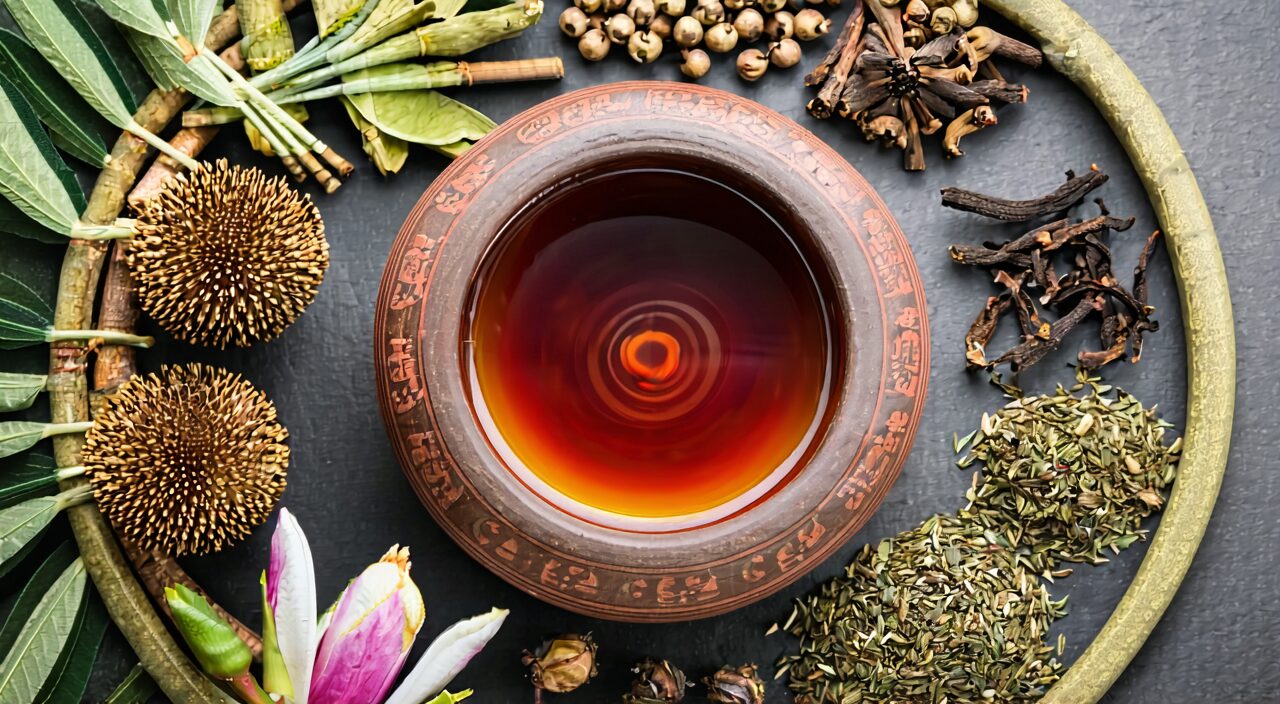
In traditional formulas, Cang Er Zi is rarely used alone; instead, it appears as one ingredient in dozens or even hundreds of compound prescriptions. Below are a few well-known formulas and patent medicines to illustrate the traditional application context.
Cang Er Zi San (Cocklebur Fruit Powder) originates from Ji Sheng Fang (Formulas to Aid the Living) and is often regarded as the classic formula centered on Cang Er Zi. Its basic composition includes Cang Er Zi, Xin Yi, Bai Zhi, and others, traditionally used for patterns of wind-cold binding the exterior, nasal congestion, clear nasal discharge, and frontal headache. In this formula, Cang Er Zi and Xin Yi work together to open the nasal passages, while Bai Zhi disperses wind and alleviates pain. However, this formula tends to be warm and drying; whether it is suitable needs to be assessed in light of individual constitution—for example, in cases of frequent aversion to cold with profuse clear discharge, more careful judgment is required.
Xin Yi San (Magnolia Flower Powder), although centered on Xin Yi, often includes Cang Er Zi as a supporting ingredient. This formula also targets the Lung meridian with a similar direction of action, but its composition differs—it includes Sheng Ma (cimicifuga), Fang Feng (siler), Chuan Xiong (ligusticum), etc., with an overall approach more inclined to disperse wind-heat and open the orifices.
Bi Yuan Tong Qiao Ke Li (Nasal Congestion Orifice-Opening Granules) is a modern patent medicine formulated with Cang Er Zi, Xin Yi, Huang Qin (scutellaria), Bo He (mint), Ma Huang (ephedra), and others, often used for conditions characterized by severe nasal congestion, thick nasal discharge, and reduced sense of smell. As a ready-made product, its scope of use is relatively defined, but it is still essential to refer to the product instructions and make a comprehensive judgment based on specific symptoms, constitution, and advice from a professional.
These formulas each have their own emphasis and are by no means universal remedies. Different presentations of the body may call for completely different approaches; never attempt to combine them on your own.
What Precautions Should Be Taken When Using Cang Er Zi?
This section is perhaps the most important to emphasize. Because Cang Er Zi indeed carries potential toxicity, several key risk points must be understood in advance.
First, raw Cang Er Zi should never be used directly. The toxic components in raw material have not been destroyed by heat; decocting or powdering it after wild-harvesting poses a high risk. Even stir-fried Cang Er Zi is not recommended for large-dose or long-term use as a single herb. In traditional practice, the therapeutic range of Cang Er Zi is usually strictly controlled, and it is always processed and combined with other herbs to reduce toxicity.
Second, for people with pre-existing poor liver or kidney function, as well as children and women during pregnancy or breastfeeding, use of Cang Er Zi is traditionally avoided. Its toxicity is sensitive to the liver and kidneys and may aggravate existing conditions; children’s organ functions are immature, making the risk even greater.
Furthermore, if symptoms such as nausea, vomiting, sudden loss of appetite, fatigue, or darkened urine occur after taking formulas containing Cang Er Zi, discontinue use immediately and seek medical assistance. Some adverse reactions may be subtle in the early stages and easily overlooked.
Finally, it is worth reminding overseas users that they may come across Cang Er Zi materials that have not undergone proper processing, or products of unknown origin. Such herbs lack standardized processing criteria, and their actual component levels can vary widely, so extra caution is needed during use. Regardless of the dosage form, it is advisable to consult a TCM practitioner or a qualified professional to determine suitability based on your individual condition.
Summary
Cang Er Zi is an herb with highly recognizable features and a clear tradition of use, but it is also one that requires an extra level of caution. Its spindly, spiny appearance, the medicinal use of the whole fruit with its involucre, and its frequent pairing with Xin Yi form the basic framework for understanding it. Whether in Cang Er Zi San or other related formulas, it reflects the TCM approach of regulating the body by dispersing wind-cold and unblocking nasal passages. However, because its constituents are somewhat toxic, improper self-administration can carry risks such as liver and kidney damage. This article is intended only as informational reference and cannot replace professional diagnosis or treatment advice. Any decisions regarding the use of herbs should be made in consultation with a qualified TCM practitioner or healthcare professional.