
What Is Peppermint? Medicinal Parts, Identification, and Common Formulas
Many people encounter mint in gardens or tea, but the mint used in Chinese medicine is both related to and distinct from everyday fresh leaves. This article organizes basic information about mint from perspectives such as visual identification, medicinal parts, traditional understanding, comparison with similar plants, and common formulas, helping readers build a relatively complete framework of understanding.
What Does Mint Look Like? How to Identify It?
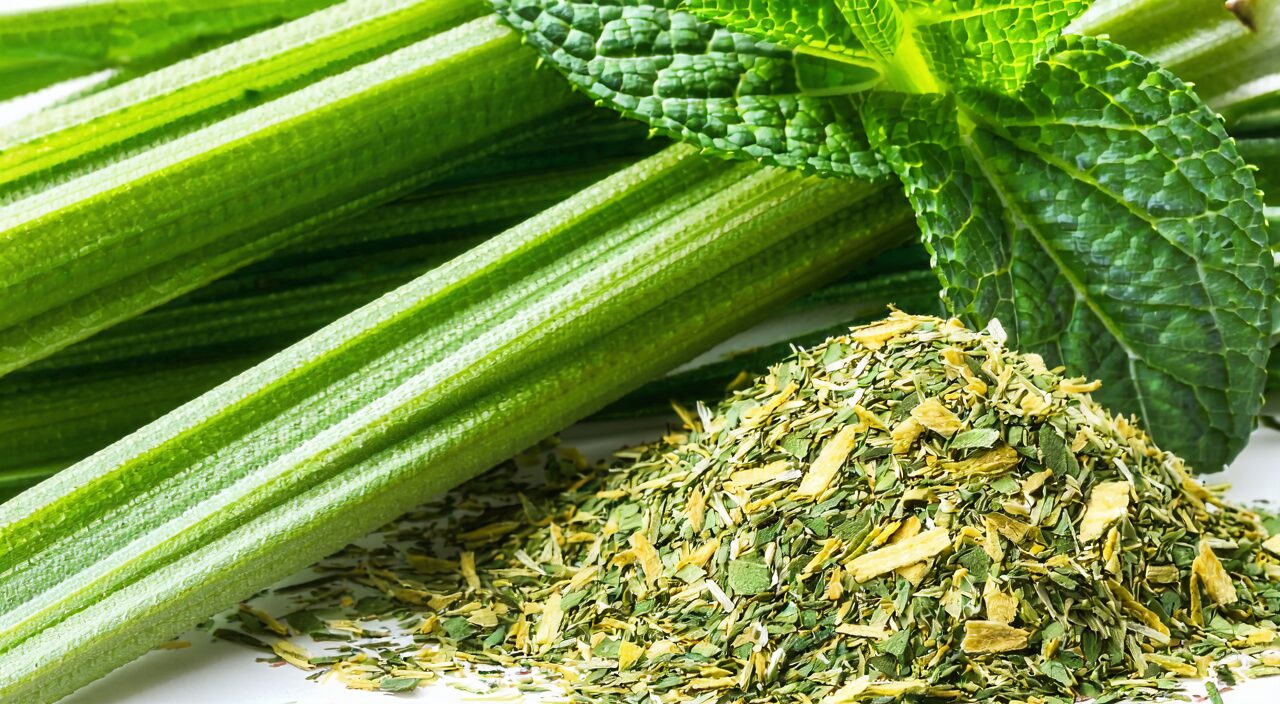
Peppermint is an herb of the Mentha genus in the Lamiaceae family. Its erect stem is square with four distinct ridges, a typical feature of the mint family. The leaves are opposite, with one leaf growing on each side of each node. The leaf blades are mostly ovate or oblong-lanceolate with fine serrations on the margins and often have short hairs on the surface. When fresh leaves are crushed, they release a strong, refreshing cool aroma—this coolness is clear and penetrating without being harsh. After drying, peppermint pieces usually appear as irregular yellow-green fragments. Upon close inspection, you can still see the square stem pieces, serrated leaf fragments, and residual hairs. Grab a small handful and gently rub it in your palm; the cooling scent will be released immediately, an important characteristic retained by the dried product. For general enthusiasts, mastering the square stems, opposite leaves, serrations, and cooling scent provides a basic identification approach.
What Are the Medicinal Parts of Peppermint?
Medicinal mint is derived from the dried aerial parts of the plant, meaning both the stems and leaves are used, but not the roots. Harvesting typically occurs in summer and autumn when the stems and leaves are lush and before the flowers fully bloom. The aerial parts are cut, impurities removed, and then sun-dried or dried in a well-ventilated shade; sometimes they are cut into sections for storage and dispensing. Mint’s fresh aroma comes from its volatile oil. In traditional decoction, it is explicitly required to be added near the end—throwing the mint in only when the other herbs are almost done and cooking for an additional three to five minutes. This helps preserve its nature and flavor, preventing the loss of aromatic compounds from prolonged heating. This handling method reflects the nuanced understanding of plant properties in traditional medicine.
How Does Chinese Medicine Understand Peppermint?
In traditional Chinese medicine theory, peppermint is often classified as an acrid-cool exterior-releasing herb, and its actions are understood through the following aspects:
- Disperses wind-heat: When externally contracted wind-heat causes fever, slight aversion to wind and cold, dry mouth and throat, peppermint is commonly used together with herbs like honeysuckle and forsythia to help vent out the wind-heat pathogenic factors and relieve early exterior-heat discomfort.
- Clears and benefits the head and eyes, soothes the throat: Peppermint is acrid and cool in nature, light and ascending. Traditionally, it is believed to ascend to the head and eyes, clearing and opening the orifices for conditions such as headache, red eyes, and sore throat caused by wind-heat attacking the upper body.
- Facilitates rash expression: In early stages of measles when the rash is not fully expressed, peppermint can help other herbs promote the smooth outward expression of the rash, preventing the pathogenic qi from sinking inward.
- Soothes the liver and moves qi: Peppermint enters the liver meridian and can disperse liver qi stagnation. For emotional distress, chest and rib-side distension, small amounts of peppermint are traditionally added to liver-regulating formulas to help regulate qi movement.
These understandings come from generations of clinical experience and are not therapeutic promises for specific diseases. Their applicability needs to be assessed in conjunction with individual constitution, current manifestations, and under the guidance of experienced practitioners.
Brief Overview of Modern Research
Modern research shows that peppermint essential oil contains constituents such as menthol and menthone. Menthol can activate cold receptors on the skin and mucous membranes, producing a cooling sensation. A small number of in vitro and animal studies suggest it may have antibacterial effects or relax smooth muscle, but most of these findings remain at the laboratory stage. Therefore, insights from traditional usage should not be simply extrapolated into medical conclusions.
How Do Peppermint, Spearmint, and Perilla Leaf Differ?
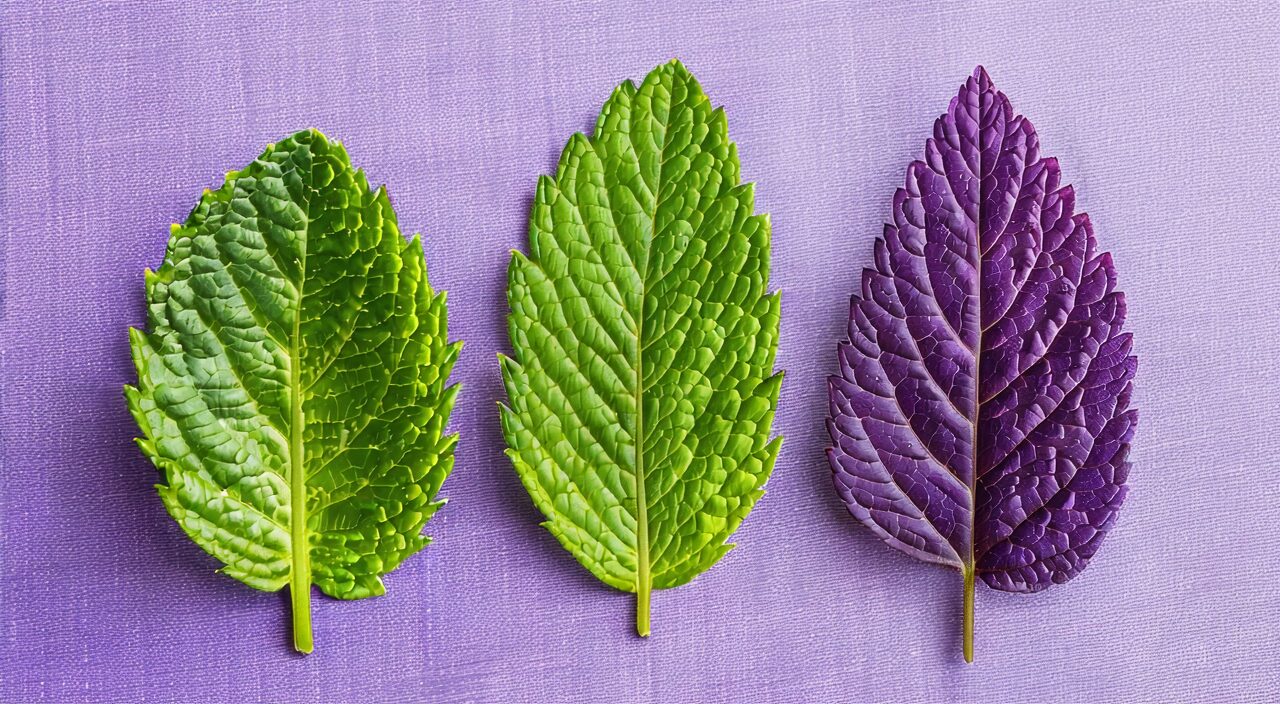
In daily identification, peppermint is easily confused with spearmint and perilla leaf. Here are some practical distinguishing features:
- Spearmint: Spearmint’s most distinctive feature is its sweet, green aroma, reminiscent of familiar chewing gum, whereas peppermint’s scent is almost without sweetness, dominated by a pure cooling sensation. In appearance, spearmint leaves are often more wrinkled, darker green, and less flat than peppermint leaves. In traditional use, spearmint is more often used as a flavoring spice rather than as a Chinese medicinal herb for dispersing wind-heat.
- Perilla leaf: Perilla leaves are relatively wide and broadly ovate, with coarsely serrated margins and a distinctly purplish underside. When crushed, they release an acrid-warm, distinctive aroma that is completely different from peppermint’s coolness. Perilla primarily enters the lung and spleen meridians in traditional theory and is commonly used to disperse wind-cold and harmonize the stomach. Its nature is warm, exactly opposite to peppermint’s cool-dispersing property.
For ordinary users, the simplest way to tell them apart is by scent: cool and not sweet is peppermint; sweet-smelling is mostly spearmint; if you detect an acrid-warm scent and the leaves have purple coloring, then perilla leaf is likely.
Which Formulas Use Peppermint?
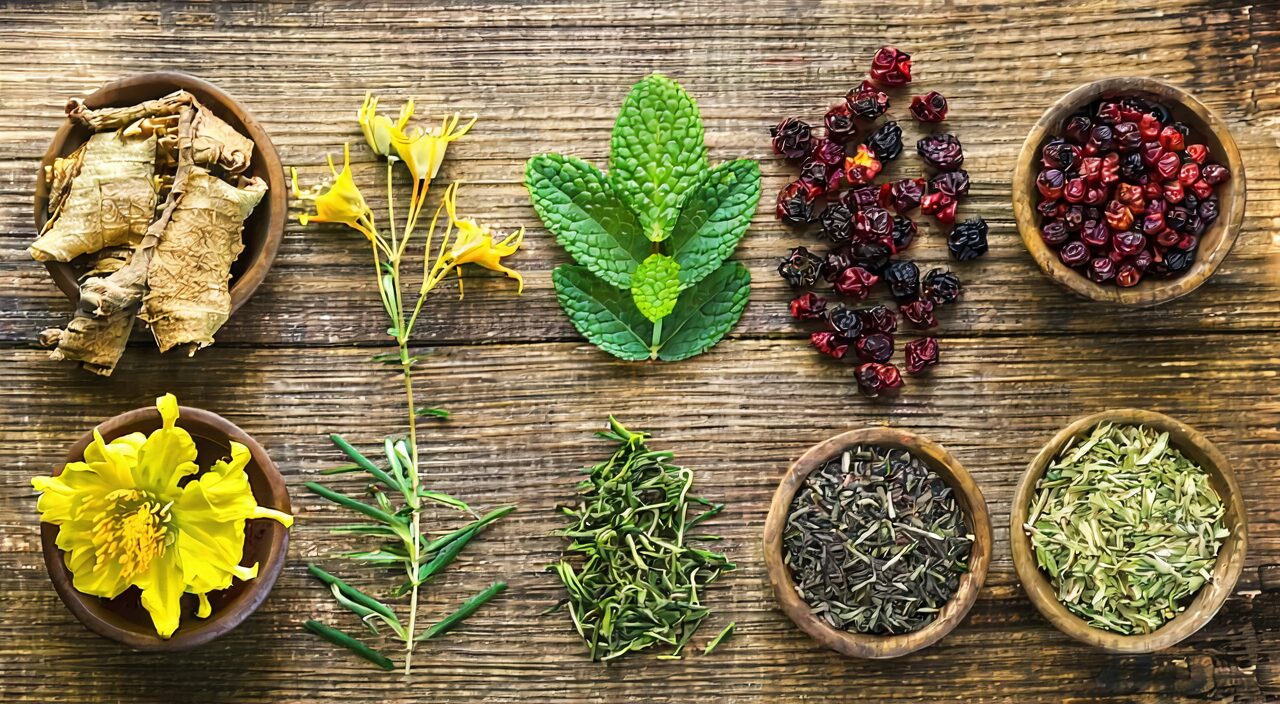
Although peppermint often plays a supporting role in many well-known formulas, it is indispensable. Here are a few common formulas and their traditional application ideas:
- Yinqiao San (Lonicera and Forsythia Powder): With honeysuckle and forsythia as the chief herbs, combined with peppermint, burdock fruit, etc., this formula is often referenced in Chinese medicine at the early stage of warm diseases when wind-heat invades the exterior. Peppermint assists in dispersing wind-heat and benefits the throat to relieve toxicity.
- Sang Ju Yin (Mulberry Leaf and Chrysanthemum Decoction): Mulberry leaf and chrysanthemum are the main ingredients, assisted by apricot kernel, forsythia, peppermint, etc. It is often used in the early stage of wind-warmth when cough is predominant and fever is not severe. Peppermint exerts its light, clearing effect to expel pathogens and diffuse lung qi.
- Xiaoyao San (Free and Easy Wanderer Powder): A classic formula for soothing the liver and nourishing the blood, composed of bupleurum, angelica root, white peony root, atractylodes, etc. A small amount of peppermint in the formula helps bupleurum resolve liver depression and enhances the formula’s regulating action.
- Chuanxiong Chatiao San (Ligusticum Tea-Mix Powder): Specializing in headache relief, it combines ligusticum, angelica dahurica, notopterygium, asarum, saposhnikovia, etc., with peppermint. Peppermint’s acrid-cool, upward-ascending nature clears the head and eyes and counterbalances the warm-dryness of the other herbs.
The application of these formulas is based on traditional syndrome differentiation. Individual manifestations and constitutions vary greatly. Whether they are suitable for your situation should be considered in combination with product instructions and comprehensive professional opinions; they should not be applied by oneself simplistically.
What Should Be Noted When Using Peppermint?
Although peppermint is common in daily life, the following situations warrant attention:
- Those with qi deficiency and spontaneous sweating: Peppermint has a relatively strong dispersing effect. If you are often easily fatigued, have a weak voice, or sweat with slight exertion, long-term or large quantities may worsen qi deficiency. Such constitutions should be cautious.
- Breastfeeding women: Traditional experience holds that peppermint may reduce milk supply. Although views differ, for safety, breastfeeding women should consult a Chinese medicine practitioner or lactation consultant before using products containing peppermint.
- People with gastroesophageal reflux: Some studies suggest that peppermint can relax the lower esophageal sphincter, thereby worsening reflux and heartburn symptoms. Those with such conditions need to be especially careful when ingesting peppermint.
- Topical use of essential oil: Peppermint essential oil is highly concentrated. Applying it directly to the skin can easily cause irritation or even burns. It must be thoroughly diluted and used under professional guidance, especially on the face and in children.
If you experience recurrent headaches, chest and epigastric stuffiness, or other symptoms that persist or worsen, do not rely solely on peppermint products but seek medical help promptly.
Summary
Peppermint is a highly recognizable medicinal herb. Its square stems, opposite leaves, and cooling scent allow for quick identification. The medicinal part is the dried aerial part, and decocting it by adding near the end is a classic method. From the perspective of Chinese medicine, peppermint is applied in dispersing wind-heat, benefiting the throat and promoting rash expression, and soothing the liver and moving qi. It is clearly distinct from spearmint and perilla leaf in aroma and traditional use. Although peppermint is a common plant, caution is needed in cases of qi deficiency, breastfeeding, and gastroesophageal reflux. Professional advice should be sought when necessary. This article is for knowledge sharing only and cannot replace professional diagnosis or treatment advice.