
What Is Burdock Fruit (Niu Bang Zi)? Medicinal Part, Identification, and Common Formulas
When exploring traditional formulas or herbal approaches, “Niu Bang Zi” (burdock fruit) is a name that often sparks curiosity. Many people think of burdock root, but in fact, burdock fruit and burdock root come from the same plant yet represent different parts, with distinct appearances and uses. This article covers the source, appearance, medicinal part, traditional understanding, differences from burdock root, and some common formulas involving Niu Bang Zi, offering overseas Chinese readers a clear and practical general reference.
What does burdock fruit look like? How to identify it
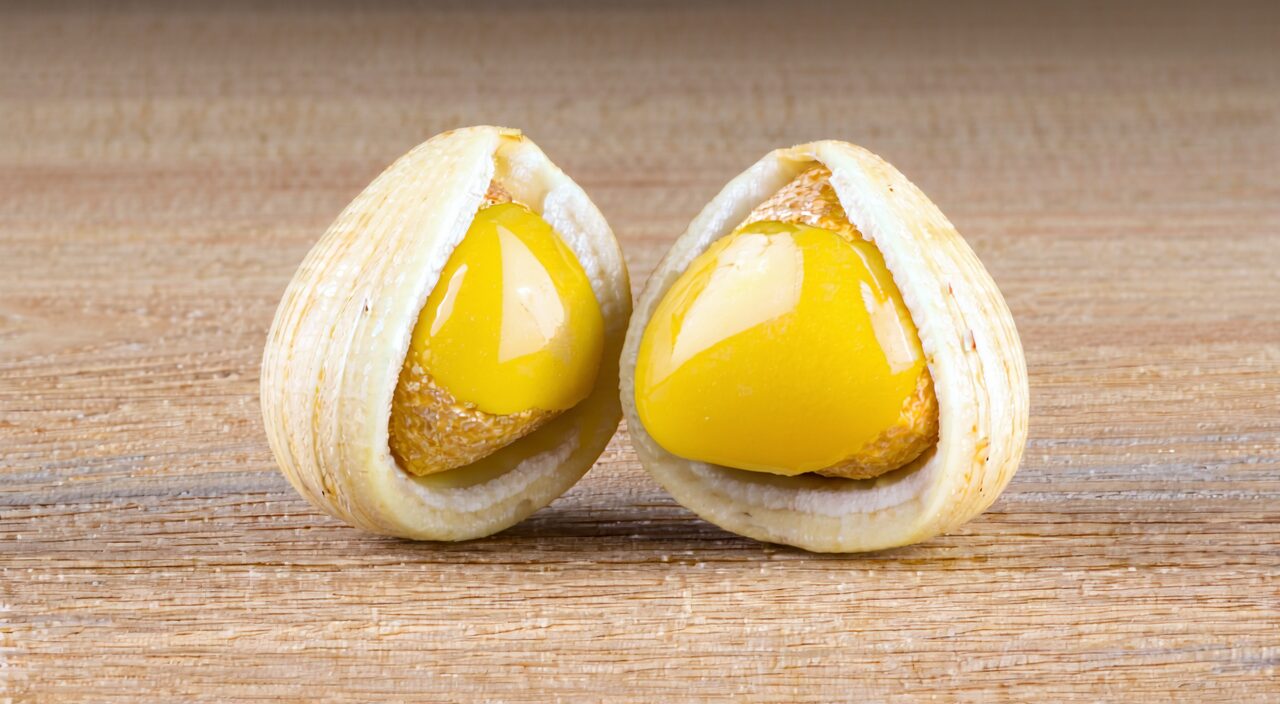
Burdock fruit is the mature fruit of the burdock plant. When used as a medicinal material, it is usually an elongated, obovate achene, slightly flattened with both ends somewhat pointed. The intact surface is mostly grayish-brown or brownish-gray, often with slightly darker speckles and several raised longitudinal ridges. Between the ridges, there are fine, transverse wrinkles, and the overall texture is relatively hard.
After breaking open the outer shell, a yellowish-white kernel is visible, rich in oil. When crushed, it gives off a distinctive oily smell. If pressed firmly on paper, it often leaves an oil stain. In herb identification, these oily characteristics, along with the longitudinal ridges and speckles, are key points to observe. Because some adulterants appear on the market, the preferred quality is generally plump, full grains with a grayish-brown husk and no insect damage. There are also dry-fried Niu Bang Zi, whose surface color becomes slightly darker and smell more pronounced. When identifying, one can assess the appearance, hand feel, and the oily quality of the cut surface for a comprehensive judgment.
What is the medicinal part of burdock fruit?
The medicinal part of Niu Bang Zi is clearly defined as the dried ripe fruit of the burdock plant. Typically, the fruit heads are harvested in autumn when the fruits are ripe, dried in the sun, then the fruits are beaten off, impurities removed, and further dried or dry-fried as needed. Dry-fried Niu Bang Zi is traditionally considered better at promoting outward expression without being overly cold.
It is important to note that although burdock root comes from the same plant, it is a different medicinal part. Burdock root mainly refers to the fleshy taproot and is used more as a food ingredient in some regions, while Niu Bang Zi is the fruit used for medicinal purposes. The two differ in both traditional and modern applications and should not be used interchangeably.
How does Chinese medicine view burdock fruit?
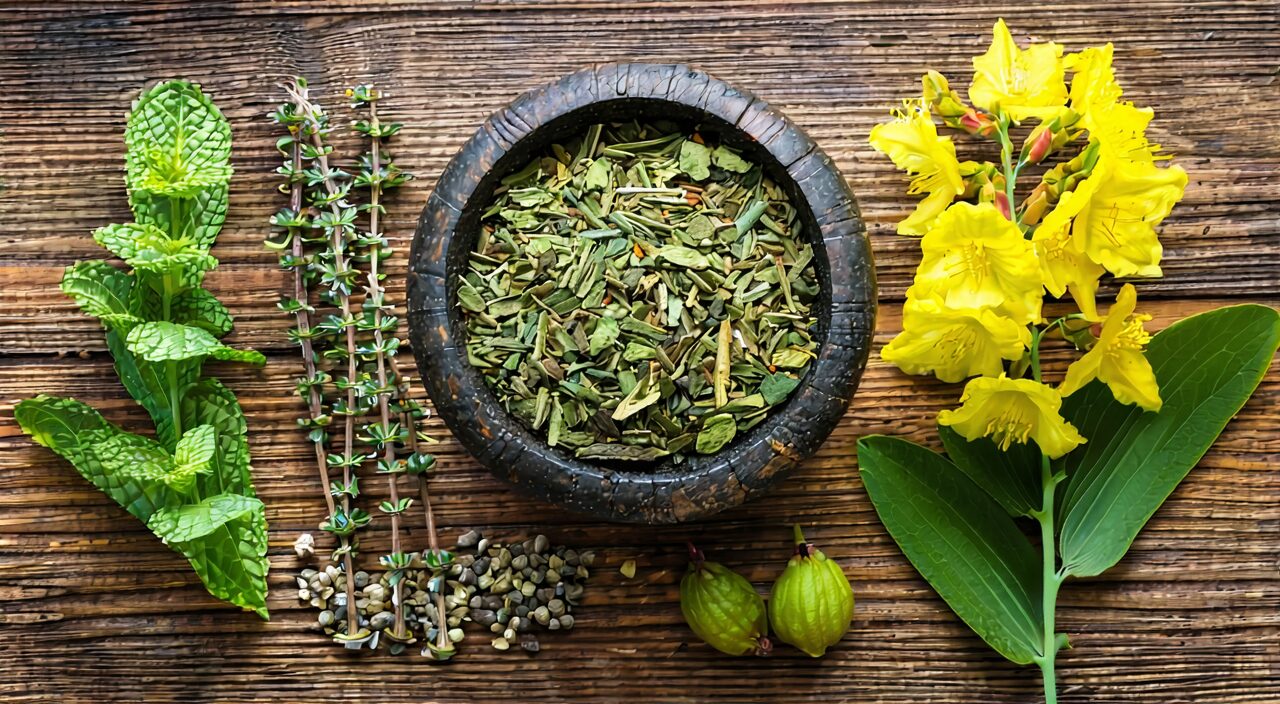
From the Chinese medicine perspective, Niu Bang Zi is generally classified among the wind-heat dispersing herbs, primarily related to the Lung and Stomach meridians. Traditionally, its actions are understood in several directions: First, it disperses wind-heat, being used at the early stages of wind-heat external contraction or warm diseases, often combined with other herbs to help disperse superficial pathogens. Second, it ventilates the lungs and promotes eruption; for early-stage measles with sluggish eruption or wind-rash and itching, Niu Bang Zi may be considered in the treatment strategy because it is thought to help outward expression. Third, it resolves toxicity and benefits the throat; for throat swelling and pain, welling abscesses, and sores due to heat toxin congestion, Niu Bang Zi is sometimes included to take advantage of its heat-clearing and mass-dissipating tendency. In addition, because Niu Bang Zi is moist and can lubricate the intestines, it may both clear superficial pathogens and assist bowel movement in cases of wind-heat with constipation.
However, it should be kept in mind that these are traditional empirical understandings. Whether it is suitable for an individual must be determined by an experienced Chinese medicine professional based on constitution and symptom characteristics. Directly copying a formula is not advisable.
Focus of modern research on burdock fruit
Modern attention on burdock fruit mainly centers on its chemical constituents and preliminary activity studies. Research has found that it contains lignans such as arctiin and arctigenin, as well as fatty acids and volatile oils. Some experiments suggest that burdock fruit extracts may show certain potential in anti-inflammatory, antibacterial, and antiviral aspects, and there are also studies exploring its effect on immune regulation. However, most of these are still in the experimental stage and still have a long way to go before becoming mature clinical applications. This information can serve as a supplementary perspective for understanding burdock fruit and is not intended to imply any disease-treating or preventive function. For health concerns, consultation with a professional physician is still necessary.
What is the difference between burdock fruit and burdock root?
Many people confuse Niu Bang Zi with burdock root because of the similar names, but in fact, the two have clear differences in source, properties, and common usage. Niu Bang Zi uses the fruit of the burdock plant, which is an achene, mostly grayish-brown, hard, and highly oily. Burdock root, on the other hand, is the fleshy taproot, looking like an elongated root vegetable with an earthy-brown skin and white flesh, and is used as a vegetable in some regions.
In traditional use, Niu Bang Zi is more often seen in dispersing wind-heat, promoting eruption, benefiting the throat, and resolving toxicity, while burdock root is often used for clearing heat, reducing swelling, and sometimes as part of dietary therapy. In Japanese food culture, burdock root is relatively common as an ingredient, while Niu Bang Zi rarely appears in the kitchen. If a choice needs to be made at the medicinal level, it is essential to be clear about whether it is the fruit or the root; they cannot be mixed. For daily health maintenance, one should consider personal circumstances and professional advice and avoid self-substitution.
Which formulas use burdock fruit?
Burdock fruit appears in several classic formulas. The following are only a few common examples to help readers understand its traditional combination principles and are not intended as specific treatment suggestions.
Yin Qiao San is a frequently used formula in the warm disease school, composed of honeysuckle flower, forsythia fruit, burdock fruit, mint, and other herbs. It is traditionally used for wind-heat exterior patterns such as fever, mild aversion to wind-cold, sore throat, and thirst. In this context, burdock fruit helps disperse wind-heat and benefit the throat to dissipate masses.
Pu Ji Xiao Du Yin originally contains scutellaria root, coptis rhizome, burdock fruit, silkworm, etc. It is mainly used for conditions like “big head plague” where wind-heat epidemic toxin attacks the head and face. Burdock fruit works together with silkworm and mint to jointly disperse wind-heat, resolve toxicity, and benefit the throat.
Xiao Feng San is often used for skin problems such as wind-rash and eczema. The formula includes schizonepeta, saposhnikovia, burdock fruit, cicada slough, etc. Its traditional idea is to course wind, nourish blood, clear heat, and eliminate dampness. Burdock fruit helps express wind-heat and relieve itching.
Niu Bang Jie Ji Tang features burdock fruit as the chief ingredient, combined with mint, schizonepeta, forsythia fruit, etc. It is frequently used for sores and swelling of the head, face, and neck, or for throat pain caused by wind-heat attacking upward or heat toxin congestion. It functions to course wind, clear heat, and release the muscle layer to expel pathogens.
It should be reminded that the applicable presentations, modifications, and contraindications of these formulas need relatively detailed differentiation. Whether a formula fits a particular person must be judged under the guidance of a professional based on constitution and current symptoms, and should not be chosen by name alone.
What precautions should be taken when using burdock fruit?
Although burdock fruit is commonly seen in various applications, it is not suitable for everyone. Because its nature tends to be slippery and unblocking, traditional experience holds that people with qi deficiency and loose stools or those prone to diarrhea should use it with caution, so as not to increase the burden on the spleen and stomach. Those who easily feel fatigue, have poor appetite, or unformed stools, if considering burdock fruit, are best advised to consult a Chinese medicine practitioner first.
Pregnancy and lactation are special stages during which the use of medicinal herbs requires extra caution. There is currently insufficient safety data on whether burdock fruit is suitable for this population, so it is generally recommended to avoid self-use of products containing burdock fruit during pregnancy. In addition, burdock fruit contains oils; improper storage can easily cause rancidity and spoilage, manifested as a stale oily smell or darkened color. Once an off odor or mold appears, such burdock fruit should no longer be used. Daily storage should be in a cool, dry, light-proof, and airtight environment. Dry-fried burdock fruit should also be used as soon as possible to ensure quality.
If persistent sore throat, unrelenting high fever, recurrent skin rashes, or severe allergic reactions occur, seeking medical attention should be the priority rather than relying solely on a single herb.
Summary
Burdock fruit is a commonly used fruit-based medicinal herb traditionally recognized for dispersing wind-heat, promoting eruption, and benefiting the throat. Its appearance and medicinal part are fundamentally different from burdock root, and its presence in classic formulas such as Yin Qiao San and Pu Ji Xiao Du Yin reflects a specific way of thinking in Chinese medicine formula design. While learning about burdock fruit, it is still important to understand that any medicinal herb must be considered with professional judgment under the premise of constitutional compatibility and symptom suitability. This article is only a popular science reference and cannot replace individualized diagnosis and treatment advice.