
What Is Mulberry Leaf? Medicinal Parts, Identification, and Common Formulas
Many people first encounter mulberry leaves not in a pharmacy but in scenes of silkworm rearing or a cup of mulberry leaf tea. Despite its simple appearance, mulberry leaf has a long history of traditional use. For overseas Chinese-speaking readers, understanding what mulberry leaf actually is, how to identify it, and in which situations it can be used is the first step toward safe and appropriate use.
What Does Mulberry Leaf Look Like? How to Identify It?
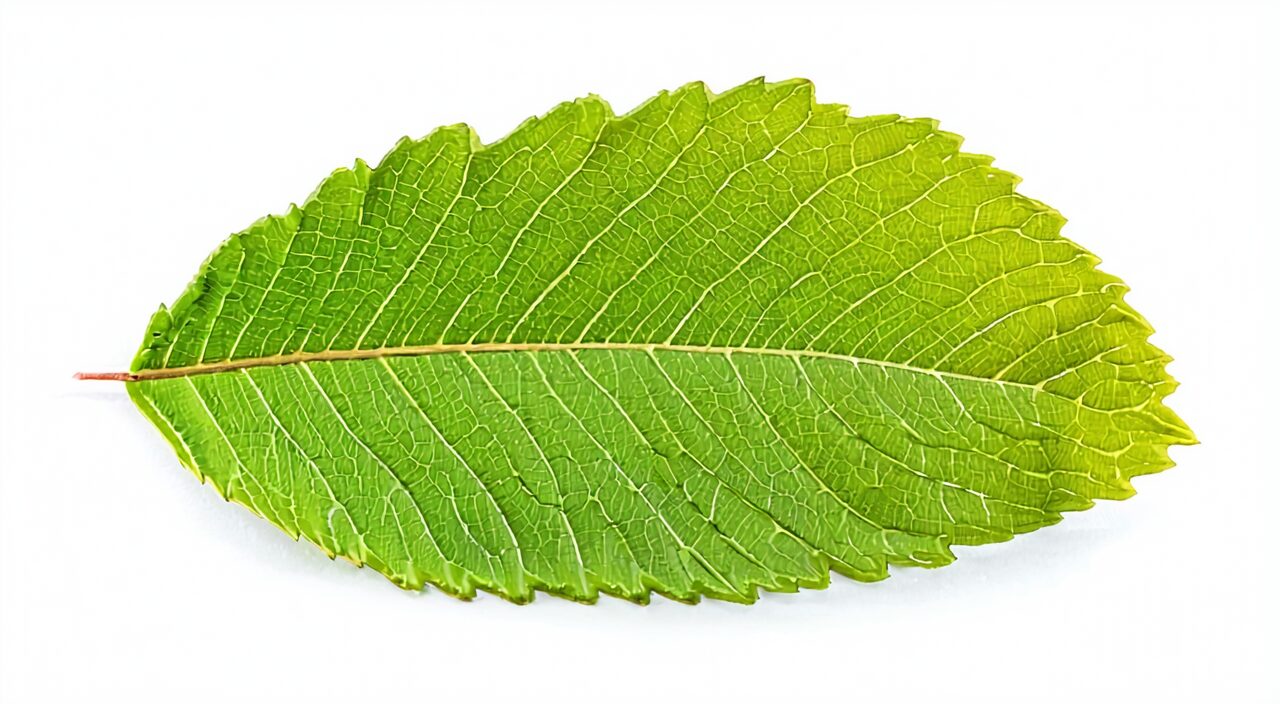
The typical mulberry leaf is ovate or broadly ovate, with a pointed tip, a base that is nearly heart-shaped or rounded, and distinctly serrated margins. The venation is clear, with the midrib and lateral veins slightly raised on the underside, giving the leaf a somewhat papery texture when touched. Fresh leaves are dark green, while dried leaves usually turn yellowish-green or light brown and become brittle and break easily.
A more intuitive identification point is the detail on the underside of the leaf. The back of a mulberry leaf often has fine, soft hairs along the veins, giving it a slightly rough feel rather than being completely smooth. Commercially available dried mulberry leaf pieces are often irregular fragments or curled shapes, with remnants of the petiole and main veins visible. If you observe dense, fine, short hairs on yellowish-green pieces, it is more likely to be mulberry leaf rather than other similar-looking leaves. Some ornamental plants in the wild also have leaves resembling mulberry leaves; it is recommended not to harvest them based solely on leaf shape, especially when you cannot confirm the plant’s identity and safety.
What Is the Medicinal Part of Mulberry Leaf?
The part used medicinally is the dried leaf of the mulberry tree. Traditionally, mulberry leaf is often referred to as “frost mulberry leaf” or “winter mulberry leaf,” meaning leaves harvested after the first frost in late autumn. According to this harvesting tradition, frost-exposed leaves are considered sweeter, bitter, and colder in nature, making them more suitable for dispersing wind-heat and clearing and moistening related patterns. In modern medicinal material standards, the harvest period for mulberry leaves also generally falls in late autumn to early winter, which aligns well with this traditional understanding.
After harvesting, mulberry leaves are usually cleaned of impurities and dried in the sun or at low temperatures to produce prepared slices. The finished pieces typically appear shriveled, broken, and yellowish-green; some are even rolled into small balls. For use, they can be decocted as a medicinal tea or steeped in boiling water as a daily beverage, but the dosage and concentration differ between the two methods and should be determined according to specific product instructions.
How Does Traditional Chinese Medicine Understand Mulberry Leaf?
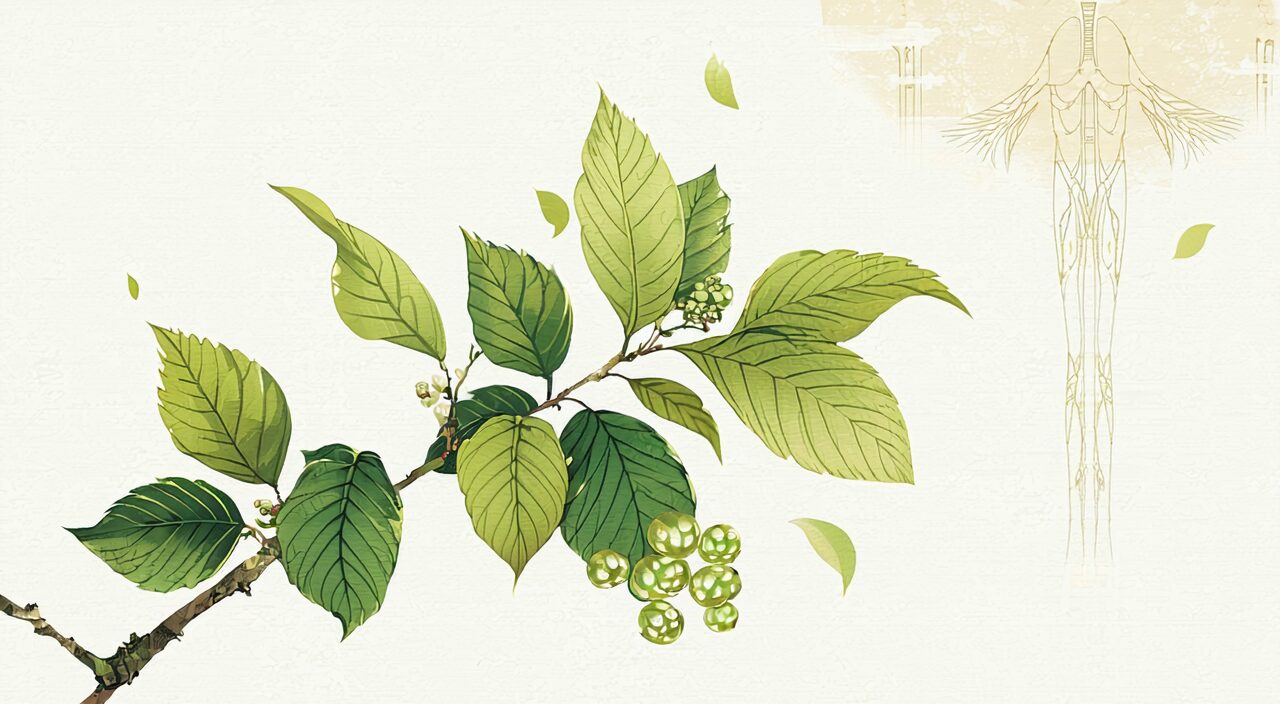
From the perspective of traditional Chinese medicine, understanding mulberry leaf revolves mainly around its nature, flavor, and meridian entry. Mulberry leaf is sweet and bitter in flavor and cold in nature; it enters the Lung and Liver meridians. Because it is cold and thus able to clear, and because its light quality allows it to act on the exterior, it is commonly categorized as an acrid-cool exterior-releasing medicinal.
Specifically, the traditional applications of mulberry leaf can be broadly divided into several approaches. The first is dispersing wind-heat: when wind-heat is just beginning, with signs such as slight fever, a dry or scratchy throat, and mild cough, mulberry leaf is often combined with chrysanthemum, mint, and others. The second is clearing the lungs and moistening dryness: when dryness-heat affects the lungs, causing dry cough or scanty, sticky sputum, and dry mouth and nose, mulberry leaf may be chosen for both its clearing and moistening properties. The third is clearing the liver and brightening the eyes: for redness, dryness, photophobia, or blurred vision caused by wind-heat in the Liver meridian or flaring of liver fire, mulberry leaf can be taken internally or used as a decoction for eye rinsing. The fourth is cooling the blood and stopping bleeding: in some mild bleeding conditions due to blood heat, mulberry leaf is occasionally used. However, all these approaches must be considered in light of individual constitution and the overall condition; one should not use it based solely on a single sensation.
Modern phytochemical research has identified various flavonoids, alkaloids, polysaccharides, and other constituents in mulberry leaves. Some studies have focused on its potential in regulating glucose and lipid metabolism and providing antioxidant effects. This research offers additional information for understanding mulberry leaf but does not directly equate to specific health benefits from consuming it.
What Are the Differences Between Mulberry Leaf, Lotus Leaf, and Chrysanthemum?
Mulberry leaf, lotus leaf, and chrysanthemum are all commonly used botanical ingredients in traditional practices, and they sometimes appear in discussions about wellness teas, but their emphases in application are distinctly different.
In terms of appearance, mulberry leaf is ovate with serrated margins and turns yellowish-green when dry. Lotus leaf is much larger, shield-shaped and round, with veins radiating from the center; when dried, it is often cut into strips or pieces and appears grayish-green or yellowish-brown. Chrysanthemum is a capitulum, becoming a small, ball-shaped dry flower with dense petals—completely different from leaf-like forms.
From a traditional application standpoint, mulberry leaf tends toward dispersing wind-heat, clearing the lungs and moistening dryness, and clearing the liver and brightening the eyes. Lotus leaf focuses more on clearing summerheat, draining dampness, and raising clear yang, often used for summerheat-dampness and conditions where the spleen and stomach fail to ascend clear qi. Chrysanthemum also disperses wind-heat and clears the liver and brightens the eyes, but chrysanthemum is used more for calming the liver and clearing the liver, and its emphasis can vary with different varieties—such as white chrysanthemum, yellow chrysanthemum, and wild chrysanthemum. Thus, comparing mulberry leaf and lotus leaf: one emphasizes “dispersing wind-heat from the upper burner and moistening dryness,” while the other emphasizes “transforming damp turbidity in the middle burner and raising clear qi.” Although both mulberry leaf and chrysanthemum address eye issues, mulberry leaf also moistens lung dryness, whereas chrysanthemum excels at clearing and calming the liver. The choice should depend on the specific presentation and constitution, not merely on a single function.
Which Formulas Use Mulberry Leaf?
In traditional formulas, mulberry leaf is not frequently used as the chief herb, but its value in combination is widely recognized. The following representative examples are offered only as references for understanding traditional thinking, and they do not constitute recommendations for any specific condition.
Sang Ju Yin (Mulberry Leaf and Chrysanthemum Decoction) is often mentioned at the early stage of wind-warmth disorders. In this formula, mulberry leaf is combined with chrysanthemum, mint, forsythia, platycodon, and others, with an overall direction of dispersing wind-heat, diffusing the lungs, and stopping cough. It is suitable for low fever, mild cough, and dry mouth. Sang Xing Tang (Mulberry Leaf and Apricot Kernel Decoction) is commonly used for warm-dryness damaging the lungs; mulberry leaf is paired with apricot kernel, glehnia, fritillary, gardenia peel, and others to clear, diffuse, and moisten warm-dryness and to moisten the lungs and stop cough. It is often used for dry cough without sputum, scanty sticky sputum, throat dryness, and a red tongue with little moisture. Qing Zao Jiu Fei Tang (Dryness-Clearing and Lung-Rescuing Decoction) combines mulberry leaf with gypsum, ophiopogon, ginseng, donkey-hide gelatin, apricot kernel, loquat leaf, and others, emphasizing clearing dryness, moistening the lungs, boosting qi, and nourishing yin. It is suitable for more severe dryness-heat that has damaged both qi and yin, which differs from the typical image of plain heat-clearing formulas. In Ling Jiao Gou Teng Tang (Antelope Horn and Uncaria Decoction), mulberry leaf is combined with antelope horn, uncaria, Sichuan fritillary, rehmannia, chrysanthemum, and others, mainly to cool the liver, extinguish wind, increase fluids, and relax the sinews, and is applied to acute and severe presentations such as high fever and convulsions triggered by extreme heat stirring wind. As can be seen, mulberry leaf plays more than one role in formulas—it can disperse wind-heat, moisten dryness, and also assist in cooling the liver. The suitable presentations, populations, and contraindications for these formulas vary; whether they are appropriate still needs to be assessed based on individual constitution, symptoms, and professional advice.
What Precautions Should Be Taken When Using Mulberry Leaf?
Mulberry leaf is widely accepted in daily wellness, and mulberry leaf tea is often mentioned as a beverage for “clearing heat” and “clearing the liver.” However, mulberry leaf is cold in nature. For individuals with a cold-deficient spleen and stomach who tend to experience cold abdominal pain and loose or unformed stools, prolonged or large amounts may exacerbate discomfort. In such cases, traditional practice usually combines it with other relatively mild herbs to modify its nature, rather than using mulberry leaf alone.
Additionally, it is especially important not to equate mulberry leaf tea or mulberry leaf-containing products with “therapeutic medicines.” Even with traditional usage directions, selection should be based on specific presentations, and dosage, duration, and combination can all influence outcomes. For persistent or recurrent discomfort, or symptoms such as marked anxiety, palpitations, chest tightness, weight loss, continuous vomiting, severe abdominal pain, or black stools, it is essential to consult a doctor or healthcare professional first, rather than attempting to resolve the issue with a single herb.
Summary
The identification, harvesting, and traditional use of mulberry leaf provide a concrete and clear example for understanding TCM concepts such as “dispersing wind-heat,” “clearing the lungs and moistening dryness,” and “clearing the liver and brightening the eyes.” It differs from lotus leaf, which transforms dampness and raises clear qi, and also from chrysanthemum, which calms the liver and brightens the eyes. In practical use, the direction must be determined based on constitution and specific presentations. Whether used as a single-herb tea or in formulas such as Sang Ju Yin and Sang Xing Tang, one should rationally assess its value, understand one’s own constitution, and seek professional help when complex discomfort arises. This article is for educational reference only and cannot replace professional diagnosis or treatment advice.