
What Is Sheng Ma? Medicinal Parts, Identification, and Common Formulas
When people overseas with an interest in Chinese medicine hear about Sheng Ma, they may think of certain traditional formulas that regulate qi and blood or improve qi sinking. In formulas, Sheng Ma often plays a “lifting” role, but when considered on its own, what kind of herb is it, what does it look like, which formulas commonly include it, and what precautions come with its use become questions on many minds.
This article offers a systematic introduction to Sheng Ma from the perspectives of visual identification, medicinal parts, understanding in Chinese medicine, differences from Chai Hu, and common formulas, helping readers have a general reference when coming across related products.
What does Sheng Ma look like? How to identify it?
Identification of Sheng Ma mainly relies on its rhizome. The medicinal part is the dried rhizome, which usually appears as irregular elongated chunks or nodular pieces, slightly curved and not very uniform in shape.
The surface color is mostly black-brown or dark brown, rather rough, sometimes with some residual rootlet scars. A relatively easy identifying feature is that the Sheng Ma rhizome often retains some round or semicircular hollow stem scars on its surface. These stem scars vary in size, are unevenly distributed, and look like “pits” embedded in the surface.
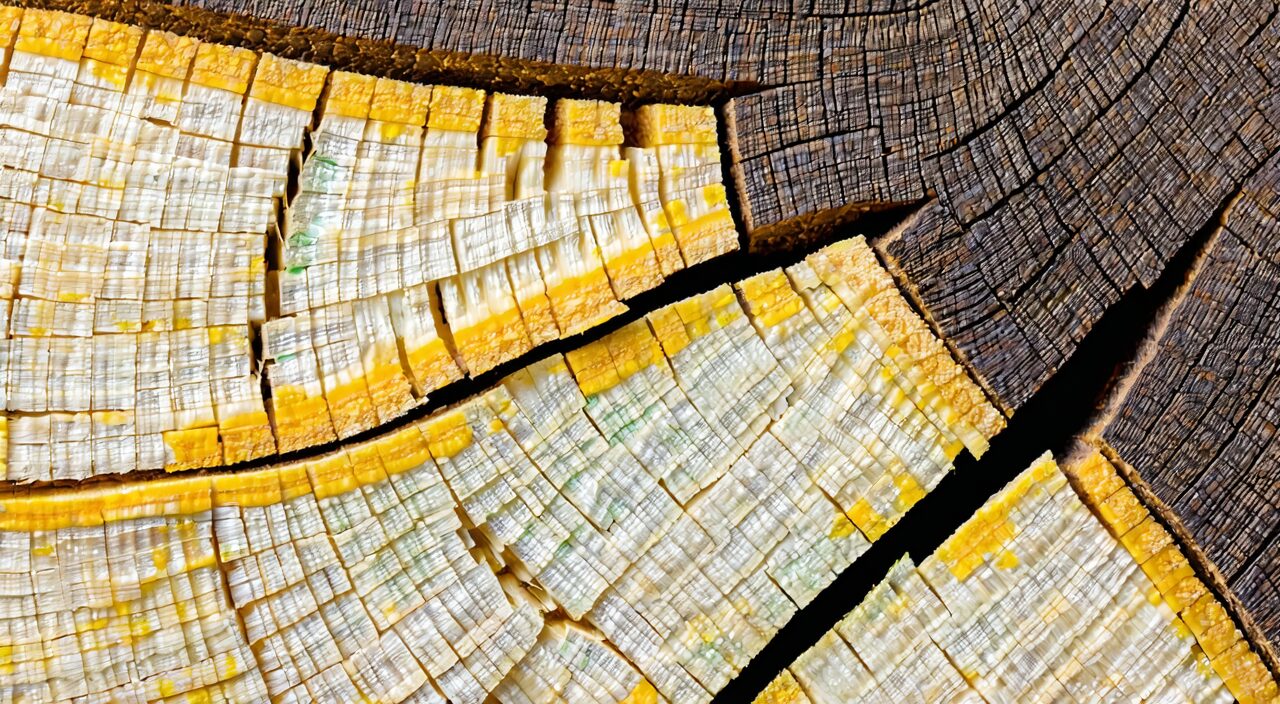
If you look carefully at a cross-section, you will find that Sheng Ma is hard yet light in texture and does not break easily. The broken surface is uneven, showing marked fibrous nature, with interwoven pale yellowish-white or yellowish-green fibrous bundles, somewhat like a rough hemp-like structure. The odor is light, and tasting it (not recommended to casually taste raw herbs) gives a slight bitterness and astringent sensation.
In the traditional herb market, different areas may have different commercial grades of Sheng Ma based on its source, but overall, a black-brown surface, hollow stem scars, and a strongly fibrous cross-section are several key points that distinguish Sheng Ma from other root and rhizome herbs.
What is the medicinal part of Sheng Ma?
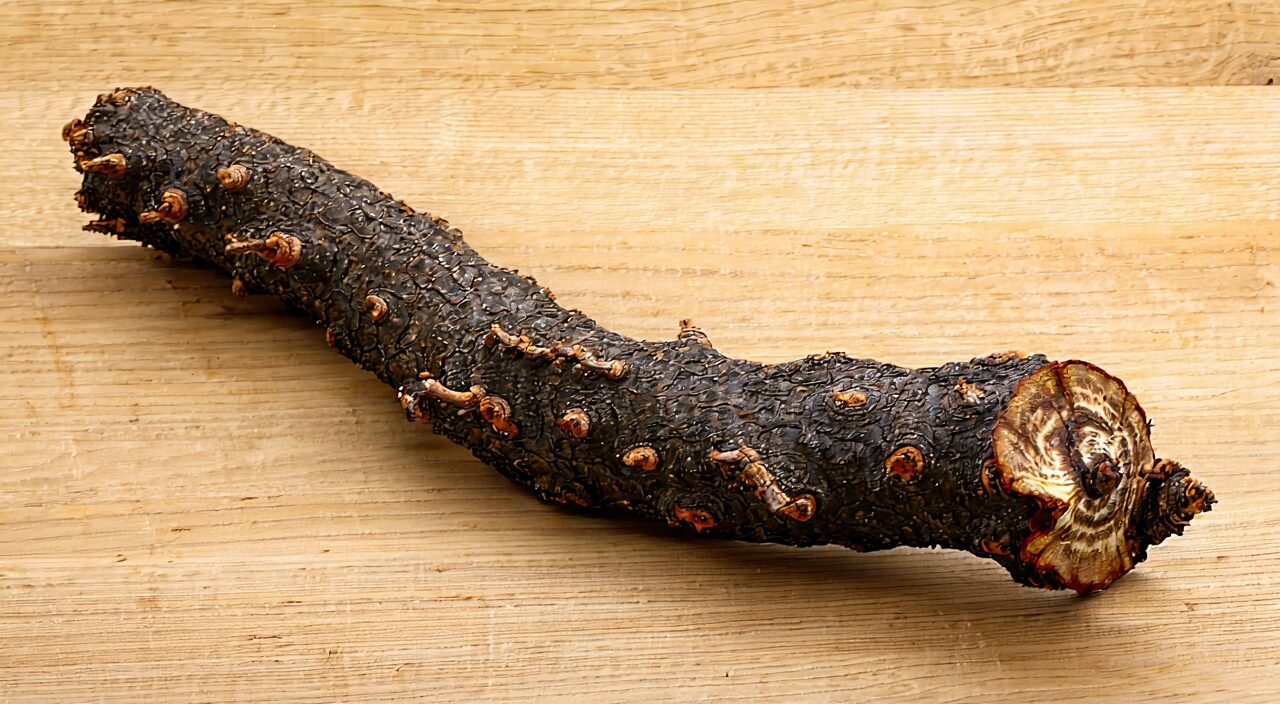
Sheng Ma uses the dried rhizome as its medicinal part. Harvesting is usually done in autumn when the above-ground parts wither or in early spring when the plant just begins to sprout, as the rhizome accumulates relatively concentrated constituents at these times. After digging, soil, rootlets and unsuitable parts must be removed, and then it is dried. In some regions, a simple peeling treatment is carried out before drying, but the complete rhizome shape is often retained.
Traditional experience holds that Sheng Ma rhizomes of firm texture, large size, black-brown surface, strongly fibrous cross-section, and without residual rootlets are of superior quality. Because Sheng Ma rhizomes are easily affected by moisture and can become moldy, they need to be stored in a dry and well-ventilated place.
How does Chinese medicine understand Sheng Ma?
In TCM theory, Sheng Ma is classified as acrid, slightly sweet, and slightly cold in nature and flavor, and it mainly enters the Lung, Spleen, Stomach, and Large Intestine meridians. Traditionally, its actions are often understood from the following perspectives:
- Releasing the exterior and promoting eruption: Sheng Ma is commonly seen in the early stages of measles when the rash has not yet fully emerged. Ancient practitioners believed that Sheng Ma has an outward-diffusing property that can assist the rash in breaking out smoothly, so it often appears in early-stage formulas. However, if the measles rash has already fully erupted, using Sheng Ma may no longer be appropriate.
- Clearing heat and resolving toxins: Sheng Ma’s cold nature makes it frequently used for heat-toxin related issues, such as redness, swelling and pain in the mouth and throat, or in epidemic toxin patterns where it is combined with other heat-clearing herbs to achieve a resolving effect.
- Raising yang qi: This is a very representative application of Sheng Ma. If a person has been overworked for a long time and has an irregular diet, leading to a tendency of qi sinking, with manifestations such as abdominal distension and bearing-down sensations, chronic diarrhea with rectal prolapse, or uterine prolapse, traditional formulas often combine Sheng Ma with Chai Hu and other “lifting” herbs to help restore the upward movement of qi.
From these thoughts we can see that Sheng Ma is generally not used alone but is combined with other herbs to adjust complex body states.
What does modern research say about Sheng Ma?
Modern pharmacological research on Sheng Ma mainly focuses on its triterpenoids, phenolic acids, chromones and other constituents. Some in vitro studies indicate that Sheng Ma extracts may possess anti-inflammatory, antioxidant, and immunomodulatory activities. There is also research exploring the application of Sheng Ma for menopausal discomfort, but this mostly centers on the use of other species of the same genus in European and American herbalism.
For the traditional Chinese herb Sheng Ma, relevant pharmacological studies are still ongoing, and they currently serve more as a reference for understanding its traditional uses rather than as a direct basis for treating certain diseases. Therefore, when looking at Sheng Ma, one still needs to take into account both traditional experience and the new perspectives provided by modern research.
What are the differences between Sheng Ma and Chai Hu?
Sheng Ma and Chai Hu are often mentioned together because both can play a “lifting” role in formulas. However, there are clear differences between the two in terms of source, appearance, and application emphasis.
First, their sources are completely different. Sheng Ma uses the dried rhizome of Ranunculaceae plants such as Cimicifuga heracleifolia, Cimicifuga dahurica, or Cimicifuga foetida, while Chai Hu uses the dried root of Apiaceae plants such as Bupleurum chinense or Bupleurum scorzonerifolium.
In appearance, Sheng Ma is an irregular elongated chunk rhizome, black-brown, with hollow stem scars and a fibrous cross-section; Chai Hu roots are mostly cylindrical or elongated conical, with a dark brown or pale brown surface, and the root head often enlarged with residual stem bases. The cross-section is flat and the xylem is distinct, which is easily distinguished from the fibrous cross-section of Sheng Ma.
In terms of application emphasis, Sheng Ma is adept at raising the clear yang qi of the Spleen and Stomach, while also possessing the actions of clearing heat, resolving toxins, and promoting eruption. Chai Hu, on the other hand, tends to soothe the liver, relieve stagnation, and raise the yang qi of the Shaoyang channel, and is more often used for liver qi constraint, chest and rib-side distension, and alternating chills and fever caused by Shaoyang disorders. Although both can “lift,” Sheng Ma is more suitable when middle burner qi sinks with accompanying heat toxin, while Chai Hu is more suitable when there is liver qi stagnation and impaired Shaoyang pivot function.
Which formulas use Sheng Ma?
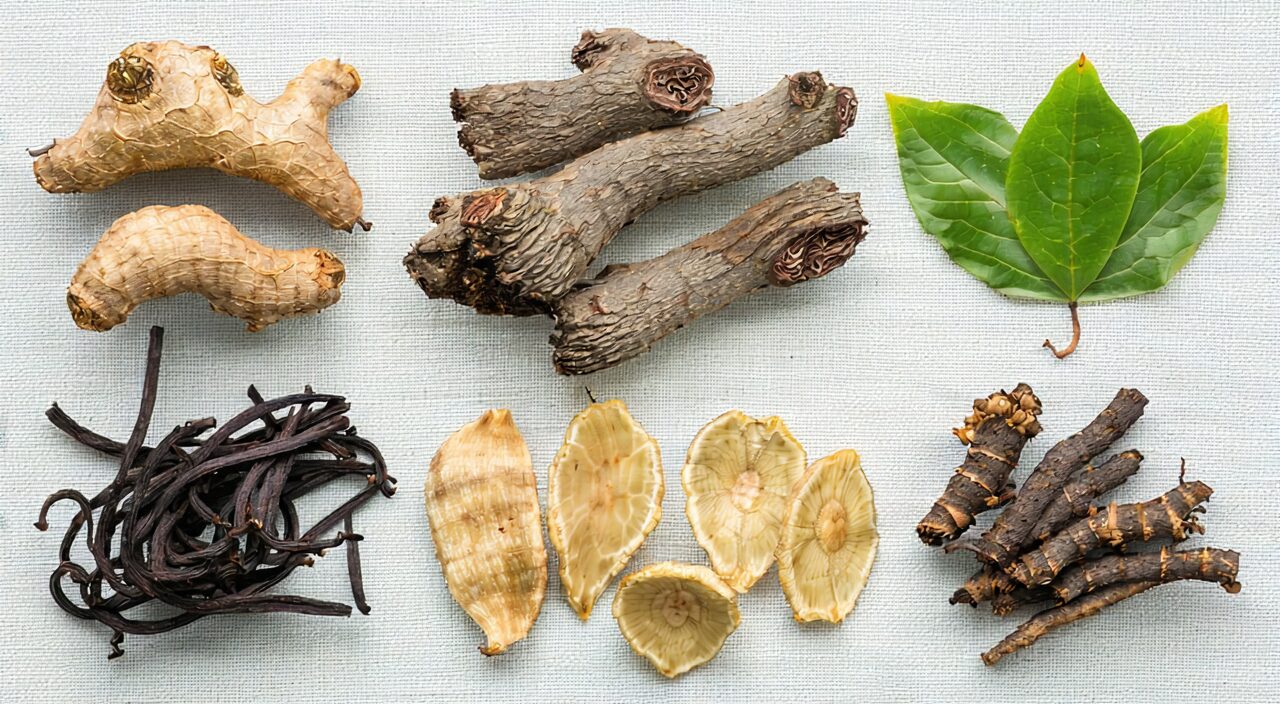
Sheng Ma occupies a place in quite a few traditional formulas. Below are several representative ones. This information is provided only as an introduction to traditional knowledge and does not represent a recommendation for any specific situation.
Shengma Gegen Tang This is a formula with Sheng Ma and Gegen as the main herbs. Traditionally it was often used for the early stages of measles, with fever, cough, and watery eyes while the rash had not yet smoothly erupted, taking advantage of its action of diffusing outward to expel the external pathogen.
Buzhong Yiqi Tang This formula is well known to many. Sheng Ma appears in it combined with Chai Hu, assisting Huangqi and Renshen, etc., for patterns of insufficient middle qi and qi sinking leading to fatigue, shortness of breath, chronic diarrhea with rectal prolapse, and organ prolapse. The dosage of Sheng Ma in the formula is usually small, mainly to achieve its “lifting” meaning.
Qingwei San In Qingwei San, Sheng Ma is often combined with Huanglian and Mudanpi. Traditionally it was used for toothache, red and swollen gums, and bad breath caused by accumulated heat in the Stomach. Sheng Ma here not only exerts the effect of clearing heat and resolving toxins but also helps guide the herbs upward, allowing the effect to better act on the head and facial area.
Puji Xiaodu Yin This is a classic formula for treating head erysipelas, head and face redness and swelling. Sheng Ma is used together with Chaihu, Huangqin, Huanglian and others, jointly playing the action of clearing heat, resolving toxins, soothing wind and dispersing pathogens.
As can be seen, the role of Sheng Ma in these formulas varies: sometimes it is the main actor, sometimes a supporting one. How it is specifically matched needs to be determined according to the specific pattern of the body.
What precautions should be taken when using Sheng Ma?
Although Sheng Ma has a wide range of applications in traditional use, it is not suitable for all situations. The following points require special attention:
- Yin deficiency with fire effulgence, upper excess and lower deficiency: If a person is constitutionally deficient in yin fluids with deficiency fire flaming upward, presenting symptoms such as heat in the palms and soles, dry mouth and throat, malar flush, and night sweats, while also having deficiency cold in the lower burner, using Sheng Ma alone or in large doses may cause the deficiency fire to flare up even more and provoke discomfort.
- Measles already fully erupted: When the measles rash has fully erupted and heat toxin is already intense, continuing to use ascending and dispersing herbs like Sheng Ma may exacerbate the heat momentum, so traditionally it is generally avoided.
- People with hypertension: Because Sheng Ma has some lifting action, traditional experience holds that people with liver yang hyperactivity or unstable blood pressure control need to be very cautious when using Sheng Ma. From a modern perspective, if one’s blood pressure is on the higher side, whether one can use formulas containing Sheng Ma should be determined under the guidance of a professional.
- Special physiological stages: During pregnancy, breastfeeding, and for young children, formulas containing Sheng Ma should all be used under the guidance of an experienced TCM practitioner, and should not be applied casually on one’s own.
If the physical discomfort is already relatively serious, or recurs over a long term, or is accompanied by obvious chest tightness, palpitations, severe pain, persistent vomiting, black stools, weight loss, etc., one should promptly consult a doctor instead of choosing herbs for self-regulation.
Summary
Sheng Ma is a traditional herb whose rhizome is used medicinally. In appearance, it can be preliminarily identified by its irregular chunk shape, black-brown surface, hollow stem scars, and strongly fibrous cross-section. Chinese medicine mainly understands it from the perspectives of releasing the exterior and promoting eruption, clearing heat and resolving toxins, and raising yang qi. In practical application, it usually works in compound formulas in coordination with other herbs. Whether you are simply curious about Sheng Ma or encounter this herb in a formula, you need to make a cautious judgment by taking into account your own constitution and specific situation under the guidance of a professional or product instructions. This article is for informational reference only and cannot replace professional diagnosis or treatment advice.