
What Is Viola Yedoensis? Medicinal Parts, Identification, and Common Formulas
Viola yedoensis is the whole plant with roots of Viola yedoensis, a species in the Violaceae family. Its name derives from its purple flowers and slender underground roots. Many overseas enthusiasts of Chinese medicine often compare it with dandelion and other heat-clearing and detoxifying herbs, wondering what it actually looks like, which part is used medicinally, and which traditional formulas include it. The following sections help build a fairly complete understanding from the perspectives of plant identification, medicinal parts, TCM theory, and representative formulas.
What Does Viola Yedoensis Look Like? How to Identify It
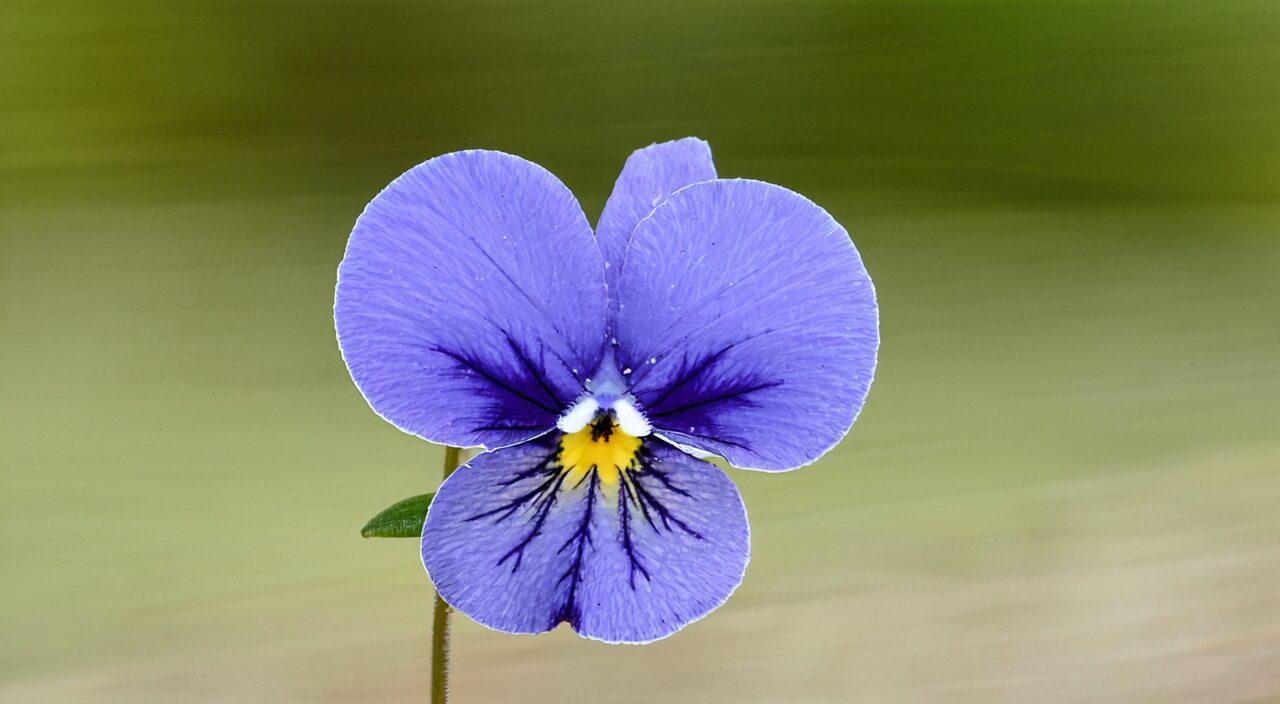
Viola yedoensis is a low-growing perennial herb, usually no taller than 10 cm. All leaves are basal, growing in a rosette from the crown. The leaf blades are oblong-lanceolate, ovate-lanceolate, or linear-lanceolate, with shallow, blunt teeth along the margins. The upper surface is green, while the underside is slightly paler. The most distinctive identification feature is the purple flower: a single flower rises at the tip of a slender pedicel, which is longer than or nearly as long as the leaves. The corolla is zygomorphic, with five petals—two smaller upper petals, two slightly broader lateral petals, and a larger lower petal that extends backward into a slender spur. The blooming period generally runs from late March to May, and fruiting continues until around July. The capsule is ellipsoid and splits into three sections when mature. The rhizome is short and stout, with numerous slender, whitish or pale yellow fibrous roots clustered below. In the field, care should be taken to distinguish it from closely related species such as Viola prionantha, which blooms earlier, has a shorter spur, and slightly broader leaves. In summary, focusing on “basal leaves, purple flowers, spurred corolla, and three-parted capsule” allows relatively reliable identification of Viola yedoensis.
What Are the Medicinal Parts of Viola Yedoensis?
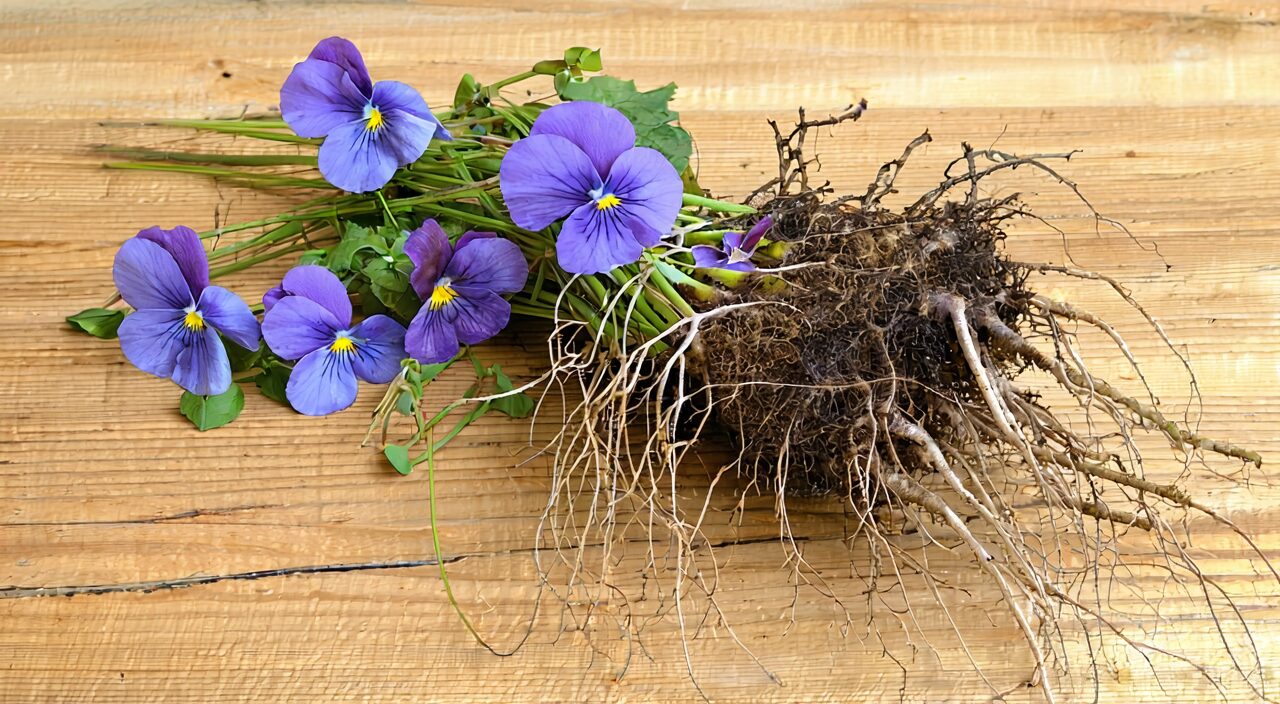
The medicinal part of Viola yedoensis is the whole plant with roots, meaning the aboveground and underground portions—roots, rhizome, leaves, and flowers—are all used. Harvesting typically occurs in late spring to early summer when flowers first open, as aboveground growth is vigorous and active compounds are at a relatively high level. The plant is pulled up with its roots, and withered leaves and soil are removed. It is then dried in the sun or at low temperature. In some producing areas, a half-sun-drying and half-hand-rolling method is used to make the dried roots and leaves coil more tightly together. The dried herb often appears grayish green or dark green, with scattered remnants of purple corollas, a brittle texture, and a faint odor. The fresh herb can also be used, but storage is inconvenient, so dried products are more common in daily practice. It is usually cut into short segments for decoction or dispensing.
How Does TCM Understand Viola Yedoensis?
Traditional Chinese medicine classifies Viola yedoensis as a heat-clearing and detoxifying medicinal. It is considered cold in nature, bitter and acrid in taste, and mainly enters the Heart and Liver meridians. Because it is adept at cooling the blood, resolving toxins, and dispersing abscesses, it is frequently used for various sores and ulcers caused by intense heat toxin. It is recorded in works such as the Compendium of Materia Medica, and ancient herbals often called it a “key remedy for deep-rooted boils.” For boils, carbuncles, erysipelas, and red, swollen, painful throat conditions arising from blood heat and exuberant toxin, traditional physicians often combine it with herbs like honeysuckle flower, wild chrysanthemum flower, and dandelion. Additionally, it has been used as one of the approaches in managing early-stage mastitis and acute lymphadenitis, conditions that belong to the category of internal abscesses. Besides internal use, applying the crushed fresh plant as a poultice is a common topical method, mainly for localized redness and swelling that has not yet ulcerated. It is important to stress that Viola yedoensis has a pronounced cold nature, and whether it is suitable must be determined by a TCM practitioner based on pattern differentiation and individual constitution. It should not be chosen on the basis of a single symptom alone.
Brief Notes on Modern Research
Modern studies have isolated various flavonoid glycosides, organic acids, coumarins, and volatile oil constituents from Viola yedoensis. In vitro experiments suggest that its extracts show certain inhibitory effects against Staphylococcus aureus, Streptococcus pneumoniae, and Escherichia coli, while some research also indicates anti-inflammatory, antiviral, and immunomodulatory activities. Certain compounds have demonstrated the ability to counteract oxidative stress in cell models. These findings provide partial modern background for traditional uses but cannot be directly equated with definitive clinical efficacy, and they serve only as reference for further understanding.
How Does Viola Yedoensis Differ from Dandelion?
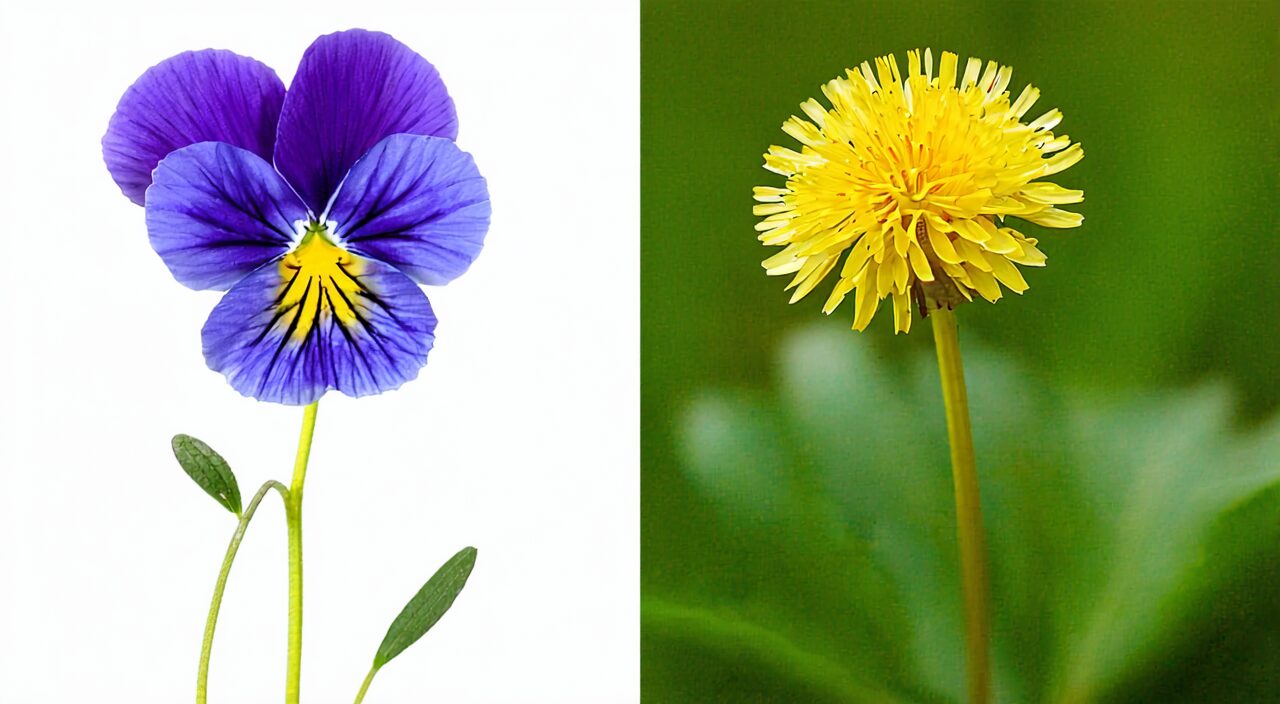
Both Viola yedoensis and dandelion are common herbs found in fields and are frequently used heat-clearing and detoxifying medicinals, but the two differ clearly. First, look at the flowers: dandelion bears a yellow capitulum composed of many ray florets, later producing achenes topped by white pappus; Viola yedoensis has a single purple, zygomorphic flower with a distinct spur. The leaves also differ in shape: dandelion leaves are oblanceolate, often deeply lobed or pinnately divided with sharp lobes; Viola yedoensis leaves are oblong or lanceolate, with only shallow, blunt teeth and no lobes. When collected for medicinal use, both are generally used as the whole plant with roots. In traditional application, dandelion is more inclined toward dispersing abscesses, reducing masses, promoting urination, and unblocking strangury, being especially common for breast abscesses, heat strangury, and jaundice; Viola yedoensis places greater emphasis on cooling the blood, resolving toxins, and eliminating deep-rooted boils, and is more commonly employed for red, swollen boils and sores with severe blood heat and toxin. The two are sometimes used together in formulas to enhance heat-clearing power, but their emphases differ and they are not interchangeable.
Which Formulas Include Viola Yedoensis?
Viola yedoensis appears quite frequently in heat-clearing formulas. Three representative examples are introduced below.
- Wu Wei Xiao Du Yin (Five-Ingredient Toxin-Removing Beverage): Originating from the Golden Mirror of Medicine, this formula consists of honeysuckle flower, wild chrysanthemum flower, dandelion, Viola yedoensis, and Begonia fimbristipula. It is a classic recipe for treating boils and abscesses caused by exuberant heat toxin, often considered during the early stage when there is redness, swelling, heat, and pain. If suppuration has already occurred, other comprehensive measures are needed.
- Di Ding San (Viola Powder): A traditional formula usually built around Viola yedoensis, combined with heat-clearing and blood-cooling medicinals such as coptis root, baical skullcap root, and red peony root. It is used for skin sores and ulcers with redness, swelling, heat, and pain where blood heat predominates.
- Zi Hua Di Ding Tang (Viola Yedoensis Decoction): Some practitioners formulate this decoction with Viola yedoensis as the chief herb, often supported by forsythia fruit, gardenia fruit, and others to intensify the action of draining fire and resolving toxin. The exact composition varies according to pattern presentation.
The formulas mentioned above are provided only to illustrate traditional therapeutic thinking. In actual use, a comprehensive judgment must be made based on individual constitution, specific symptoms, product instructions, and professional guidance. One should not mimic these prescriptions without proper differentiation.
What Precautions Should Be Taken When Using Viola Yedoensis?
Viola yedoensis is cold in nature. People with spleen-stomach deficiency and cold, such as those who easily experience bloating, loose stools, or aversion to cold, should be cautious with internal use to avoid impairing spleen-stomach yang qi. Long-term, large-dose use may affect digestive function, and short-term use within reasonable doses is generally advised. Some individuals may be allergic to Viola yedoensis; for first-time use, it is recommended to start with a very small amount and observe for any adverse reactions such as rashes or itching. In such cases, discontinue use and consult a relevant professional. When digging in the wild, careful identification is essential, because several plants in the Ranunculaceae family (such as certain Ranunculus species) have a somewhat similar overall appearance, and mistaken collection and use may cause toxic reactions including oral burning, abdominal pain, and vomiting. Furthermore, pregnant women should be particularly cautious with heat-clearing and blood-cooling herbs, and tradition generally suggests weighing benefits and risks under the guidance of a practitioner. A final and crucial reminder: in serious infectious conditions—such as persistent high fever, rapidly expanding carbuncles or abscesses, tendencies toward sepsis, or altered consciousness—professional medical intervention must be sought immediately. Relying solely on one or a few herbs cannot replace timely treatment and may delay proper care.
Summary
Viola yedoensis, characterized by its small purple flowers and whole-plant-with-roots medicinal use, is a staple in TCM for clearing heat, resolving toxins, cooling the blood, and reducing swelling. It plays an important role in renowned formulas such as Wu Wei Xiao Du Yin. Recognizing the morphological and practical differences between it and dandelion, and fully understanding its cold nature and contraindications, helps us approach traditional herbal knowledge more rationally. This article is intended for informational and educational purposes only and cannot replace professional diagnosis. For any specific use, always consult a qualified healthcare provider or TCM practitioner.