
What Is Wild Chrysanthemum? Medicinal Parts, Identification, and Common Formulas
On grassy slopes and along field paths, you often see clumps of plants with golden-yellow flowers in autumn. Their strong fragrance leads many people to call them “wild chrysanthemums.” In Chinese medicine, however, wild chrysanthemum is not just a vague name; it has a specific botanical origin and a defined medicinal part. For overseas Chinese readers interested in or following Chinese medicine, understanding what wild chrysanthemum really is, what it looks like, how it is used, and how it differs from the ordinary chrysanthemum can help you view related products and formulas more rationally when the need arises. This article explores these angles to help build a relatively clear picture.
What does wild chrysanthemum look like? How can it be identified?
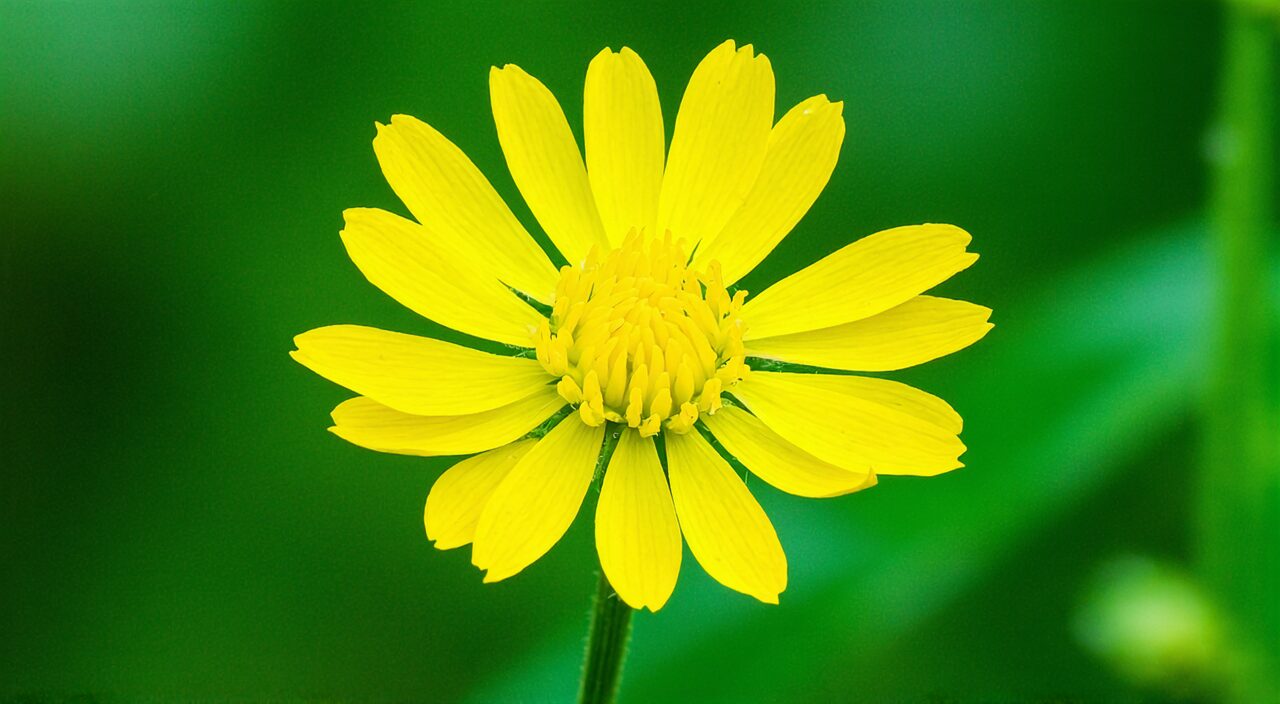
Wild chrysanthemum comes from the dried flower heads (capitula) of Chrysanthemum indicum, a plant in the Asteraceae family. Compared with ornamental chrysanthemums or cultivated medicinal chrysanthemums, its appearance has several rather distinctive features.
First, the flower heads are relatively small, usually 1–1.5 cm in diameter, noticeably smaller than those of the common garden chrysanthemum. Each head consists of many yellow ray florets and disc florets. There is a single row of peripheral ray florets, mainly bright yellow, while the centre is densely packed with deeper yellow disc florets, giving the whole flower the look of a tiny sunflower. At the base of the head are several layers of involucral bracts; they are ovate or elliptic-ovate, often with a pale brown margin, thin in texture, and sometimes mistaken for withered leaves – this is also one of the key identification points.
Second, there is the smell and taste. Wild chrysanthemum has a distinctive, aromatic fragrance, with a rather strong cooling sensation when smelled up close, and the aroma becomes more obvious when the flower is crushed. Tasting it reveals a notable bitterness and a prominent acrid, cooling sensation, unlike the relatively sweet, mild taste of the ordinary chrysanthemum. This bitterness and fragrance have traditionally been used as a reference for quality: bright yellow colour, strong fragrance, and bitter taste are considered marks of good quality.
When identifying the plant in the field, it is also important to note the plant’s habit. Wild chrysanthemum is a perennial herb. The stem is erect or slightly creeping at the base. Leaves are alternate, deeply pinnately lobed, with serrated margins and a relatively coarse texture. The flowering period normally runs from September to November, peaking in autumn. From the herbal medicine perspective, however, what we normally call “wild chrysanthemum” refers mainly to the dried flower heads, not the whole plant.
What is the medicinal part of wild chrysanthemum?
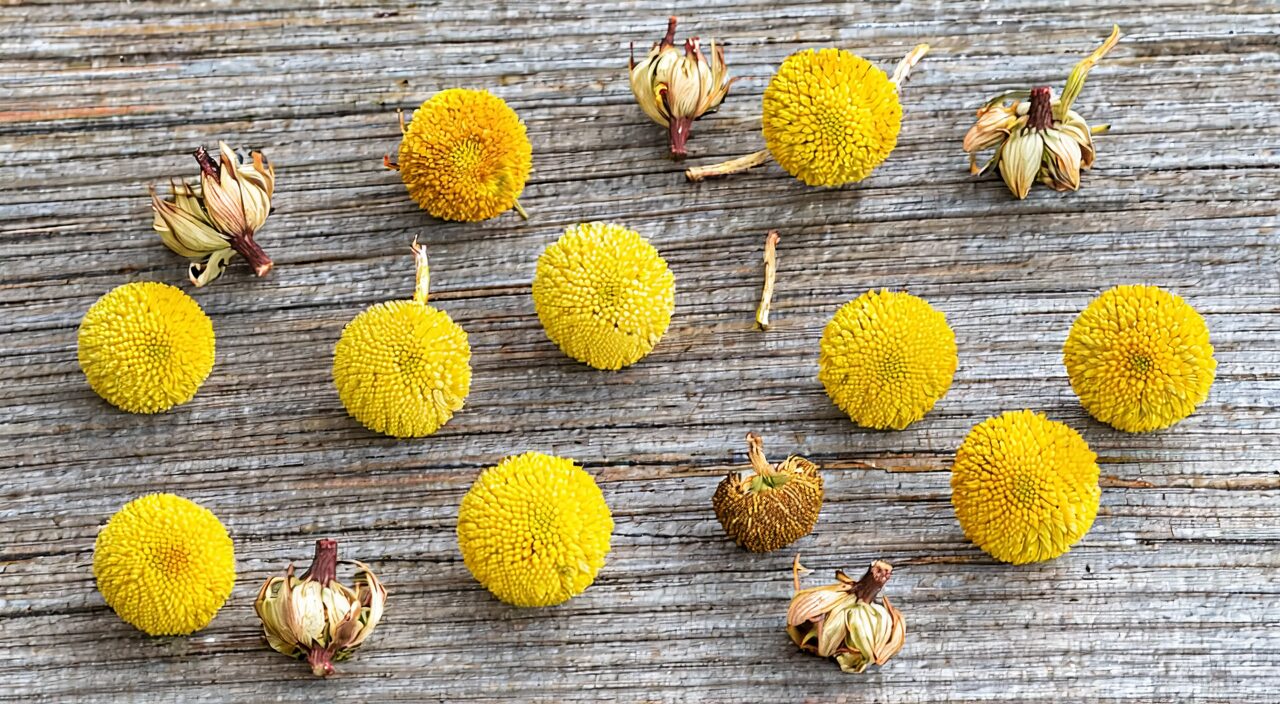
The medicinal part of wild chrysanthemum is the dried flower head (capitulum). Botanically, this is an inflorescence, not a single flower, but a structure formed by numerous small florets clustered together on a common receptacle.
Harvesting usually takes place in late autumn to early winter, when the flowers have just begun to open. At this stage the colour is golden-yellow, the flowers have not yet fully expanded, and the active constituents are relatively abundant. Traditionally it is best to harvest on a sunny day after the dew has dried. Stems, leaves and impurities are removed, leaving only the flower heads. After harvesting, the heads are dried directly in the sun or at a low temperature. During drying it is important to ensure good ventilation and avoid stuffy heat that could darken the colour and dissipate the fragrance, thereby reducing quality.
Dried wild chrysanthemum is spherical or flattened-spherical, small in diameter, easily crushed when pinched, yellowish with a greenish tinge or brownish-yellow, with a fresh fragrance and a bitter, acrid taste. Some sources, when describing its macroscopic features, particularly emphasize the presence of involucral bracts and the number of rows of ray florets, which are also key points in distinguishing it from the flower heads of other Chrysanthemum species.
Understanding the medicinal part helps to set a basic benchmark when buying or using related products: high-quality wild chrysanthemum has intact flower heads, a bright yellow colour, and a strong fragrance. If the material has been stored too long, the colour deepens and the fragrance fades, it may indicate that some volatile oil constituents have been lost, and traditionally its usefulness is considered to be diminished.
How does Chinese medicine understand wild chrysanthemum?
In Chinese medicine theory, wild chrysanthemum is slightly cold in nature, bitter and acrid in flavour, and enters the Lung and Liver channels. Traditionally it is classified either as a heat-clearing and toxin-resolving herb or as a wind-heat-dispersing herb, with a particular bias towards clearing heat and draining fire.
The core traditional understanding is “clearing heat and resolving toxins.” Here “toxin” is not equivalent to the biomedical concept of a toxin, but is a broad concept often used to summarize a range of external or internal manifestations caused by exuberant heat toxin. In the past, when dealing with sores, swellings, toxins, red and swollen throat, or red, swollen, painful eyes, practitioners often used wild chrysanthemum, commonly as an oral decoction or externally as a wash or wet compress.
Another direction is “draining fire and calming the liver.” For discomforts caused by liver fire flaring upward, such as head distension and pain, red eyes, irritability, and bitter taste in the mouth, wild chrysanthemum is also often used as an auxiliary remedy. Because it can both clear liver heat and mildly disperse wind-heat, it is suitable for conditions related to upward disturbance of liver fire. Some Qing-dynasty formula books combine wild chrysanthemum with selfheal (Prunella vulgaris), mulberry leaf, and cassia seed, precisely to enhance the effect of clearing the liver and brightening the eyes.
In addition, wild chrysanthemum has traditionally been used in the early stages of externally contracted wind-heat, with symptoms such as fever, cough, and dry throat. In this setting, however, it is usually combined with herbs like honeysuckle flower and forsythia fruit, rather than used alone. It should be noted that these understandings are summaries of traditional experience. The response to wild chrysanthemum may vary considerably between individuals with different constitutions. Whether it is suitable and how it should be used must be decided on an individual basis by someone with professional expertise.
Modern research exploration on wild chrysanthemum
Modern research has mainly focused on certain groups of constituents in wild chrysanthemum, such as flavonoids, volatile oils, and organic acids. Among these, flavonoids such as linarin and luteoloside have attracted considerable attention. Some in vitro experiments and animal studies indicate that these constituents possess anti-inflammatory, antioxidant, and immunomodulatory activities, which provides a certain scientific perspective for the traditional understanding of clearing heat and resolving toxins. However, most of the current research is still at the laboratory stage, and the information that can be directly translated into specific application recommendations is still relatively limited, so the findings should not be over-interpreted.
How does wild chrysanthemum differ from florist’s chrysanthemum and honeysuckle?
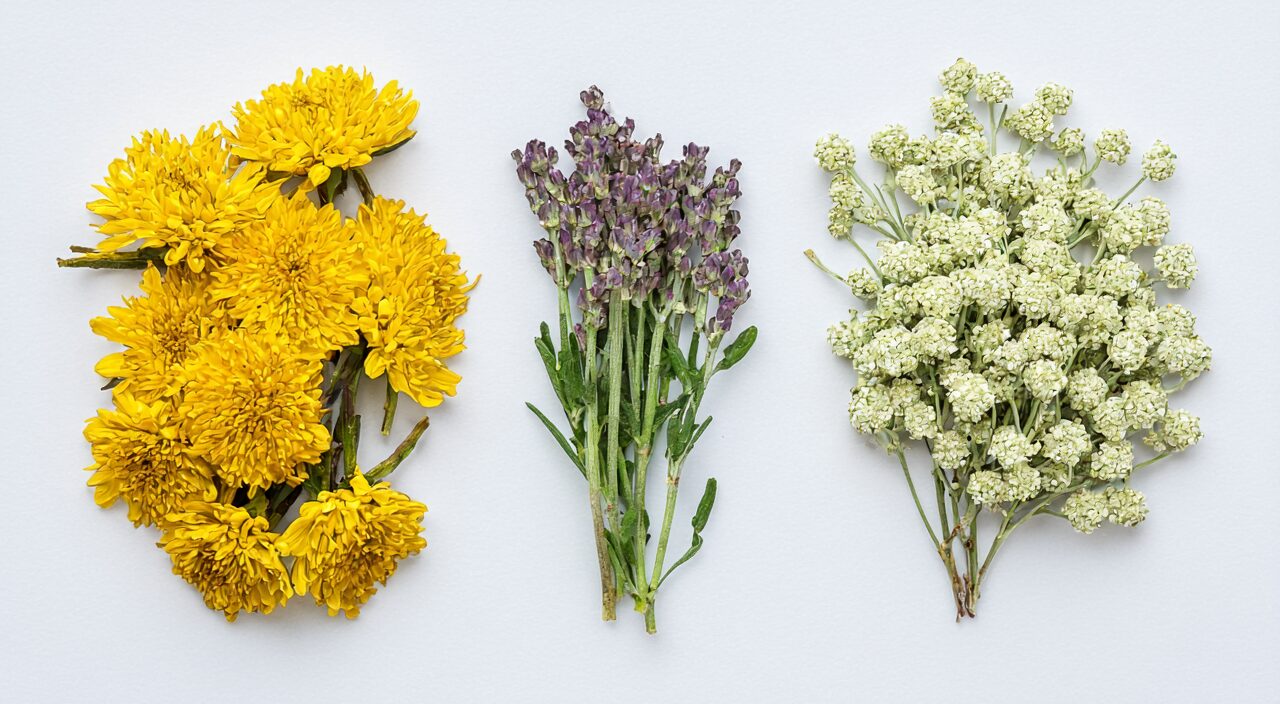
Many overseas Chinese readers easily confuse wild chrysanthemum with the ordinary chrysanthemum or with honeysuckle, because their names or usage contexts sometimes overlap. In reality, the three come from different sources and have distinctly different natures, flavours, and therapeutic emphases.
Chrysanthemum normally refers to the dried flower heads of Chrysanthemum morifolium. Depending on colour and processing method, it is further divided into Hang-ju, Bai-ju, Gong-ju, Chu-ju and so on. Chrysanthemum is generally sweet and bitter in flavour and slightly cold in nature. Traditionally it emphasizes dispersing wind-heat, calming the liver and brightening the eyes, and clearing heat and resolving toxins, but its action is relatively mild. It is more commonly used for wind-heat colds, red eyes, and dim vision. In appearance, cultivated chrysanthemum heads are usually larger than those of wild chrysanthemum, with more rows of ray florets and more varied colours – some are white, some pale yellow – and the bitterness is not pronounced.
Honeysuckle flower, on the other hand, is the flower bud or newly opened flower of Lonicera japonica, a plant in the Caprifoliaceae family. It is cold in nature and sweet in flavour, and mainly enters the Lung and Stomach channels. Traditionally it focuses on clearing heat and resolving toxins and dispersing wind-heat, and it is particularly effective for heat-toxin-induced abscesses, sores, sore throat and the like. Honeysuckle flower looks quite different from wild chrysanthemum: it is club-shaped or tubular, not yet fully open, and its colour gradually changes from greenish-white to yellowish-white. When tasted, it has a faint sweetness and a cooling sensation, not bitter and acrid like wild chrysanthemum. To summarize, wild chrysanthemum is not as intensely cold as honeysuckle, but its bitter and acrid taste is more obvious, and its action of clearing heat, draining fire, and resolving toxins and dispersing swellings may be somewhat more targeted. Chrysanthemum, however, leans more towards calming the liver, brightening the eyes, and dispersing wind-heat, with a relatively gentler nature. Although the three overlap in some traditional use directions, each has its own emphasis, and they cannot simply be substituted for one another.
Which formulas use wild chrysanthemum?
In compound formulas, wild chrysanthemum is often not the chief (sovereign) herb, but it often plays an important role in clearing heat, resolving toxins, and dispersing swellings and nodules. Below are a few representative formulas or preparation forms, presented only as an introduction to traditional application knowledge, and not as a recommendation for treatment.
Wuwei Xiaodu Yin (Five-Ingredient Toxin-Removing Decoction) is one of the classic heat-clearing and toxin-resolving formulas. It comes from the Yizong Jinjian (Golden Mirror of Medicine) and consists of five ingredients: honeysuckle flower, wild chrysanthemum, dandelion herb, Chinese violet herb, and Semiaquilegia adoxoides. The whole formula is relatively cold and cool, and was traditionally used for sores, furuncles and swellings caused by exuberant heat toxin. In it, wild chrysanthemum mainly helps strengthen the heat-clearing and toxin-resolving power, and is often used when abscesses and swellings are just beginning, with obvious redness, swelling, heat and pain. If you are considering exploring this direction, a professional must first determine whether a corresponding heat-toxin pattern exists.
Wild chrysanthemum suppositories are a modern dosage form for rectal administration. Traditionally they have often been used for managing chronic prostatitis, pelvic inflammatory disease and other conditions related to “damp-heat in the lower jiao.” The advantage is that they avoid direct irritation of the gastrointestinal tract that occurs with oral administration. However, precisely because the dosage form is special, their use requires following the product instructions, taking into account one’s actual condition and professional advice, and should not be self-judged or self-prescribed.
Wild chrysanthemum granules are a soluble preparation made from a single extract of wild chrysanthemum. The usual method is to take them dissolved in hot water, as an auxiliary choice for clearing heat and resolving toxins. Some people, when they sense the beginning of an externally contracted illness or when their throat feels uncomfortable, may consider using them on the understanding of their own constitution. However, because a single herb has a focused action, it is even more important to ensure it matches the pattern. If people with a cold constitution or a tendency to diarrhoea use it hastily, it may cause discomfort.
These formulas and preparations are often used within the framework of traditional Chinese medicine, but any choice must be made by comprehensively considering constitution, symptoms, and specific product information, and should not be adopted as a universal, self-selected solution.
What precautions should be taken when using wild chrysanthemum?
Although wild chrysanthemum is quite common, there are still some points to note in actual use, especially for people with spleen-stomach deficiency cold.
First, those with spleen-stomach deficiency cold must be cautious. Wild chrysanthemum is cold and cool in nature and bitter in flavour, so it can easily damage the yang qi of the spleen and stomach. If you often experience abdominal bloating, diarrhoea, poor appetite, or aversion to cold, using wild chrysanthemum in large amounts or for a long time may aggravate these discomforts. In traditional practice, it is often combined with herbs that warm the middle or strengthen the spleen to counteract its coldness, but this is a relatively specialized combination and ordinary readers should not assemble such formulas on their own.
Second, be alert to the risk of allergy. Chrysanthemum plants belong to the Asteraceae family. People who are allergic to ragweed, mugwort, daisies and the like may also have cross-reactivity to wild chrysanthemum, with symptoms such as itchy skin, rashes, or respiratory discomfort. When coming into contact with or using wild chrysanthemum products for the first time, it is advisable to start with a very small dose and observe. If any abnormal reaction occurs, stop immediately and consult a professional.
Third, avoid prolonged, high-concentration steeping. Some people get into the habit of drinking a large mug of strong wild chrysanthemum tea every day as a regular “fire-purging” drink. This practice is not recommended. Drinking large amounts of bitter and cold substances over a long period can affect digestive function and disrupt the body’s own balance. Even if your constitution tends towards heat, it is advisable to use it intermittently according to your actual state, not as a long-term daily habit.
Fourth, be alert to the contamination risks of wild-picked plants. Many friends overseas see plants that look like wild chrysanthemum in their yard or in the countryside and may think of picking them themselves. However, wild plants may be contaminated by pesticides, vehicle exhaust, heavy metals, or animal waste, and there are many plants with similar appearances – the risks of misidentification and accidental ingestion should not be underestimated. If you are not completely certain of the plant’s identity, it is not advisable to collect and use it.
For serious, prolonged inflammatory problems, or conditions accompanied by marked fever, severe redness, swelling and pain, or suppuration – especially if there is chest tightness, difficulty breathing, intense abdominal pain, or persistent vomiting – one should not rely on the single herb wild chrysanthemum for self-treatment, but should promptly see a doctor or an appropriate health professional.
Summary
Wild chrysanthemum is a Chinese herbal medicine with a clear origin and a broad tradition of use. Its main medicinal part is the dried flower head of Chrysanthemum indicum, and its key identification features are small size, yellow colour, and a bitter, acrid taste. In Chinese medical understanding, it is biased towards clearing heat, resolving toxins, draining fire and calming the liver, but it differs significantly from florist’s chrysanthemum and honeysuckle in origin, nature, flavour, and therapeutic emphasis. Understanding these differences and the common formulas can help you form a basic judgement when encountering related products and information. This article is for general educational reference only and cannot replace professional diagnosis or treatment advice. Any specific use should take into account individual circumstances and professional guidance.