
What Is Mirabilite (Mangxiao)? Medicinal Parts, Identification, and Common Formulas
If you have ever seen the names “Mangxiao” (mirabilite) or “Pixiao” in a Chinese herbal formula, you may be curious: it does not look like an herb or a root, but is a crystal processed from a mineral. In traditional Chinese medicine, mirabilite is often classified as a purgative, and many classic formulas for draining heat and promoting bowel movements rely on it. This article will outline the appearance characteristics, medicinal source, traditional understanding in Chinese medicine, and the difference from Xuanming powder (processed mirabilite), as well as introduce common formulas and risks that require special attention during use.
What Does Mirabilite Look Like? How to Identify It?
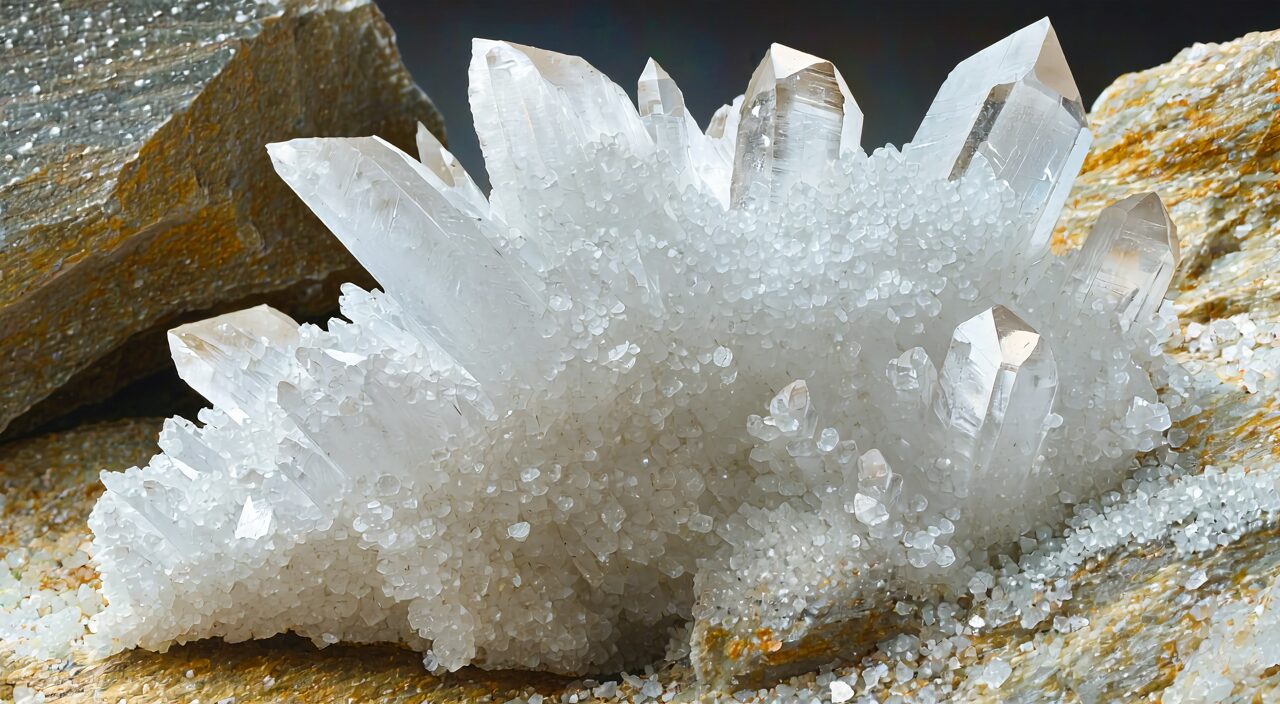
The natural mineral form of mirabilite is not directly used as medicine. Most of the medicinal material we see today is the product of refined crystallization, and its appearance has certain identifying features.
Crystal Form
Mirabilite is usually colorless or white, transparent or translucent, with a vitreous luster on the surface. The crystals are mostly prismatic or needle-shaped, sometimes granular or in irregular lumps. High-quality mirabilite in medicinal material tends to have complete crystals, long strips, white color, and strong transparency.
Efflorescence
The main component of mirabilite is sodium sulfate decahydrate. In dry air, it easily loses its water of crystallization, gradually forming a white, frost-like powder on the surface and becoming brittle—this is known as “efflorescence.” Therefore, it needs to be stored in an airtight container, avoiding direct contact with air; otherwise, it will slowly turn into a white powder that crumbles at a touch.
Odor and Taste
Mirabilite has no particular odor, but when tasted, it has a distinct salty taste with some bitterness and a cooling sensation. Traditionally, experienced pharmacy workers often identify it by combining appearance and taste, but directly tasting it is not a recommended identification method, especially for non-professionals.
What Is the Medicinal Part of Mirabilite?
The medicinal part of mirabilite is not simply the naturally collected mineral rocks. It is the refined crystal obtained through processes such as dissolving, filtering, and recrystallizing natural minerals containing sodium sulfate. In other words, mirabilite is an artificially purified mineral medicine, and its active component is mainly sodium sulfate decahydrate.
This processing method removes most insoluble impurities and makes the medicinal properties relatively pure and controllable. If further processing dehydrates mirabilite into anhydrous sodium sulfate, it becomes Xuanming powder (also known as Yuanming powder or calcined mirabilite). There are differences in properties and potency between the two.
How Does Chinese Medicine Understand Mirabilite?
The traditional understanding of mirabilite in Chinese medicine is mainly based on its salty, bitter, and cold nature. It enters the Stomach and Large Intestine meridians and is commonly described in terms of several therapeutic directions.
Purging and Promoting Bowel Movements, Moistening Dryness and Softening Hardness
Mirabilite is commonly used for excess heat accumulation, especially when heat pathogen binds with dry stool in the intestines, causing hard stools, abdominal fullness, distension, and pain. The traditional idea is that mirabilite’s salty-cold nature can soften dry, impacted feces, increase intestinal fluids, and thereby promote defecation. It is often combined with drugs like rhubarb (Dahuang)—one tends to attack and purge, the other to moisten and soften, achieving a synergistic effect.
Clearing Fire and Reducing Swelling
For external use, mirabilite is also commonly applied for heat-related conditions such as red, swollen, painful eyes, sore throat, mouth sores, or early-stage breast abscesses (mammary abscess). Dissolving it in water for gargling, eye washing, or wet compresses is considered a supplementary approach in some traditional experiences. The occasional “mirabilite external compress” used by many modern households mainly follows this idea, but it is still necessary to control concentration and duration when using it.
How Does Modern Research View Mirabilite?
Modern analysis confirms that the main component of mirabilite is sodium sulfate. After oral administration, sulfate ions and sodium ions are poorly absorbed by the intestinal wall, creating a hypertonic environment in the intestines that prevents water absorption and draws body fluids into the intestinal lumen. This thins the intestinal contents and increases their volume, stimulating peristalsis and producing a laxative effect. When used externally, the hypertonic effect has a certain astringent action on local inflammatory exudation. These findings are generally consistent with traditional usage, but it remains important to emphasize dosage control and constitutional suitability.
Differences Between Mirabilite, Xuanming Powder, and Table Salt
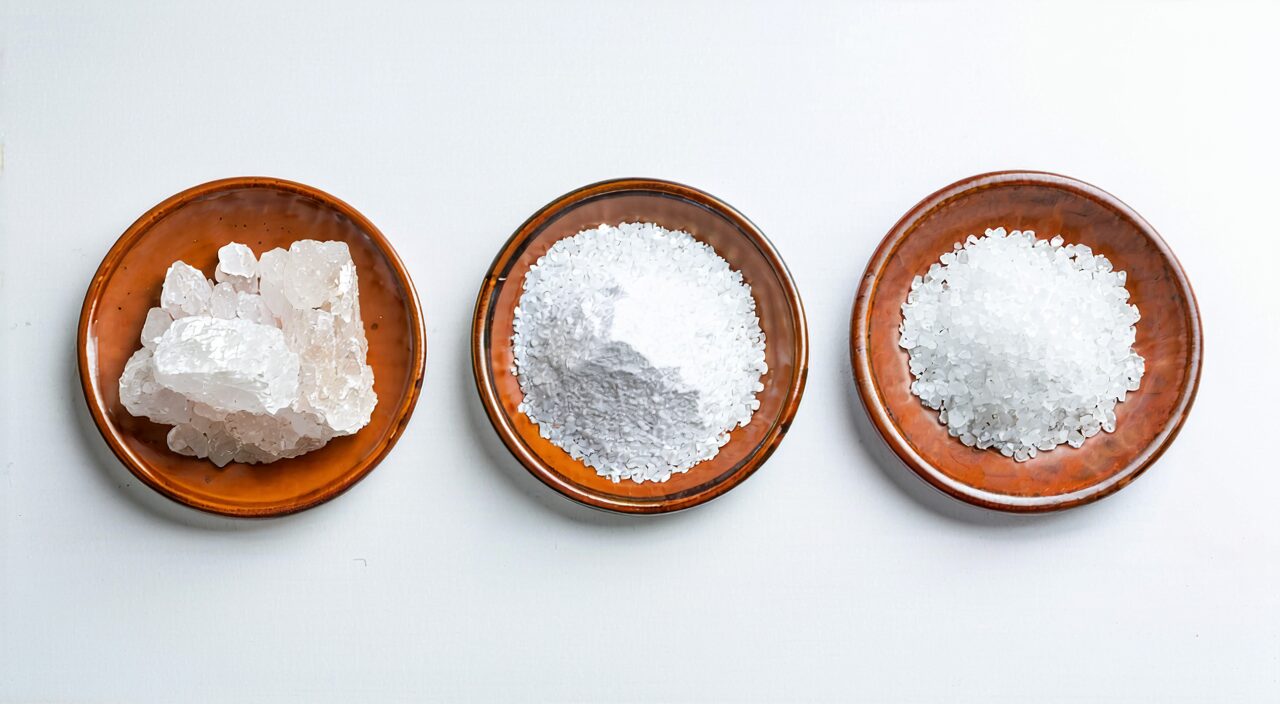
Although they are all white or colorless substances, mirabilite, Xuanming powder, and table salt are easily confused, but their components and uses are distinctly different.
Mirabilite is a hydrated sodium sulfate crystal with a cold nature and relatively strong purgative power, commonly used in formulas for severe excess heat accumulation. Xuanming powder is anhydrous sodium sulfate obtained after mirabilite undergoes efflorescence; it has a purer, finer texture and a relatively milder nature. In addition to internal use for unblocking the bowels, it is also more commonly used in external preparations for ophthalmology and laryngology.
The main component of table salt is sodium chloride. Although it is also salty, it does not have the stool-softening and purgative action of mirabilite and cannot be used as a substitute for mirabilite in medicine. Mistaking salt for mirabilite or Xuanming powder not only fails to achieve the expected effects but may also delay proper treatment. Therefore, when purchasing and using these substances, one should pay attention to distinguishing them based on the properties and processing methods of the medicinal materials.
Which Formulas Use Mirabilite?
Mirabilite is not uncommon in classic Chinese medicine formulas, especially the Cheng Qi Tang series that combines it with rhubarb. Several well-known formulas are listed below, solely for the purpose of understanding traditional knowledge and not as a recommendation for self-prescription.
Da Cheng Qi Tang (Major Purgative Decoction)
Da Cheng Qi Tang consists of rhubarb (Dahuang), magnolia bark (Houpo), immature bitter orange (Zhishi), and mirabilite (Mangxiao). Traditionally, it is used for drastically purging heat accumulation patterns, such as severe excess-heat constipation with abdominal distension, hardness, and pain that refuses pressure, sometimes accompanied by fever, delirium, or other complex manifestations. In this formula, mirabilite works together with rhubarb to soften hardness, moisten dryness, and clear excess heat from the intestines, following the principle of urgent purgation to preserve yin. This type of formula has strong actions and should only be considered under the pattern-differentiation guidance of a professional.
Tiao Wei Cheng Qi Tang (Stomach-Regulating Purgative Decoction)
Tiao Wei Cheng Qi Tang has a simpler composition compared to Da Cheng Qi Tang, containing only rhubarb, mirabilite, and licorice (Gancao). This formula is more gentle in its purgative action and is suitable for the early stage when dry-heat has just started to accumulate in the intestines and has not yet formed severe excess and fullness. Licorice is included to protect stomach qi and prevent overly harsh purgation.
Tao He Cheng Qi Tang (Peach Kernel Purgative Decoction)
Tao He Cheng Qi Tang adds peach kernel (Taoren) and cinnamon twig (Guizhi) to the base of Tiao Wei Cheng Qi Tang, focusing on both invigorating blood, dispelling stasis, and draining heat. It is often used for lower-jiao blood accumulation patterns with symptoms such as lower abdominal tension and spasms, normal urination, and irritability or mania caused by the binding of stasis and heat. Here, mirabilite still plays its role in draining heat and softening hardness, while peach kernel and cinnamon twig are responsible for transforming stasis and unblocking vessels.
Da Xian Xiong Tang (Major Chest Draining Decoction)
Da Xian Xiong Tang consists of kansui root (Gansui), rhubarb, and mirabilite. It mainly targets chest-binding patterns where water and heat mutually bind in the chest and abdomen, presenting with hardness, fullness, and pain from the epigastrium down to the lower abdomen that cannot be touched. Mirabilite assists rhubarb and kansui in draining heat and expelling water; this formula has extremely strong attacking and purging power and should never be tried casually.
Whether the above formulas are suitable for a specific individual requires a comprehensive assessment based on constitution, patterns, tongue and pulse presentations, and other holistic information, and cannot be applied just by matching a couple of symptoms.
What Precautions Should Be Taken When Using Mirabilite?
Although mirabilite is a commonly used mineral medicine, improper use or ignoring contraindications can cause significant discomfort or even risks.
It is contraindicated during pregnancy. Mirabilite’s purgative and blood-activating tendencies may adversely affect pregnancy. People who usually have spleen-stomach deficiency cold, loose stools, the elderly, those who are weak, or those with chronic illness and deficiency should also exercise extreme caution and are generally not suitable candidates.
Oral administration of mirabilite readily causes diarrhea. If the dosage is too large or the medication is used for a long time, it may lead to dehydration and electrolyte imbalances, presenting symptoms such as fatigue and palpitations. Therefore, it should not be used long-term as a self-prescribed laxative. In cases of intestinal obstruction or severe abdominal pain and vomiting of unknown cause, the condition must be clearly diagnosed by a physician before deciding whether to use it; blind purgation must be avoided.
For external use, attention must be paid to concentration and the area of application. High-concentration solutions can be irritating to the skin and mucous membranes and should not be applied to large areas of broken skin or used as a prolonged wet compress on the same site. In addition, if you are taking iodine-containing medications or need to restrict sodium intake, you should inform your doctor beforehand so they can evaluate whether mirabilite is appropriate.
In summary, mirabilite is a substance that requires “using at the right time, with the right dosage, and in the right combination.” If you are not certain about your own condition, it is advisable to first consult a professional Chinese medicine practitioner or medical expert.
Summary
As a refined crystalline mineral medicine, mirabilite’s main component is sodium sulfate decahydrate. In traditional Chinese medicine, it is commonly used for constipation related to excess heat accumulation, abdominal fullness, and external redness, swelling, heat, and pain. Although it shares the same origin with Xuanming powder, there are differences in processing and emphasis in usage. In classic formulas like Da Cheng Qi Tang and Tiao Wei Cheng Qi Tang, mirabilite often plays a key role in softening hardness and draining heat. It is important to note that mirabilite has strong medicinal properties and demands strict requirements regarding constitution and conditions of use. Ordinary individuals are not recommended to take it internally at will or apply it externally over a long period; any therapeutic approach is best undertaken under professional guidance.