
What Is Tongcao? Medicinal Parts, Identification, and Common Formulas
Many overseas Chinese who have encountered traditional formulas or lactation-promoting diets may have heard the name “Tongcao.” It often appears in discussions about postpartum care or damp-heat constitutions. However, many are unclear about which part of the plant Tongcao comes from, how to identify the genuine product, and how it differs from the similarly named Mutong. This article provides a clear reference framework for readers who want to learn about Tongcao, covering its botanical source, appearance characteristics, traditional understanding, and common formulas.
What Does Tongcao Look Like? How to Identify Its Appearance Characteristics?
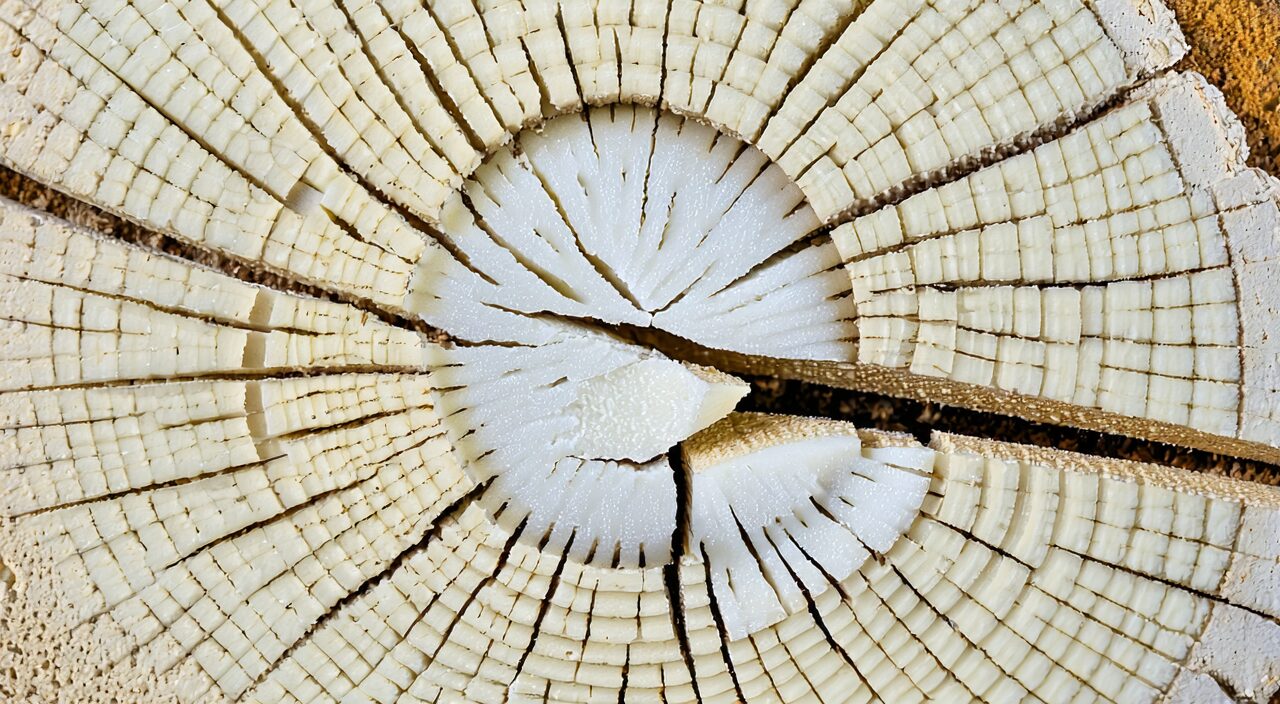
Among Chinese medicinal materials, Tongcao has a rather distinctive appearance, and identification usually focuses on several key characteristics.
Tongcao is cylindrical, generally 20–40 cm in length and about 1–2.5 cm in diameter. The surface is white or pale yellowish-white, with shallow longitudinal grooves, giving it a clean and plain overall appearance. Its most distinctive textural feature is its lightness; it feels almost weightless in the hand, is soft and spongy with slight elasticity, and yields to gentle pressure with a visible depression.
When broken, the cross-section is relatively flat, showing fine, radially arranged lines, sometimes with a hollow center or a semi-transparent membrane. Although the texture is soft and spongy, it does not easily crumble into powder — a detail that helps distinguish it from other white, woody medicinal materials.
In the market, adulterants that are excessively white or too hard may occasionally be seen. In such cases, one can rely on the surface grooves, the radial lines on the cross-section, and the extremely light hand-feel to make a comprehensive judgment. Tongcao has no distinct odor and a very bland taste, which can also serve as auxiliary identification clues.
What Is the Medicinal Part of Tongcao? How Is It Harvested and Processed?
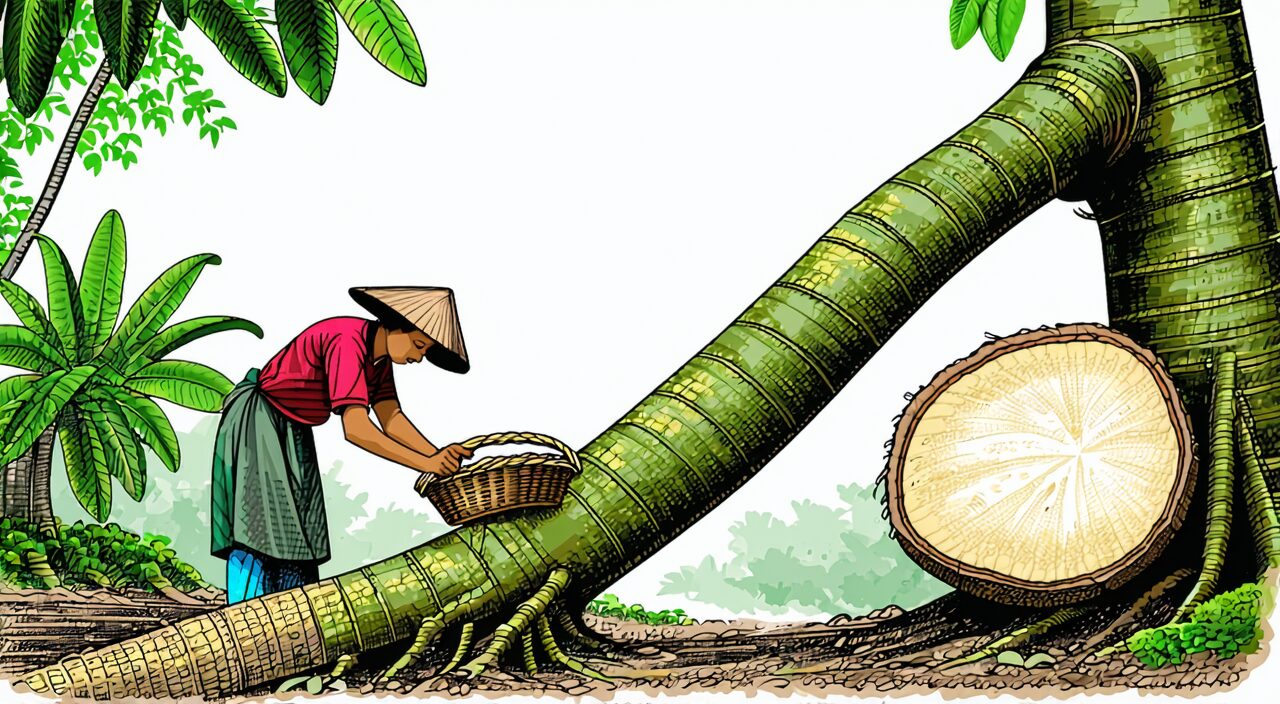
Tongcao is not the entire stem of the plant used for medicine; its medicinal part is the dried stem pith of Tetrapanax papyrifer.
Tetrapanax papyrifer is a plant in the Araliaceae family, and autumn is the main harvest season. Stems that are two to three years old are typically selected, cut down, and sectioned. While still fresh, the central pith is carefully removed in one piece, keeping the pith strip intact to avoid breakage. The extracted pith is straightened and then dried in a well-ventilated place or at low temperature, becoming the medicinal material Tongcao.
Due to its spongy texture, the pith becomes very light and soft after drying and has a strong water-absorbing capacity. It can sometimes be seen cut into thin slices or thin strips for easy decoction or combination with other herbs. Understanding this harvesting and processing helps explain why Tongcao appears so light and puffy and floats easily on water.
How Does Traditional Chinese Medicine View Tongcao? Traditional Uses
In the thinking of traditional Chinese medicine, Tongcao does not work by directly nourishing the body, but rather plays a role of “unblocking” or “dredging.”
Tongcao is sweet and bland in flavor, slightly cold in nature, and enters the Lung and Stomach meridians. Its bland taste is believed to drain dampness, and its cold nature can clear heat. Traditionally, it has been used for several purposes: first, for difficult urination, dribbling urination with pain, and other conditions where damp-heat accumulates in the lower burner, making use of its ability to clear heat, promote urination, and guide damp-heat out through the urine; second, for blocked or insufficient lactation after childbirth, drawing on the traditional understanding that it unblocks qi and promotes milk flow. It is often combined with other herbs that strengthen the spleen, nourish blood, or soothe the liver and regulate qi.
It is important to emphasize that insufficient or blocked lactation can have many causes, including qi and blood deficiency, liver qi stagnation, or blockage of the milk ducts. Tongcao is mainly used when there is qi stagnation preventing milk flow, serving as an option to assist in unblocking qi movement. Whether it is suitable needs to be analyzed in light of the individual’s constitution and specific situation; a judgment should not be made based solely on this single herb.
In addition, Tongcao is also commonly used in the early stages of damp-warmth diseases, with sensations of chest tightness and a heavy body, where it improves the state of dampness trapping the body by promoting urination to drain dampness. These applications are mostly found in compound formulas rather than being used alone.
What Components Have Modern Studies Discovered?
From the perspective of modern phytochemistry, the stem pith of Tongcao mainly contains polysaccharides, flavonoids, and small amounts of trace elements. Among these, the polysaccharide components have drawn considerable attention, with some studies suggesting possible diuretic and immunomodulatory activities. In vitro experiments have also observed that Tongcao extracts have some effects on certain inflammatory factors, but these findings generally remain at the experimental stage.
These components and their directions of action show a certain parallel with the traditional uses of clearing heat, draining dampness, and promoting free movement in the lower burner, but they are still insufficient to be directly extrapolated as evidence for clinical efficacy. For readers interested in natural plant components, this information can serve as background reference for a deeper understanding of Tongcao.
What Are the Differences Between Tongcao, Mutong, and Xiaotongcao?
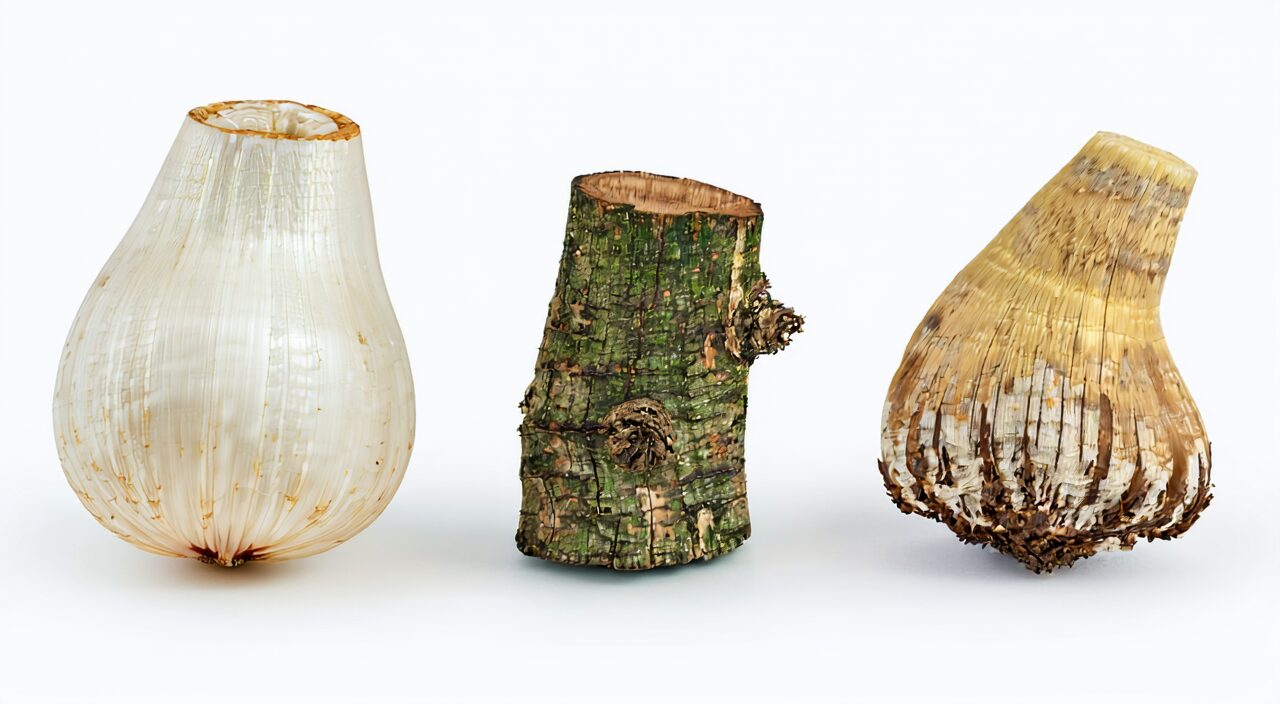
Although “Tongcao” and “Mutong” have similar names and have even been confused in some regions, they are actually two completely different medicinal materials with very different safety profiles.
Tongcao comes from the pith of Tetrapanax papyrifer stems, with a soft, white appearance, extremely light weight, and a cross-section showing radial lines. Mutong, by contrast, comes from the woody stems of plants in the Lardizabalaceae family such as Akebia quinata, Akebia trifoliata, or Akebia trifoliata var. australis. It appears as hard, woody stem slices that are yellowish-brown or grayish-brown, with a cross-section showing radial cracks and a firm texture. When placed side by side, the differences in weight and hardness are very obvious.
Another easily confused item is Xiaotongcao. Xiaotongcao usually refers to the stem pith of plants in the Stachyuraceae family, such as Stachyurus himalaicus or Stachyurus chinensis. It resembles Tongcao in shape but is thinner, with a diameter generally between 0.5 and 1 cm, a slightly harder texture, and a pale yellow color. In traditional use, the applications of the two overlap somewhat, but their different sources and characteristics mean they should not be casually substituted for one another.
It is especially important to note that among Mutong-type materials, Guanmutong (Aristolochia manshuriensis) has been reported to contain aristolochic acid and carries a clear risk of nephrotoxicity; it is no longer used as a Mutong medicinal material. To avoid misuse, when purchasing these herbs, one must carefully distinguish between the commercial name and the actual plant source and clearly know whether the material is Tongcao, Mutong, or Xiaotongcao.
Which Classic Formulas Use Tongcao?
Tongcao mostly appears as an auxiliary herb in formulas, helping the whole formula to better unblock water passages or the qi mechanism of the breasts. The following formulas are representative examples of its use.
Tongru Dan (Lactation Promoting Elixir) is a classic formula recorded in Fu Qingzhu’s Obstetrics and Gynecology from the Qing Dynasty, used for postpartum lactation insufficiency. The formula mainly consists of qi- and blood-nourishing ingredients such as ginseng, astragalus, Chinese angelica, and ophiopogon root, combined with Tongcao, platycodon root, and pig trotters. Here, Tongcao primarily acts to unblock collaterals and promote milk flow, helping the milk to be discharged when qi and blood are sufficient.
Xiaru Yongquan San (Milk Gushing Powder) is often used in cases of blocked lactation caused by liver qi stagnation. The formula includes liver-soothing and blood-nourishing herbs such as Chinese angelica, white peony root, bupleurum, and green tangerine peel, combined with unblocking herbs like Tongcao, rhaponticum root, and cowherb seed, emphasizing the regulation of qi, dispersal of stagnation, unblocking of collaterals, and promotion of milk flow.
San Ren Tang (Three Kernels Decoction) is a representative formula in the school of warm diseases, composed of apricot kernel, cardamom seed, and coix seed. It is used in the early stage of damp-warmth diseases where dampness predominates over heat. Tongcao, bamboo leaf, and talc are often added to the formula to promote bland urination, drain dampness, and guide damp-heat downward. Here, Tongcao does not directly address breast issues but focuses on providing an exit for dampness in the body.
These formulas target different aspects and are not suitable for all situations. When choosing, it is necessary to clarify whether the condition is due to qi and blood deficiency or qi stagnation, and whether dampness or heat is predominant, in order to gain a more directional understanding.
What Precautions Should Be Taken When Using Tongcao?
Although Tongcao appears gentle, there are still several aspects that require caution when using it.
Pregnancy is the first stage to consider. Tongcao is slightly cold in nature and excels at promoting free movement. In traditional experience, pregnant women are generally advised to avoid it to prevent unnecessary disturbance to the pregnancy.
For individuals with dual deficiency of qi and yin and without obvious signs of damp-heat or qi stagnation, long-term or large-scale use of bland, dampness-draining herbs may consume qi and yin, making one more prone to fatigue, dry mouth, and decreased appetite. Therefore, if one does not have a constitution characterized by damp-heat accumulation or qi stagnation, Tongcao is not very suitable as a daily health product.
When lactation is blocked after childbirth, it is also necessary to first assess the root cause. If the lack of milk flow is due to severe deficiency of qi and blood leading to insufficient milk production, using Tongcao alone to promote qi and unblock collaterals is often limited in effect and may even consume qi. In such cases, more attention should be paid to the spleen and stomach’s absorption and the generation of qi and blood, and Tongcao can only be considered as part of a combination strategy, not an independent solution.
Finally, the issue of source must be emphasized again. Because there is still confusion in names or substitution among Tongcao, Mutong, and Xiaotongcao in commerce in some regions, when purchasing, one should try to select herbs with clear sources and accurate labeling to avoid misuse of species containing aristolochic acid. If there is any doubt about the source or safety of the medicinal material, a qualified Chinese medicine professional should be consulted promptly.
Summary
As a Chinese medicinal characterized by its unblocking and promoting action, the key to identifying Tongcao lies in its white cylindrical pith, light weight and soft texture, and radial lines on the cross-section. Traditionally, it is mainly used for clearing heat, promoting urination, and unblocking qi to promote lactation, but its specific application needs to be comprehensively judged in light of the individual’s constitution and disease cause. In particular, it must be strictly distinguished from easily confused items such as Mutong based on source and characteristics. The content of this article is for general informational purposes only and cannot replace professional diagnosis or individualized medication advice.