
What Is Mutong? Medicinal Parts, Identification, and Common Formulas
Mutong may sound like an ordinary Chinese medicine, but many readers only notice it when they encounter formulas for promoting urination or lactation. More importantly, Mutong is often confused with Guanmutong, which caused a nephrotoxicity scandal. Therefore, accurately understanding what the currently used Mutong is, how to identify it, and how it differs from Guanmutong is the prerequisite for safe use.
What Does Mutong Look Like? Quick Visual Identification
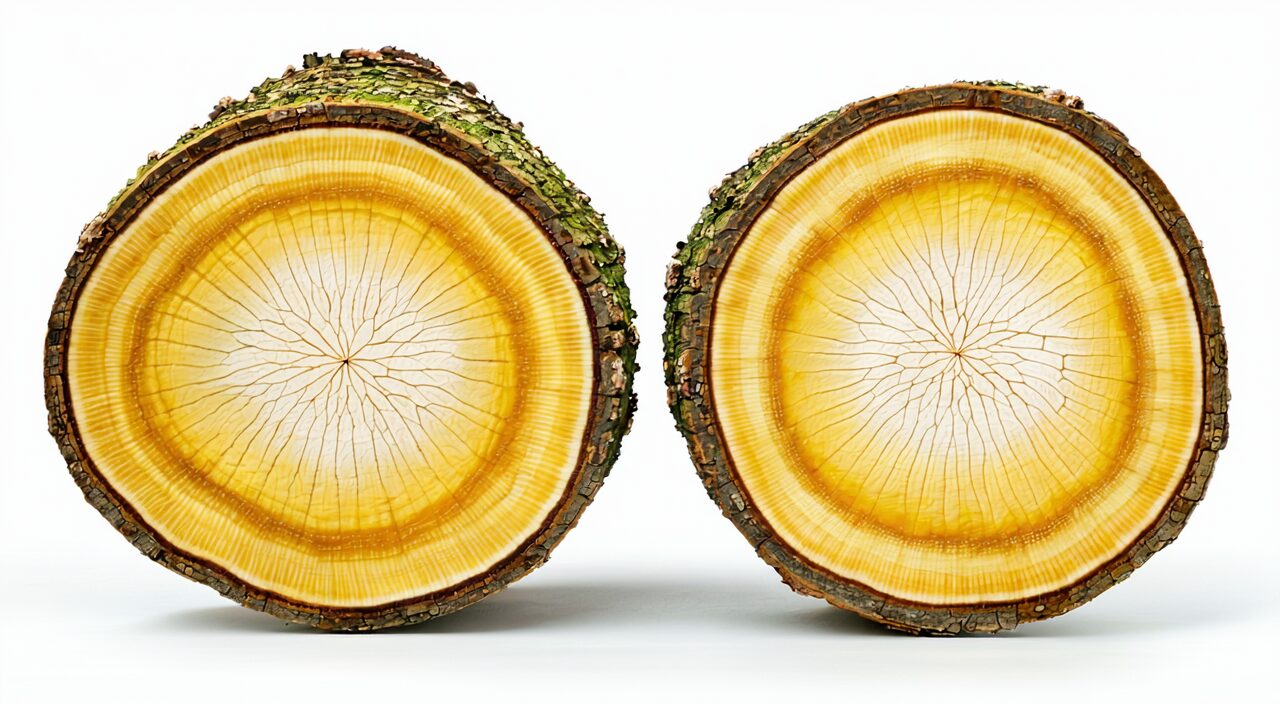
In current clinical practice and the herbal market, Mutong mainly comes from the dried stems of Akebia quinata, Akebia trifoliata, or Akebia trifoliata var. australis (family Lardizabalaceae). When purchasing or examining decoction pieces, you can rely on the following features.
Decoction pieces are mostly nearly round or oval thick slices with irregular edges. The outer bark is grayish-brown or grayish-tan, sometimes with longitudinal wrinkles or cracks, and tends to peel off easily. On the cut surface, the bark layer is relatively thin, while the wood is broad, appearing yellowish-white to light brownish-yellow. The most distinctive feature is the radially arranged vessel pores within the wood, along with multiple concentric rings resembling a wheel pattern. Near the center, there is usually a small pith, which is pale, sometimes whitish or loose-textured. The sliced pieces are solid and firm but break relatively easily, with a mild odor. The original stem is cylindrical, slightly twisted, and varies in thickness. These morphological traits can help distinguish it from other similar-looking vine stems.
What Is the Medicinal Part of Mutong?
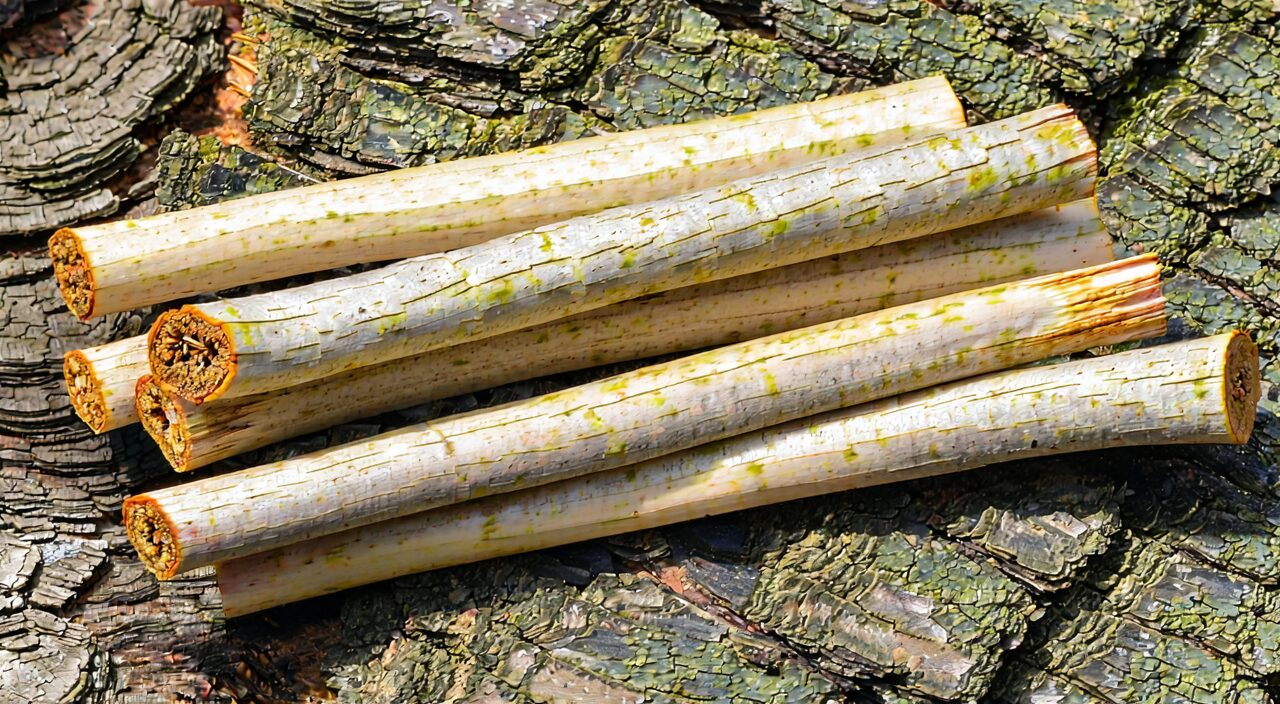
The medicinal part of Mutong is clearly defined as the dried stem of Akebia plants. Harvest usually takes place in autumn. The stems are cut, and after removing thin branches and leaves, they are sliced or sectioned while fresh and then dried in the sun or at low temperature. In some regions, the rough outer bark is scraped off after harvest to improve the cleanliness of the decoction pieces. During processing, care should be taken to prevent mold and insect infestation by keeping the stems dry.
According to traditional collection and usage experience, the stems are quite hard and are often prepared as thick slices or sections to facilitate the extraction of active components during decoction. Since the stem is perennial, the wood of older stems is particularly tough, and the thickness and processing method can affect the extraction efficiency.
How Traditional Chinese Medicine Understands the Uses of Mutong
In traditional Chinese medicine, the understanding of Mutong mainly revolves around its actions of clearing heat, promoting urination, unblocking meridians, and stimulating lactation. It is considered to enter the Heart, Small Intestine, and Bladder meridians. Because its nature and taste are bitter and cold, it is often used in patterns involving heat signs or damp-heat.
For symptoms such as scanty, dark urine, painful difficult urination, oral sores, irritability, and reddish urine, the traditional approach often involves the concept of heart fire transmitting to the small intestine. In such cases, Mutong can be selected as one option to clear heart fire and promote urination. For postpartum blocked milk flow or insufficient lactation, if the differentiation indicates qi and blood stagnation with obstructed breast channels, Mutong is sometimes combined with other channel-unblocking and lactation-promoting herbs to assist milk flow. For damp-heat pouring downward causing swollen, painful feet and knees and joint discomfort, Mutong is often paired with herbs that clear heat, drain dampness, and relax sinews.
It must be emphasized that these are traditional empirical approaches and whether they suit an individual’s condition needs to be assessed by an experienced TCM professional based on specific constitution and symptoms.
Modern Research Focuses on Source Identification and Safety
Modern attention to Mutong focuses more on source species authentication and safety differences between varieties. The current Chinese Pharmacopoeia includes Mutong from Akebia plants, which do not contain aristolochic acids, and it is completely different from the previously used Aristolochia manshuriensis (Guanmutong). Research uses organoleptic, microscopic, thin-layer chromatography, and molecular identification methods to effectively distinguish Mutong, Guanmutong, and other similar species. Therefore, choosing herbs from regulated channels with clear origin is the foundation for ensuring safe use.
In addition, preliminary chemical analyses of Mutong stems have found triterpenoid saponins, lignans, β-sitosterol, and other constituents, but in-depth pharmacological studies remain relatively limited, and current data largely consist of traditional use records. In terms of safety, clinically there are very few reports of kidney injury induced by properly used Akebia Mutong, but this does not imply that high doses or long-term use are safe.
Key Differences Between Mutong, Guanmutong, and Tongcao
Mutong is easily confused with Guanmutong and Tongcao, but the three differ completely in source, plant part, and safety requirements.
Guanmutong is the dried stem of Aristolochia manshuriensis (family Aristolochiaceae) and contains aristolochic acids, posing a clear risk of nephrotoxicity. It is now banned as Mutong in the Chinese market and must not be substituted. Mutong comes from Akebia plants, contains no aristolochic acids, and is the current pharmacopoeial species. In appearance, Guanmutong has a smoother surface, thicker bark, and slightly different ray clarity and radial texture on the cut surface, but visual differentiation by non-experts remains difficult. Therefore, the foremost safety principle is to avoid products of unknown origin.
Tongcao, although often mentioned together with Mutong for promoting lactation, is the dried stem pith of Tetrapanax papyrifer (family Araliaceae). It appears as white, soft, light pith slices, completely different from the woody stem of Mutong. The two also differ in nature, taste, meridian entry, and traditional focus: Tongcao is more oriented toward light, diffusing diuresis and promoting milk flow, suitable for damp-warm patterns or lactation deficiency with a deficiency tendency. Clarifying these differences helps understand the role of each herb when referencing various formulas.
Several Classic Formulas That Include Mutong
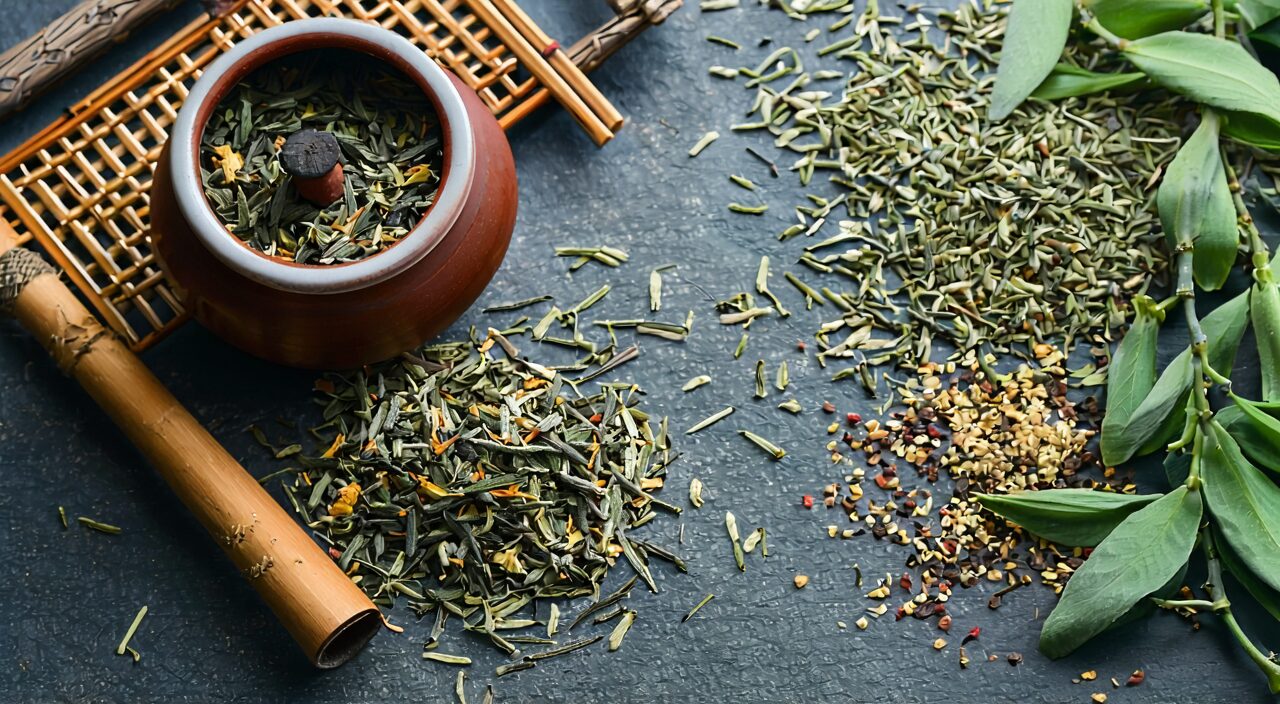
In TCM formulas, Mutong is often incorporated as part of a strategy to promote urination, relieve strangury, or clear heart fire. Below are a few traditional formulas that include Mutong, provided for educational purposes only; individual use must be evaluated by a professional.
Bazheng San: This formula combines Plantago seed, Dianthus, Polygonum aviculare, talcum, Mutong, Gardenia fruit, rhubarb, and licorice. It is traditionally used for damp-heat pouring downward causing frequent, urgent, painful urination. Mutong assists in clearing damp-heat and guiding it out through the urine. In modern settings, infectious diseases should be ruled out before pattern-based use.
Daochi San: Composed of rehmannia root, Mutong, licorice tip, and lophatherum leaf, it is often used for excess heart heat with oral sores, reddish urine, and difficult urination. In this formula, Mutong works with rehmannia to drain heart fire and promote urination. Note that its use must be based on specific tongue and pulse diagnosis.
Xiaoji Yinzi: Contains field thistle, rehmannia, talcum, Mutong, cattail pollen, lotus node, and lophatherum leaf. It is traditionally used for heat binding in the lower burner causing bloody strangury or hematuria. Mutong helps clear heat, unblock strangury, and stop bleeding with stasis dispersing, but the causes of blood in urine are complex, and organic pathology must be ruled out first.
Mutong San: This is a category of formulas named after Mutong, with variations in composition across different texts. Commonly paired herbs include Polyporus, Poria, white mulberry bark, and betel nut. It emphasizes promoting water metabolism, reducing edema, and regulating qi to relieve stagnation. It is traditionally used for edema and difficult urination. Which specific Mutong San is chosen should be referenced against the original source and combination.
The above formulas have different emphases and are not universal remedies for similar symptoms. Each choice must consider constitution, accompanying signs, relevant product information, and professional advice.
Crucial Precautions When Using Mutong
First, never substitute Guanmutong for Mutong. Because Guanmutong contains aristolochic acids, even short-term use can cause irreversible kidney damage, and its medicinal standard has been revoked in many countries and regions. When purchasing or using products containing Mutong, always verify that the source species is Akebia and avoid herbs with unclear labeling from informal channels.
Second, people with renal insufficiency, chronic kidney disease, glomerulonephritis, or renal failure should avoid using Mutong. Even genuine Akebia Mutong should be strictly avoided if underlying kidney problems exist. Pregnant and lactating women, as well as young children, should not use Mutong-containing preparations on their own when reliable risk assessment is lacking.
Third, there is insufficient evidence for long-term or high-dose use of Mutong. Historically, Mutong was rarely used alone in large doses; it is typically used in compound formulas for short periods. If symptoms such as abnormal urination or oral sores recur and fail to resolve, or if accompanied by chest tightness, palpitations, abdominal pain, nausea, decreased appetite, weight loss, etc., discontinue use promptly and seek medical help to rule out deeper health issues.
Fourth, Mutong products of unknown origin, compound herbal packs with unclear labeling, and loose bulk herbs sold online carry higher risks and are not recommended for self-purchase. Overseas use must also consider local regulations and legal requirements regarding Chinese medicine.
Summary
The key to understanding Mutong lies in grasping its stem origin, visual characteristics, and the fundamental difference from Guanmutong. In traditional formulas, Mutong often plays a supporting role in clearing heat, promoting urination, and unblocking lactation, but its safety rests on using the correct source species and rational combinations. For those with renal insufficiency, during pregnancy, or when considering products of unknown origin, maintain clear risk awareness and seek professional guidance when necessary. This article is intended to provide objective herbal education and should not replace personalized TCM pattern differentiation or modern medical diagnosis.