
What Is Rush Pith? Medicinal Parts, Identification, and Common Formulas
In traditional Chinese medicine, rush pith is a common diuretic and dampness-draining herb derived from the dried stem pith of Juncus effusus L. Many people associate its name with a lamp wick because it is slender, white, and resembles the wick of an old oil lamp. For overseas readers interested in Chinese herbs, understanding rush pith’s appearance, medicinal part, and its role in formulas provides a solid foundation. Below, we will introduce its identification, processing, TCM perspective, and differences from rice paper pith (Tongcao).
What Does Rush Pith Look Like? How to Identify It
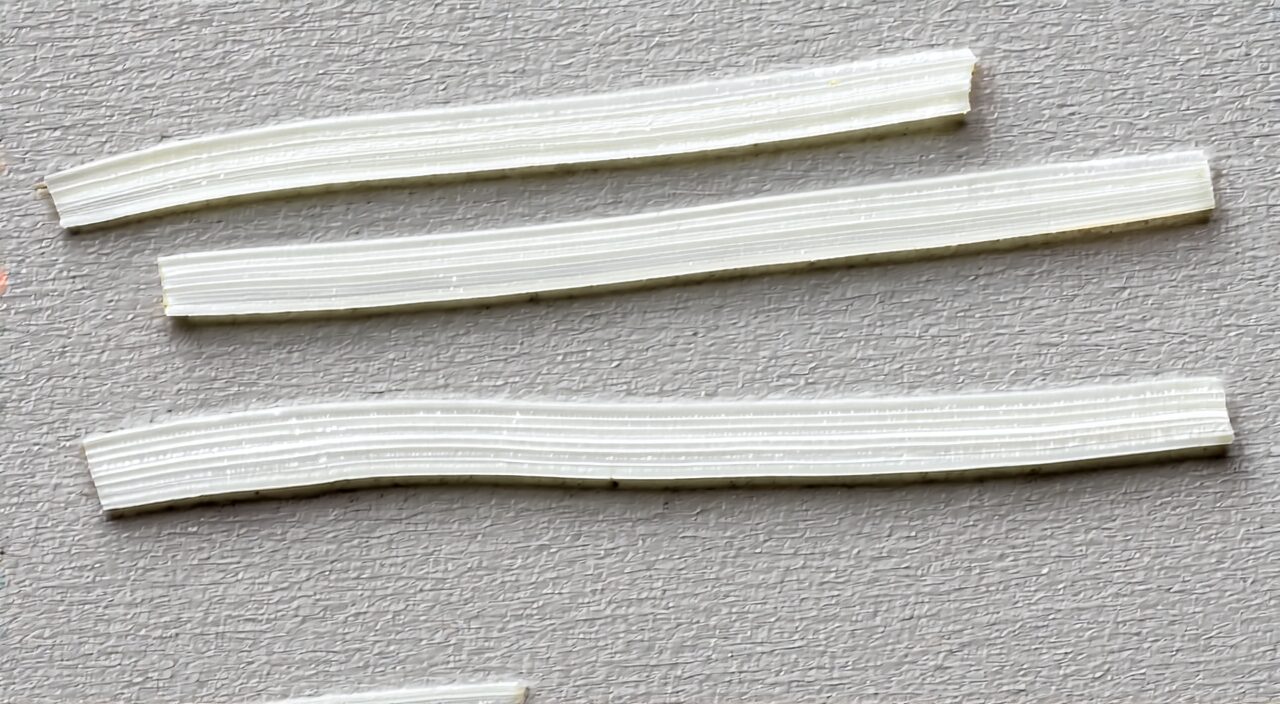
The medicinal part of rush pith is mainly the slender stem pith, so it has quite distinctive morphological features. The herb appears as fine cylindrical strips, sometimes slightly curved, and can be up to several dozen centimeters long with a diameter mostly between 1–3 mm. The surface is white or pale yellowish-white, without nodes or obvious branches. On close inspection, you can see fine, dense longitudinal striations covering the entire pith—this is an important visual identification point.
In the hand, rush pith is extremely light, almost weightless. The texture is soft with slight elasticity; it breaks easily with a gentle pull, leaving a clean cross-section that reveals the white pith without any layered structure. It has no particular smell and tastes very bland. Traditionally, better-quality rush pith is considered to be long, thick, white, lightweight, and with prominent longitudinal striations. If the herb appears dark, hardened, or crumbles easily into powder, it may have been stored improperly or is of inferior quality.
Which Part of the Plant Is Used Medicinally?
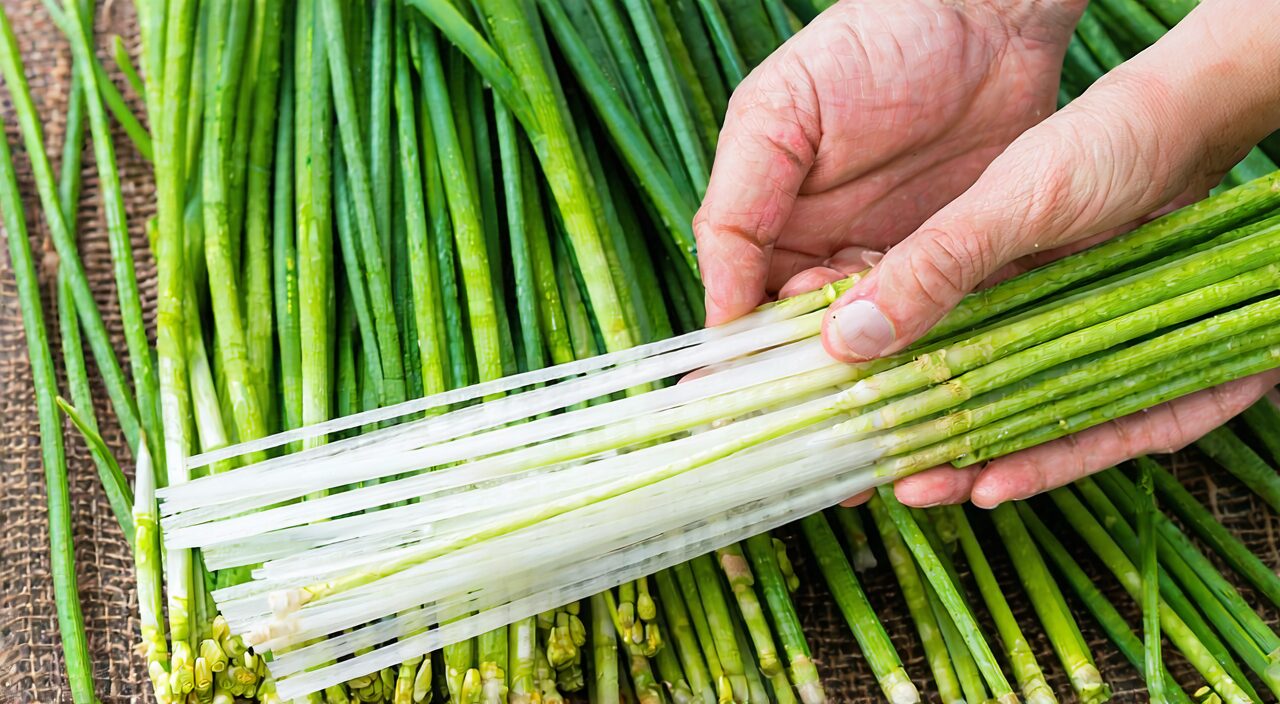
Many people mistakenly think rush pith refers to the entire aerial part of the plant, but its medicinal part is quite specific: only the white pith inside the stem—the dried stem pith of Juncus effusus.
Harvesting and processing typically take place from late summer to autumn, when the plant is thriving and the pith inside the stems is plump. The whole plant is cut, the outer skin and green stem bark are peeled away, and the inner white pith is slowly drawn out. It is then straightened, tied into small bundles, and dried in the sun. Although the process sounds simple, it relies heavily on manual work and requires care to avoid breaking the pith strands.
Besides the raw, sun-dried product, there are several processed forms. One common type is “cinnabar-processed rush pith” (Zhu Deng Xin), made by evenly coating clean rush pith segments with a very fine powder of cinnabar (mercury sulfide). This is intended to enhance its mind-calming and spirit-quieting effects. However, because cinnabar contains mercury sulfide, dosage must be carefully controlled and its use should be strictly guided by a professional. Another preparation is “charred rush pith” (Deng Xin Tan), produced by sealing rush pith and calcining it into charcoal, used mainly for external applications or as an astringent to stop bleeding. All these forms highlight the traditional application ideas associated with different processing methods of the same medicinal part.
How Does TCM Understand Rush Pith?
From the perspective of TCM nature, taste, and meridian tropism, rush pith is sweet and bland in flavor, slightly cold in nature, and enters the Heart, Lung, and Small Intestine meridians. Because sweet and bland flavors can drain dampness, and slight cold can clear heat, it has traditionally been regarded as an herb that clears heart fire and promotes urination.
In terms of specific applications, rush pith is often used when heart fire is excessive or there is heat in the heart meridian, manifesting as restlessness, disturbed sleep, mouth and tongue sores, or scanty, dark urine with a burning sensation during urination. Traditional TCM approaches may consider using rush pith to clear the heart and relieve vexation, guiding heat downward to be excreted through urine. However, these indications are not suitable in every situation; it is more appropriate for patterns of excess heat or heat in the heart meridian accompanied by difficult urination. In cases of deficiency-cold or qi deficiency leading to frequent urination, copious clear urine at night, or mental restlessness, rush pith is not commonly indicated. This distinction directly influences whether the herb is selected and how it is combined with others.
Modern Research on Rush Pith
Modern phytochemical studies show that rush pith contains flavonoids, phenolic acids, triterpenoids, and phenanthrenes, among other compounds. Some basic research suggests that rush pith extracts exhibit diuretic, sedative, and antioxidant activities in experiments. There are also studies focused on its inhibitory effects against certain skin fungi, though these findings largely remain at the laboratory stage.
Although these discoveries resonate in some ways with the traditional uses of clearing heart fire and promoting urination, large-scale clinical trial evidence is still lacking. Constitutional differences and individual variation can significantly influence actual effects. Therefore, such research mainly provides a modern perspective to help understand the potential basis of traditional usage, rather than serving as grounds for self-medication or a substitute for medical advice.
What Is the Difference Between Rush Pith and Rice Paper Pith (Tongcao)?
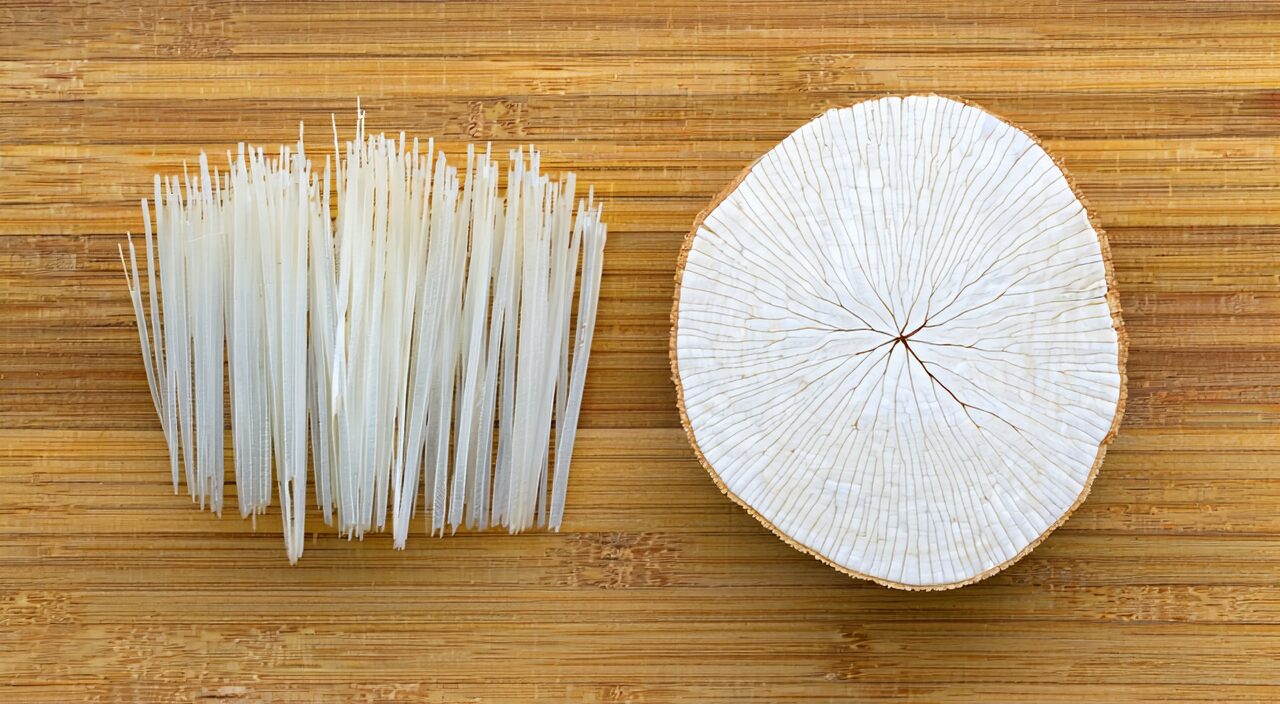
Both rush pith and rice paper pith (Tongcao) share the characteristics of being white, cylindrical stem pith, and both are used to promote urination, which often confuses beginners. You can differentiate them from several angles.
First, source and size. Rush pith comes from plants in the Juncaceae family, and the stem pith is extremely fine, only 1–3 mm in diameter, resembling white thin threads or strips. In contrast, rice paper pith comes from the Araliaceae plant Tetrapanax papyrifer, and its stem pith is much thicker, typically 1–2.5 cm in diameter, taking a cylindrical or semi-cylindrical shape with occasional shallow grooves on the surface.
Second, texture and cross-section. Rush pith is lightweight and soft, easily broken, with a white cross-section and no special luster. Rice paper pith is even lighter and more spongy, almost foam-like, and its cross-section often displays a silvery-white or semi-translucent sheen; pressing it with a fingernail easily leaves a dent.
In terms of traditional usage, both belong to the diuretic and dampness-draining category. However, rush pith primarily clears heart fire and guides heat downward, while rice paper pith focuses more on clearing lung and stomach heat and is especially noted for promoting lactation. In actual clinical reasoning, the two cannot be simply interchanged.
Which Formulas Contain Rush Pith?
In TCM formulas, rush pith often appears as a guiding or assistant ingredient to enhance heart-clearing and diuretic effects; it is rarely used alone in large doses. A classic example is Dao Chi San (Guide Out Red Powder), which primarily contains rehmannia root, akebia stem (or mutong), and raw licorice tip. In some variations, rush pith is added during decoction as a guiding agent to reinforce the action of clearing heart fire, promoting urination, and conducting heat downward.
Additionally, there are traditional simple formulas like Rush Pith Decoction, sometimes consisting solely of rush pith boiled in water, used to address patterns such as heart heat causing restlessness or night-time crying in children. It may also assist in heart-calming formulas, combined with other herbs that clear the heart, calm the spirit, or promote urination.
It is important to stress that all of these formulas are considered under specific pattern differentiation. For instance, Dao Chi San is suitable for excess heat or heat patterns with heart heat and scanty, reddish urine, and is not a general remedy for calming the mind. Before using any formula containing rush pith, it is advisable to assess individual constitution, actual symptoms, and seek professional guidance to avoid blindly applying the formula.
What Precautions Should Be Taken When Using Rush Pith?
Although rush pith is relatively mild in nature, it is not suitable for casual long-term use. The following points deserve special attention.
First, people with qi deficiency or deficiency-cold in the lower burner who experience frequent urination, clear and copious urine at night generally should not use it. With its slightly cold property and diuretic action, rush pith can further consume yang qi and potentially worsen symptoms such as urinary frequency and fatigue.
Second, do not treat it as a daily diuretic tea. Some people may want to use it to alleviate puffiness or “detoxify,” but prolonged self-directed diuresis can lead to electrolyte imbalances or mask more serious health conditions that need attention. If unexplained edema or urinary abnormalities occur, identify the underlying cause first rather than relying on rush pith for self-care.
Third, use in children requires extra caution. In some folk traditions, rush pith is boiled in water to “calm fright” in young children. This practice must be based on a clear pattern diagnosis, with dosage and combinations determined by a TCM practitioner; self-administration can pose risks. Cinnabar-processed products like cinnabar-processed rush pith are strictly prohibited for casual use in children.
Additionally, people taking other medications or those with chronic conditions should fully consult a doctor or pharmacist before use to avoid potential adverse interactions.
Summary
Rush pith is a highly recognizable traditional Chinese herb. Its slender white pith strands, light and soft texture, and slightly cold, heat-clearing, diuretic nature give it a unique place in clearing heart fire and promoting urination. At the same time, these characteristics mean it is not suitable for arbitrary use by individuals with deficiency-cold or qi deficiency. Compared with the similar-looking rice paper pith (Tongcao), rush pith is much finer, and their traditional applications differ. This article is for informational reference only and cannot replace professional diagnosis or treatment advice. For specific usage, please consult a qualified TCM practitioner.