
What Is Winter Melon Peel? Medicinal Part, Identification, and Common Formulas
Many people use winter melon to make soup or dishes in summer. After eating the flesh, the leftover peel is often thrown straight into the trash. In traditional Chinese medicine, however, winter melon peel is actually a fairly common medicinal herb, not just kitchen waste. It belongs to the category of herbs that drain dampness and promote urination. It has a long history and is still used in quite a few formulas today. For those living overseas who want to regulate their health through traditional approaches, it’s worth clarifying first: “What is winter melon peel?” “What does it actually look like?” and “How is it different from winter melon seed?”
What Does Winter Melon Peel Look Like? How to Identify It
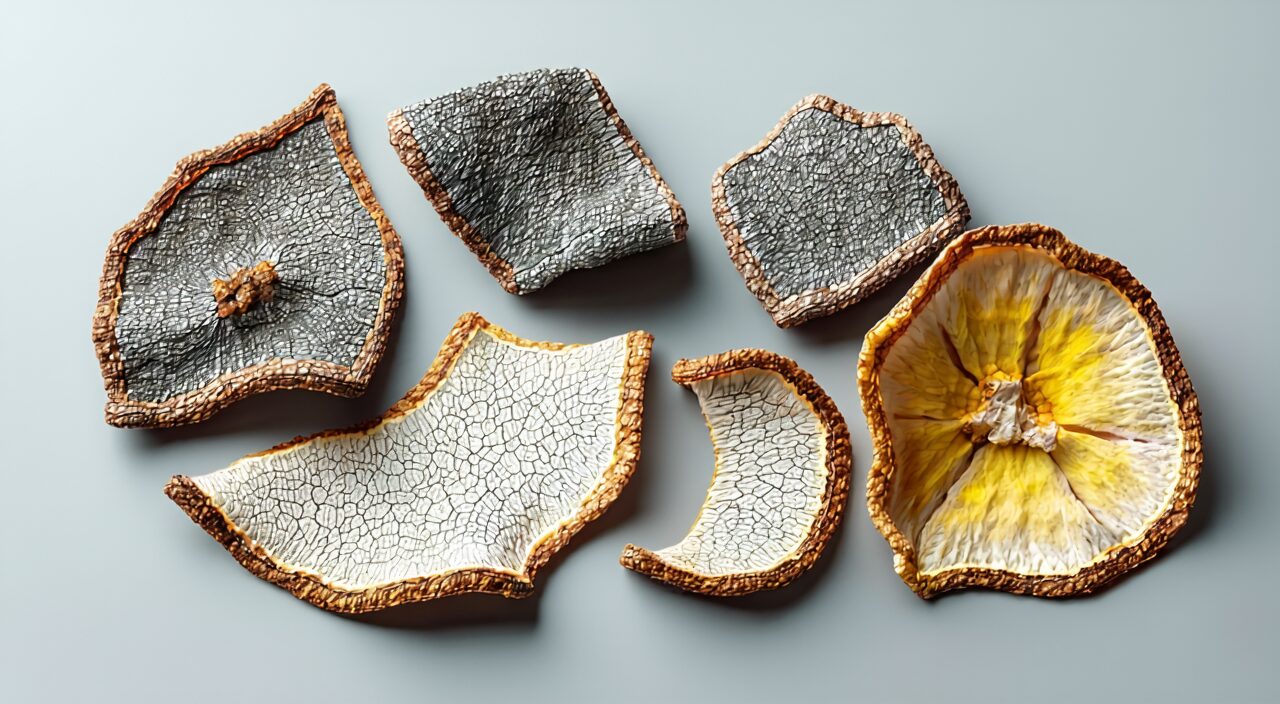
Standard winter melon peel medicinal material usually appears as irregular thin slices or curled strip-like pieces of varying sizes. The outer surface is mostly greyish-green, yellowish-white, or bears a slight white bloom, sometimes with fine longitudinal striations. The inner surface is coarser, commonly yellowish-white or pale yellow, with visible vascular bundle traces. The texture is very light; it snaps and shatters easily when pinched, and the fractured surface is uneven. The odour is faint, and it tastes almost flavourless or slightly astringent.
If you have some dried winter melon peel on hand, try holding it up to the light. The outer wall side is usually smoother than the inner wall, and its colour tends more toward greyish-green. This is clearly different from the vivid jade-green of fresh winter melon peel, as the overall colour becomes duller after drying. It is important to note that fresh peel trimmed at home contains a lot of moisture and easily becomes mouldy. Without proper cleaning and drying, it does not equate to medicinal material, and it is not advisable to store it casually for self-use.
What Is the Medicinal Part of Winter Melon Peel?
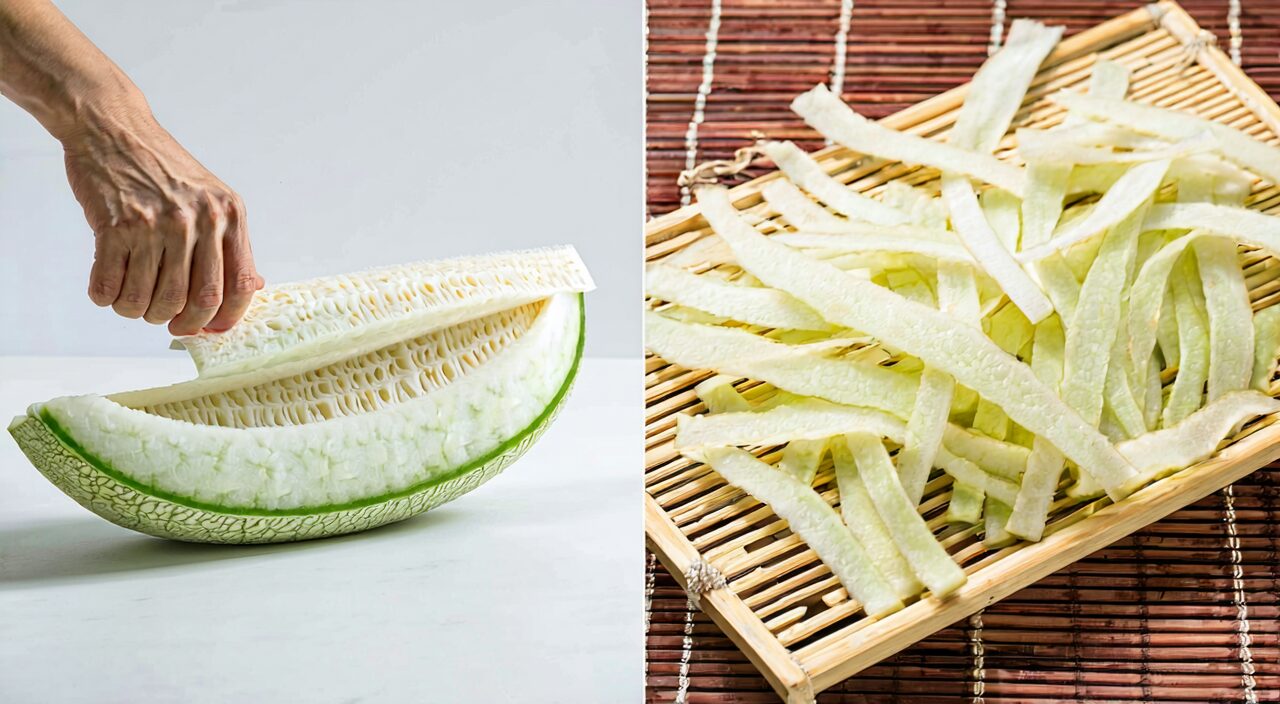
The medicinal part of winter melon peel is very specific: it is the dried outer peel of the winter melon fruit. Harvesting usually takes place after the fruit has fully matured and the peel has hardened. The outer peel is cut or peeled off, cleaned to remove sediment, and then sun-dried or dried at low temperature. During this process, the surface is normally washed clean of mud and sand, and it is cut into suitably sized slices or segments for subsequent formulation and decoction.
This means that authentic medicinal material uses the specially harvested and processed dried outer peel, not the leftover scraps after making soup. Winter melon peel left over from food preparation may be mixed with residual pulp, insufficiently dried, and prone to absorbing moisture and spoiling. It is hard for it to match properly processed medicinal material in terms of cleanliness and retention of active constituents. If you wish to understand and use winter melon peel from a medicinal perspective, choosing cleaned and dried medicinal slices is more reliable.
How Does Traditional Chinese Medicine View Winter Melon Peel?
In traditional Chinese medicine, winter melon peel is often regarded as a medicinal herb that is sweet and cool in nature with relatively gentle actions. It mainly enters the Spleen and Small Intestine meridians. Many classical texts record its ability to “promote urination and reduce swelling” and “clear heat and relieve summer heat.” From a traditional perspective, when the body has water-dampness accumulating internally, leading to conditions such as inhibited urination or limb oedema, winter melon peel is often used as a direction to help “open the sluice and release water.” In hot summer weather, if a person feels vexatious heat, thirst, and scanty dark urine, a light decoction of winter melon peel can be taken as an everyday tea to help clear summer heat and promote urination.
It must be noted that “reducing swelling” and “clearing heat” here do not mean it can treat diseases; rather, they are traditional experiential summaries of its function. Whether it is actually suitable depends on comprehensive factors such as tongue appearance, pulse pattern, and constitutional type. For example, even for oedema, the direction of regulation is entirely different between cold-dampness encumbering the spleen and damp-heat exuberance. Winter melon peel is more suited to the latter, a constitution that tends toward heat with an excess of water-dampness, and is inappropriate for the former, where deficiency-cold is more pronounced.
Winter Melon Peel from a Modern Research Perspective
Modern research on winter melon peel has mainly focused on its polysaccharides, flavonoids, and trace elements. Some animal experiments have observed that water extracts of winter melon peel have a certain diuretic tendency, increasing the urine output of experimental animals while having a relatively mild effect on electrolyte balance. Additionally, some in vitro studies have explored its potential anti-inflammatory and antioxidant activities.
However, most of these experiments are based on extracts and specific animal models, which is not the same as everyday decoction and consumption. There is currently insufficient strong clinical evidence to equate it with a reliable means of controlling oedema. Therefore, in a modern context, winter melon peel is better understood as a traditional life experience along the lines of food-medicine homology and cannot replace medical investigation and standard treatment for the causes of oedema.
What Are the Differences Between Winter Melon Peel, Winter Melon Seed, and Poria Peel?
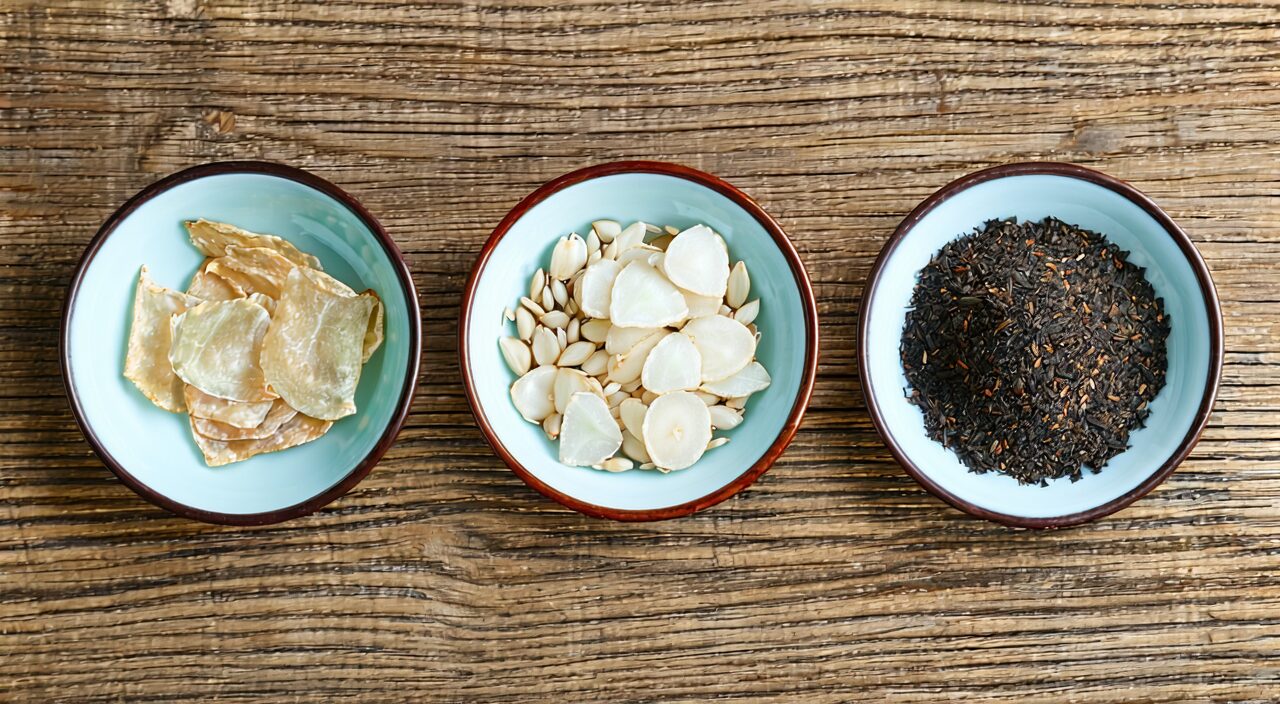
When first exploring herbs that drain dampness and reduce swelling, many people easily confuse winter melon peel (Dong Gua Pi), winter melon seed (Dong Gua Zi), and poria peel (Fu Ling Pi). In fact, their sources and emphases differ considerably.
Winter melon peel is the dried outer rind of the winter melon fruit. Its actions focus on clearing heat, promoting urination, and reducing swelling, and it is particularly suitable for oedema caused by summer heat mixed with dampness or mild damp-heat. Winter melon seed, on the other hand, is the dried mature seed of winter melon. Its nature is somewhat more sweet-cold, and traditionally it is more often used to clear lung heat, transform phlegm, discharge pus, and resolve abscesses. It is commonly seen in patterns of lung-heat cough, lung abscess, and intestinal abscess. Poria peel is entirely different from the above two: it is not a part of winter melon but the dried outer skin of the sclerotium of the fungus Poria cocos, which belongs to the Polyporaceae family. Poria peel also promotes urination and reduces swelling, but its characteristic is fortifying the spleen and percolating dampness. It is more prominent for spleen-deficiency oedema, has a neutral nature, and is less likely to damage the healthy qi.
To differentiate briefly: the fruit peel (winter melon peel) leans toward clearing heat and percolating dampness; the seed (winter melon seed) leans toward clearing the lung and discharging pus; the sclerotium peel (poria peel) leans toward fortifying the spleen and percolating dampness. Although all three can promote urination, in traditional experience, if puffiness is accompanied by summer heat and yellow urine, one might lean toward understanding winter melon peel; if cough with yellow phlegm and slight swelling are present, winter melon seed might be more often referenced; if there is spleen deficiency with poor appetite, fatigue, and puffiness, poria peel is more likely to be considered. This is, of course, only a rough differentiation, and specific choices still depend on individual circumstances and professional judgement.
Which Formulas Use Winter Melon Peel?
When winter melon peel is mentioned, a relatively classic direction is formulas for promoting urination and reducing swelling. For instance, the “Five-Peel Decoction” (Wu Pi Yin), recorded in the Tai Ping Hui Min He Ji Ju Fang (Formulas from the Bureau of People’s Welfare Pharmacy), originally contains fresh ginger peel, mulberry root bark, aged tangerine peel, areca husk, and poria peel, decocted together to move qi and promote urination. In later generations, some versions adjusted the formula with the discretion to add winter melon peel to enhance its heat-clearing and water-draining effects. Additionally, there is the “Winter Melon Peel Decoction,” which directly features winter melon peel as the main herb, traditionally used for the direction of oedema with abdominal distension and inhibited urination.
In clinical modifications and everyday tea-drinking approaches, winter melon peel is also often paired with adzuki bean, coix seed, and corn silk to jointly assist in promoting urination and reducing swelling. However, whether it is a variation of Five-Peel Decoction or traditional formulas like Winter Melon Peel Decoction, none of them are protocols you can directly apply on your own. The composition of every formula is based on specific patterns and constitutions. Whether it suits you still requires considering your symptom presentation and tongue-pulse information, making a judgement only after fully understanding the product description and seeking professional advice. It is crucial not to self-prescribe or mix herbs simply upon seeing the phrase “promotes urination and reduces swelling.”
What Should Be Noted When Using Winter Melon Peel?
Although winter melon peel is a relatively gentle medicinal herb, there are still some directions that require special attention when using it. First, people with spleen-stomach deficiency-cold, prone to diarrhoea, with poor appetite, or those whose constitution tends toward cold limbs and aversion to cold, are generally not suitable for using a large amount of winter melon peel alone, because its cool nature and water-draining effect may further weaken the spleen and stomach. Secondly, those with hypotension should also be cautious; if diuresis leads to changes in blood volume, it could make it harder to maintain stable blood pressure.
More importantly, oedema is merely a manifestation, and the causes behind it are complex and varied. It may be related to abnormalities in cardiac, renal, or hepatic function, or to issues of nutrition, endocrine function, or venous return. If persistent puffiness occurs, especially when accompanied by chest tightness, difficulty breathing, palpitations, markedly reduced urine output, severe abdominal pain, black stools, or rapid weight changes, one must never rely on dietary therapy or a single herb. Instead, one must promptly seek medical attention and undergo a comprehensive examination. Using winter melon peel to make a tea for daily wellness is only an auxiliary direction chosen cautiously by the individual, under the premise that organic pathological changes have been ruled out, and it cannot replace standard diagnosis and treatment.
Summary
Winter melon peel is a drain-dampness and swelling-reducing herb with a clear source and high recognisability. Its core uses revolve around clearing heat, relieving summer heat, and helping the body expel excess water-dampness. When identifying it, paying attention to the greyish-green or yellowish-white outer skin, the rough inner surface, and the light, brittle texture makes it hard to confuse with other herbs. When using it, particular care is needed to note its functional differences from winter melon seed and poria peel, and one must honestly assess whether one’s constitution tends toward deficiency-cold. Most importantly, no approach to promoting urination and reducing swelling can replace the professional process of identifying the cause of oedema. This article serves only as educational reference and cannot substitute for individual constitutional evaluation or medical advice.