
What Is Gualou? Introduction to Its Medicinal Parts, Identification, and Common Formulas
When it comes to Gualou, many Traditional Chinese Medicine (TCM) enthusiasts associate it with conditions like chest obstruction (Xiong Bi) and phlegm cough. From the same Trichosanthes plant, the harvested fruit can be processed into Whole Gualou, Gualou Peel, and Gualou Seeds found in pharmacies. What exactly are the relationships among them, and what are their particular emphases? This article will sort out the basic knowledge of Gualou from the perspectives of visual identification, medicinal parts, TCM understanding, and commonly used formulas, while also noting points to be aware of during use.
What Does Gualou Look Like? How to Identify It?
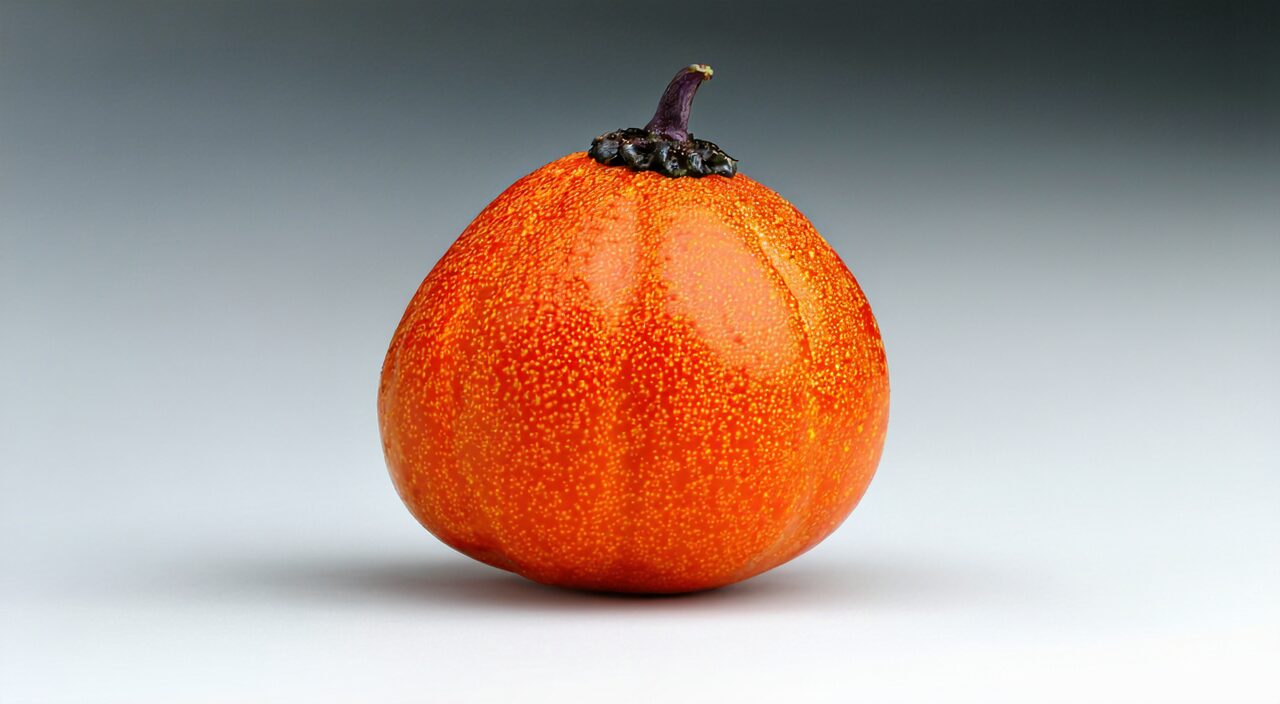
Gualou is the mature fruit of the cucurbitaceous plant Trichosanthes kirilowii or Trichosanthes rosthornii. It is usually harvested in autumn when the fruit ripens and the peel turns orange-yellow or yellowish-brown. The whole fruit is subspherical or broadly elliptical, ranging from several centimeters to over ten centimeters in diameter. The surface often shows obvious wrinkled textures, with a residual style scar visible at the apex, while the fruit stalk may still have a short stem attached.
Upon cutting it open, you can see a relatively thin peel; the interior is filled with yellowish-white, sticky pulp, which encloses a large number of flat-elliptical, plump seeds with oily kernels. Based on these characteristics—including shape, color, cross-section pulp, and seeds—you can roughly identify Gualou. It should be noted that wild and cultivated products may differ in size and color, but their overall structures are similar.
What Are the Medicinal Parts of Gualou?
The medicinal part of Gualou is the mature fruit of Trichosanthes kirilowii or Trichosanthes rosthornii. Based on different processing methods, it is further divided into three common decoction piece specifications: Whole Gualou, Gualou Peel, and Gualou Seed.
Whole Gualou is generally prepared by harvesting the whole mature fruit, removing the stem, pressing it flat and cutting into pieces or strips, and then drying directly. It contains the peel, pulp, and seeds. If only the outer peel is taken, washed clean, and sun-dried, Gualou Peel is obtained. By cutting open fresh Gualou, taking out the seeds, washing and sun-drying them, Gualou Seed is produced; sometimes it is further stir-fried before use. Although these three decoction pieces come from the same fruit, their emphases in traditional usage are not completely identical.
How Does TCM Understand Gualou?
Traditional Chinese Medicine mainly understands Gualou from the perspectives of nature and flavor, meridian tropism, and functions. It is generally considered sweet and slightly bitter in flavor, cold in nature, and enters the Lung, Stomach, and Large Intestine meridians. Classical texts such as the Compendium of Materia Medica (Bencao Gangmu) record its actions of “moistening lung dryness, descending fire, clearing phlegm accumulation, benefiting the throat, and dispersing abscesses and sores”. Later generations of physicians often summarize its effects as clearing heat and resolving phlegm, broadening the chest and dissipating masses, and moistening dryness to unblock the bowels.
Throughout history, in clinical practice, for conditions such as cough with yellow, sticky phlegm and chest oppression caused by phlegm-heat obstructing the lung, or chest obstruction (Xiong Bi) and chest pain radiating to the back due to phlegm-turbidity blocking the chest, as well as intestinal dryness and constipation, different Gualou preparations are selected for combination regulation based on pattern differentiation. It must be emphasized that Gualou is cold in nature, so it is not suitable for all cases of cough or chest oppression; its use must be determined according to the individual’s constitution and syndrome characteristics. If you experience long-term, recurrent, or obvious symptoms such as palpitations, chest pain, or breathing difficulties, you should seek evaluation by a professional physician rather than attempting to treat with the single herb on your own.
Directions of Modern Research on Gualou
Modern phytochemical studies have found that Gualou fruits and seeds contain various components such as triterpenoid saponins, organic acids, sterols, amino acids, and volatile oils. Some experimental studies suggest that Gualou extracts exhibit certain activities in anti-inflammation, antioxidation, blood lipid regulation, and influence on myocardial ischemia models. However, the specific mechanisms and their exact effects in the human body are still under continuous exploration. These studies provide some reference for understanding the traditional functions of Gualou from another angle, but they cannot be directly equated with clinical efficacy, nor should they serve as a basis for self-medication.
What Are the Differences Between Whole Gualou, Gualou Peel, and Gualou Seed?
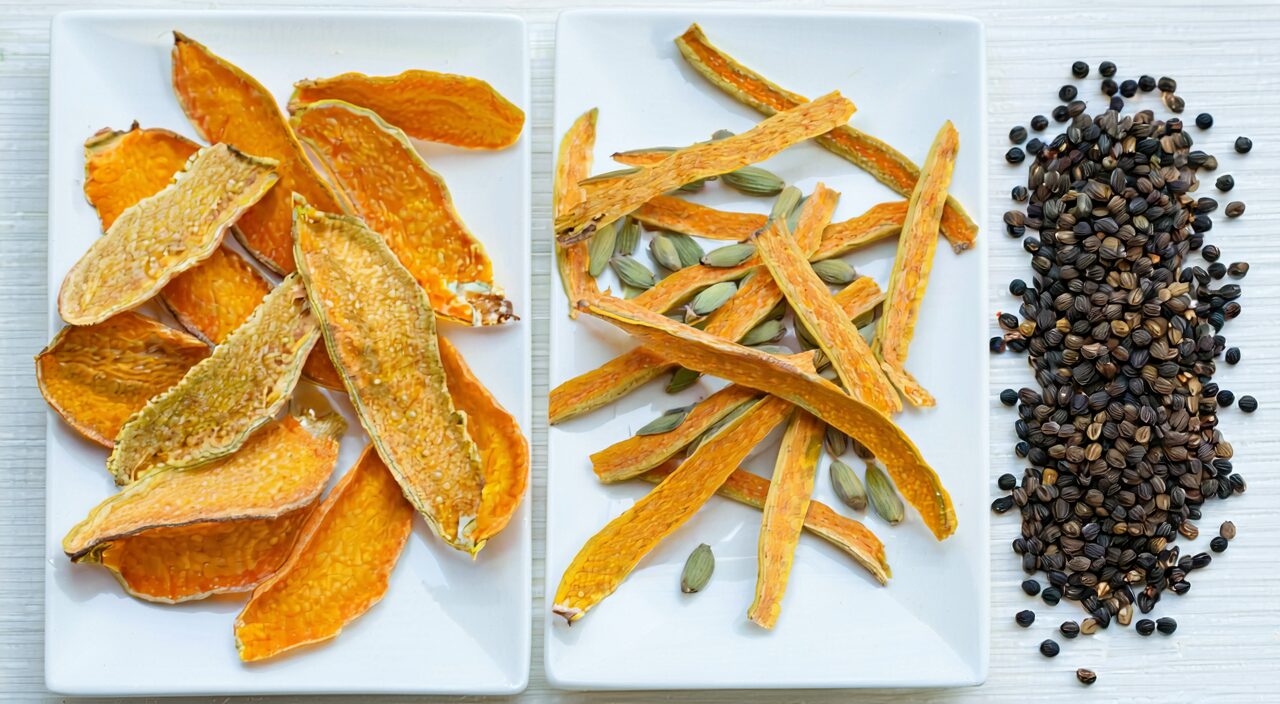
Whole Gualou, Gualou Peel, and Gualou Seed, although all derived from the same fruit, have different emphases in traditional application. Whole Gualou includes both the peel and seeds, so it can both clear heat and resolve phlegm, and moisten the intestines to promote bowel movements. Therefore, it is used more frequently in cases of phlegm-heat stagnation accompanied by difficult defecation.
Gualou Peel is only the fruit peel and tends to broaden the chest, regulate qi, and clear and transform heat phlegm. It is more often used for chest oppression and distension of the chest and hypochondriac region caused by intermingled phlegm and qi, with relatively weaker bowel-moistening action. Gualou Seed is rich in oils and excels at moistening dryness and unblocking the bowels; it also has the effect of clearing the lung and transforming phlegm, but it leans more towards improving intestinal dryness and constipation, especially habitual constipation or intestinal dryness in the elderly and debilitated.
Therefore, when purchasing or learning about related products, it is necessary to distinguish among these three according to the specific direction of regulation, rather than simply assuming they are interchangeable because the name contains “Gualou”. Whether to choose Whole Gualou, Gualou Peel, or Gualou Seed should be decided based on a comprehensive assessment of the individual’s constitution and the corresponding condition.
Which Formulas Use Gualou?
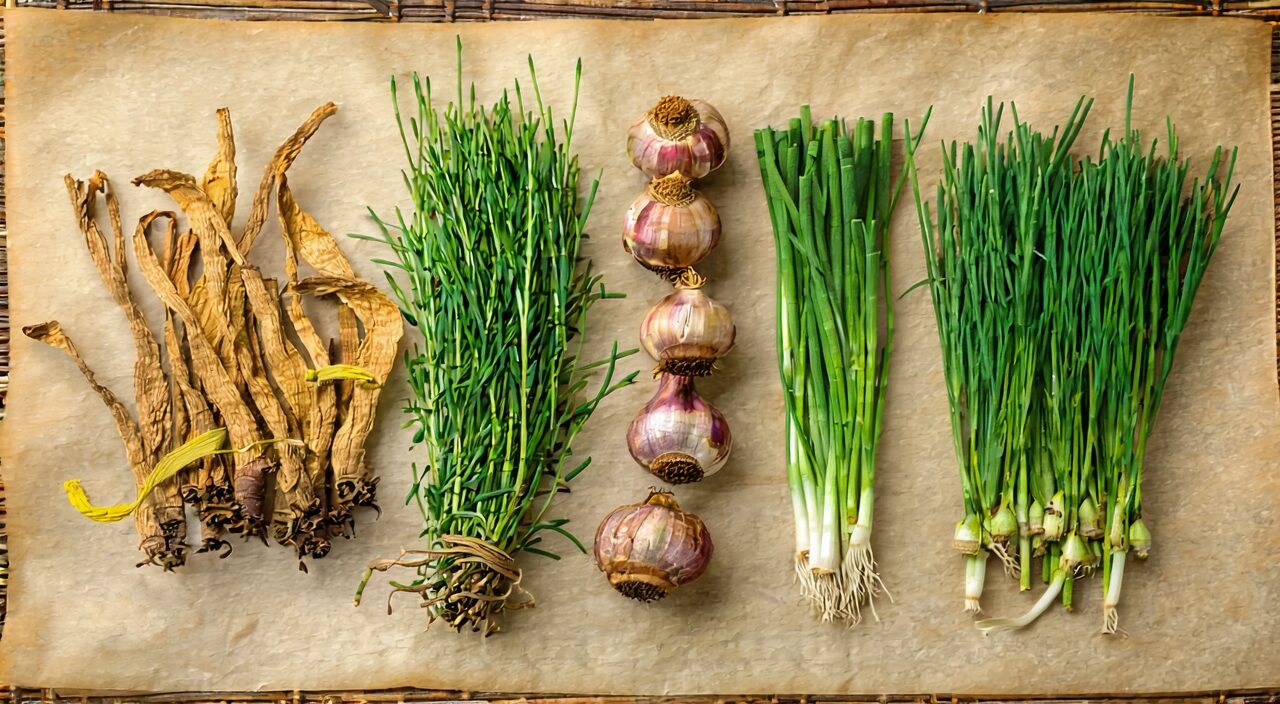
Gualou has been widely used in formula compositions throughout history, especially in combination strategies for unblocking yang and dissipating masses, and dispelling phlegm to broaden the chest. The following formulas are commonly cited examples, all of which require professional assessment on the basis of accurate pattern differentiation before use.
Gualou Xiebai Baijiu Decoction (Trichosanthes, Allium, and Rice Wine Decoction) originates from Essentials from the Golden Cabinet (Jingui Yaolue). It is composed of Gualou, Xiebai (Allium macrostemon), and baijiu (rice wine), decocted for oral administration. Traditionally used for chest obstruction (Xiong Bi) caused by devitalized chest yang and intermingled phlegm and qi, manifesting as chest oppression and pain, panting, cough and expectoration, etc. In the formula, Gualou opens the chest and dissipates masses, Xiebai unblocks yang and moves qi, and baijiu assists the medicinal strength. The combination strategy emphasizes unblocking yang and relieving chest obstruction.
Gualou Xiebai Banxia Decoction also comes from Essentials from the Golden Cabinet. It adds Banxia (Pinellia ternata) to the base of Gualou Xiebai Baijiu Decoction, enhancing the action of dispelling phlegm and directing rebellious qi downward. It is often used for chest obstruction with more severe phlegm turbidity, inability to lie down, and heart pain radiating to the back.
Zhishi Xiebai Guizhi Decoction (Aurantium, Allium, and Cinnamon Decoction) is likewise from Essentials from the Golden Cabinet. It contains Gualou, Xiebai, Zhishi (Aurantium), Houpo (Magnolia bark), Guizhi (Cinnamon twig), etc. It is suitable for chest obstruction accompanied by epigastric and abdominal focal distension and fullness, and qi surging from the hypochondrium to the chest. Traditionally, it is believed to unblock yang and dissipate masses, resolve focal distension, and direct qi downward.
Beimu Gualou Powder (Fritillaria and Trichosanthes Powder) is one of the representative formulas for moistening the lung and clearing heat. It is usually composed of Gualou, Beimu (Fritillaria), Tianhuafen (Trichosanthes root), Fuling (Poria), Juhong (Citrus peel), Jiegeng (Platycodon), etc. It is mainly used for dry-phlegm cough with difficult expectoration and dry throat, etc. In it, Gualou plays the role of clearing heat, moistening dryness, transforming phlegm, and dissipating masses.
These formulas each have their suitable indications, and the same formula cannot be universally applied to different conditions. For example, for individuals with cold deficiency constitution and loose stools, using cold-moistening Gualou-type formulas may not be appropriate. If symptoms such as chest pain, cough, or constipation recur or persist without relief, a physician must first provide a clear diagnosis before determining whether these traditional formulas are suitable for use.
What Precautions Should Be Taken When Using Gualou?
When using Gualou, even within the scope of dietary therapy or daily regulation, it is important to understand some key precautions.
First, Gualou is cold in nature. For individuals with spleen and stomach deficiency-cold, or those prone to diarrhea or loose stools, using it may aggravate discomfort, so it should generally be avoided or used with extreme caution. Second, according to the traditional “Eighteen Incompatibilities” (Shiba Fan), there is the saying “Ban, Lou, Bei, Lian, and attack Wu,” meaning that Gualou (including Gualou Peel, Gualou Seed, and Tianhuafen) is incompatible with aconite (Wu Tou) and should not be used together with herbs containing aconite-type constituents such as Chuanwu (Aconiti Radix), Caowu (Aconiti Kusnezoffii Radix), and Fuzi (Aconiti Lateralis Radix Praeparata). This should be paid special attention to when independently combining herbs or purchasing compound products.
In addition, pregnant women are not advised to casually use Gualou or formulas containing Gualou, so as to avoid unnecessary risks. If you are considering using Gualou for regulation due to chest pain, cough, constipation, or other issues, but also experience palpitations, breathing difficulties, severe abdominal pain, persistent vomiting, black stools, or significant weight loss, do not simply rely on Gualou for treatment and should consult a physician promptly.
Summary
Gualou is the mature fruit of Trichosanthes kirilowii or T. rosthornii. Through different processing methods, Whole Gualou, Gualou Peel, and Gualou Seed are obtained. Although these three share the same origin, they have different emphases in clearing heat-phlegm, broadening the chest, and moistening the intestines. Traditional formulas often use Gualou in combination to regulate chest oppression, chest pain, and intestinal dryness with constipation caused by intermingled phlegm and qi. However, strict differentiation of syndrome and constitution is necessary, especially caution is needed for those with spleen-stomach deficiency-cold, during pregnancy, and when there are incompatibilities with aconite. The content of this article is only for TCM knowledge popularization and reference, and does not constitute any medical diagnosis or treatment advice.