
What Is Gualouzi? Medicinal Parts, Identification, and Common Formulas
Many people who see Gualouzi (Trichosanthis Semen) for the first time in an overseas Chinese medicine shop mistake it for Dongguazi (Benincasa seed) or pumpkin seed. Gualouzi actually comes from the mature seed of Trichosanthes kirilowii or Trichosanthes rosthornii, a member of the Cucurbitaceae family. It is a very practical herb in Chinese medicine for resolving phlegm, stopping cough and relieving wheezing. Understanding its appearance, medicinal parts and its relationship with traditional formulas can help you better understand the role of this herb in regulating the body. Let’s explore these aspects one by one.
What does Gualouzi look like? How to identify it?
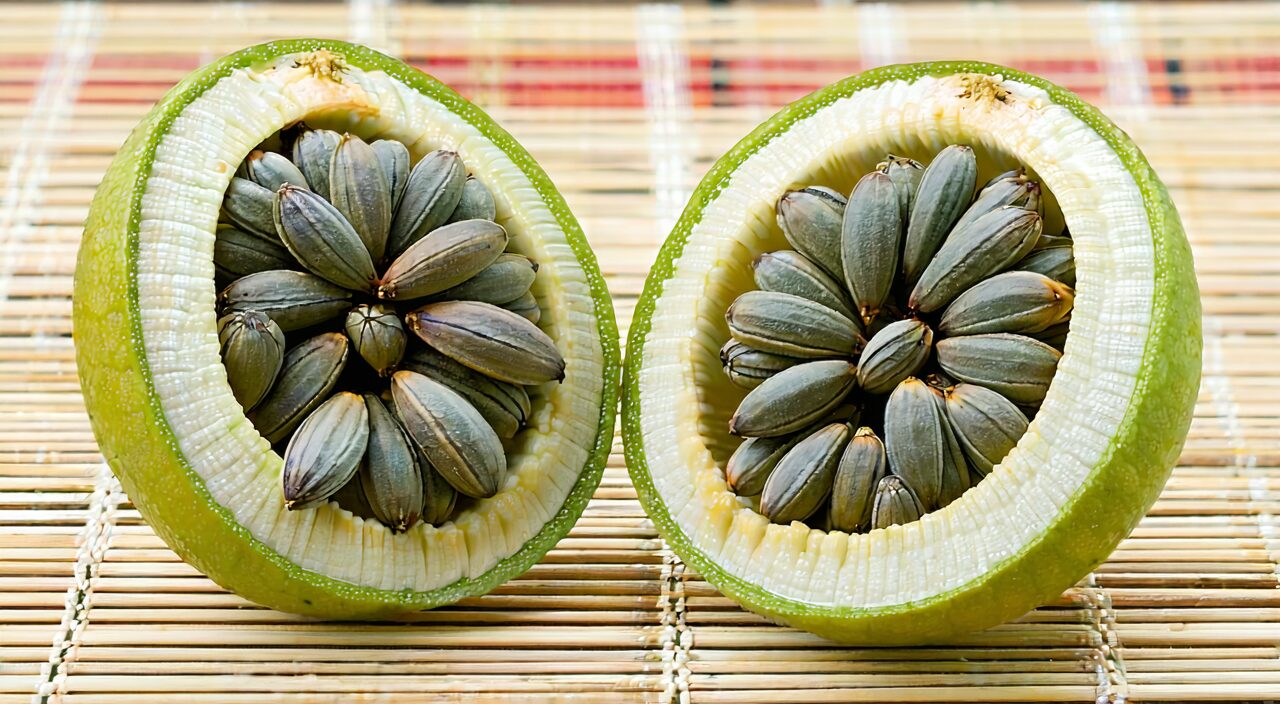
Gualouzi is flat-oval, 1.2–1.5 cm long, 0.6–1 cm wide, and about 3 mm thick. It looks like a flattened seed, but with distinct ridges or shallow grooves along the edge. Traditional identification often describes it as having “a ring of grooves along the margin.” The surface color ranges from greyish-brown to brownish. When examined closely against the light, fine reticular wrinkles can be seen. One end of the seed is relatively round, while the other is slightly pointed, where a small depression—the hilum—is visible. To the touch, the seed is hard and not easily crushed. If you gently bite it open, the kernel is yellowish-white, rich in oil, and has a faint oily aroma. The taste is slightly sweet at first and then slightly bitter. If the kernel is shrivelled, blackened, or has a rancid or sour smell, it usually means the oil has oxidized and deteriorated, and it should not be used. Compared with Dongguazi, Gualouzi is flatter, wider, and much more oily—an important distinguishing point.
What is the medicinal part of Gualouzi?
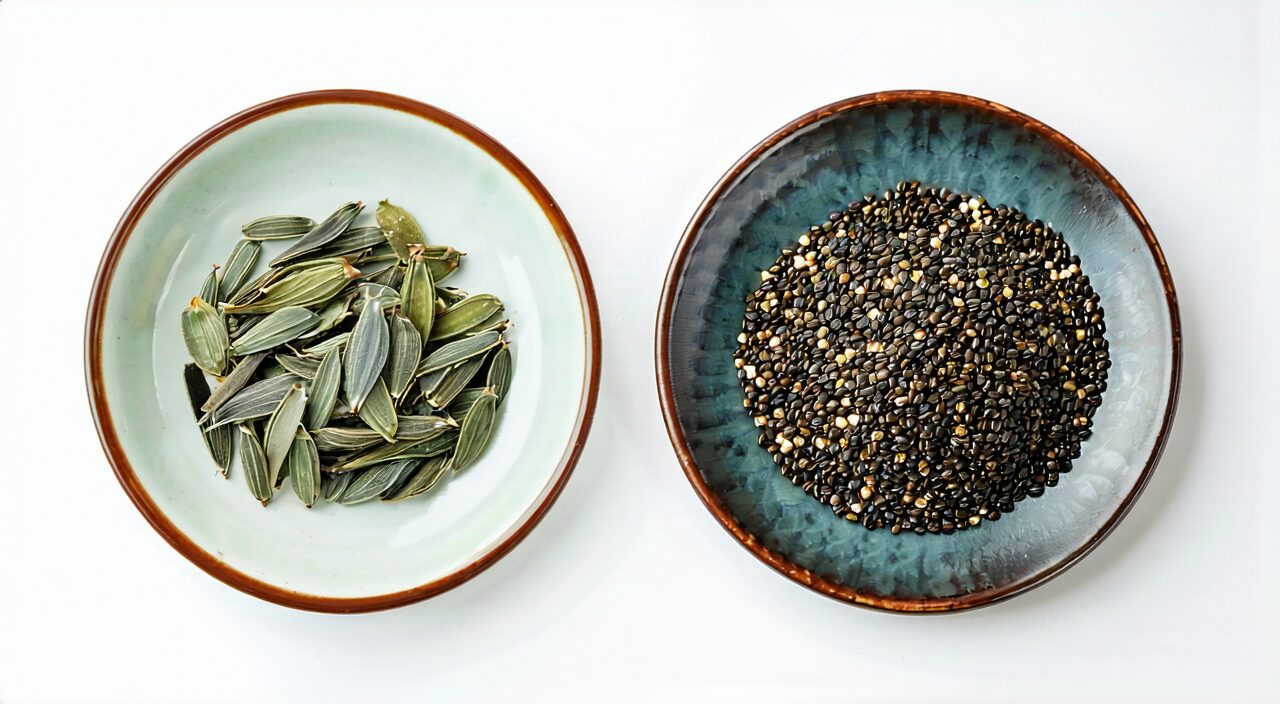
The official medicinal part of Gualouzi is the mature seed from the ripe fruit of Trichosanthes kirilowii or Trichosanthes rosthornii. In autumn, when the fruit skin turns from green to yellow, the fruit is cut together with the pedicel, split open, and the seeds and pulp are scooped out. The seeds are separated by washing, rubbing and other methods, then dried in the sun or at a low temperature. This process is called “extracting the kernel,” yielding raw Gualouzi. Besides the raw form, stir-fried Gualouzi is more commonly used in clinical practice and dietary therapy. To make it, cleaned Gualouzi is heated with mild fire while being stirred continuously until the seed surface slightly bulges, the color deepens, and a fragrance is noticeable. It is then taken out and cooled. Stir-frying moderates the cold and slippery nature of the seeds, making the laxative effect gentler, which is more suitable for people with a weak spleen and stomach who still need to promote bowel movements. Another processed product is Gualouzi Frost, a loose powder made by pressing the cleaned seeds to remove the oil. This further weakens the lubricating laxative effect and is mostly used for dry cough due to lung dryness when a strong laxative action is not needed.
How does Chinese medicine view Gualouzi?
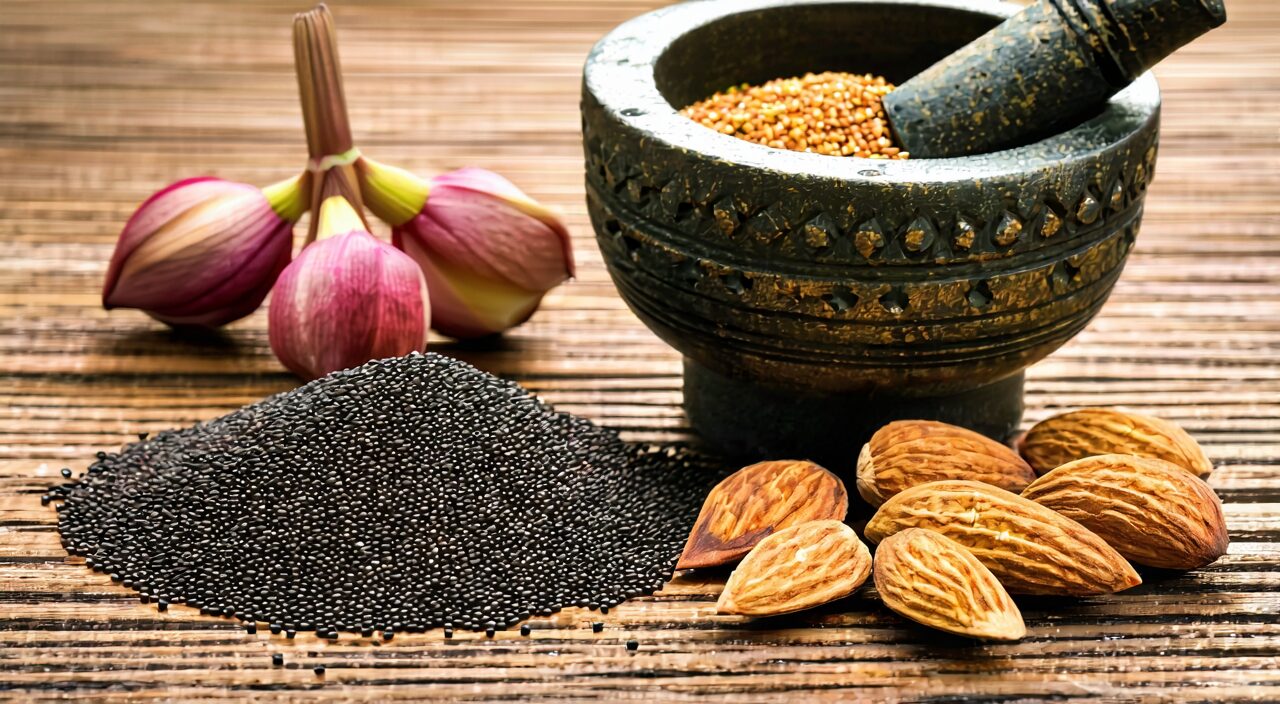
In Chinese medicine theory, Gualouzi is cold in nature, sweet and slightly bitter in flavor, and enters the Lung, Stomach and Large Intestine meridians. Its core action is “moistening”—it can moisten the lung to transform phlegm and moisten the intestines to promote bowel movements. These two functions appear separate but actually share the same source: the Lung and Large Intestine are internally–externally related. The oils and moistening-cooling nature of Gualouzi can act on both the upper and lower burners simultaneously. When the lung is injured by dryness, or body fluids are insufficient, leading to dry cough with scanty sputum, sticky sputum that is hard to expectorate, and a dry, scratchy throat, Gualouzi serves as an important lung-moistening ingredient. When intestinal fluids are deficient, causing dry, pellet-like stools and difficult defecation, it provides a gentle lubricating force. In traditional formulations, Gualouzi is often combined with Beimu (Fritillaria), Xingren (Apricot kernel), and Tianhuafen (Trichosanthes root) to enhance the lung-moistening and phlegm-transforming effect. When combined with Huomaren (Hemp seed) or Yuliren (Bush-cherry seed), it focuses on moistening the intestines and promoting bowel movements.
Brief overview of modern research
Modern research has isolated abundant fatty oil, sterols, triterpene saponins, and various amino acids from Gualouzi. These components are thought to be related to lubricating the intestines and assisting mucus secretion in the respiratory tract. However, current studies are mostly limited to chemical composition analysis and animal experiments. There is still a gap between these findings and complex human pathological conditions, so they can only serve as circumstantial evidence for traditional use and should not be directly equated with clinical efficacy.
What are the differences among Gualouzi, Gualoupi and Dongguazi?
These three items often appear side by side in the pharmacy cabinet, but their origins and application focuses are completely different. Gualoupi (Trichosanthis Pericarpium) is the dried mature fruit peel of Trichosanthes kirilowii or Trichosanthes rosthornii. It appears as irregular strips or blocks, brownish-yellow, with a faint smell and a taste that is sweet initially and then sour. Chinese medicine uses it to expand the chest and dissipate masses, clear the lung and transform phlegm; it is commonly used for phlegm-heat cough, chest oppression and hypochondriac pain, and breast abscess, excelling at “regulating the qi of the upper burner.” Dongguazi (Benincasa seed) comes from the mature seed of wax gourd. It is flat-ovate, yellowish-white, relatively light, and tends to clear the lung, transform phlegm, resolve abscesses and expel pus. It is more commonly used for lung abscess, intestinal abscess, and morbid leukorrhea caused by damp-heat pouring downward, with a property leaning towards “draining.” Gualouzi, with its high oil content, leans towards moistening, focusing on moistening lung dryness and lubricating the intestines. To use a simple analogy: for cough with profuse yellow, sticky phlegm where phlegm-heat is predominant, Gualoupi may be considered; for dry cough with scant sputum accompanied by constipation, Gualouzi better demonstrates its moistening value; and when cough is accompanied by purulent discharge or is considered from an infection perspective, Dongguazi comes into view. Of course, the specific choice must be based on tongue coating, pulse condition, and other symptoms, and should be determined by an experienced Chinese medicine practitioner.
Which formulas use Gualouzi?
Classic formulas containing Gualouzi are not extremely numerous, but it occupies an important position among phlegm-resolving herbs. Here are three representative formulas for readers interested in understanding their combination rationale.
Qingqi Huatan Wan (Clear the Qi and Transform Phlegm Pill) originates from the Yi Fang Kao. The core ingredients are Dannanxing (Arisaema cum Bile), Huangqin (Scutellaria), and Gualouren (Gualouzi). Here, Gualouren plays the role of transforming phlegm and moistening to promote downward discharge, working together with the heat-clearing Dannanxing and Huangqin to address phlegm-heat cough, expectoration of thick yellow sputum, and chest and epigastric fullness. Traditionally, the slippery and laxative nature of Gualouren is believed to help resolve sticky phlegm and guide heat downward.
Beimu Gualou San (Fritillaria and Trichosanthes Powder) comes from the Yi Xue Xin Wu. In this formula, Beimu (Fritillaria) clears and moistens, Gualou moistens the lung and transforms phlegm, and Tianhuafen (Trichosanthes root) generates fluids and clears dryness. The whole formula is built around “dry phlegm,” commonly indicated for cough with scanty, sticky sputum that is difficult to expectorate, and a dry throat. Here, Gualouzi strengthens the function of moistening the lung and lubricating phlegm, rather than simply clearing heat.
Gualou San (Trichosanthes Powder) also comes from the Yi Xue Xin Wu, with Gualou fruit as the main ingredient, combined with Qingpi (green tangerine peel) and other herbs. It is mainly suitable for the early stages of breast masses and breast abscess, with breast distension and pain or palpable lumps. Gualou here exerts its function of expanding the chest, dissipating masses, and moistening to unblock, demonstrating the comprehensive use of different parts of Gualou. It should be noted that this Gualou San sometimes uses the whole Gualou fruit, but from this one can also see the adjuvant value of Gualouzi in dissipating masses.
Regardless of which formula-related patent medicine or herbal combination is chosen, one must first differentiate the constitution and pattern. Chinese medicine emphasizes “use the formula only when the pattern is present.” If a lung-moistening formula is used just because there is a cough, it may worsen damp-phlegm conditions. Whether it is suitable needs to be based on individual circumstances. It is advisable to consult a Chinese medicine practitioner before use if possible.
What should be noted when using Gualouzi?
Although Gualouzi appears mild in terms of home dietary therapy, several points require special attention. First, it should not be used by people with loose stools or diarrhea. Gualouzi is rich in oil and has a natural lubricating laxative effect. People with overactive bowel movements or a cold deficiency of the spleen and stomach may experience worsened diarrhea after taking it. Second, due to its high oil content, improper storage easily leads to oxidative rancidity, producing a stale, unpleasant smell. Consumption may cause stomach discomfort. It is recommended to store it sealed and refrigerated, and use it within six months. Third, those allergic to Gualouzi components should avoid using it. Allergic reactions may include skin rash, itching, or gastrointestinal discomfort. Fourth, the traditional “Eighteen Antagonisms” clearly state that aconite herbs (Chuanwu, Caowu, Fuzi, etc.) should not be combined with Gualou, Beimu, Banxia, etc. Therefore, people taking aconite-based Chinese medicine should not simultaneously use Gualouzi. Fifth, pregnant women, breastfeeding mothers, children, and individuals with severe chronic diseases should consult a doctor or pharmacist for professional advice before use. If persistent constipation, blood-streaked sputum, chest tightness, or other symptoms occur, prompt medical attention should be sought rather than solely relying on Gualouzi for self-regulation.
Summary
Gualouzi, the mature seed of Trichosanthes kirilowii and Trichosanthes rosthornii, is characterized by its flat-oval shape and oily kernel. Traditional Chinese medicine uses its properties of moistening the lung to transform phlegm and lubricating the intestines to promote bowel movements, often playing a role in managing dry-phlegm cough and constipation due to fluid deficiency. It has distinct specialities compared with Gualoupi from the same plant and the commonly confused Dongguazi. When using it, one must pay attention to loose stools, oil deterioration, and the contraindication with aconite herbs, and always combine it with professional judgment. It should not replace necessary medical treatment.