
What Is Loquat Leaf? Medicinal Parts, Identification, and Common Formulas
Loquat leaf is a plant leaf with a long history of use in traditional Chinese medicine (TCM), obtained from the evergreen small tree Eriobotrya japonica of the Rosaceae family. Whenever the seasons change and cough or throat discomfort appears, many people think of loquat-related products. However, what loquat leaf actually looks like, how its medicinal part is processed, how it differs from similar leaves such as mulberry leaf, and which classic formulas use it—these details directly affect whether one can safely and reasonably use it as a subject of understanding. This article will examine these aspects.
What Does Loquat Leaf Look Like? How to Identify It
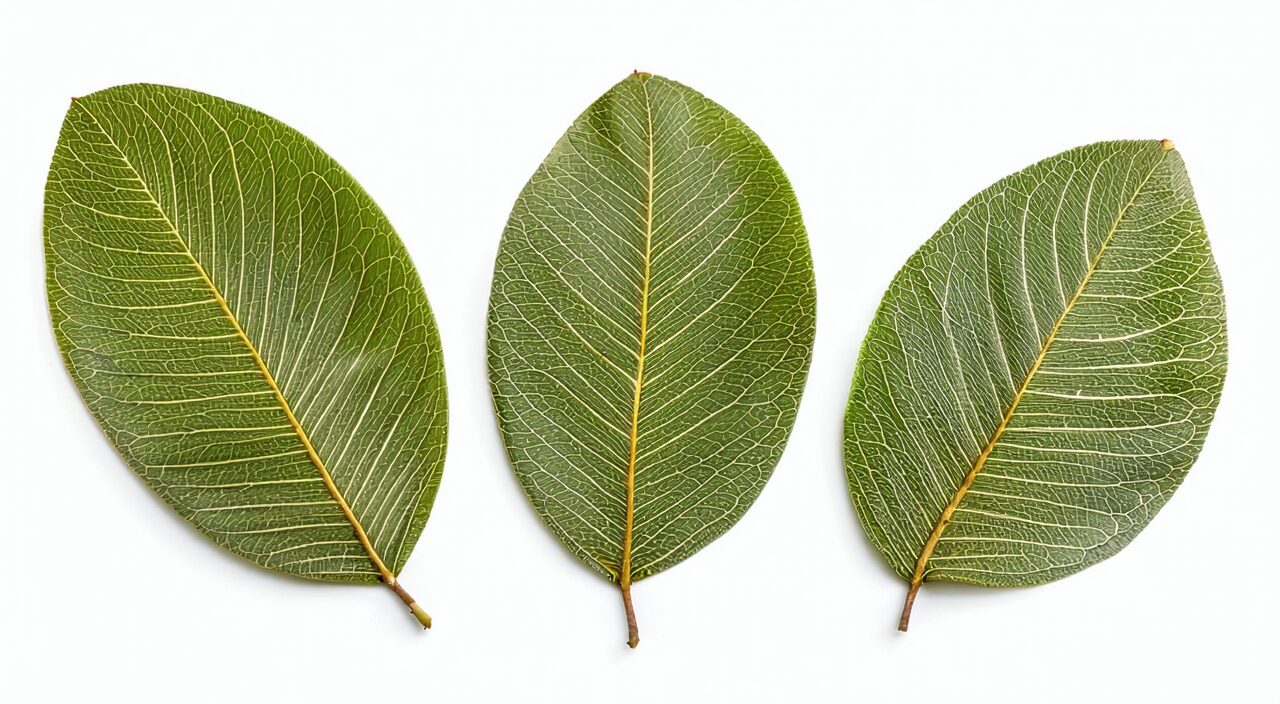
The typical shape of loquat leaf is oblong-elliptic or oblanceolate. The leaf is relatively thick and feels leathery to the touch. The intact leaf usually measures 12 to 30 cm in length and about 4 to 9 cm in width. The upper surface is grayish green, yellowish brown, or reddish brown with a glossy sheen, while the most distinctive feature of the lower surface is that it is densely covered with yellowish fuzz, often called woolly hairs, which is the key point for identifying loquat leaf. The leaf margin has sparse serrations, the apex is acute or acuminate, the base is cuneate or slightly oblique, and the petiole is short, generally less than 1 cm. After drying, loquat leaf becomes brittle and easily broken, sometimes curling. When selecting or identifying it, pay close attention to whether the fuzz on the underside is intact and presents a fresh yellow or brownish-yellow color, and whether the color of the upper surface is natural. In addition, the main vein is prominently raised on the lower surface, and the lateral veins are pinnate—these are supplementary details for identification.
What Is the Medicinal Part of Loquat Leaf?
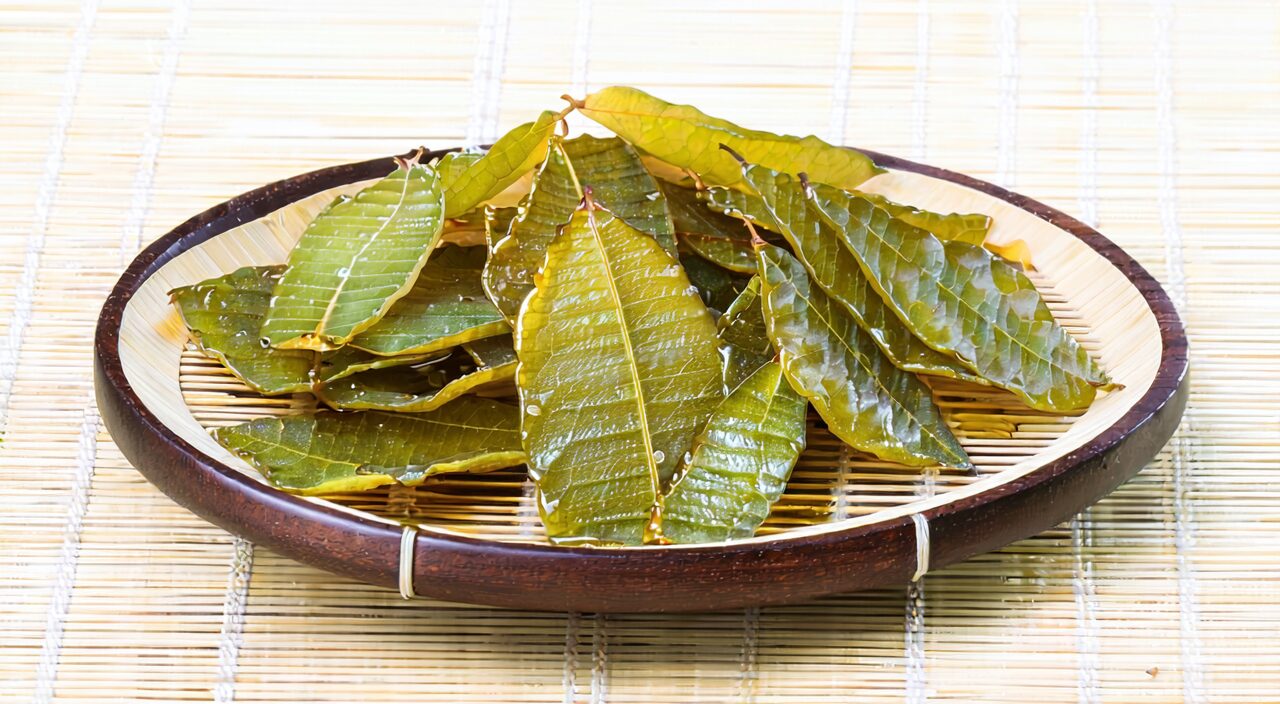
The medicinal part of loquat leaf is the dried leaf of Eriobotrya japonica. After harvesting, it is not used directly; instead, it must undergo cleaning, which involves using a brush to remove the fuzz from the underside. Otherwise, these fine hairs may irritate the throat and trigger coughing when decocted or steeped. Both origin processing and prepared slice standards emphasize the step of brushing off the fuzz. In the crude drug market, common commercial forms include cleaned loquat leaf shreds, which are strips cut after brushing, and honey-fried loquat leaf, which is prepared by mixing cleaned loquat leaf with refined honey and frying until it is no longer sticky. After honey-frying, the bitter-cold nature of loquat leaf is moderated, and its lung-moistening effect becomes more pronounced; thus, for some dry-pattern coughs, honey-fried loquat leaf is more commonly used. Regardless of the form, confirming that the fuzz on the underside has been removed is a prerequisite for safe use.
How Does Traditional Chinese Medicine Understand Loquat Leaf?
Traditional Chinese medicine has a wealth of records about loquat leaf. It is generally considered bitter in flavor and slightly cold in nature, entering the Lung and Stomach meridians. Its main actions can be summarized as “clearing” and “descending”: clearing lung heat and descending lung qi, while also descending stomach qi. For lung-system discomfort, loquat leaf is often used for cough and rapid breathing due to lung heat, or for dry cough with little phlegm caused by dryness-heat damaging the lung. The idea is to rely on its bitter-descending property to direct rebellious lung qi downward, thereby stopping cough and calming panting. For stomach-system issues, loquat leaf may be applied to vomiting, hiccups, and belching due to stomach heat, alleviating these by clearing stomach heat and descending stomach qi. However, it must be clearly understood that this understanding is based on pattern differentiation. If the cough is due to wind-cold fettering the lung, with white, thin sputum and aversion to cold, or if the vomiting is due to stomach cold, with clear, thin vomitus and a cold pain in the gastric region, then loquat leaf is not appropriate. Misuse in such cases may worsen the discomfort.
Brief Introduction to Modern Research
Modern research has made some explorations into loquat leaf from a chemical composition perspective. Studies show that loquat leaf contains triterpene acids such as ursolic acid and oleanolic acid, as well as flavonoids, polyphenols, and volatile oils. Some in vitro experiments and animal studies have observed that loquat leaf extracts exhibit antitussive, expectorant, and anti-inflammatory activities. However, there are considerable differences between these experimental conditions and the complex metabolic environment in the human body, so the related conclusions can only serve as background reference. These findings provide a certain modern perspective for the traditional use of loquat leaf, but they do not equate to directly translatable clinical efficacy, nor should one determine usage or dosage based solely on such studies.
What Are the Differences Between Loquat Leaf, Mulberry Leaf, and Pyrrosia Leaf?
Loquat leaf, mulberry leaf, and pyrrosia leaf are all commonly used leaf-based medicinal substances, but they differ in origin, morphology, and traditional application. Mulberry leaf is the dried leaf of Morus alba of the Moraceae family. Its leaf is mostly ovate or broadly ovate, with irregularly serrated margins; the upper surface is yellowish green, the lower surface is light green, and there is no dense fuzz, only sparse soft hairs along the veins. Traditionally, it is more often used to disperse wind-heat, clear lung and moisten dryness, and clear liver and brighten eyes, with its action more oriented toward wind-heat in the upper burner. Pyrrosia leaf is the dried leaf of Pyrrosia sheareri and other species of the Polypodiaceae family. Its leaf is lanceolate and leathery, with the underside densely covered with sporangial clusters that appear as brown dots or stellate hairs. It is traditionally associated with promoting urination and unblocking strangury, clearing lung and stopping cough, and is mainly applied to damp-heat strangury patterns, cough due to lung heat, and so on. The most intuitive difference between loquat leaf and the other two is that its lower surface is densely covered with yellowish fuzz and the leaf is thicker, and its traditional application focuses on descending lung qi and descending stomach qi. Starting from the hair covering on the underside, one can usually quickly distinguish the three: loquat leaf has dense, yellow fuzz; mulberry leaf basically lacks dense fuzz; and pyrrosia leaf features sporangial clusters and stellate hairs.
Which Formulas Use Loquat Leaf?
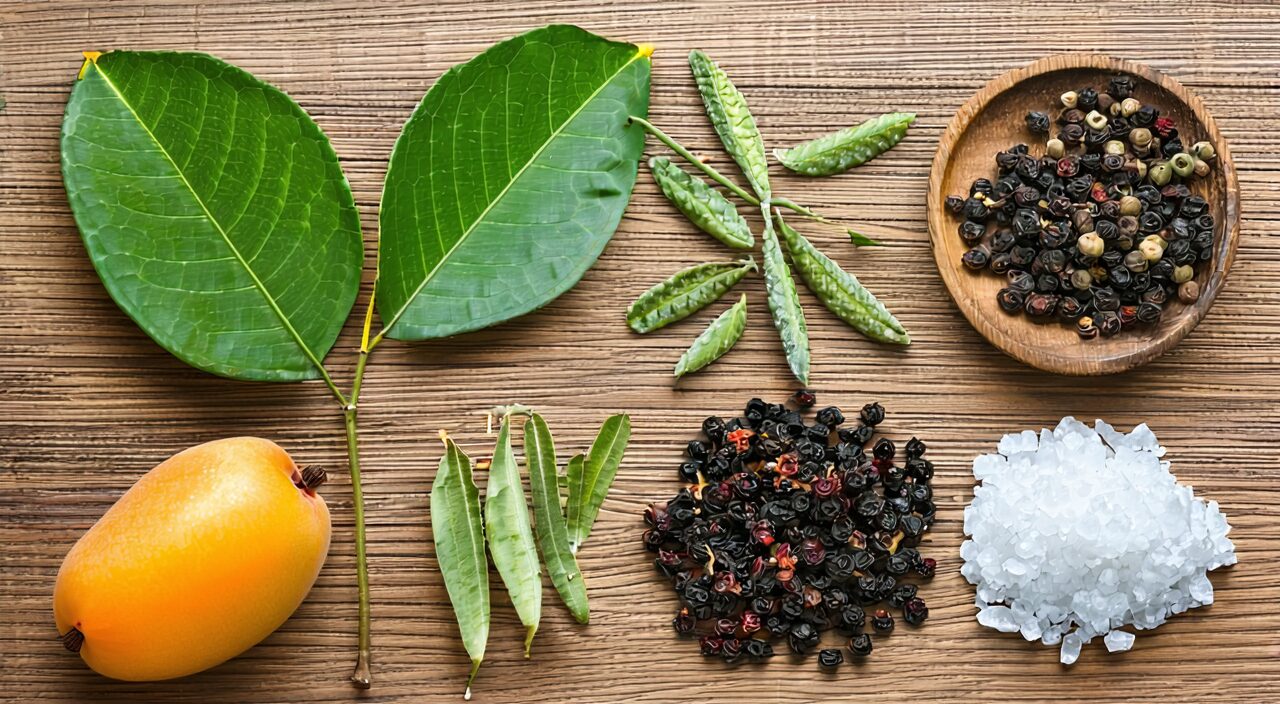
Loquat leaf plays an important role in some classic formulas, often combining with different medicinal substances to address specific body imbalances. Here are several relatively common formulas:
- Qing Zao Jiu Fei Tang (Dryness-Clearing Lung-Rescuing Decoction): This formula originates from Yi Men Fa Lü (Precepts for Physicians) and consists of mulberry leaf, gypsum, ophiopogon, ginseng, donkey-hide gelatin, black sesame seed, bitter apricot seed, loquat leaf, and others. It is traditionally used for warm-dryness damaging the lung, manifesting as dry cough without phlegm, qi counterflow and panting, dry throat, vexation, and thirst. In this formula, loquat leaf and mulberry leaf work together, combined with yin-nourishing and dryness-moistening ingredients, mainly targeting dry-heat damaging fluids with cough and qi counterflow.
- Pi Pa Qing Fei Yin (Loquat Lung-Clearing Beverage): Recorded in Yi Zong Jin Jian (Golden Mirror of the Medical Tradition), this formula consists of loquat leaf, mulberry root bark, coptis, phellodendron, ginseng, licorice, and others. Originally used for lung-wind acne, it is now often understood from the perspective of clearing lung heat and draining lung fire, and is commonly applied when there is lung meridian heat with oily facial skin and red, swollen acne. Loquat leaf assists in clearing and descending lung heat in this context.
- Pi Pa Ye San (Loquat Leaf Powder): This formula appears in Taiping Huimin Heji Ju Fang (Formulas of the Taiping Welfare Pharmacy Bureau) and other formularies, with slight variations. It usually centers on loquat leaf and is combined with tangerine peel, clove, pinellia, and others. Its direction is more focused on descending rebellious qi and harmonizing the stomach, used for vomiting, hiccups, and the like caused by stomach qi rising counterflow.
The above formulas are all examples of experiential prescriptions. Whether they suit an individual case needs to be determined in light of the person’s constitution and symptoms and by a TCM professional familiar with their condition. Self-application by simply matching symptoms is not recommended.
What Should You Pay Attention to When Using Loquat Leaf?
Although loquat leaf is quite common, there are several key points of caution to be aware of before use:
First, the fuzz on the underside must be thoroughly brushed off. This is the most basic safety requirement. Unremoved fuzz may cause throat irritation, severe coughing, and even nausea. When purchasing prepared slices, choose varieties that have been cleanly processed. If collecting and processing it yourself, you must patiently brush off the fuzz.
Second, cold-pattern coughs should not use it. Loquat leaf is slightly cold in nature and is suitable for coughs dominated by heat or dryness. If the cough is accompanied by white, thin sputum, aversion to cold, and a runny nose with clear discharge—signs of cold—its use may worsen the condition.
Third, vomiting due to stomach cold must be avoided. Loquat leaf stops vomiting primarily in cases of stomach heat vomiting, which manifests as halitosis, acid reflux, a red tongue with yellow coating, etc. If the vomitus is clear and thin, the gastric region feels cold, and there is poor appetite, this usually indicates stomach cold, and loquat leaf is not suitable in such cases.
Fourth, loquat fruit is not equivalent to loquat leaf. The fresh loquat fruit eaten daily is sweet, cool, and lung-moistening—it is a fruit. Loquat leaf, after drying and processing, has a different nature and flavor, as well as different actions and safety requirements. The two cannot be arbitrarily substituted for each other.
Fifth, for long-term, recurrent cough, or if accompanied by chest distress, difficult breathing, hemoptysis, or unexplained weight loss, one should promptly seek medical attention for a systematic examination to identify the underlying cause, rather than relying on a single medicinal substance for self-treatment.
Summary
The identification of loquat leaf mainly relies on the dense yellowish fuzz on its underside. The fuzz must be removed before medicinal use to ensure safety. Traditional Chinese medicine primarily uses it to clear lung heat, descend rebellious qi, stop cough, and arrest vomiting, but cold-pattern coughs and stomach-cold vomiting should avoid it. Distinguishing it from mulberry leaf and pyrrosia leaf and selecting the appropriate formula must all be based on pattern differentiation. The use of any medicinal substance should be tailored to the individual situation and refer to professional advice. This article is for informational purposes only and cannot replace diagnosis or treatment recommendations.