
What is Bitter Apricot Seed? Medicinal Parts, Identification, and Common Formulas
In Chinese medicine, “bitter apricot seed” does not refer to the sweet almonds eaten as snacks, but to the mature seeds of Prunus armeniaca var. ansu, Prunus sibirica, Prunus mandshurica, or Prunus armeniaca. Many people confuse medicinal bitter apricot seed with edible sweet almonds, yet they differ markedly in appearance, composition, and safety. This article will help you recognize the true face of bitter apricot seed, understand its medicinal part, the thinking behind its use in traditional Chinese medicine (TCM), common formulas, and the safety boundaries that must not be ignored.
What does bitter apricot seed look like and how do you identify it?
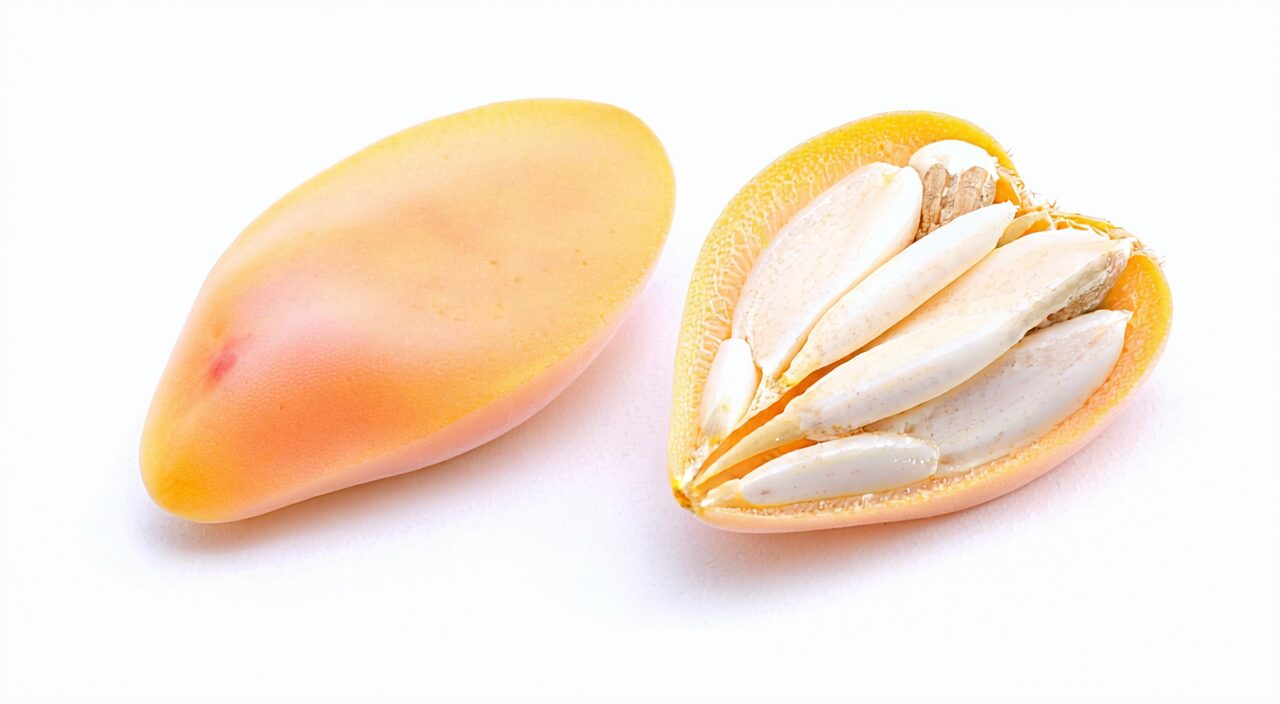
The medicinal part of bitter apricot seed is the seed, which is flattened heart‑shaped, 1–1.9 cm long, 0.8–1.5 cm wide, and 0.5–0.8 cm thick. The surface is yellowish‑brown to dark brown, with one pointed end and the other blunt and rounded; the left and right sides are slightly asymmetrical. On the pointed side, there is a short, linear hilum, and on the blunt end, a chalaza; between the hilum and chalaza, multiple dark longitudinal vein lines are visible. The seed coat is thin; after peeling, two milky‑white, oily cotyledons can be seen—the main nutrient storage site. Bitter apricot seed tastes extremely bitter, whereas sweet almond does not, offering a simple distinguishing method. When you encounter a flattened heart‑shaped, yellowish‑brown seed with a distinctly bitter taste, it is very likely medicinal bitter apricot seed.
What is the medicinal part of bitter apricot seed?
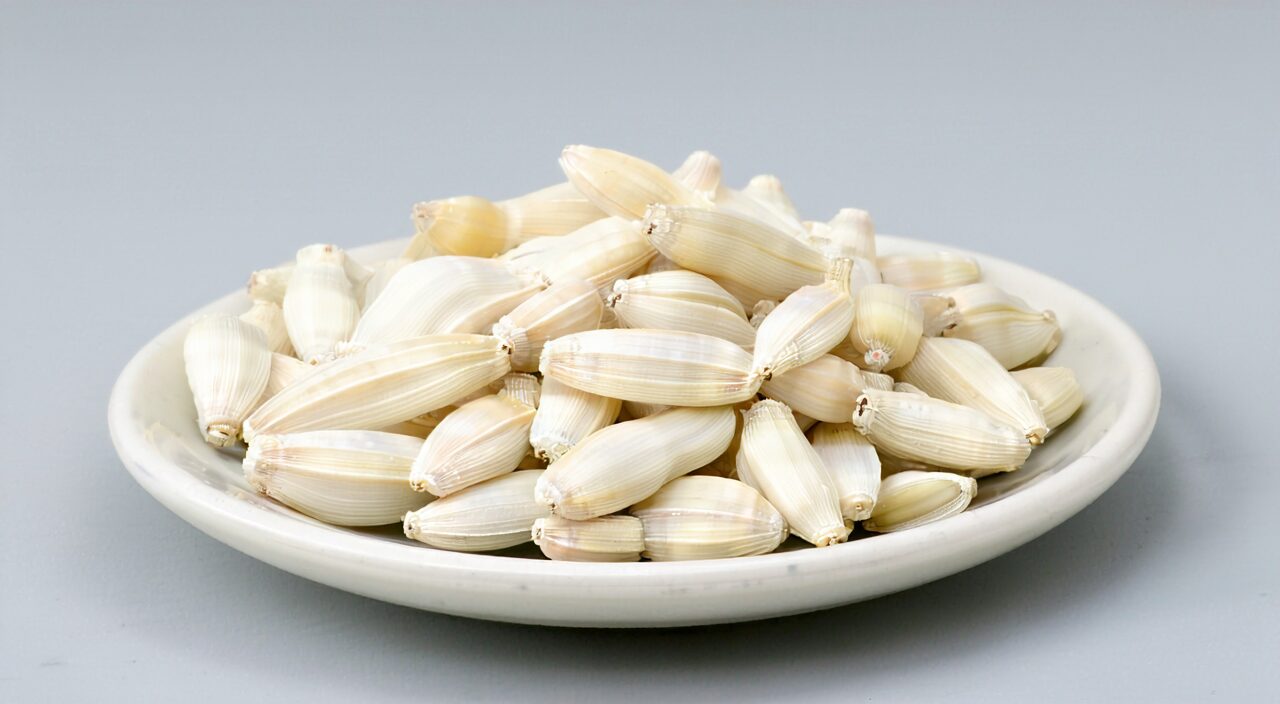
The medicinal part of bitter apricot seed is the dried mature seed of Rosaceae plants such as Prunus armeniaca var. ansu, Prunus sibirica, Prunus mandshurica, or Prunus armeniaca. Usually, the ripe fruits are harvested in summer, the pulp and shell are removed, the seeds are taken out and dried in the sun. To reduce toxicity and facilitate the extraction of active ingredients during decoction, raw bitter apricot seed often undergoes a “chan” preparation before use—the cleaned seed is placed in boiling water until the seed coat wrinkles slightly, then removed and immersed in cold water, the seed coat is rubbed off, dried, and debris sifted out, resulting in what is called chan bitter apricot seed. After chan processing, the seed coat is removed, which helps release active components while partially destroying enzymes that break down amygdalin, contributing to toxicity control. The common bitter apricot seed on the market is generally dried seed with or without peel. Before use, you should confirm the processing method.
How does TCM understand bitter apricot seed?
Traditional Chinese medicine considers bitter apricot seed to be slightly warm in nature, bitter in taste, and slightly toxic; it enters the lung and large intestine meridians. Its primary functions are to descend qi, stop coughing, and calm wheezing, and it is often used for cough and wheezing caused by external invasion or internal injury. Because the lung and large intestine are interior–exteriorly related, bitter apricot seed can also moisten the intestines and promote bowel movements, and may be considered for cases accompanied by dry stools and intestinal dryness. Ancient texts record that it “governs coughing up of reversed qi,” and in traditional formulas it is often combined with lung‑dispersing or heat‑clearing herbs to help restore the balance of lung qi descending and dispersing. Please note, however, that this is only a TCM interpretation based on qi dynamics; specific application must be tailored to individual constitution and concrete manifestations and judged by a qualified TCM professional. Self‑medicating by matching symptoms to book descriptions is not advisable.
What notable components should be recognized from modern research?
Modern pharmacology has found that bitter apricot seed contains amygdalin, which upon hydrolysis by enzymes or acid in the body produces hydrocyanic acid. Trace amounts of hydrocyanic acid have a certain inhibitory effect on the respiratory center, which may contribute to antitussive and antiasthmatic effects, but at slightly higher concentrations it can cause poisoning, with symptoms such as dizziness, nausea, palpitations, and even respiratory depression. For this reason, bitter apricot seed must not be regarded as an ordinary food or health supplement. Some in vitro studies have suggested that amygdalin may influence certain tumor cells, but these findings are far from human application and should not be interpreted as “anticancer” evidence. Any claim that bitter apricot seed can treat cancer does not align with current scientific evidence, and blind, large‑quantity consumption may instead bring fatal risks. Users must therefore be fully aware of the cyanogenic glycoside toxicity of amygdalin and use it only under standardized processing and dosage control.
How does bitter apricot seed differ from sweet almond and peach seed?
In appearance, bitter apricot seed is generally smaller and thicker than sweet almond, heart‑shaped and asymmetric, with an extremely bitter taste. Sweet almond is a cultivated variety of Prunus armeniaca or Prunus armeniaca var. ansu, larger and flatter, slightly sweet or non‑bitter, mainly used for food or oil extraction, with very weak medicinal value. Peach seed (Semen Persicae) is the mature seed of Prunus persica or Prunus davidiana; it is elongated and ovate, flatter than bitter apricot seed, with a surface covered by fine granular protrusions, and tastes slightly bitter but not as intensely bitter as bitter apricot seed. It is commonly used to activate blood and remove stasis, as well as to moisten the intestines and promote bowel movements. In terms of safety, sweet almond is generally safe to eat because its amygdalin content is very low, but both bitter apricot seed and peach seed contain amygdalin; excessive consumption in a raw state can cause hydrocyanic acid poisoning and must never be mistaken for snacks. Traditionally, when selecting an herb, bitter apricot seed leans toward descending qi and transforming phlegm, peach seed toward activating blood, and sweet almond toward moistening dryness. Their uses differ and should be distinguished based on the specific condition.
Which formulas use bitter apricot seed?
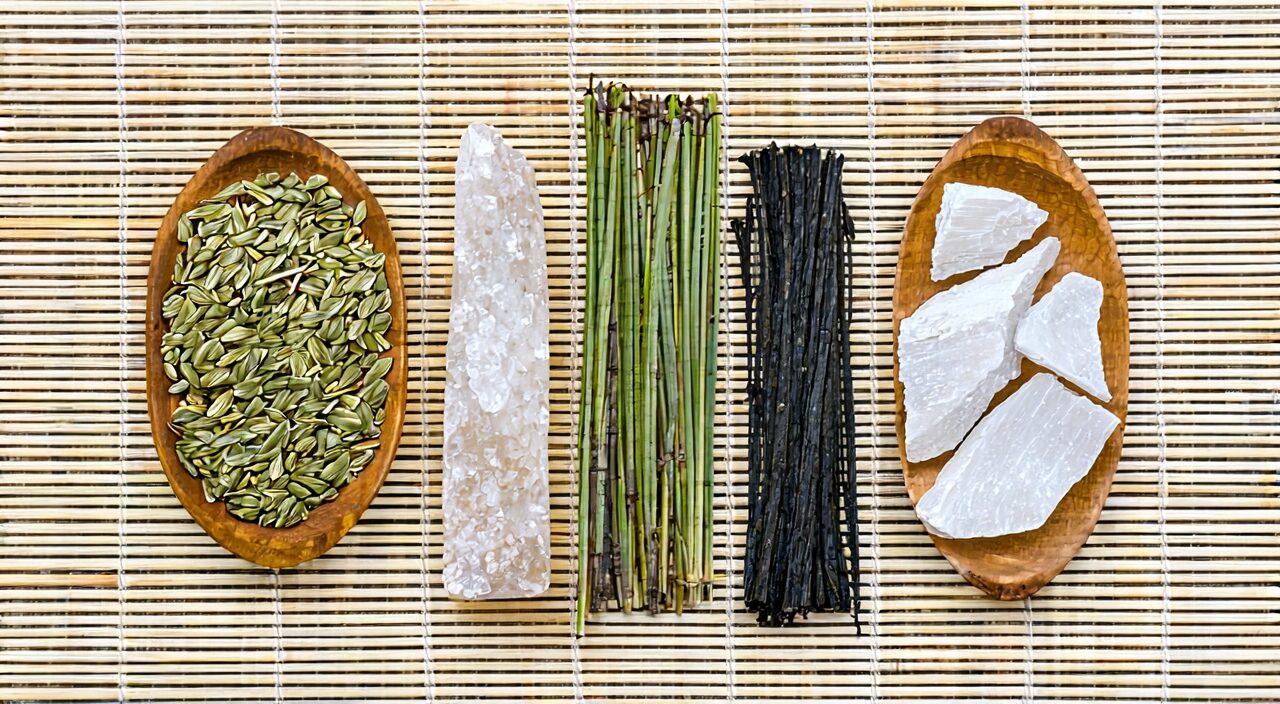
Bitter apricot seed plays a role in dispersing and descending lung qi in many classic formulas. For example, in “Maxing Shigan Decoction,” bitter apricot seed is used together with ephedra, gypsum, and licorice, traditionally for wheezing and cough caused by heat congesting the lung. “San’ao Decoction” is composed of ephedra, apricot seed, and licorice, commonly used for cough with a heavy sound and chest tightness due to wind‑cold fettering the lung. In “Sangju Decoction,” bitter apricot seed is combined with mulberry leaf and chrysanthemum, traditionally used for mild cough in the early stage of wind‑heat. “Xingsu Powder” targets cool‑dryness damaging the lung, with apricot seed used alongside perilla leaf and Peucedanum praeruptorum root to help disperse cold and ventilate the lung. These formulas have different emphases, and the disease conditions, constitutions, and dosages are strictly defined. Suitability must still be determined by considering individual constitution, symptoms, and professional advice; self‑combination is not recommended.
What precautions should be taken when using bitter apricot seed?
The core risk of bitter apricot seed is hydrocyanic acid poisoning. Eating raw bitter apricot seed, using improperly processed seed, or overdosing can all cause poisoning symptoms such as dizziness, nausea, vomiting, palpitations, breathing difficulties, and even respiratory depression. Children are more sensitive to cyanide, and pregnant women should also avoid exposure to prevent harm to the fetus. In addition, for some groups with severe pulmonary insufficiency or respiratory center depression, using bitter apricot seed may increase risks. If poisoning is suspected, seek medical attention immediately. Therefore, bitter apricot seed must be used under the guidance of a TCM practitioner or pharmacist, following standardized dosage and processing requirements, and must never be consumed in large amounts as a dietary remedy on your own. If you are already taking other antitussive or laxative medications, also be mindful of potential additive adverse reactions from overlapping components.
Summary
Bitter apricot seed is a traditional Chinese herb that requires careful handling. From its identification features and medicinal part to its formula applications, everything is inseparable from an understanding of safety boundaries. Its traditional applications in conditions such as externally contracted cough and wheezing or intestinal dryness and constipation have certain reference value, but the cyanogenic glycoside toxicity of amygdalin dictates that it must not be used casually as a daily health product. Whether it is sweet almond with a similar appearance or peach seed with comparable effects, each has its own strengths; they should not be used as substitutes for each other, and definitely should not be taken without professional guidance. This article is for informational reference only and cannot replace professional diagnosis or treatment advice.