
What Is Haigeqiao? Medicinal Parts, Identification, and Common Formulas
Many readers interested in traditional Chinese medicine encounter the medicinal material “Haigeqiao” (Meretricis Concha/Clam Shell) when exploring formulas that resolve phlegm and dissipate masses. Unlike botanical drugs that are easily identified by flowers, leaves, roots, and stems, this is a type of shell. This article will clarify the ins and outs of Haigeqiao, from visual identification, medicinal parts, TCM understanding, and preliminary modern research findings, to its differences from common shells like Oyster Shell, and then to specific formulas and precautions for use.
What Does Haigeqiao Look Like? How to Identify It?
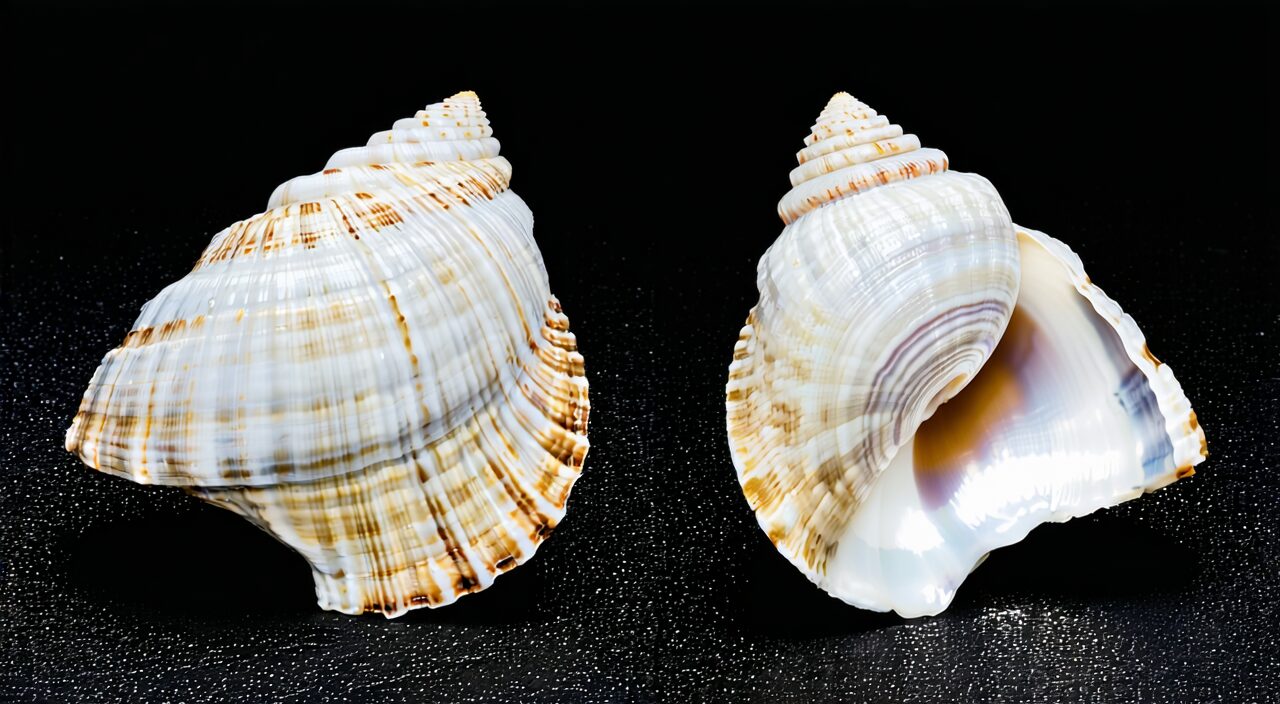
Haigeqiao does not come from a single specific shellfish species; traditionally, it mainly comes from shells of various clams in the Veneridae family, such as Meretrix meretrix (hard clam) or Cyclina sinensis (Chinese clam). If you have the chance to see a complete original shell, you can identify it from several aspects.
The entire shell is often fan-shaped or nearly round, with two valves that can open and close, belonging to the bivalve class. The outer surface of the shell is usually convex, with fine, dense radial ribs extending from the umbo to the edge, known as radial ribs. At the same time, the shell surface also has concentric growth lines centered around the umbo; the two patterns interweave to form a regular texture. Depending on the source, the thickness and density of the radial ribs may vary slightly: the shell surface of Meretrix meretrix is often smoother and finer, while the radial ribs of Cyclina sinensis are more pronounced.
The inner surface of the shell is milky white, with a pearly luster. If you see powder or fragments of calcined Haigeqiao, the color will have turned grayish white or pale yellowish white, the texture becomes loose and brittle, and the original luster has largely disappeared—this is a typical feature after high-temperature calcination.
What Is the Medicinal Part of Haigeqiao?
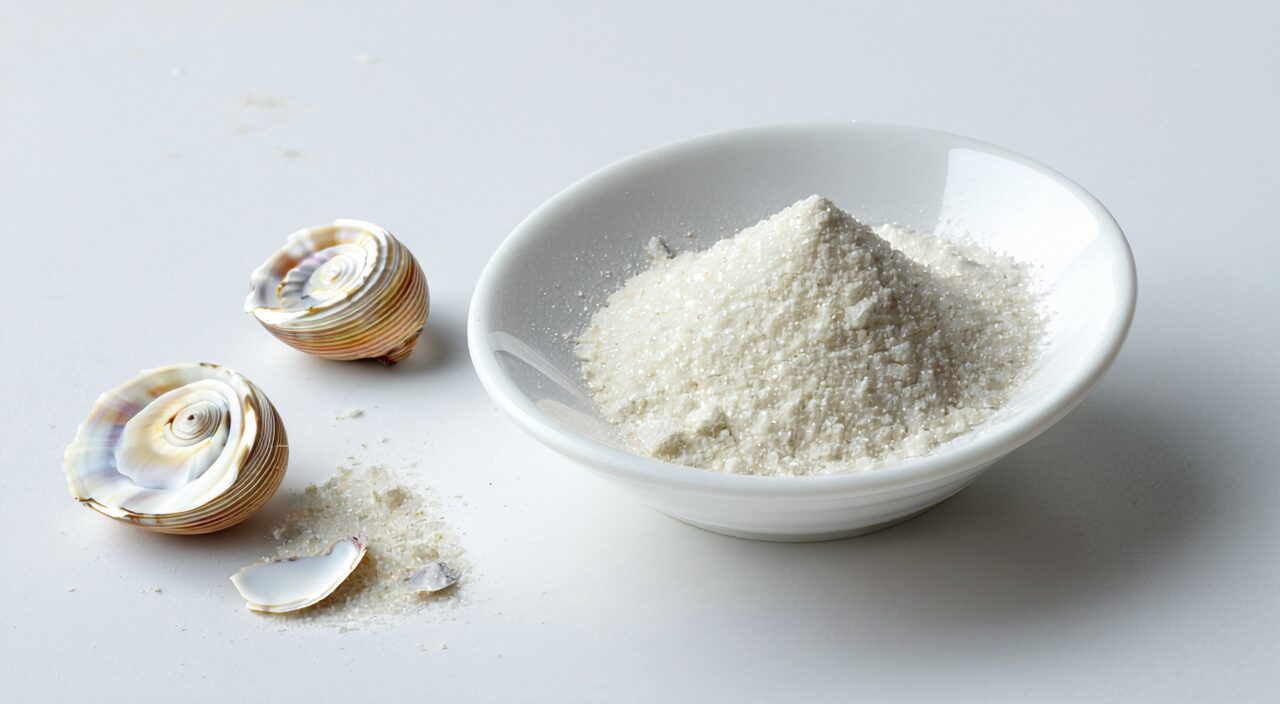
The medicinal part of Haigeqiao is the shell itself, not the soft body inside. After harvesting, the flesh and shell need to be separated; the shell is taken, washed clean, and freed of sand, mud, and attachments, then dried.
To facilitate preparation and extraction of active ingredients, the clean crude material is generally crushed into coarse or fine powder. In addition, “calcined Haigeqiao” is often used clinically. The calcination method involves placing clean Haigeqiao in a suitable container, calcining at high temperature until it becomes brittle, then taking it out to cool and crushing it. After calcination, Haigeqiao has a more pronounced effect of controlling acidity and relieving pain, and it is easier to grind into fine powder. This means the Haigeqiao you see on the market may be raw fragments, raw powder, or calcined powder, with the calcined product being more common in many traditional formulas for conditions related to excess gastric acid.
How Does TCM Understand Haigeqiao?
In traditional Chinese medicine theory, Haigeqiao is considered salty in flavor and cold in nature, mainly entering the Lung and Stomach meridians. Its functions can be understood from several aspects.
First, it clears the Lung and resolves phlegm. When there is heat in the Lung, consuming body fluids and forming thick, sticky phlegm, manifesting as yellow, sticky expectoration, chest tightness, or even blood-streaked sputum, TCM often considers using Haigeqiao to help clear Lung heat and dissolve sticky phlegm. Second, it softens hardness and dissipates masses. “Hardness” and “masses” here can refer to palpable lumps or hyperplastic nodules in the body; for example, in formulas for treating goiter (similar to thyroid enlargement) or scrofula (similar to lymph node tuberculosis), Haigeqiao can be used together with other hardness-softening and mass-dissolving herbs. Third, it can control acid and relieve pain, especially calcined Haigeqiao, which is often used for burning epigastric pain, acid regurgitation, and similar conditions caused by excess gastric acid. These application directions are all based on traditional pattern differentiation; whether they are suitable for individual conditions needs comprehensive judgment combined with tongue coating, pulse, and other signs.
What Has Modern Research Found?
Regarding Haigeqiao, Chinese medicine chemistry and pharmacological studies have provided some preliminary clues. The main component of Haigeqiao is calcium carbonate, along with small amounts of keratin, trace elements, and so on. Calcium carbonate itself has the effect of neutralizing gastric acid, providing a certain material basis for the traditional experience of using calcined Haigeqiao to control acid and relieve pain. In addition, some in vitro experiments or animal studies suggest that Haigeqiao extracts may have certain anti-inflammatory or immunomodulatory tendencies, but most of these studies are still in early stages and far from reaching definitive conclusions.
It should be noted that these modern research perspectives are only partial verification or exploration of traditional uses and cannot be directly equated with clinical therapeutic effects. The purpose of mentioning these details is solely to help readers understand this medicinal material from multiple dimensions, not to serve as a basis for treating any disease.
What Are the Differences Between Haigeqiao, Oyster Shell, and Ark Shell?
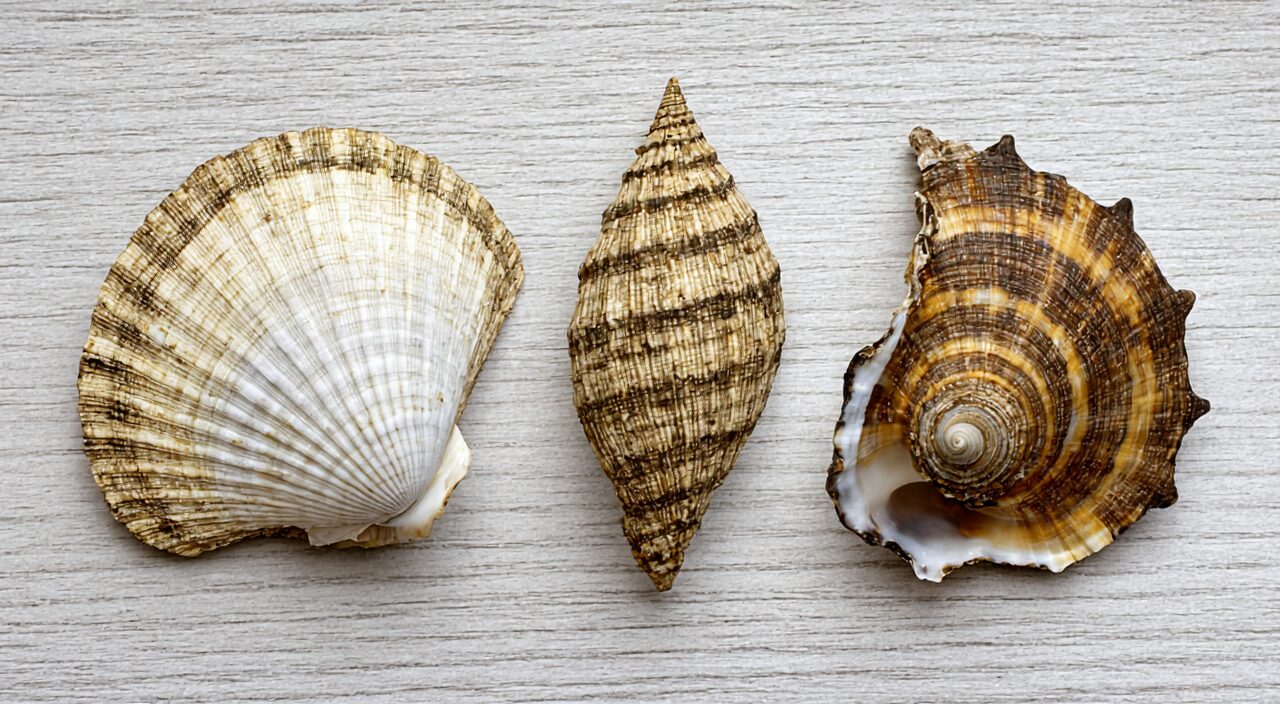
Oyster Shell (Muli), Haigeqiao, and Ark Shell (Walengzi) are several shell-based medicinal materials in TCM that are easily confused. They can be distinguished from the perspectives of shell shape, texture, and traditional applications.
In terms of shell shape, Oyster Shell is often elongated or irregularly oval, with two valves of unequal size: the lower valve is larger and concave, while the upper valve is smaller and flat, with a very obvious scale-like layered surface. Haigeqiao is mostly fan-shaped or nearly round, with two valves generally similar in size, featuring radial ribs and concentric growth lines on the surface. Ark Shell comes from Arcidae shellfish; its shell is often nearly triangular or fan-shaped, with highly prominent radial ribs that frequently have small nodules, giving it a corrugated, angular feel when touched.
In traditional applications, Oyster Shell is more focused on calming the Liver and subduing Yang, heavily settling and calming the mind, and softening hardness and dissipating masses. It is often used for dizziness, palpitations, and insomnia caused by Liver Yang hyperactivity. Haigeqiao is more prominent in clearing the Lung and resolving phlegm, as well as controlling acid and relieving pain. Ark Shell is better at eliminating phlegm and resolving stasis, softening hardness and dissipating masses, and is particularly used for abdominal masses, lumps, and epigastric pain. Although all three are shells, their roles in specific formulas are different and should be chosen according to the therapeutic direction.
Which Formulas Use Haigeqiao?
Haigeqiao appears in quite a few classic formulas. Here are some common examples.
The first is Daige San (Indigo and Clam Shell Powder), composed of Indigo Naturalis (Qingdai) and Haigeqiao. This is a very simple formula traditionally used for cough, blood-streaked sputum, and chest and hypochondriac pain caused by Liver fire invading the Lung. The second is Haige San (Clam Shell Powder), which in addition to Haigeqiao is often combined with ingredients such as Trichosanthis Semen (Gualouren) and is more focused on clearing and resolving heat-phlegm. The third is Haige Wan (Clam Shell Pill), which is often used together with other herbs that soften hardness, dissipate masses, or resolve phlegm and regulate Qi, for conditions such as goiter and scrofula where palpable lumps appear.
It should be noted that the above formulas are traditional empirical prescriptions designed for specific patterns, and the same formula may have completely different effects on different people. If you need to understand related content, it is recommended to combine your specific symptoms and constitutional characteristics and refer to them under the guidance of a professional, rather than applying them on your own.
Precautions for Using Haigeqiao
First, people with Spleen-Stomach deficiency-cold should use Haigeqiao with extra caution. Haigeqiao is cold in nature; if you are prone to cold stomach pain, loose stools, poor appetite, and aversion to cold, this type of constitution may not be suitable for long-term or large-dose use, as it may further damage the Spleen-Stomach Yang Qi.
Secondly, whether it is raw Haigeqiao powder or calcined powder, care should be taken to avoid dust contamination and accidental inhalation; handle with caution during processing and weighing. In addition, people allergic to seafood or shells should avoid using Haigeqiao, as it may trigger allergic reactions such as skin itching and breathing difficulties.
Lastly, and very importantly: never pick up ordinary shells on the beach to use as medicinal Haigeqiao. Medicinal Haigeqiao must undergo strict species identification, cleaning, processing, and other procedures; the source and processing conditions of the raw material directly affect safety. Ordinary shells may carry harmful microorganisms, heavy metals, or other contaminants, and self-processing and consumption pose significant risks.
Summary
Haigeqiao is a traditional Chinese medicinal material that uses specific shells. Its appearance can be identified by the fan-shaped bivalve shell, radial ribs, and concentric growth lines. Its functions—clearing the Lung and resolving phlegm, softening hardness and dissipating masses, and controlling acid and relieving pain—all have clear theoretical bases in TCM, although modern research is still in the preliminary stage. Although it, Oyster Shell, and Ark Shell are all shell medicinals, each has its own emphasis and should not be used interchangeably. When learning about formulas containing Haigeqiao, be sure to consider the actual constitution, remain vigilant about Spleen-Stomach deficiency-cold, allergic constitutions, or shells that have not been properly processed, and consult a professional when necessary. This article is for popular science reference only and cannot replace professional diagnosis or treatment advice.