
What Is Hai Zao (Sargassum)? Medicinal Parts, Identification, and Common Formula Introduction
Many people have seen various forms of seaweed by the seaside or in cuisine, but when “Hai Zao” appears as a Chinese medicinal herb, it is not exactly the same as the everyday broad term. The Hai Zao used in traditional Chinese medicine has specific origins and identification standards. Understanding what it looks like, which part is used, and how it works in compound formulas is very helpful for safely and reasonably understanding this type of medicinal material. This article will clarify important information about medicinal Hai Zao from several aspects: visual identification, medicinal parts, TCM thinking, modern research, differences from Kun Bu and kelp, classic formulas, and precautions for use.
What Does Hai Zao Look Like? How to Identify It?
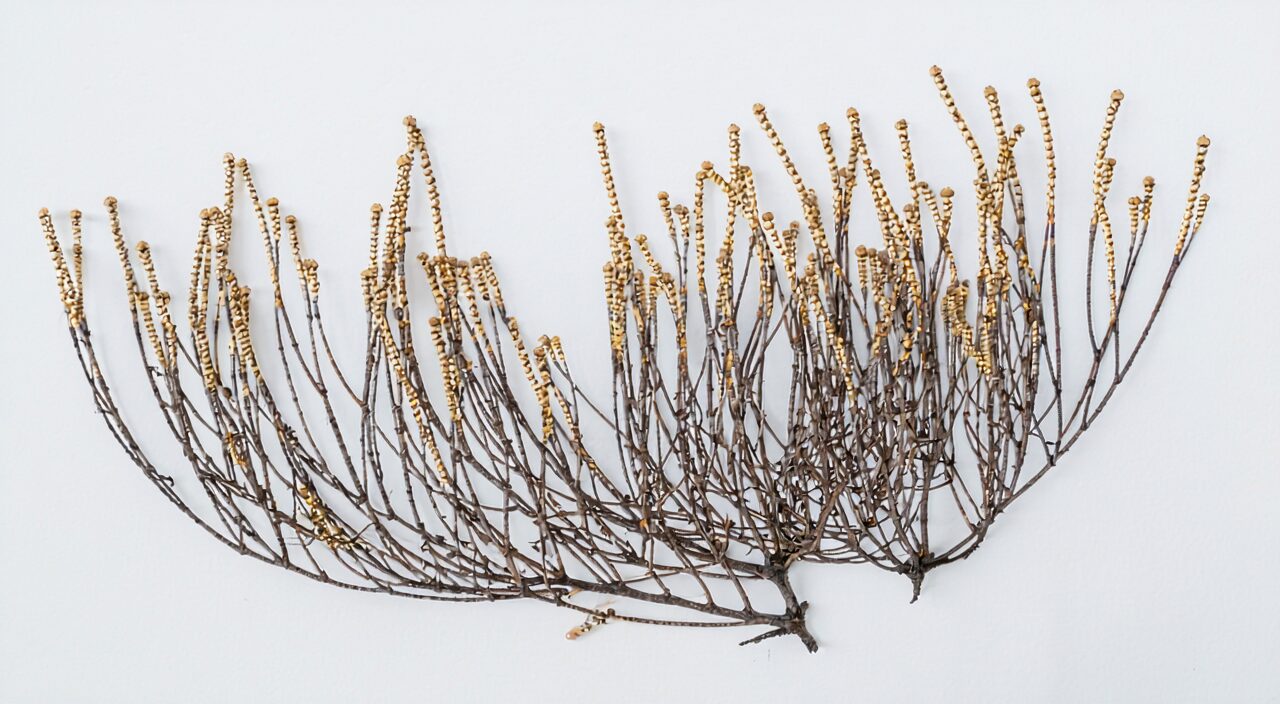
The Chinese medicinal herb Hai Zao mainly comes from the dried thallus of the Sargassaceae plants Sargassum fusiforme or Sargassum pallidum. The whole plant appears curled and crumpled into a clump, but when unfolded, a typical branching structure can be seen. Sargassum fusiforme is usually blackish-brown or yellowish-brown, with a distinct main axis bearing cylindrical or slightly flattened branches, and lateral branches arranged alternately; Sargassum pallidum is slightly lighter in color, pale brown or grayish-brown, with relatively finer and more fragmented branches and leaves.
When identifying it, pay attention to several key features: fleshy leafy structures can be seen on the surface of the thallus, mostly lanceolate, spatulate, or linear in shape, sometimes with serrated or entire margins. In the axils of branches or between leafy structures, small air bladders, spindle-shaped or spherical, can often be found. After drying, their texture becomes tough, which can help determine whether it is this type of brown algae. The medicinal material has a distinct marine, fishy smell and a rather salty taste; the fishy odor becomes more prominent when crushed. If the smell is faint or there is an unusual rancid odor, it may have been stored improperly or may not be the authentic product.
What Is the Medicinal Part of Hai Zao?
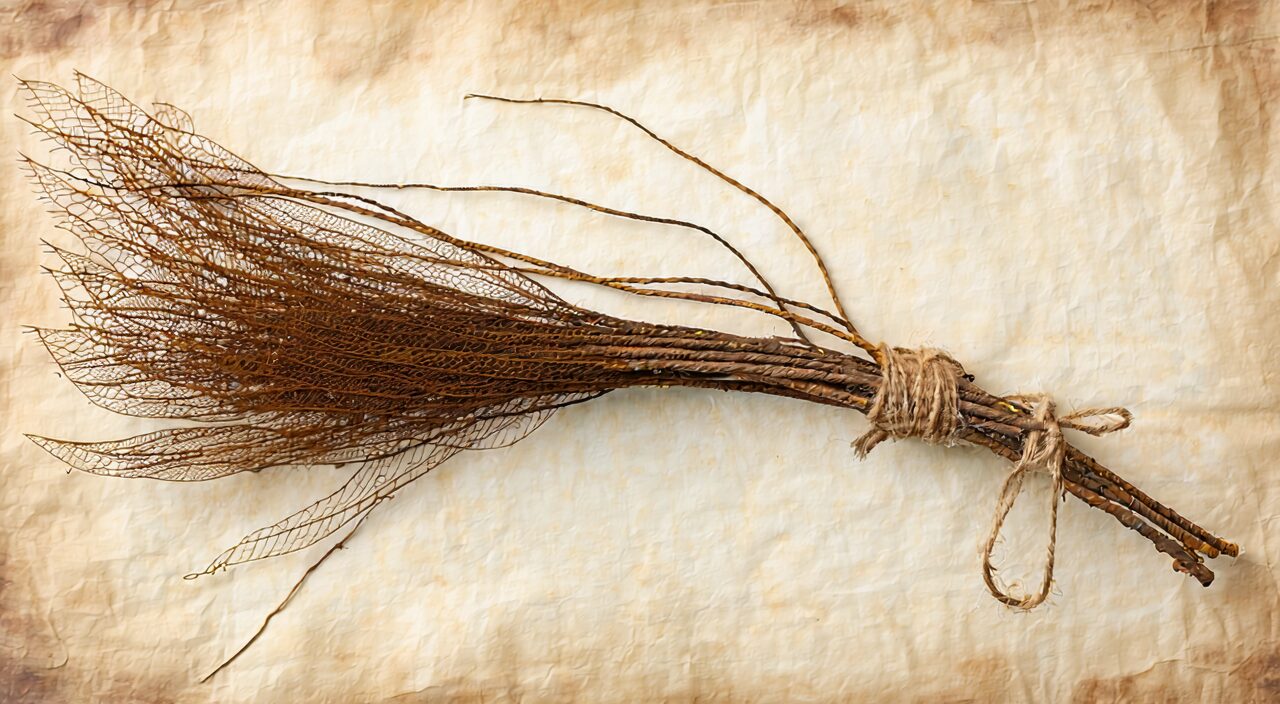
The medicinal part used is the entire thallus, meaning the whole dried alga including the main axis, branches, leafy structures, and air bladders. Harvesting typically occurs in summer and autumn when the algae are growing vigorously. They are collected or cut from seawater, cleaned of attachments and sediment, rinsed repeatedly with fresh water to remove excess salt and impurities, and then sun-dried or dried at low temperature.
After drying, Hai Zao is pliable and prone to absorbing moisture, so it usually needs to be stored sealed in a cool, dry place. Some markets also sell Hai Zao cut into short segments; before use, it still needs simple sorting to remove residual stem bases or impurities. Because the whole herb is used medicinally, there is no mistaken claim that only a certain part is taken. A complete thallus with leaf-like structures and small air bladders is traditionally considered to be of better quality.
How Does TCM Understand Hai Zao?
In TCM theory, Hai Zao is bitter and salty in flavor, cold in nature, and enters the Liver, Stomach, and Kidney meridians. Its actions are traditionally understood in two main directions: “dissipating phlegm, softening hardness, and dispersing masses” and “promoting urination and reducing swelling.” Ancient practitioners often used Hai Zao for conditions such as yingliu (benign neck masses), luoli (scrofula), and testicular swelling and pain caused by phlegm congealing and qi stagnation over time, believing it could soften hard lumps and promote the dissipation of phlegm-dampness accumulations. Here, “yingliu” roughly corresponds to certain benign masses appearing in the neck in modern terms, rather than referring to all thyroid diseases.
The idea of promoting urination and reducing swelling is reflected in cases of edema or leg qi swelling caused by water-dampness stagnation. Hai Zao can help promote the movement of body fluids and reduce the sensation of swelling. However, these understandings are all based on traditional pattern differentiation and are not simply a matter of matching symptoms with herbs. Whether it is suitable still requires a comprehensive judgment based on individual constitution, symptoms, and other combined herbs, and it should not be taken on one’s own over a long period.
Modern Research on Hai Zao
Modern analysis has found that Hai Zao contains abundant iodine, alginic acid, alginates, mannitol, and various polysaccharides. Among these, the relatively high iodine content once led people to directly associate Hai Zao with thyroid problems. However, iodine is only one of the raw materials for thyroid hormone synthesis, and the causes of thyroid dysfunction are highly complex. Simply consuming high-iodine herbs cannot solve all thyroid-related problems and may sometimes even worsen certain conditions. Therefore, equating the iodine in Hai Zao with treating thyroid disease is one-sided.
Polysaccharide components have shown certain immunomodulatory, anticoagulant, and antioxidant activities in laboratory studies, but these mostly remain at the stage of in vitro experiments or animal models, and there is still a considerable gap before clinical application. Understanding these studies can serve as background knowledge, but one should not intentionally engage in daily high-dose supplementation based on them, nor can they replace standardized medical evaluation.
What Are the Differences Between Hai Zao, Kun Bu, and Kelp?
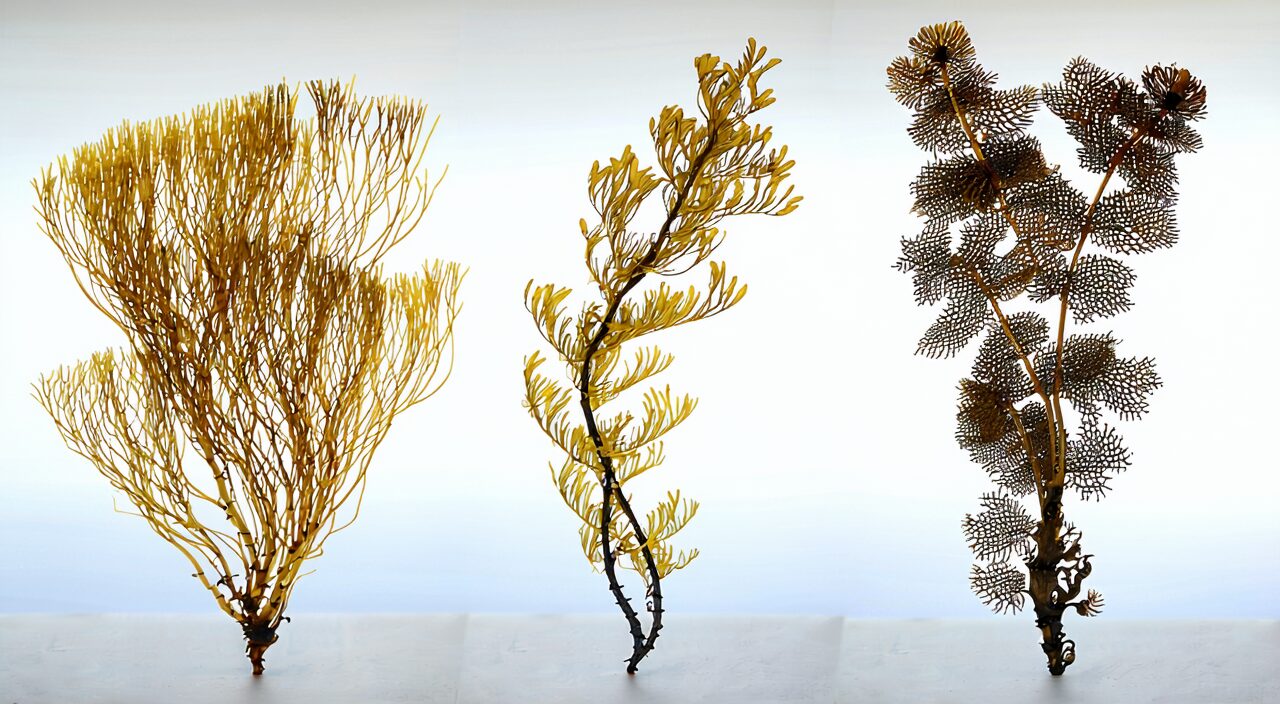
Many people easily confuse Hai Zao, Kun Bu, and kelp, especially as these three names are often used interchangeably in food and medicinal contexts. In terms of origin, TCM Kun Bu generally comes from the dried leaf-like thallus of Laminaria japonica (kelp) or Ecklonia kurome (a type of algae), presenting mostly as broad band-shaped or pinnately divided blades, brownish-green to blackish-brown in color, and relatively thick in texture; the kelp commonly eaten daily is usually one of these. In contrast, TCM Hai Zao comes from Sargassum fusiforme or Sargassum pallidum, presenting a fine, fragmented branching structure with small leaf-like structures and small air bladders, with obvious morphological differences.
In terms of traditional functions, although both Kun Bu and Hai Zao have the characteristic of softening hardness and dispersing masses, Kun Bu is better at dissipating phlegm and promoting urination, while Hai Zao is comparatively more inclined to disperse masses and reduce swelling. “Seaweed salad” and similar items on the food market typically use wakame or other edible seaweeds, which are not the same species as the medicinal herb Hai Zao and cannot simply be substituted. Therefore, when purchasing, it is necessary to note whether it is intended as food or medicine, and pay attention to the corresponding scientific name and medicinal part to avoid confusion.
Which Formulas Use Hai Zao?
Hai Zao is a commonly used medicinal herb, mostly appearing in traditional formulas oriented toward softening hardness and dispersing masses. It is generally not used alone but combined with herbs such as Kun Bu, Beimu (Fritillaria), Banxia (Pinellia), Lianqiao (Forsythia), and Danggui (Angelica sinensis). Several representative formulas can help understand its application approach.
Hai Zao Yuhu Decoction, from Waike Zhengzong (Orthodox Manual of External Medicine), is one of the classics among formulas that soften hardness and disperse masses. This formula combines Hai Zao with Kun Bu, Beimu, Banxia, Qingpi (Citrus reticulata peel), Lianqiao, and others. Traditionally, it is often used for shiying (hard goiter) and early-stage yingliu caused by phlegm and qi binding, mostly seen when neck masses are relatively hard. The premise for using this type of formula is often that the constitution tends toward repletion without obvious deficiency manifestations; it is by no means suitable for everyone.
Neixiao Luoli Pill focuses on dispersing and clearing heat, softening hardness and transforming phlegm, and is often used for conditions like luoli and phlegm nodules. Within it, Hai Zao is used together with Xiakucao (Prunella), Xuanshen (Scrophularia), Zhebeimu (Fritillaria thunbergii), Tianhuafen (Trichosanthes root), and others, mainly targeting patterns of phlegm-fire stagnation with local swelling and pain. Hai Zao Pill has a similar approach, emphasizing softening hardness and dispersing masses. In ancient and modern literature, it is often used for yingliu and luoli that have persisted for a long time without resolving. These formulas all embody a traditional strategy of gradual, slow dissipation and reduction, which is not suitable for acute infections or cases with ulceration or high fever. It is especially important to note that formula selection must be based on constitution, specific manifestations, and reference to product instructions and professional opinion; one must not self-prescribe based on a single symptom alone.
What Precautions Should Be Taken When Using Hai Zao?
Although Hai Zao is a commonly used medicinal herb, there are still many aspects requiring attention when using it. First is regarding thyroid-related diseases. If a person has been diagnosed with hyperthyroidism, autoimmune thyroiditis, or needs strict control of iodine intake, they should avoid indiscriminate use of Hai Zao because its naturally high iodine content may interfere with thyroid function or affect disease evaluation. Even for the general population using Hai Zao as a daily tea or food ingredient, the frequency and dosage should be controlled, and it should not be consumed continuously over a long period without interruption.
Secondly, the active components in Hai Zao have a certain anticoagulant tendency. If one is taking anticoagulant or antiplatelet drugs and simultaneously eating or using high-concentration Hai Zao extracts, it may affect coagulation function and requires extra caution. Furthermore, marine-sourced algae may carry risks of heavy metal and arsenic contamination. Products purchased through regular channels and subjected to testing are more reliable; the safety of self-collected, unprocessed seaweed is difficult to guarantee.
Finally, traditional Chinese herbal compatibility includes the concept of the “Eighteen Incompatibilities,” among which the pairing of Hai Zao and Gancao (licorice) is considered a mutually incompatible pair, meaning it is generally believed that the two should not be used together. Although modern debates on this still exist, for safety reasons, Hai Zao should not be casually taken together with formulas or patent medicines containing Gancao without professional pattern-based guidance.
Summary
As a traditional Chinese medicine, Hai Zao mainly comes from the dried whole thallus of Sargassum fusiforme or Sargassum pallidum. It has a branching appearance with small air bladders and a marine smell, clearly differing from Kun Bu and edible kelp. It is often used for the therapeutic directions of dissipating phlegm, softening hardness, dispersing masses, and promoting urination to reduce swelling, and appears in classic formulas such as Hai Zao Yuhu Decoction. Due to Hai Zao’s high iodine content and the existence of contraindicated combinations, individual constitution, thyroid status, and medication safety must be fully considered before use. This article is for informational reference only and cannot replace professional diagnosis or treatment advice. For specific use, please make comprehensive judgments based on product instructions and the opinions of professionals.