
What Is Magnetite? Medicinal Parts, Identification Methods, and Common Formulas
In the world of Chinese patent medicine compositions, mineral medicines often appear understated and mysterious. Magnetite, as a traditional mineral medicinal, often attracts the attention of overseas Chinese medicine enthusiasts due to its unique magnetism and origin. But what exactly is magnetite, what does it look like, and how is it used medicinally? This article will provide a clear and understandable science-based explanation, covering aspects such as visual identification, medicinal source, traditional understanding, differences from similar substances, common formulas, and precautions for use.
What Does Magnetite Look Like? How to Identify It?
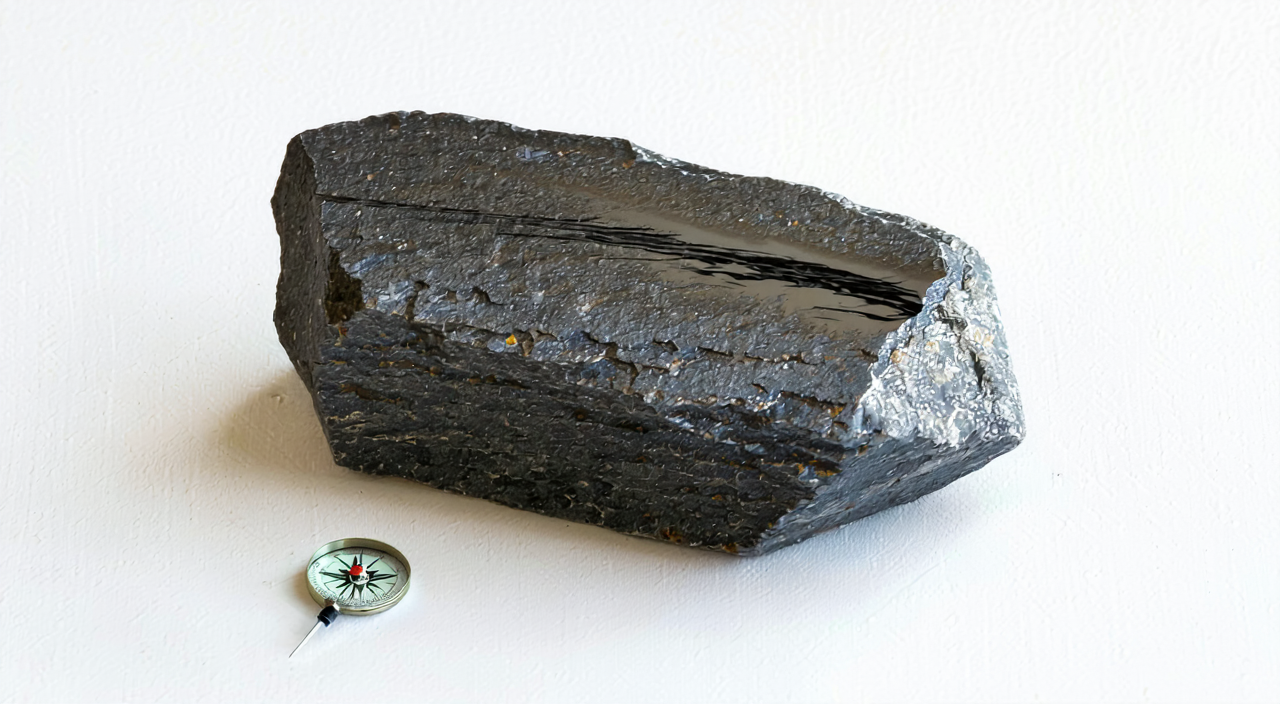
In its natural state, magnetite is mostly found as irregular massive aggregates, sometimes with angular surfaces, but overall not uniform. Its color is mainly black or slightly brownish-black, and fresh fractures often display a distinct metallic or sub-metallic luster, resembling some kind of ore. One of the simplest ways to identify magnetite is to observe its streak — scratching magnetite on an unglazed porcelain plate leaves a black streak, whereas many visually similar stones yield other colors. More importantly, magnetite is magnetic; bringing a small piece near a compass will deflect the needle, or placing it near fine iron filings will cause them to adhere to the surface. This characteristic is intuitive and unique, serving as a key to distinguish it from many other gray-black minerals. However, it should be noted that after high-temperature calcination, the magnetism of calcined magnetite often weakens significantly, so relying solely on magnetism for identification should be combined with other features.
What Is the Medicinal Part of Magnetite?
The medicinal part of magnetite is not the root, stem, flower, or leaf of a plant, but the natural magnetite mineral itself. Generally, portions with higher iron content are selected during mining, surface-attached impurities and soil are removed, and after crushing and cleaning, pieces of suitable size for medicinal use are sorted out. According to clinical practice, magnetite is often used in two forms: raw magnetite and calcined magnetite. Raw magnetite is cleaned, crushed, and directly used, whereas calcined magnetite is made by heating raw magnetite at high temperature until red-hot, then immediately quenching it in vinegar until it becomes brittle — a process in traditional processing called calcination and quenching. After calcination and quenching, the brittleness of magnetite increases, making it easier to prepare and decoct. It is also believed that the settling and calming nature of calcined magnetite becomes milder, making it more suitable for individuals with a weak constitution who cannot tolerate strong heavy-settling substances.
How Does Chinese Medicine Understand Magnetite?
In traditional Chinese medicine theory, magnetite is often classified as a calming (settling spirit) or liver-pacifying medicinal. Its nature and flavor are mostly recorded as salty and cold, and it enters the Heart, Liver, and Kidney meridians. Based on this understanding, physicians throughout history have developed several main application approaches for magnetite:
- Calming fright and settling the spirit: For manifestations such as palpitations, insomnia, and irritability caused by disharmony between the Heart and Liver, magnetite can be used as a settling and calming option, often combined with cinnabar to enhance the spirit-calming effect, but the proportion of the combination must be strictly controlled.
- Pacifying the Liver and subduing Yang: When Liver Yang rises and disturbs the upper body, leading to dizziness, vertigo, irritability, and anger, the descending nature of magnetite may help suppress the hyperactive Liver Yang, and it is often used together with dragon bone and oyster shell.
- Brightening the ears and eyes: In cases of tinnitus, deafness, or blurred vision due to Liver and Kidney deficiency with upward-flaring deficiency fire, magnetite is thought to guide the floating fire downward, thereby improving the function of the ear and eye orifices. It is often used with nourishing substances such as prepared Rehmannia root and Cornus fruit.
- Grasping Qi and relieving dyspnea: For deficiency-type dyspnea caused by the Kidney failing to grasp Qi, magnetite has the function of assisting the Kidney in receiving Qi. Therefore, it is often used as an adjuvant in formulas regulating dyspnea, typically combined with warm kidney and Qi-grasping herbs such as cinnamon bark and agarwood.
It should be noted that these approaches are theoretical summaries of traditional Chinese medicine. Whether they are applicable in practice also depends on individual constitution and specific patterns at the time, and should not be applied directly without differentiation.
What Does Modern Research Focus On?
From the perspective of modern mineralogy and pharmacy, the main component of magnetite is ferroferric oxide (Fe3O4), and it often contains small amounts of magnesium, aluminum, silicon, and other elements. Modern research on magnetite focuses more on quality control, such as determining its iron content and strictly limiting the residual levels of harmful elements like lead, arsenic, and mercury. Pharmacopoeias of various countries have clear regulations on the limits of heavy metals in magnetite, which forms the basis for ensuring medication safety. Additionally, the influence of calcination processing on the dissolution and physical properties of magnetite’s components is another area of current interest. These efforts primarily aim to ensure the stable quality of medicinal mineral decoction pieces and provide fundamental data for traditional use, rather than simply verifying some kind of “efficacy.”
Differences Between Magnetite, Hematite, and Dragon Bone
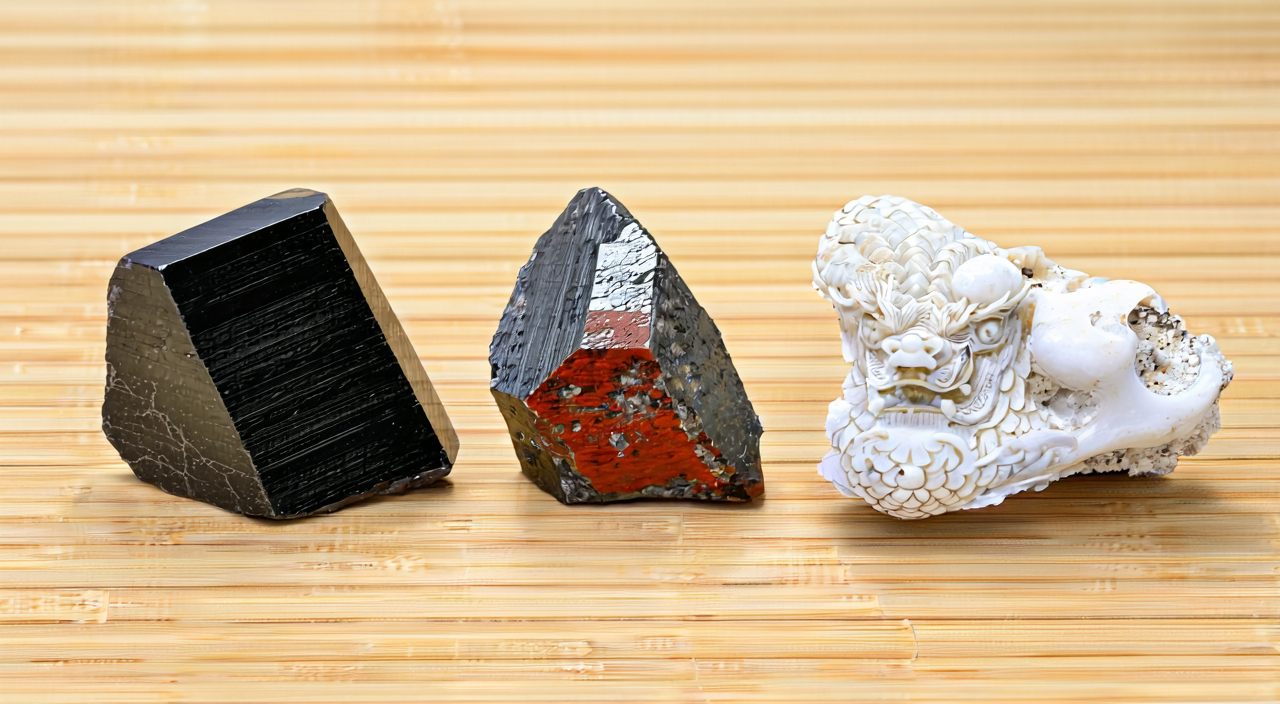
In practical application, magnetite often appears together with mineral medicines like hematite and dragon bone, but there are distinct differences among them. Magnetite belongs to the magnetite mineral group, appearing black or brownish-black, with metallic luster, and can attract iron. Its main component is ferroferric oxide. Hematite, on the other hand, originates from red iron ore, usually brownish-red or rust-red, with a dull earthy luster on the fracture surface, non-magnetic, and its main component is ferric oxide. In Chinese medicine, it is more inclined to pacify the Liver and redirect rebellious Qi, cool blood, and stop bleeding, often paired with Inula flower for belching and hiccups. Dragon bone is the fossilized bone of ancient mammals such as rhinoceros or elephants, mostly off-white or grayish-white, light in weight, non-magnetic, and commonly used for calming the spirit and astringing. The three differ completely in color, magnetism, texture, and their traditional functional orientations, and should not be confused or substituted arbitrarily.
Which Formulas Use Magnetite?
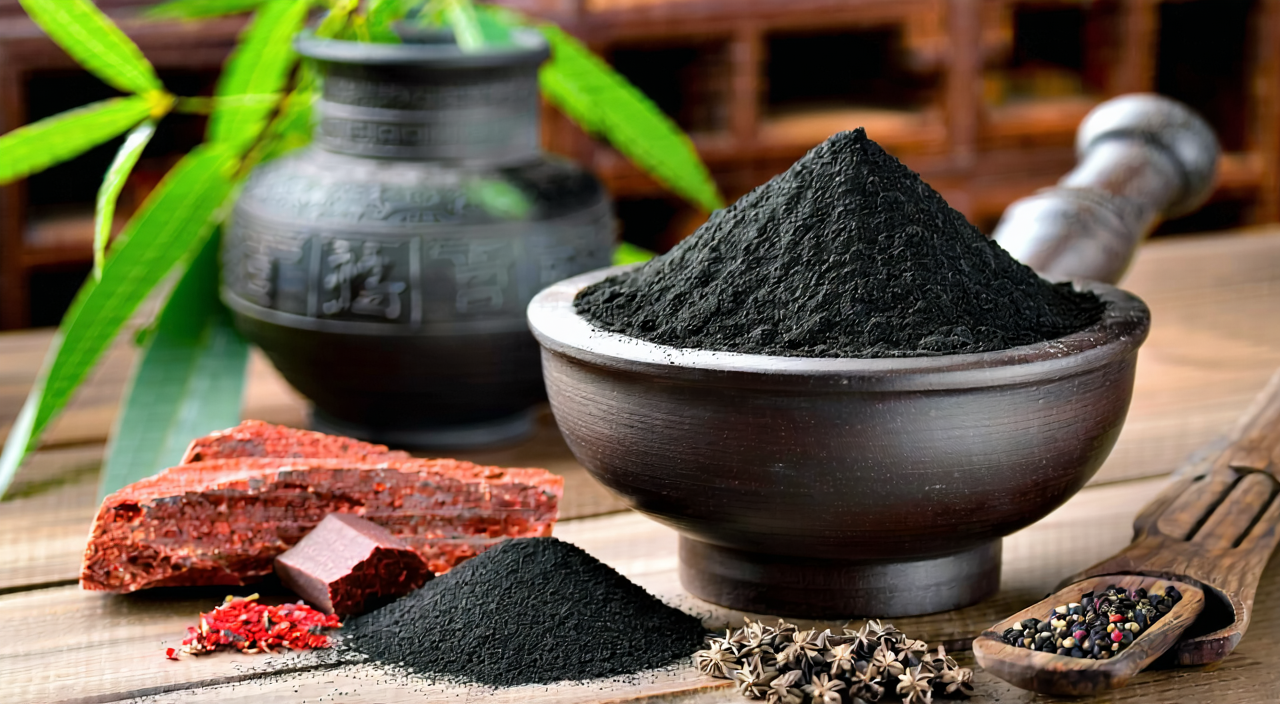
Historically, magnetite has been included in many classic formulas. The following are a few examples for reference:
- Ci Zhu Wan (Magnetite and Cinnabar Pill): Composed of magnetite, cinnabar, and Massa Medicata Fermentata (shen qu), it is traditionally used for blurred vision and tinnitus caused by disharmony between the Heart and Kidney. This formula is often regarded as a representative prescription for calming the spirit and improving vision, but because it contains cinnabar, strict limits apply to dosage and suitable populations.
- Er Long Zuo Ci Wan (Deafness Left-Supporting Pill): Based on Liu Wei Di Huang Wan (Six-Ingredient Rehmannia Pill) with added magnetite and other herbs, it is commonly used in the regulating approach for deafness, tinnitus, dizziness, and blurred vision associated with Liver and Kidney Yin deficiency and upward-flaring deficiency fire.
- Ci Shi Wan (Magnetite Pill): Throughout medical history, there are multiple formulas named Ci Shi Wan. For example, the one in Taiping Shenghui Fang (Peaceful Holy Benevolent Prescriptions) features magnetite as the main ingredient, combined with Cistanche and Psoralea fruit, used for kidney deficiency tinnitus. Other versions are also mostly formulated around Liver and Kidney insufficiency and diminished hearing and vision, with magnetite as a core ingredient.
Regardless of the formula, it should be used under the guidance of a professional Chinese medicine practitioner, based on specific constitution and pattern differentiation, and should not be self-selected merely by the formula name.
What Precautions Should Be Taken When Using Magnetite?
As a mineral medicine, magnetite has some aspects that require special attention. First, individuals with weak spleen and stomach, or those prone to abdominal bloating and loose stools, should use magnetite with great caution, because its descending nature may increase the digestive burden or cause constipation. Second, mineral medicines may contain small amounts of heavy metals or other components; therefore, properly tested magnetite decoction pieces that meet pharmacopoeia standards should be selected, and raw materials of unknown origin should be avoided. If you are taking iron supplements, other iron-containing blood-tonifying products, or medications related to mineral components, consult a doctor or pharmacist to avoid excessive iron intake from concomitant use. Moreover, pregnant women, breastfeeding women, and children are generally not considered suitable for self-directed use. Magnetite should not be taken continuously for long periods, especially in very large doses, as it may cause discomfort in certain constitutions. In summary, this type of mineral medicine is not suitable for daily self-regulation, and one should fully understand their own condition and seek professional judgment before use.
Summary
Magnetite, as a distinctive mineral medicine, can be clearly differentiated from other mineral substances such as hematite and dragon bone by its unique magnetism and appearance. Traditional Chinese medicine applies magnetite through approaches like calming fright and settling the spirit, pacifying the Liver and subduing Yang, brightening the ears and eyes, and grasping Qi to relieve dyspnea, while formulas such as Ci Zhu Wan and Er Long Zuo Ci Wan further demonstrate its combined application directions. However, the use of mineral medicines places high demands on individual constitution and processing quality, and must be carried out under professional guidance. Never self-administer long-term based on incomplete understanding. This article is for popular science reference only and cannot replace professional Chinese medicine pattern differentiation and treatment.