
What Is Muli? Medicinal Parts, Identification Tips, and Common Formulas
When people hear “muli” (oyster shell), many first think of tender seafood, but in traditional Chinese medicine, muli is a shell-based medicinal with a long history and wide applications. The part used is not the familiar oyster meat, but the shell of specific species such as Crassostrea gigas, Ostrea talienwhanensis, or Ostrea rivularis. For overseas Chinese, seeing “muli” on a prescription often raises questions: what is its relationship with the oysters we eat? How can it be identified? And which common formulas include it? This article addresses these practical concerns and, in plain language, summarizes the core information about muli as a medicinal.
What Does Muli Look Like? How to Identify It
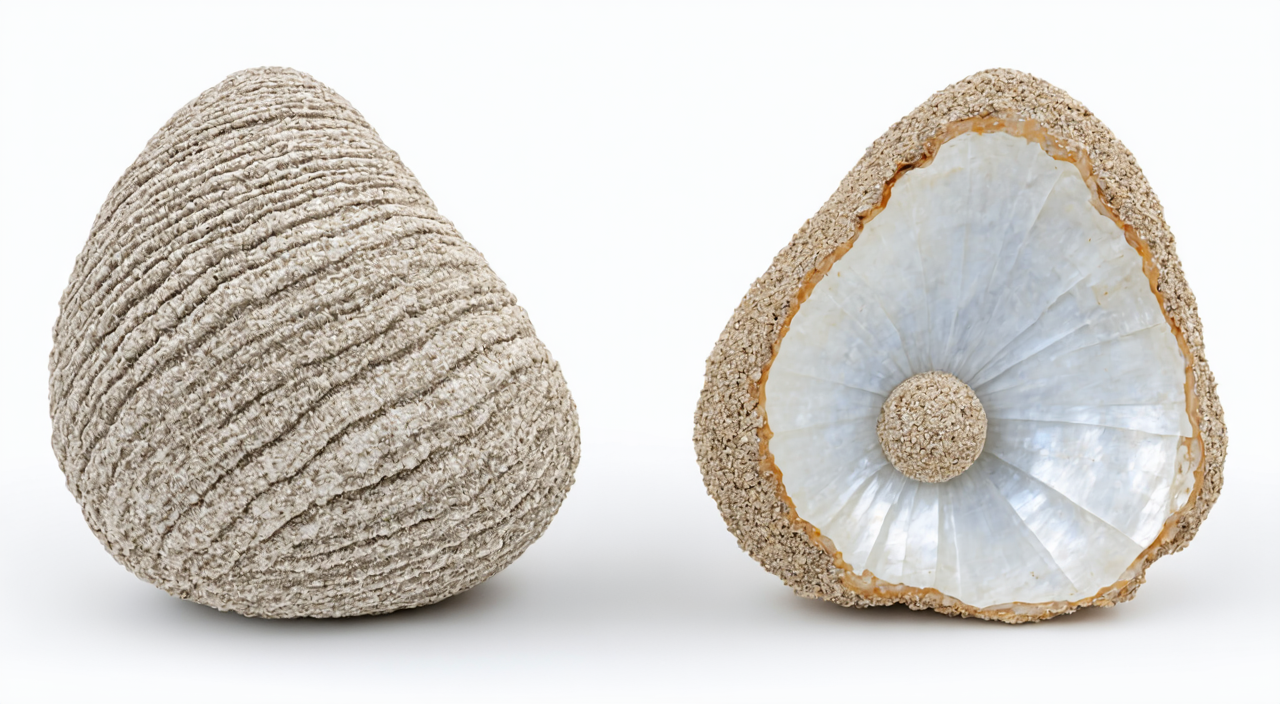
Medicinal muli comes from the same source as the oyster shells left behind after eating, but after specialized cleaning, its characteristics become clearer. Raw muli consists of irregular layered or oblong shells of varying sizes, usually quite thick and heavy. The outer surface is grayish white, grayish yellow, or light brown, rough in texture, with visible layered growth lines formed by multiple layers of growth rings. Some areas may also bear traces of barnacles or algae. To the touch, the surface is noticeably uneven and hard.
The inner surface is strikingly different: mostly milky white or porcelain white, smooth and with a pearly luster—a hallmark of the oyster’s long-term secretion of nacre. When broken, the cross-section appears lamellar, reflecting fine layered structures under light. Calcined muli, or duan muli, turns grayish white or grayish brown overall, with a brittle texture that can be easily crushed into a fine powder. The original layered structure is still visible but greatly reduced in hardness. Understanding these features is very helpful for visually identifying common commercial muli medicinal materials.
What Is the Medicinal Part of Muli?
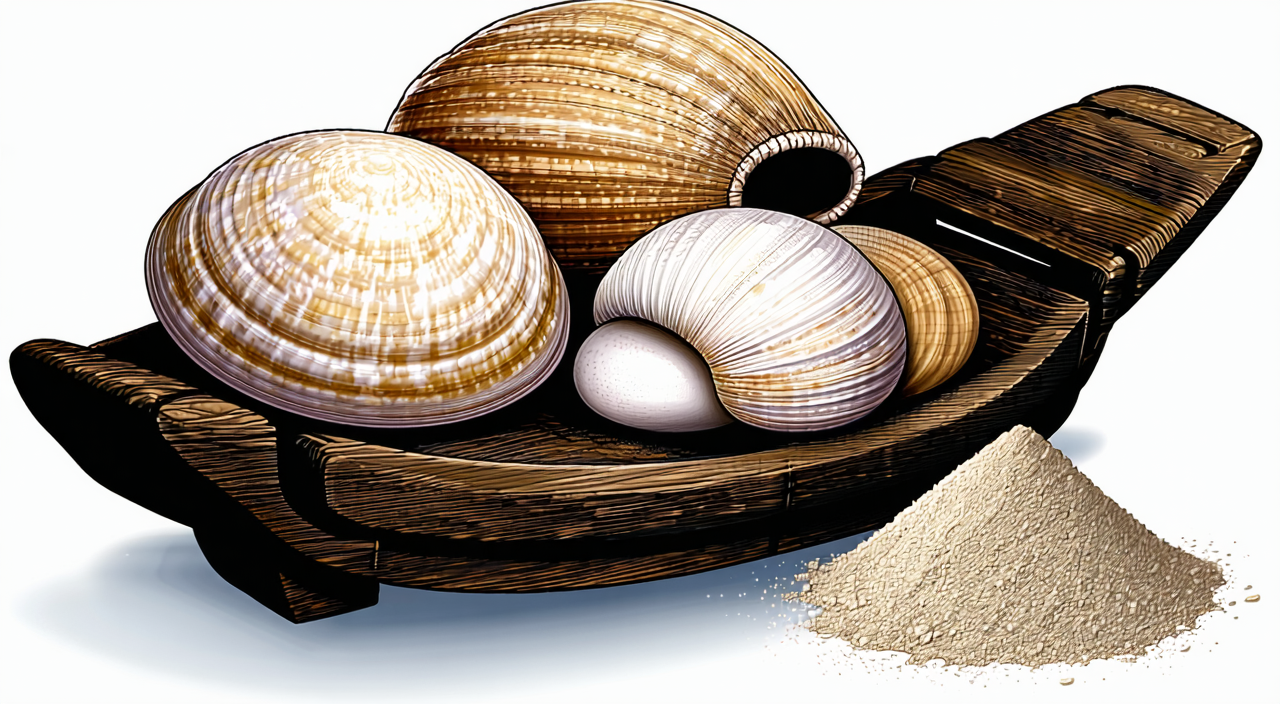
The medicinal part of muli is very clear: it is the shell of Crassostrea gigas, Ostrea talienwhanensis, or Ostrea rivularis from the Ostreidae family, without the soft body. After harvesting, attached sediment, barnacles, and other impurities must be removed, followed by thorough washing, drying, and storage. Depending on different clinical needs, muli is available in two specifications: raw muli and calcined muli.
Raw muli is usually cleaned and crushed for use, retaining the shell’s inherent heavy, settling, and descending properties. Calcined muli involves heating the cleaned shell in a smokeless fire until it becomes brittle, then cooling and crushing or grinding it into powder. The calcining process modifies some of its characteristics, enhancing its astringing, securing, and acid-restraining actions while moderating its heavy settling and spirit-calming effect. Therefore, in clinical applications, the choice between raw and calcined muli depends on the therapeutic direction and must be combined with individual conditions for a comprehensive judgment.
How Does Chinese Medicine Understand Muli?
In traditional Chinese medical theory, muli is salty and astringent in flavor, slightly cold in nature, and primarily enters the Liver, Gallbladder, and Kidney channels. Generations of physicians have summarized its understanding in several directions. First, muli is heavy in texture and can anchor and calm the spirit; for irritability, restlessness, palpitations, and insomnia caused by floating heart spirit, it is often included as an ingredient to stabilize the mind. Second, it subdues yang and enriches yin, helping to consolidate floating liver yang, and is therefore commonly used for dizziness, tinnitus, distending headache, and other conditions related to yin failing to control yang.
Third, muli is salty and can soften hardness and dissipate masses. Traditionally, it is used for scrofula and phlegm nodules caused by phlegm-fire binding, which present as lumps around the neck or underarms, often paired with heat-clearing and phlegm-resolving substances. Fourth, calcined muli excels at astringing and securing and can be used for spontaneous sweating, night sweats, seminal emission, spermatorrhea, uterine bleeding, and leukorrhea when there is a loss of containment. It also has acid-restraining and pain-relieving effects and may be considered for excess gastric acid, epigastric noise, acid reflux, and heartburn. These applications are all grounded in the traditional syndrome differentiation system; whether muli is appropriate still requires consideration of individual constitution and professional judgment.
What Has Modern Research Discovered?
Modern analytical techniques offer another perspective on understanding muli. Oyster shell contains a large amount of calcium carbonate, along with calcium phosphate, calcium sulfate, and minerals such as magnesium, aluminum, and silicon, as well as small amounts of amino acids and trace elements. These constituents may have some relevance to its astringent external use and internal acid-restraining effects. Preliminary studies have also observed that oyster shell extracts show sedative and anti-experimental gastric ulcer potential under specific experimental conditions, but such findings mainly provide a scientific reference for understanding and cannot be directly equated to clinical effectiveness. For general readers, modern research can help make sense of traditional usage concepts but should not replace careful evaluation of individual circumstances.
How Does Muli Differ from Haigeqiao and Walengzi?
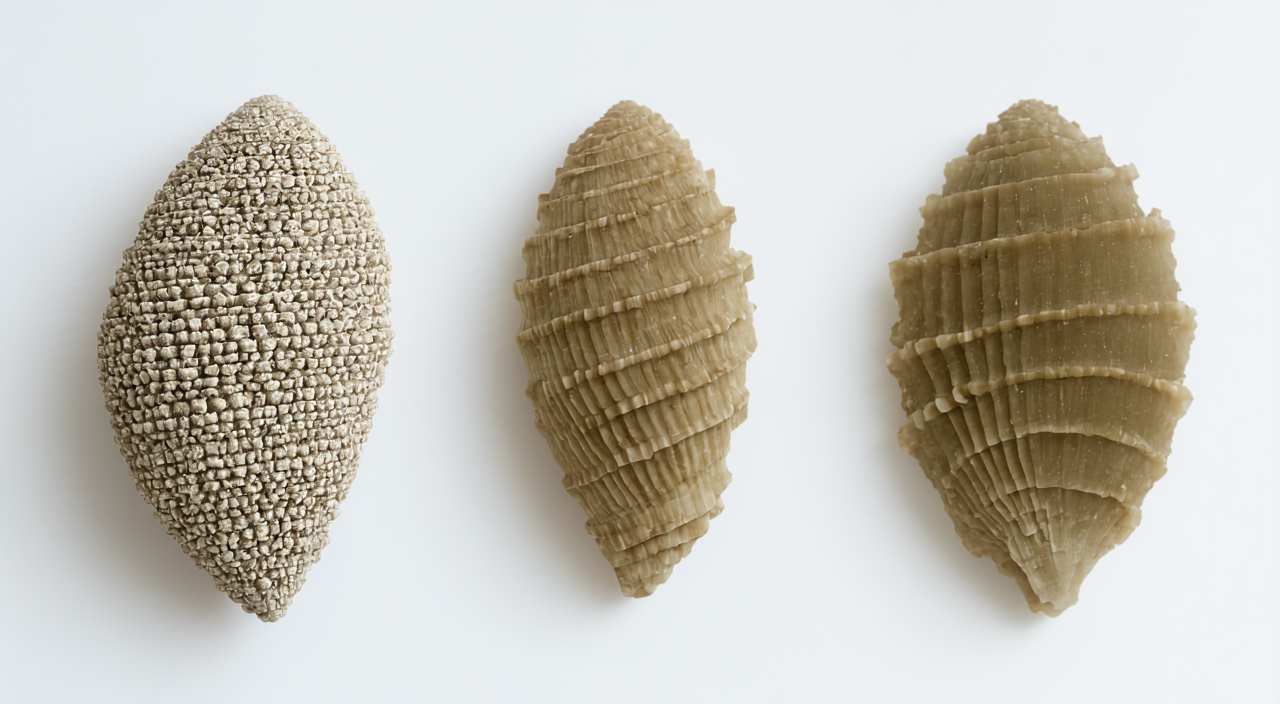
Even those with some background in Chinese medicine sometimes confuse muli, haigeqiao (clam shell), and walengzi (ark shell)—three shell-based medicinals—because their appearances can be somewhat similar. Upon close observation, the differences are actually quite obvious.
Muli shells are primarily irregular layered pieces, thick and hard, with rough layered lines on the outer surface and a smooth inner surface; the lamellar structure on the cross-section is a key identifying feature. Haigeqiao comes from Meretrix meretrix or Cyclina sinensis; its shells are generally thinner, with distinct radiating ribs on the surface, and concentric growth lines intersecting the radiating ribs to form a lattice-like pattern. It is lighter than muli and lacks a clear lamellar structure on the cross-section. Walengzi is the shell of Arcidae species; its surface features numerous prominent radial ribs resembling roof tile ridges. It is hard, and while its cross-section is also layered, it is finer.
In terms of traditional applications, the three also have different emphases. Muli leans toward anchoring and calming the spirit, subduing yang and enriching yin, softening hardness and dissipating masses, and astringing and securing. Haigeqiao is more adept at clearing the lung and resolving phlegm, softening hardness and dissipating masses, and is often used for phlegm-heat coughs and goiters. Walengzi mainly eliminates phlegm and resolves stasis, softens hardness and dissipates masses, and restrains acid and alleviates pain. Thus, even though they are all marine shells, their functional emphases and suitable conditions differ, and when referencing formulas, it is advisable to understand each substance’s orientation accordingly.
Which Formulas Use Muli?
Muli plays a key role in numerous classic formulas. Below are several commonly cited formulas to offer a window into traditional combinations.
Cinnamon Twig Decoction plus Dragon Bone and Oyster Shell (Guizhi Jia Longgu Muli Tang) is a famous formula from the Essentials from the Golden Cabinet. It consists of Cinnamon Twig Decoction plus dragon bone and oyster shell, with the action of harmonizing yin and yang, anchoring and securing. Traditionally, it is used for seminal emission, erotic dreams, lower abdominal tightness, dizziness, and hair loss. In this formula, muli assists in subduing yang and securing, allowing the floating yang to settle.
Bupleurum plus Dragon Bone and Oyster Shell Decoction (Chaihu Jia Longgu Muli Tang) also originates from the Treatise on Cold Damage. Based on Minor Bupleurum Decoction with the addition of dragon bone and oyster shell, it is often applied to chest fullness, vexation and fright, delirium, urinary difficulty, and generalized heaviness. It works by harmonizing the lesser yang and anchoring the spirit.
Golden Lock Essence-Securing Pill (Jinsuo Gujing Wan) is a common formula for securing the kidneys and astringing essence. It combines calcined muli with dragon bone, Euryale seed, lotus stamen, and other ingredients to jointly astringe and secure essence. Traditionally, it is used for seminal emission and spermatorrhea due to kidney deficiency and for lassitude.
Scrofula-Removing Pill (Xiaolei Wan) primarily uses muli, Scrophulariae Radix, and Fritillariae Thunbergii Bulbus, focusing on clearing heat, resolving phlegm, softening hardness, and dissipating masses. It is suitable for scrofula and phlegm nodules caused by phlegm-fire congealing. It is important to note that the above formulas are classical combinations based on traditional understanding; actual use requires comprehensive judgment according to body constitution, current symptoms, product instructions, and professional advice. Self-prescription is not recommended.
What Precautions Should Be Taken When Using Muli?
Although muli is a commonly used medicinal, a few points warrant attention during use. First, muli has an astringing nature; for those who normally have dry, hard stools or marked constipation, it may be unsuitable without appropriate combination, and professional advice should be sought before use. Second, oyster shells may bind with minerals and heavy metals from the marine environment during their growth, posing a risk of mineral contamination if the source is unclear or quality assurance is lacking. It is advisable to select medicinals that have undergone compliant processing and testing and to understand information about product sourcing.
The most critical point is that medicinal muli and edible fresh oyster meat are completely different things. While fresh oyster meat is delicious, it cannot substitute for the medicinal substance. The medicinal is the cleaned, dried shell that must undergo standardized processing. Therefore, it is absolutely unacceptable to eat seafood and then use the leftover shells as Chinese medicine—the differences in hygiene, processing, and efficacy are far from trivial. If symptoms are pronounced, complex, or persistent, one should seek timely medical attention rather than self-regulating with a single medicinal ingredient.
Summary
Muli is a commonly used Chinese medicinal substance, and the medicinal material is essentially the shell of Crassostrea gigas, Ostrea talienwhanensis, or Ostrea rivularis—completely different from edible oyster meat. With its traditional functions of anchoring and calming the spirit, subduing yang and enriching yin, softening hardness and dissipating masses, and astringing and securing, it plays an important role in several classic formulas. Recognizing its visual characteristics and distinguishing it from haigeqiao and walengzi can contribute to a more accurate understanding of its place. This article is for informational reference only and cannot replace professional diagnosis or treatment advice; when it comes to specific usage, one must still exercise careful judgment in light of individual circumstances and professional guidance.