
What Is Centipede? Medicinal Parts, Identification & Common Formulas
In traditional Chinese medicine, centipede holds a special place. It is an animal-derived drug and is toxic, which makes many overseas friends both curious and cautious. The medicinal part is the dried whole body, sourced from the Scolopendra subspinipes mutilans, a species of centipede. The following will help you understand this medicinal more scientifically by covering identification features, medicinal parts, TCM understanding, modern research, differences from scorpion and millipede, representative formulas, and precautions for use.
What Does a Centipede Look Like? How to Identify It?
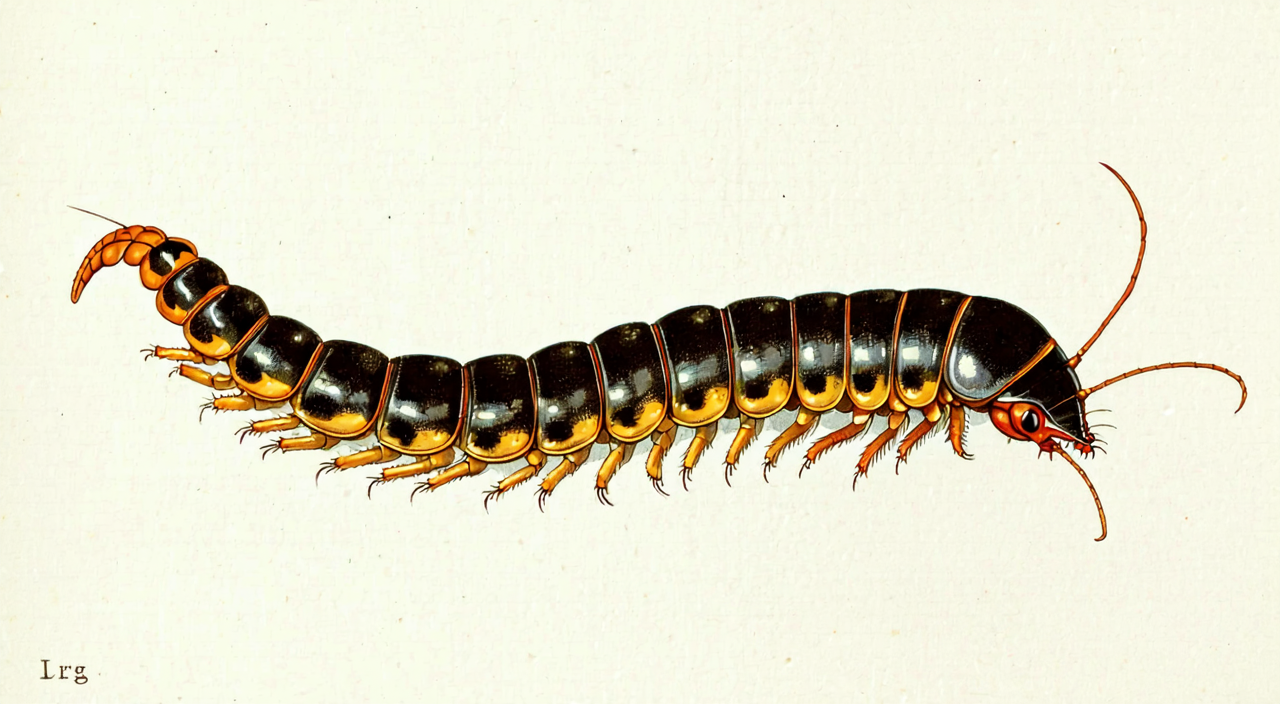
The centipede has a flat, elongated body composed of many segments, commonly around 10–15 cm in length. The overall color is mostly dark red or dark green with a sheen. Its head bears a pair of slender antennae, and the mouthparts possess a pair of well-developed venom claws capable of releasing venom. Each body segment has a pair of legs on both sides; generally there are 21 segments. The first pair of legs is modified into maxillipeds (venom claws), and the last pair extends backward like tail appendages. Living centipedes move quickly and prefer to inhabit dark, damp places. When identifying medicinal centipede, the market form is mostly the dried commodity, usually flattened and straightened by inserting bamboo splints into the head and tail, making it a flat, elongated strip. The body is intact, the ventral side is shrunken, and it has completely lost vitality, appearing dried, brittle and hard.
What Is the Medicinal Part of the Centipede?
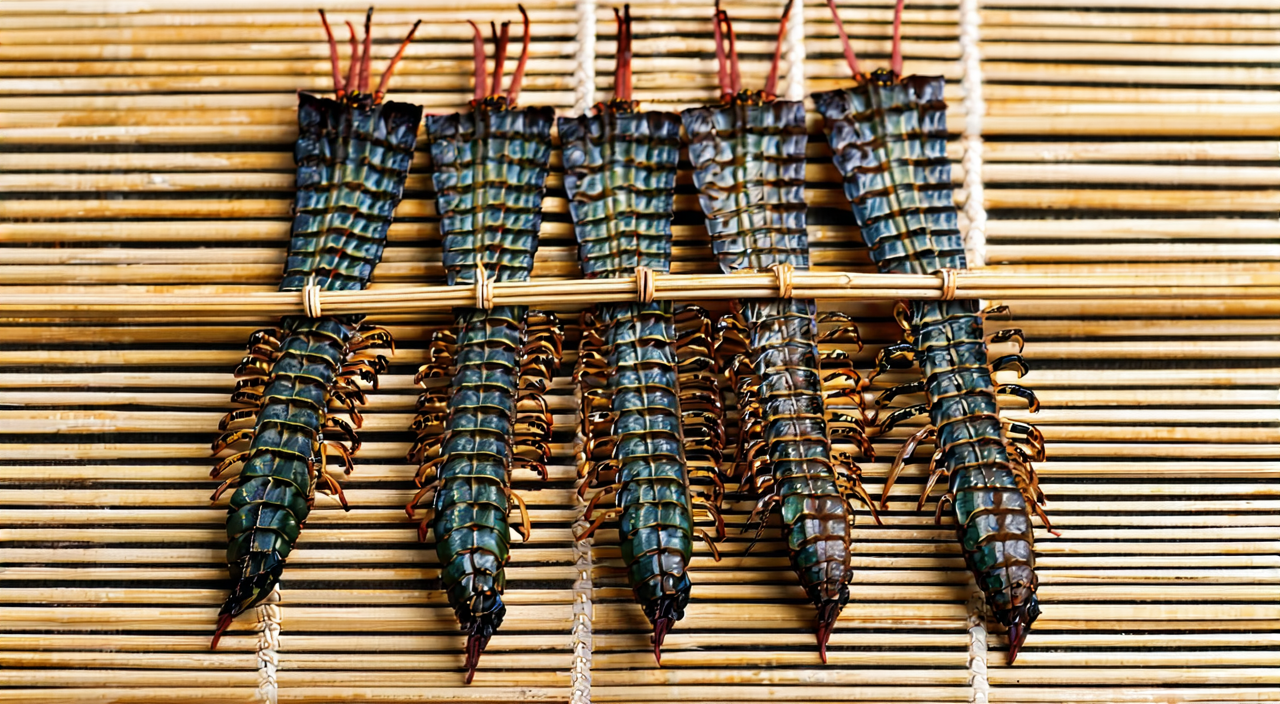
The medicinal centipede is the dried whole body of Scolopendra subspinipes mutilans. After harvesting, bamboo splints are commonly inserted into the head and tail to straighten the body, making it flat, and then it is dried at low temperature or sun-dried. The finished medicinal material appears flat, with a yellowish-brown ventral side and a dark green dorsal side; the cut surface has fissures. It has a fishy odor and an acrid, slightly salty taste. Traditional experience holds that those with long strips, intact head and tail, dried and shrunken abdomen, and free from insect damage and mold are of good quality. The medicinal part is the complete dried body; the head and legs do not need to be removed, but the shape should remain intact during processing. In compliant channels, dried centipedes are commonly seen bound in bundles or small packages. Individuals must never capture or process it by themselves to avoid danger.
How Does TCM Understand Centipede?
In TCM theory, centipede is acrid, warm, and toxic, and it enters the Liver meridian. Traditionally, TCM often understands its actions from the perspectives of extinguishing wind and arresting convulsions, unblocking collaterals and relieving pain, and attacking toxin and dispersing nodules. For example, for spasms and convulsions or opisthotonos caused by internal liver wind, centipede may be chosen as one option to extinguish wind and arrest convulsions, often combined with scorpion to enhance the power of stopping convulsions. For some stubborn headaches and joint impediment pain, it is believed to have the action of tracking wind and unblocking collaterals, which can be used for regulating related patterns. For sores, swelling, toxin, scrofula, and phlegm nodules, its nature of attacking toxin and dispersing nodules is utilized. However, these usage directions are all carried out under compound formula combinations and strict dosage control; it is not a single herb to be used casually. Modern people’s constitutions vary greatly. Whether centipede is suitable for a specific situation requires comprehensive judgment by professionals based on tongue and pulse diagnosis and symptom patterns.
What Do Modern Studies Mainly Focus On?
Modern research on centipede mainly focuses on its venom components and pharmacological activities. Centipede venom contains various enzymes, peptides, and biogenic amines. Some of these components have shown potential in experiments for anticoagulation, analgesia, and anti-inflammation. However, these studies are mostly basic research or animal experiments, and there is still a gap between them and actual clinical application. At the same time, the toxicity of centipede should not be ignored: people with allergic constitutions may experience allergic reactions such as skin itching and rashes; improper use may cause poisoning symptoms such as nausea, vomiting, and dizziness. Therefore, centipede is not a daily health product and cannot be taken long-term as a supplement. It must be used cautiously under the guidance of experienced physicians.
What Are the Differences Between Centipede, Scorpion, and Millipede?
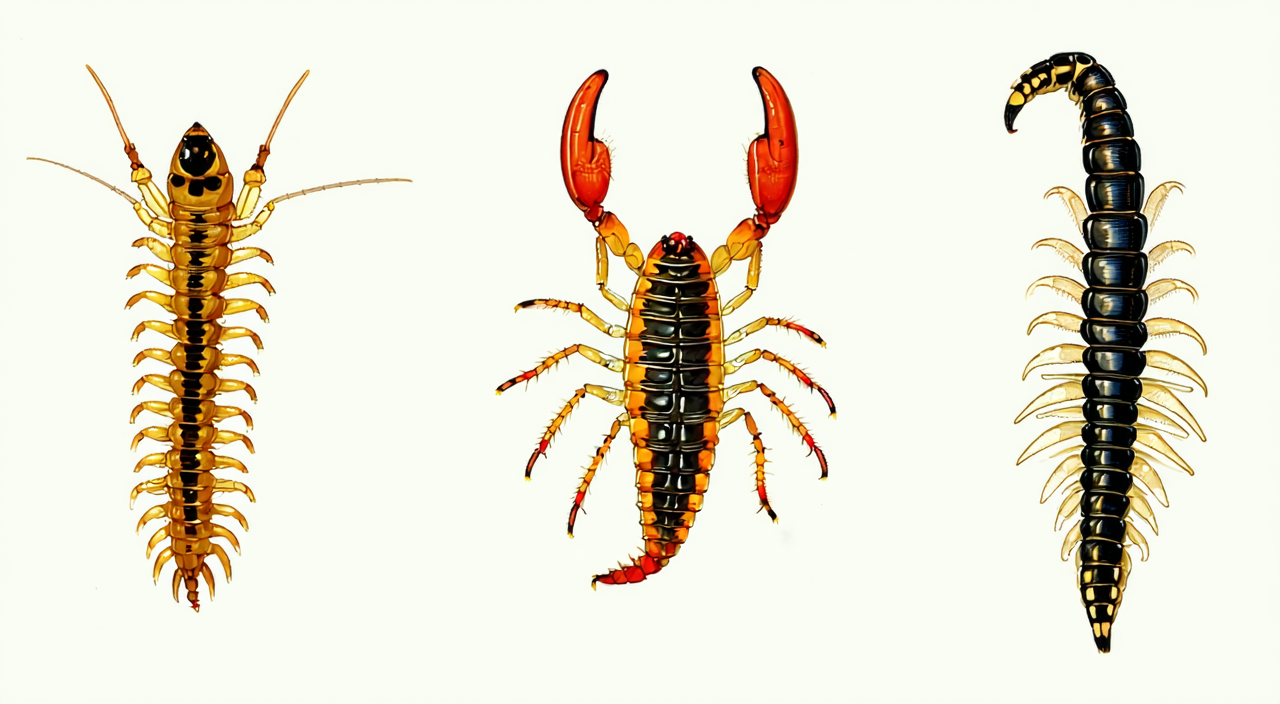
These three creatures are easily confused, but their origins and morphology are completely different. Scorpion is the dried body of Buthus martensii from the Buthidae family. Its body is divided into cephalothorax and abdomen, with a hooked venomous stinger at the tail end, and it has 4 pairs of legs, resembling a small pipa. Centipede belongs to the class Chilopoda; its body is flat and many-segmented, with one pair of legs per segment. The first pair of legs is venom claws, and the last pair is very long, making the whole body look like a flattened ribbon. Millipede (thousand-legged worm) belongs to the class Diplopoda; its body is cylindrical, with two pairs of legs per segment. It moves slowly, curls up when startled, and does not bite. The authentic medicinal centipede is Scolopendra subspinipes mutilans. Scorpion also has the actions of extinguishing wind and arresting convulsions and attacking toxin and dispersing nodules, but the two have slightly different action characteristics and meridian tropism, and they cannot replace each other. Millipedes are generally not used medicinally. In addition, scorpion’s toxicity mainly comes from the tail stinger, while centipede’s toxicity is located in the venom claws on the head. Mastering these differences can help avoid mistaken collection and misuse.
Which Formulas May Include Centipede?
In TCM formulas, centipede is often combined with wind-extinguishing convulsion-arresting herbs or collateral-unblocking pain-relieving herbs. Several common formulas can serve as directions for understanding:
- Zhi Jing San (Convulsion-Stopping Powder): Traditionally composed of centipede and scorpion, etc., it is often used to improve convulsions, hand and foot spasms, and other manifestations of wind movement. Due to its drastic medicinal nature, it must be used under physician guidance.
- Cuo Feng San (Wind-Drawing Powder): Contains centipede, Bombyx Batryticatus, Uncaria, etc., mostly used for infantile convulsions and a mouth shaped like a purse, embodying the idea of extinguishing wind and calming fright.
- Wu Gong San (Centipede Powder): With centipede as the main ingredient combined with other herbs, it was used in ancient times to manage problems such as tetanus and convulsive spasms. Modern application is extremely cautious.
- Modified Qian Zheng San (Face-Straightening Powder Plus Variants): The original Qian Zheng San targets facial paralysis and deviated mouth and eyes. Adding centipede can enhance the effect of tracking wind and unblocking collaterals, and it is often discussed in the regulation of facial palsy-related problems.
These formulas all embody centipede’s characteristics of “using toxin to attack toxin” and extinguishing wind and arresting convulsions, but any use requires professional pattern differentiation and must not be self-combined and decocted. In actual selection, it still needs to be combined with individual conditions, product instructions, and professional judgment.
What Precautions Should Be Taken When Using Centipede?
As a toxic medicinal, centipede must be used with extra caution. It is strictly forbidden for individuals to capture centipedes, sun-dry them, and take them on their own, nor to self-grind them into powder for oral use, in order to avoid poisoning. Pregnant women, breastfeeding women, children, and the elderly and debilitated should generally avoid its use. People allergic to insects may experience severe reactions and should inform their physician in advance. If symptoms such as rash, chest tightness, nausea, vomiting, or dizziness occur during use, stop using immediately and seek medical attention. In addition, if bitten by a live centipede, the local area will become red, swollen, and severely painful. Rinse quickly with an alkaline liquid, apply cold compresses, and go to the hospital for treatment without delay. In summary, the use of centipede requires clear diagnosis, strict dosage, and professional monitoring, and must not be taken lightly.
Summary
Centipede is a Chinese medicinal derived from animals and is toxic. Its dried whole body is used in the direction of extinguishing wind, unblocking collaterals, attacking toxin, and dispersing nodules in some traditional formulas. When identifying, one should note the flat, multi-segmented body with one pair of legs per segment and differentiate it from scorpion and millipede. Due to its toxicity, any use must be kept far away from self-handling and blind experimentation; it should be judged by qualified professionals. This article is intended to provide objective information and is not the basis for any personal medication. If you have related health concerns, please consult a doctor.