
What is Bingpian (Borneol)? Medicinal Parts, Identification, and Common Formulas
When we see “Bingpian” on the ingredient list of some traditional Chinese patent medicines, a crystalline, cooling image may come to mind. Bingpian is indeed a highly distinctive Chinese medicinal substance, but it is not one single thing. It may come from natural borneol, ai pian (Blumea balsamifera extract), or synthetic borneol. Relying solely on a cooling aroma makes it difficult to accurately determine the type and quality of Bingpian. This article aims to help readers form a clear and cautious understanding of Bingpian by examining its physical identification, medicinal sources, traditional Chinese medicine perspective, modern research, differences from camphor, common formulas, and usage precautions.
What does Bingpian look like? How to identify it?
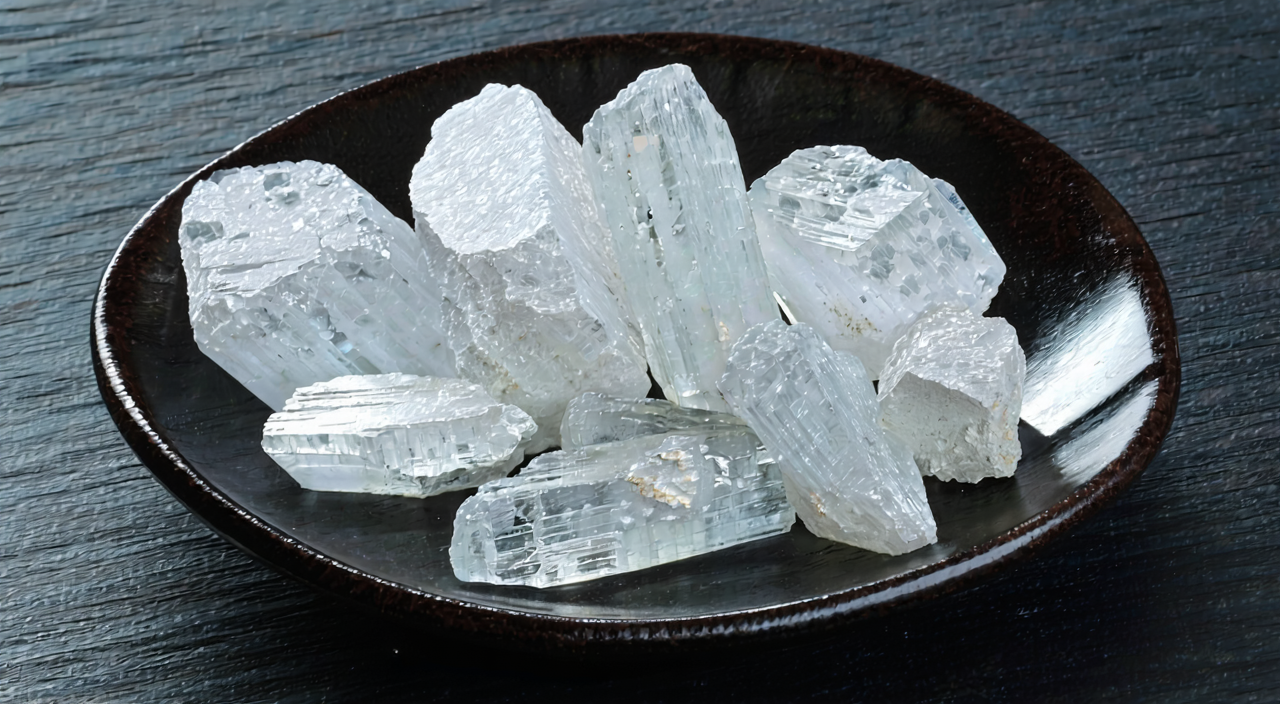
The typical appearance of Bingpian is quite distinctive. In qualified Chinese medicinal materials, Bingpian most commonly appears as semi-transparent or off-white flaky or granular crystals. It is brittle, breaks easily, and shows a semi-translucent luster under light. When held in the hand, it produces a strong cooling sensation, and it slowly volatilizes—if not sealed properly, Bingpian will gradually diminish or even disappear, precisely because its volatile components readily sublimate at room temperature.
By odor, Bingpian has an intense and unique cooling aroma that carries a penetrating quality; upon close inspection, it can make one’s nasal passages feel clear. However, relying on smell alone to draw conclusions is unreliable. The market may contain camphor, menthol, or other volatile substances sold as or adulterated with Bingpian. Camphor has a more pungent odor, with a harshness reminiscent of medicated soap or moth repellents, while the cooling fragrance of pure natural Bingpian is clearer and gentler. For ordinary users, scent can only serve as a supplementary reference; more importantly, one should obtain Bingpian through authorized channels and pay attention to source and standard information, rather than judging authenticity or quality solely by smell.
What is the medicinal part of Bingpian?

Bingpian is not simply a “leaf” or “flaky rhizome” cut directly from a plant. Its medicinal part is actually a processed product obtained after extracting and crystallizing volatile components. According to its source, there are several main categories:
- Natural Bingpian (borneol): Traditionally obtained by extracting and crystallizing from the trunk, resin, or volatile oil of Dipterocarpaceae trees such as Dryobalanops aromatica, mainly containing d-borneol.
- Ai Pian (Blumea borneol): Obtained by extracting volatile oil from the leaves of the Asteraceae plant Blumea balsamifera, then isolating and crystallizing, mainly containing l-borneol.
- Synthetic Bingpian: Also called synthetic borneol, produced by chemical synthesis using turpentine or camphor as raw materials; in addition to borneol, it may contain isoborneol and other compounds.
Therefore, Bingpian is not a simple “plant slice” but a highly purified or synthesized crystalline substance. Pharmacopoeias of various countries stipulate specific standards for the source, properties, and component limits of Bingpian. For example, the Chinese Pharmacopoeia separately monographs natural borneol, ai pian, and synthetic borneol, setting requirements for borneol content and impurities. When using products containing Bingpian in daily life, understanding the specific source type can help more accurately judge quality and safety boundaries.
How does traditional Chinese medicine view Bingpian?
In traditional Chinese medicine (TCM), Bingpian is often classified as an orifice-opening and heat-clearing medicinal. Its most common usage ideas can be summarized as “opening the orifices and restoring consciousness” and “clearing heat and relieving pain”; externally, it is also used to reduce swelling, remove putrefaction, and promote tissue regeneration.
When pathogenic heat clouds the heart orifice and causes loss of consciousness, Bingpian is often combined with Shexiang (musk) and other medicinals to open blockages and restore consciousness. This approach is not directed at a single modern disease diagnosis but is considered, from the perspective of TCM pattern differentiation, as an emergency direction in heat-closed syndromes. In addition, for conditions such as throat redness, swelling and pain, oral ulcers, and red, swollen and painful eyes, Bingpian is traditionally added to powders or insufflations for local application to exert heat-clearing and pain-relieving effects. In surgical sores and ulcers, Bingpian is also used in combination with other medicinals to assist in reducing swelling, relieving pain, and promoting local recovery.
It must be noted that these uses are based on traditional experience and are not treatment protocols in the modern medical sense. Whether they suit an individual depends on comprehensive judgment involving constitution, specific pattern types, and professional advice.
What does modern research say about Bingpian?
Modern research focuses more on Bingpian’s volatility, absorption-enhancing properties, and the boundary between dosage and toxicity. Borneol, the main component of Bingpian, is highly lipophilic and can quickly penetrate mucosal and biomembrane barriers. Therefore, in some studies, Bingpian is considered a “guiding drug” or absorption enhancer that may help other drug components enter certain tissues more rapidly, for example crossing the blood-brain barrier.
Yet it is precisely because of this property that the dosage and safety margins of Bingpian become issues that cannot be ignored. Studies show that high concentrations of borneol or excessive use without professional guidance may suppress or stimulate the central nervous system and even cause discomfort. Especially on mucosal sites, broken skin, or in special populations such as infants, young children, and pregnant women, both the absorption rate and risks may be elevated. Modern research increasingly emphasizes “reasonable concentration” and “controlled use,” rather than simply treating Bingpian as a cooling agent that can be added at will.
For this reason, Chinese patent medicines containing Bingpian usually carry strict usage and dosage instructions; altering the dose or method on one’s own may pose unpredictable risks.
What are the differences between natural Bingpian, synthetic Bingpian, and camphor?
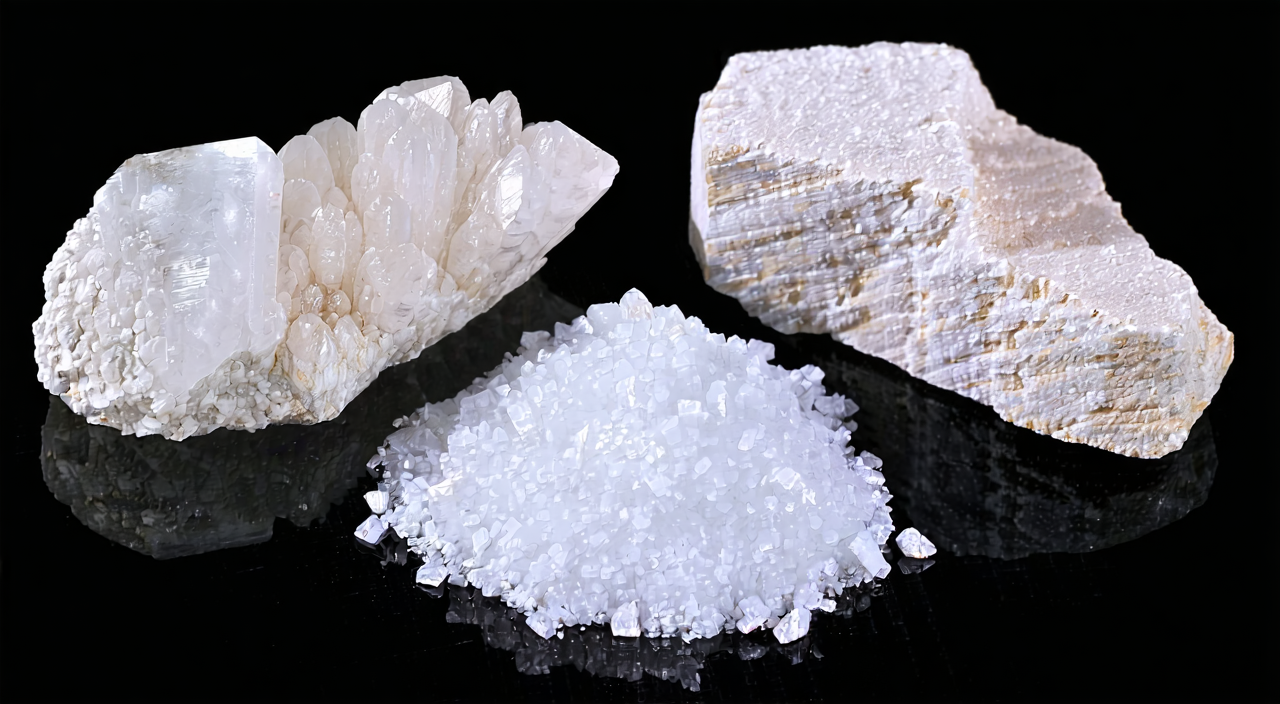
Many users easily confuse Bingpian with camphor, and there are also clear differences between natural and synthetic Bingpian that are worth distinguishing carefully.
In terms of source, natural Bingpian mainly comes from the natural resin or volatile oil crystals of Dipterocarpaceae trees, or is extracted from Blumea balsamifera leaves; synthetic Bingpian is obtained through chemical synthesis. In terms of composition, natural Bingpian consists mainly of d-borneol, while ai pian contains mainly l-borneol; synthetic Bingpian often contains a certain proportion of isoborneol in addition to borneol, giving it a slightly different odor and cooling sensation from the natural product. Camphor, on the other hand, is a completely different substance—a ketone—with a much more pungent and irritating odor, traditionally used mainly externally for pain relief, itch relief, or insect repellent, and less frequently used internally for opening orifices.
In terms of application standards, the quality indices of natural and synthetic Bingpian in pharmacopoeias also differ. For example, natural Bingpian has specific requirements for borneol content and optical rotation, while synthetic Bingpian has limits on impurities such as isoborneol. For consumers, distinguishing between them can only rely on the source information and test reports indicated on authorized products; it is very hard to make an accurate judgment solely by eye or smell. Therefore, whether purchasing the raw medicinal material or patent medicines containing Bingpian, one should pay attention to the clearly stated source type and quality standards, rather than broadly assuming that “any Bingpian is good.”
Which formulas commonly use Bingpian?
Bingpian appears in quite a few traditional formulas, especially in combinations intended to open the orifices and restore consciousness, clear heat and relieve pain, or reduce swelling externally. The representative formulas mentioned below are more a reference for understanding traditional medication thinking and should not be understood as modern recommended treatment plans.
Angong Niuhuang Wan (Peaceful Palace Bovine Bezoar Pill) is a frequently cited classic formula containing Bingpian; traditionally used for high fever, loss of consciousness, and delirium caused by febrile diseases, in which Bingpian is paired with Shexiang, Niuhuang (bovis calculus), etc., aiming to clear the heart and open the orifices. Suhexiang Wan (Storax Pill) leans more toward warming and opening the orifices, used for cold-blocked or qi-stagnation-induced clouding of consciousness and chest oppression; here, Bingpian combines with Suhexiang (storax), Ruxiang (frankincense), and others. Both formulas fall into the category of emergency TCM medications; whether and how to use them must be guided by qualified professionals, and they should not be taken on one’s own.
Among external formulas, Bingpeng San (Borneol and Borax Powder) is mainly composed of Bingpian and borax, traditionally used for local insufflation in cases of throat swelling and pain or mouth and tongue sores, providing a cooling pain-relief and swelling-reducing effect. Qili San (Seven-Thousandths Powder) is known for invigorating the blood, dispersing stasis, and stopping pain, commonly applied externally for traumatic injuries and blood stasis swelling; Bingpian in it assists in acridly dispersing and relieving pain.
The application directions and scope of these formulas each have their own emphases. Whether they suit an individual still requires comprehensive judgment based on constitution, symptoms, product instructions, and professional advice.
What precautions should be taken when using Bingpian?
Although common, Bingpian is by no means a mild ingredient that can be used casually; improper use can lead to considerable risks. The following points merit particular attention:
First, pregnancy, lactation, and infants/young children require extreme caution. Bingpian’s dispersing and orifice-opening nature, along with its potential effects on the central nervous system after absorption, mean that these populations should avoid contact with products containing Bingpian for internal use or extensive topical application. Infants and young children have delicate skin and highly permeable mucous membranes; even small-area external use cannot exclude absorption-related risks.
Second, the problem of mucosal irritation must be taken seriously. Directly applying or insufflating Bingpian powder onto oral or nasal mucous membranes at high concentrations may cause burning, stinging, or even mucosal damage. The usage methods in traditional formulas are all controlled through specific combinations and dosages; in daily life, one should never directly blow crude Bingpian powder onto mucous membranes.
Third, guard against accidental ingestion and overdose. If unidentified crystalline “Bingpian” is casually dissolved in the mouth as an oral cooling substance, it may cause gastrointestinal discomfort or even more serious poisoning due to insufficient purity or the presence of other impurities. Although synthetic products have their applications in medicine, industrial-grade synthetic borneol is entirely different from the pharmaceutical grade, and the two must never be used interchangeably.
Furthermore, in cases of high-concentration, large-area external application, the amount absorbed through the skin cannot be ignored. If the skin is broken or ulcerated, the absorption rate greatly increases, and any use of Bingpian preparations at that point requires professional evaluation. For long-term, recurrent local discomfort, or conditions accompanied by severe pain or abnormal discharge, one should not rely solely on Bingpian preparations but seek timely medical help.
Finally, purity and source are the foundation of safety. No matter what Bingpian product is chosen, attention should be paid to its source type, production standards, and third-party testing information. Purchasing crystalline powders of unclear morphologic appearance and unknown origin poses enormous uncertainty.
Summary
Bingpian is a Chinese medicinal with high recognizability and relatively clear usage directions, yet it comes from multiple sources and has varying standards. This article has outlined the physical features of Bingpian, its medicinal sources, traditional TCM understanding, volatility and absorption-enhancing properties noted in modern research, key differences between natural borneol, synthetic borneol and camphor, and highlighted the directions of formula application and safety. Understanding both the value and the limits of Bingpian is perhaps more important than simply memorizing a few formula names. This article is for informational reference only and cannot replace professional diagnosis or treatment advice.