
What Is Benzoin? Medicinal Parts, Identification, and Common Formulas
In traditional Chinese medicine and incense culture, benzoin is a highly recognizable resinous medicinal substance. Many overseas readers new to Chinese medicine may wonder what benzoin actually is and how it differs from commonly heard names like storax and frankincense. This article focuses on benzoin’s appearance, source of medicinal parts, traditional uses, common formulas, and precautions, aiming to build a relatively complete understanding.
What Does Benzoin Look Like? How to Identify It?
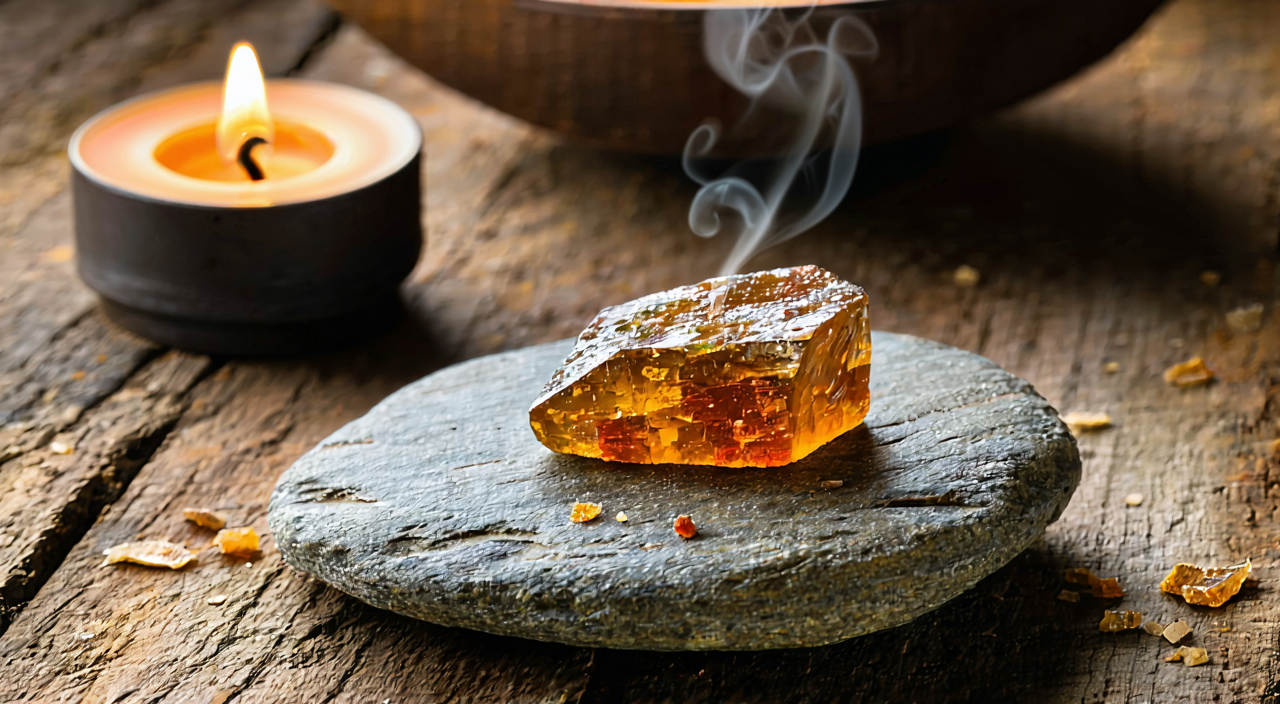
The typical commercial form of benzoin is irregular lumps or granular resin, varying in size. Some appear as agglomerated masses, while others are broken into small particles. The surface is usually yellowish-white, pale yellow, or reddish-brown, with slight color variations depending on the region of origin and processing methods.
In terms of texture, benzoin is rather brittle. It easily shatters when pressed with a fingernail or tapped. The fractured surface is slightly lustrous and has the fine grain characteristic of resin. A very intuitive identification method is the heating test: place a small piece of benzoin near a heat source or warm it gently, and it will soon emit a distinct fragrance — a sweet, warm scent reminiscent of vanilla mixed with resin. This property of releasing aroma when heated is frequently used in identification. At room temperature, the scent is relatively mild, but a faint resinous note can still be detected upon closer sniffing.
If the benzoin is in powdered or crumb form, the color leans toward pale yellow. Be alert to whether the product is adulterated with other resins or impurities. Such forms lack the natural irregular appearance of lump benzoin and require comprehensive judgment combining the smell and behavior upon heating.
What Is the Medicinal Part of Benzoin?
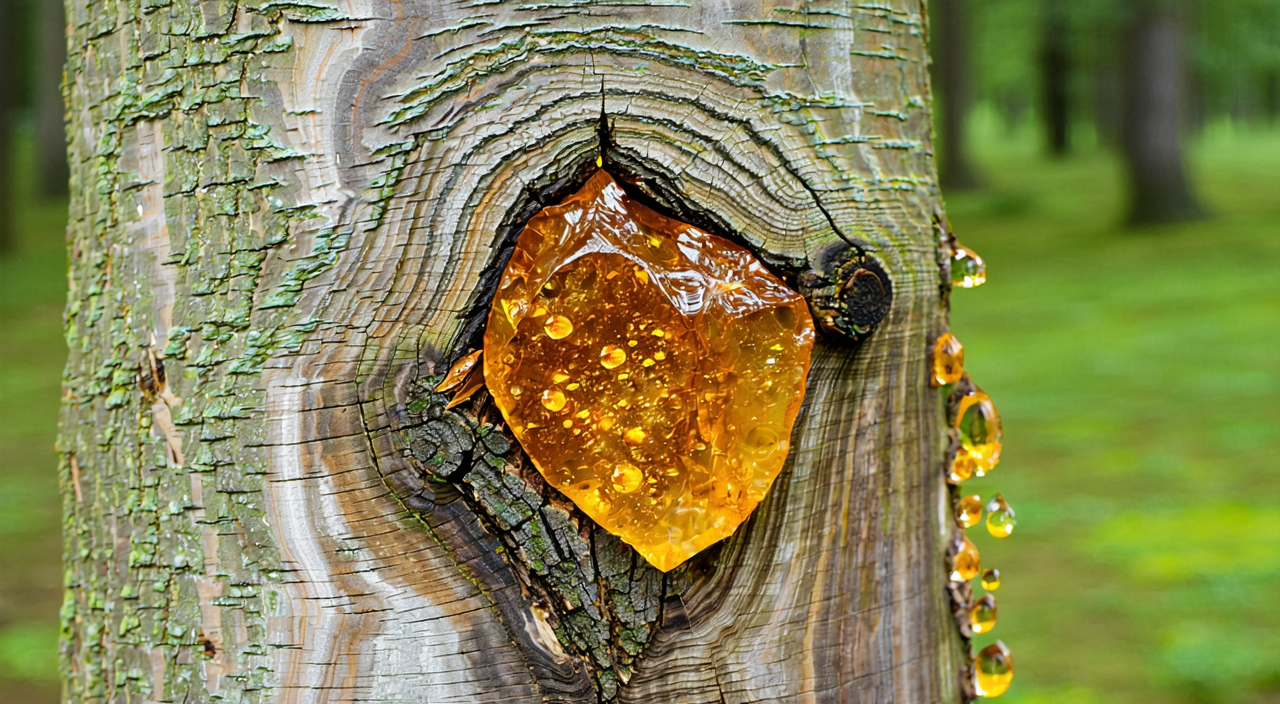
The medicinal part of benzoin comes from the resin secreted by the tree trunk after injury. The main Styrax species include Styrax tonkinensis and Styrax benzoin. When the bark is incised or naturally wounded, the trunk oozes a viscous resin. Exposed to air, it gradually dries and solidifies into a solid resin. During collection, cuts are typically made on the trunk, and the resin is allowed to exude and congeal. It is then gathered and cleaned of impurities to obtain medicinal benzoin.
The timing of resin collection, the incision method, and the drying process all affect the appearance and aromatic quality of the final product. Traditionally, resin that is brittle, strongly fragrant, low in impurities, and yellowish-white or reddish-brown is considered high quality. It should be noted that as a resinous Chinese medicine, benzoin refers to the resin itself, not the branches, leaves, or fruits of the Styrax tree. This differs from many plant-based herbs and can easily lead to confusion.
How Does Traditional Chinese Medicine Understand Benzoin?
Traditional Chinese medicine (TCM) views benzoin primarily as an agent for opening the orifices, reviving the spirit, promoting qi circulation, activating blood, and relieving pain. Ancient texts often classify benzoin as an orifice-opening medicinal, noting its fragrant nature and propensity to travel and disperse. It is believed to help unblock obstructions and restore consciousness in certain conditions. Therefore, in some cases of sudden collapse or phlegm turbidity clouding the orifices, benzoin may be considered as an auxiliary option.
Pain caused by impeded qi and blood flow also falls within the traditional scope of benzoin’s application. TCM holds that qi stagnation and blood stasis can lead to a stifling sensation in the chest and abdomen or epigastric pain. Benzoin’s ability to move qi and activate blood may be suitable when combined with other herbs to address such discomforts. Additionally, it is sometimes used externally for localized redness, swelling, and pain from trauma, sores, or ulcers, helping to alleviate pain and promote local qi and blood circulation through its aromatic penetrating property.
However, benzoin is rarely used alone in clinical practice. It is more often combined with orifice-opening medicinals like musk, borneol, or storax, or with blood-activating substances like frankincense and myrrh, before being considered as part of a formula. Its orifice-opening and spirit-reviving effect tends to be warming and unobstructing, which means it is not suitable for all types of consciousness issues and must be directed based on specific pattern differentiation.
What Has Modern Research Discovered?
Modern chemical analysis shows that benzoin mainly contains benzoic acid, cinnamic acid, vanillin, resin esters, and other substances, with compositional ratios varying by geographical origin. Some in vitro studies have observed that benzoin extracts may possess antioxidant, anti-inflammatory, and antimicrobial activities, and its volatile oil shows a certain inhibitory tendency against some pathogenic bacteria.
These preliminary findings can, to some extent, echo parts of traditional medical understanding of benzoin. For instance, the anti-inflammatory properties may support its role in pain management and external applications. However, current research is mostly limited to laboratory stage or animal experiments and is far from being able to directly infer clinical efficacy. Higher-quality studies are still needed to validate the modern application potential of benzoin, and it would be inappropriate to make usage recommendations based solely on these studies.
What Are the Differences Between Benzoin, Storax, and Frankincense?
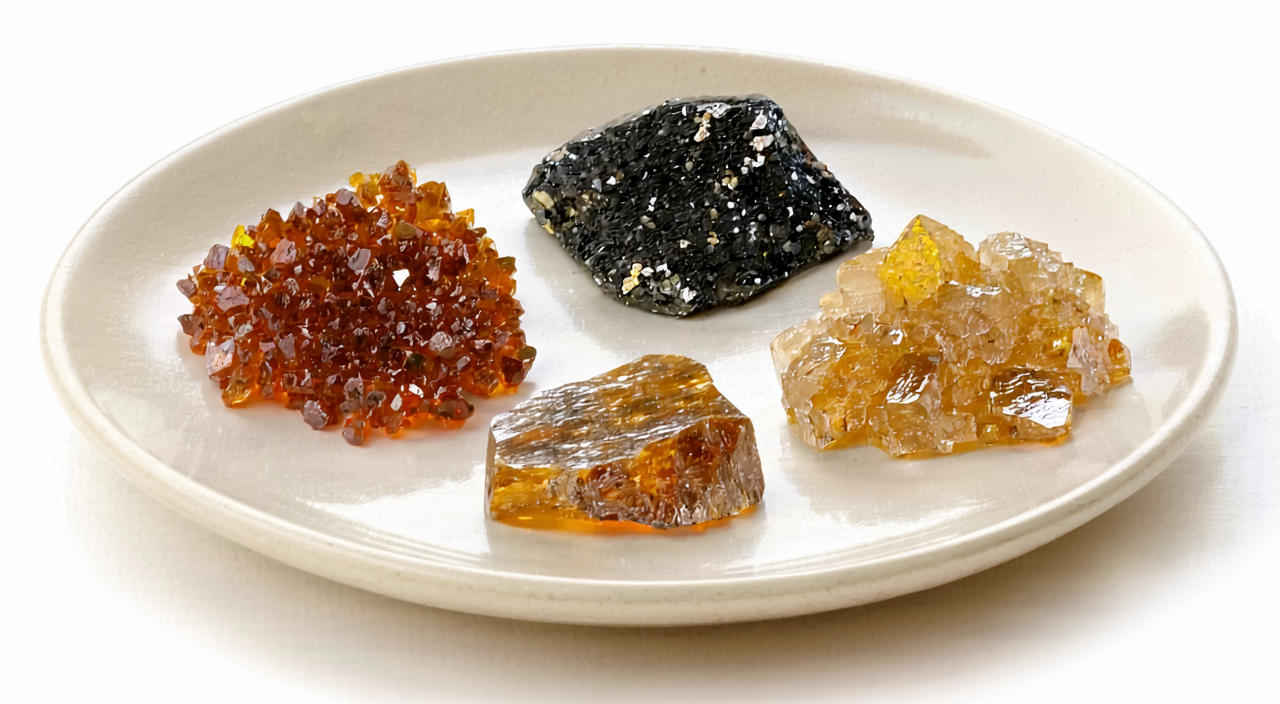
Benzoin, storax, and frankincense are all resinous medicinal substances with differences in appearance, odor, and traditional applications, and they are often compared.
Storax is the resin from the Liquidambar orientalis tree of the Hamamelidaceae family. Its color is usually darker, ranging from brownish-brown to greyish-brown. Its texture is stickier than benzoin, often appearing semi-fluid or ointment-like at room temperature. When heated, it emits a strong, lasting aroma. In terms of scent, storax leans toward a rich, heavy fragrance, whereas benzoin is relatively sweet, clear, and transparent. In TCM, storax is also classified as an orifice-opening medicinal but excels at warming and opening blockages, frequently used for cold-closed collapse patterns. Benzoin’s orifice-opening action is relatively gentler and also attends to moving qi and activating blood, indicating different emphases between the two.
Frankincense comes from the resin of Boswellia carterii and other species in the Burseraceae family. It mostly appears as nipple-shaped or teardrop-shaped granules with a yellowish-white or semi-transparent surface, more rounded and regular than benzoin. Frankincense has a light, elegant fragrance with hints of lemon and pine, while benzoin favors a sweet, warm vanilla-like note. In traditional use, frankincense is biased towards invigorating blood, stopping pain, reducing swelling, and promoting tissue regeneration, commonly employed for traumatic injuries, blood stasis swelling and pain, or non-healing sores. Benzoin, beyond activating blood to relieve pain, also has the added function of opening the orifices and reviving the spirit, so the roles they play in formulas are distinctly different.
Overall, these three resins each have their own positioning in terms of external color, aromatic personality, and traditional functions, and they cannot be simply interchanged in actual use. Notably, in orifice-opening formulas like Storax Pill, benzoin and storax often appear together precisely because each has its own strengths and they work synergistically.
Which Formulas Use Benzoin?
Benzoin appears in some classical formulas as an assistant or courier herb, primarily used to aid in opening the orifices or to strengthen the effects of regulating qi and activating blood. The following introduces a few common traditional formulas for reference only and does not constitute a personal usage recommendation.
Storax Pill (Suhexiang Wan): This is one of the most representative formulas containing benzoin. The formula centers on aromatic orifice-openers like storax and benzoin, combined with Atractylodes, Aristolochia root, and others. It is traditionally used for states of unconsciousness, chest oppression, and heart pain caused by cold pathogens or phlegm turbidity blocking the heart orifices. In this formula, benzoin assists storax in strengthening the orifice-opening power while also moving qi and activating blood, helping to relieve chest and abdominal stuffiness.
Benzoin Pill (Anxi Xiang Wan): Named after benzoin, this formula highlights its core role. The composition often includes benzoin, frankincense, myrrh, and the like, focusing on moving qi, activating blood, and relieving pain. It is traditionally used for epigastric and abdominal pain or menstrual pain due to qi stagnation and blood stasis. The dosage form and composition vary across different texts, but the direction of benzoin’s blood-activating and pain-relieving effects is quite clear.
Ten Aromatic Revival Pill (Shi Xiang Fan Sheng Wan): This formula brings together many aromatic substances such as musk, agarwood, benzoin, and storax. It is traditionally used in emergency contexts for stroke, phlegm syncope, and unconsciousness. Benzoin plays a synergistic orifice-opening and spirit-reviving role, assisting the main herbs in addressing closed-type spirit disorders.
It must be re-emphasized that the above formulas belong to traditional Chinese medicine thinking. Whether they are appropriate for any specific individual must be determined by combining constitution, symptoms, pattern differentiation, and following the product label or professional advice. Readers are not advised to apply these formulas by themselves, especially those involving orifice-opening medicinals, as usage and dosage carry strict requirements.
What Precautions Should Be Taken When Using Benzoin?
Whether taken internally or applied externally, benzoin requires attention to several points.
Individuals with a known allergy to benzoin or its constituents should avoid contact. When using benzoin externally, some individuals with sensitive skin may experience redness or itching; a skin patch test on a small area is advisable before first use. Internal use of benzoin preparations must be performed in compliance with regulations and standards, and under the guidance of a professional. Self-administration may pose unnecessary risks.
The powder of benzoin resin or the smoke generated during burning may irritate the respiratory tract. Readers with asthma or allergic respiratory conditions should be especially careful. Pregnant and breastfeeding women are generally not advised to use benzoin and its products, as its properties of opening orifices, activating blood, and promoting movement are traditionally considered to fall within the scope of cautious use.
Moreover, burning benzoin for fragrance is not the same as medicinal use. Many incense lovers enjoy the sweet, warm scent of benzoin for home fragrance, but the smoke components produced by burning are not equivalent to processed, prepared medicinal benzoin. One cannot assume that lighting benzoin equals exerting its medicinal properties, nor can it replace treatment. The inhalation of smoke also carries potential risks and should not involve prolonged or heavy exposure.
Summary
As a resinous medicinal, benzoin has distinct characteristics in appearance identification, medicinal parts, and traditional functions, yet it is often confused with storax and frankincense. By comparing their external forms, aromas, and traditional application directions, one can better understand their respective scopes of use. Benzoin is not suitable for everyone; orifice-opening medicinals carry relatively strong properties and require prudent consideration, guided by individual circumstances and professional advice. This article is for informational reference only and cannot substitute professional diagnosis or treatment recommendations.