
What Is Malt? Medicinal Parts, Identification Methods, and Common Formulas
In daily life, malt often brings to mind beer brewing or maltose, but in traditional Chinese medicine (TCM), malt is a widely used digestive herb made from dried, sprouted mature barley grains. Food-grade malt is mainly used for brewing and as a sweetener, while medicinal malt requires controlled sprouting and prompt drying; stir-fried malt (Chaomaiya) undergoes dry-frying or bran-frying, emphasizing spleen-tonifying and lactation-suppressing effects. For overseas readers interested in Chinese herbal medicine, understanding “What is malt?”, “What does malt look like?” and “How does malt differ from rice sprout?” helps correctly identify and use this traditional herb.
What Does Malt Look Like? How to Identify It
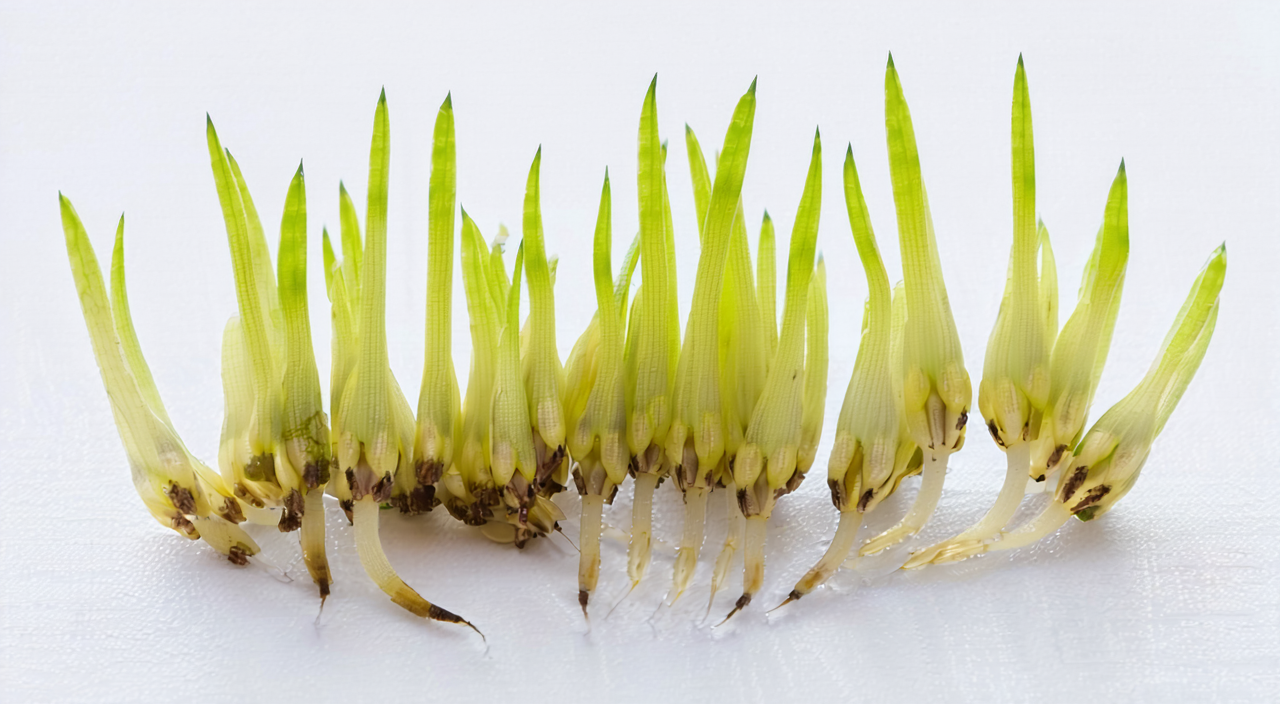
The appearance of medicinal malt is very distinctive. It is essentially a sprouted barley caryopsis, spindle-shaped, generally 8–12 mm long and about 3–4 mm in diameter. The surface is pale yellow or yellowish-white, with the back covered by the lemma and a distinct longitudinal groove on the ventral side. Most importantly, at one end you can see a pale yellow sprout about 3 mm long and several fine rootlets — traces left after germination. The texture is hard, the fractured surface is white and starchy, the odor is mild, and the taste is slightly sweet. Stir-fried malt (Chaomaiya) is darker, deep yellow or brownish-yellow, with a toasted aroma. For identification, focus on the three key features: the spindle-shaped caryopsis, short sprout, and rootlets; this makes it easier to distinguish from other grain sprouts.
What Is the Medicinal Part of Malt?
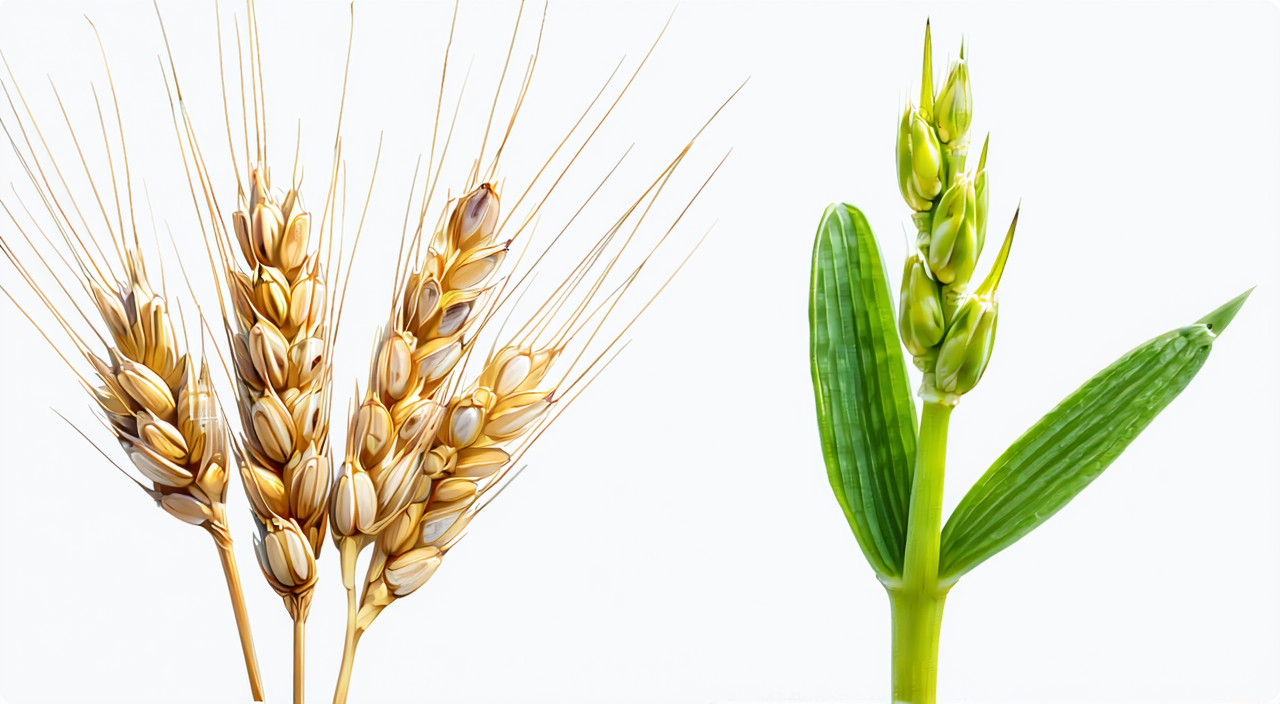
The medicinal part of malt is the mature, sprouted barley caryopsis. The specific processing method involves soaking barley in water, maintaining humidity, and drying it promptly when the sprout reaches about 0.5 cm to obtain raw medicinal malt (Shengmaiya). Depending on the processing method, malt is further categorized into raw malt, stir-fried malt (Chaomaiya), and charred malt (Jiaomaiya). Raw malt is more focused on promoting digestion and soothing the liver; stir-fried malt is better at strengthening the spleen, aiding digestion, and suppressing lactation to relieve distension; charred malt has a stronger effect on resolving food stagnation and is often used together with charred hawthorn (Jiao Shanzha) and charred medicated leaven (Jiao Shenqu), forming the well-known combination “Jiao San Xian” (Three Charred Immortals). Therefore, although all are malt, different processing methods directly influence its therapeutic emphasis.
How Does TCM Understand Malt?
Traditional Chinese medicine understands malt mainly through its nature, flavor, and meridian tropism. It is sweet in taste and neutral in nature, entering the spleen, stomach, and liver meridians. The core strengths of malt are “promoting qi to move food, strengthening the spleen and opening the stomach, and suppressing lactation to relieve distension.” For food stagnation, especially after overconsumption of starchy staples like rice, wheat, potatoes, and taro, malt is traditionally used to aid digestion. If loss of appetite and abdominal distension arise from liver qi depression, malt can be combined with liver-soothing and qi-regulating herbs. In cases where lactation suppression is needed, large doses of stir-fried malt are often used alone or in combination; however, if a woman is breastfeeding and wishes to continue, malt should be avoided. These applications are based on traditional knowledge; whether they are suitable depends on individual constitution and specific circumstances.
Modern Research on Malt
Modern chemical studies have identified various components in malt, including amylase, invertase, B vitamins, maltose, and more. In laboratory studies, these substances have shown potential in aiding the digestion of starchy foods, offering some perspective on malt’s traditional use for promoting digestion. Additionally, hordenine-type compounds found in malt have been observed in animal studies to potentially have a bidirectional regulatory effect on lactation; however, the specific mechanisms and effective doses in humans still require more rigorous clinical research. These findings can serve as directions for further understanding, but they cannot be directly equated with medicinal effects.
Differences Between Malt, Rice Sprout, and Millet Sprout
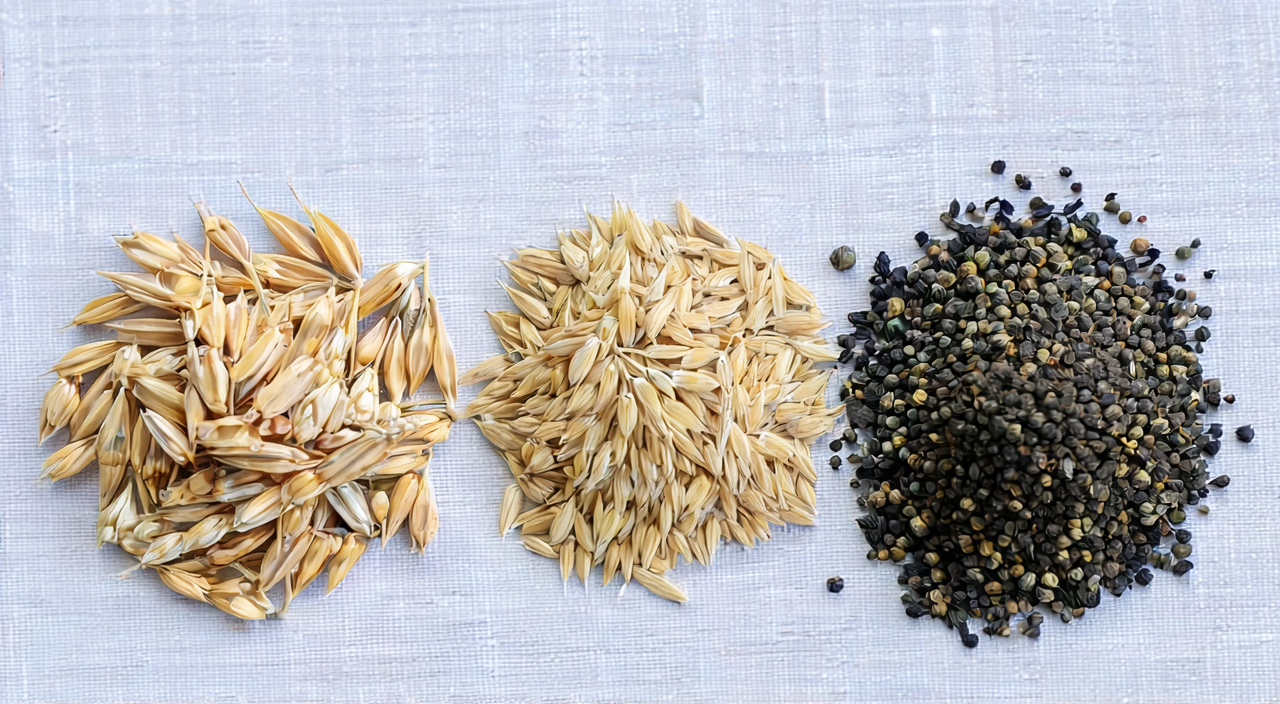
Many people confuse malt (Maiya), rice sprout (Daoya), and millet sprout (Guya), but their source grains and appearances are distinctly different. Malt comes from barley (Hordeum vulgare, Poaceae), rice sprout from the germinated mature fruit of rice, and millet sprout in southern regions often refers to the sprouted grain of foxtail millet, i.e., sprouted millet. In terms of appearance, malt is spindle-shaped, slightly larger, with a pale yellow surface, a thicker sprout, and relatively distinct rootlets; rice sprout is flat, oblong-elliptical, yellowish-white on the surface, with a finer sprout and rootlets; millet sprout is almost round and even smaller. In clinical application, all three can promote digestion and harmonize the middle, but malt excels at relieving starchy stasis from wheat-based foods and also has a lactation-suppressing effect; rice sprout and millet sprout are more suited to rice-based food stagnation, with a milder action, often used for poor appetite due to spleen deficiency. Understanding these differences helps make a clearer choice.
Which Formulas Contain Malt?
Malt appears frequently in traditional formulas. Baohe Wan is a representative formula for promoting digestion and harmonizing the stomach; although the original formula does not always include malt, it is often added in modified versions to enhance digestive power. Jianpi Wan more commonly uses stir-fried malt, combined with herbs like ginseng and white atractylodes, to strengthen the spleen and aid digestion. Jiao San Xian, a classic combination of charred malt, charred hawthorn, and charred medicated leaven, is seen in many teas or patent formulas for food stagnation and distension, where malt mainly addresses wheat-based food stasis. Additionally, common empirical formulas for suppressing lactation use stir-fried malt as a single decoction or combined with hawthorn or medicated leaven as appropriate. However, individual use — whether to use malt, which type, and at what dose — should be tailored to symptoms, product instructions, and professional advice when necessary.
What Precautions Should Be Taken When Using Malt?
Although malt is common, certain precautions should be observed when using it. If you are breastfeeding and wish to continue, you should avoid malt, as large doses of stir-fried malt are traditionally used to suppress lactation and may reduce milk supply. Barley contains gluten, so individuals with celiac disease or gluten sensitivity must avoid malt and its products. Stir-fried and charred malt contain starches and sugars; those with elevated blood sugar should monitor carefully if using on their own and avoid long-term, large-quantity intake. Some digestive issues may not be simple food stagnation; if indigestion recurs or is accompanied by abdominal pain or weight loss, long-term self-use of malt is not recommended — the underlying cause should be investigated. In any case, when using malt as part of a therapeutic approach, follow product instructions and consult a professional.
Summary
Malt is made from the sprouted caryopsis of barley; key identification features are its spindle shape, short sprout, and rootlets, which distinguish it from rice sprout and millet sprout. TCM primarily relies on its properties of moving qi, aiding digestion, strengthening the spleen, and suppressing lactation, using it for food stagnation and when lactation regulation is desired. Since malt contains gluten, may affect blood sugar, and has significantly different applications depending on processing, it should be used according to individual circumstances and with professional guidance when necessary. This article is for informational reference only and cannot replace professional diagnosis or therapeutic advice.