
What Is Rice Sprout? An Introduction to Its Medicinal Part, Identification, and Common Formulas
Many people interested in traditional dietary regulation and digestion will come across the medicinal “rice sprout.” It is not as well-known as ginseng, and it is often confused with “barley sprout” (malt) and “grain sprout.” This article outlines the source, appearance, traditional Chinese medicine (TCM) understanding, and modern background of rice sprout to help readers form a general picture. An important note in advance: the formulas and preparations mentioned here are only examples of traditional use directions. Whether they are suitable for an individual must be judged in light of the actual situation and professional advice.
What Does Rice Sprout Look Like? How to Identify It
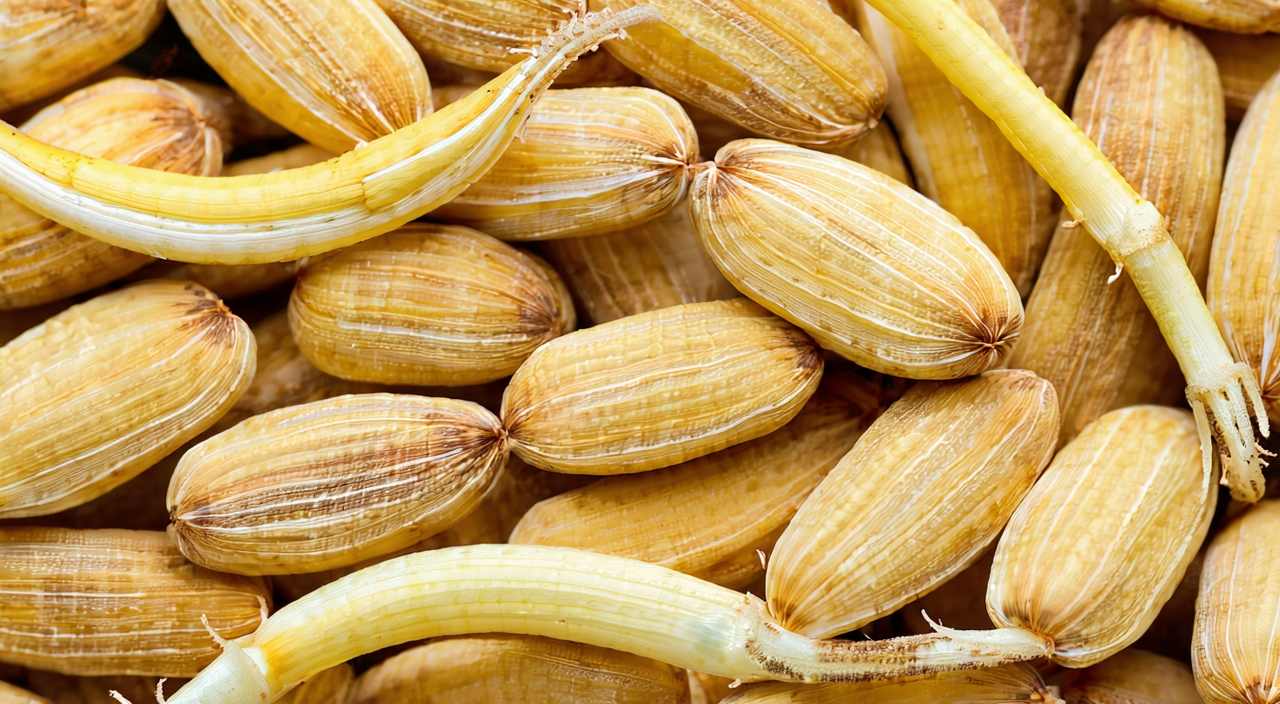
The medicinal appearance of rice sprout retains the basic shape of the rice grain and can be recognized by several features. A whole rice sprout is elongated-oval, somewhat pointed at the front and rounded at the back, about the size of a grain of unhulled rice. The surface is covered with a yellow husk (lemma and palea), on which several fine longitudinal veins can be seen; the texture is relatively tough. The key identifying characteristic is a curved young sprout emerging from one end. The sprout is pale yellow to yellowish-white, pliable, and arches out from the tip of the husk. Slightly below the base of the sprout, a few tiny fibrous roots can be observed; the rootlets are often curled and some may have fallen off. The dried rice sprout is hard, and the broken surface is white and starchy. If you see a germinated grain with a curved sprout, a yellow husk, and fine rootlets, it is very likely rice sprout used as medicine.
What Is the Medicinal Part of Rice Sprout?
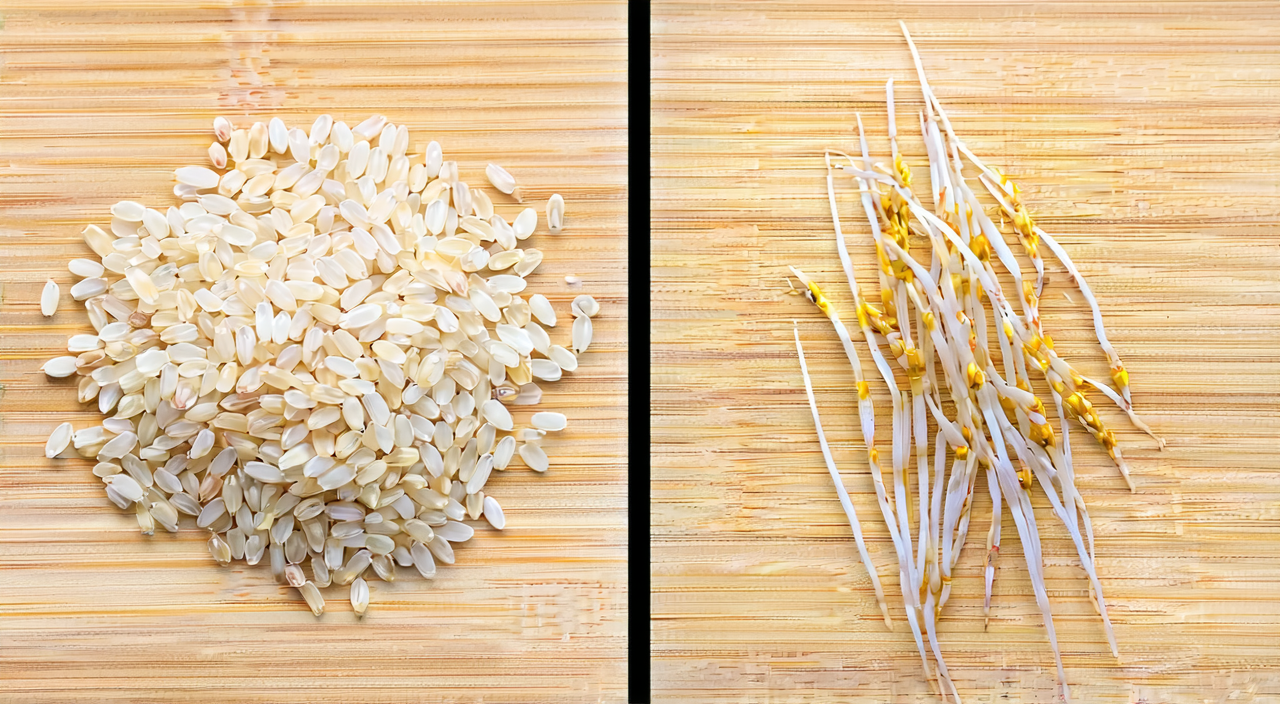
The medicinal part of rice sprout is the dried germinated caryopsis—the mature fruit of rice that has been artificially sprouted. After the rice fruit matures, plump unhulled grains are selected, soaked in water to an appropriate degree, removed, and kept under suitable temperature and humidity to encourage germination. When the young sprout has reached a certain length, the grains are taken out, dried in the sun or at low temperature, and become the TCM rice sprout. The whole germinated caryopsis together with the original husk is used medicinally. According to different processing methods, stir-fried rice sprout and charred rice sprout are also commonly used in clinical practice: stir-fried rice sprout is dry-fried over gentle heat until the surface is slightly yellow and fragrant, while charred rice sprout is fried over a stronger heat until it turns brown and emits a scorched aroma. Different degrees of processing emphasize different aspects of promoting digestion in traditional use: raw rice sprout tends to harmonize the middle, while stir-fried and charred rice sprout are more focused on helping resolve food stagnation.
How Does TCM Understand Rice Sprout?
Traditional Chinese medicine typically understands the action of rice sprout from the perspective of “promoting digestion and harmonizing the middle, strengthening the spleen and stimulating the appetite.” Its nature is sweet and neutral, and it enters the spleen and stomach channels. In classical herbal texts, rice sprout is often described as being able to help digest grain-based food stagnation and improve epigastric and abdominal fullness and distension, poor appetite, and related signs. For symptoms such as undigested food accumulation, sour or foul breath, and abnormal bowel movements caused by improper diet or weak spleen-stomach transport, rice sprout may serve as a regulating option. Stir-fried rice sprout has moderately enhanced spleen-fortifying and stagnancy-dispersing strength, while charred rice sprout leans more toward moving food stagnation. Because rice sprout comes from a staple grain itself, its action is traditionally considered relatively gentle, and it is often used together with other digestion-promoting or qi-regulating herbs, playing a supporting role in many formulas that regulate the spleen and stomach. In TCM theory, “promoting digestion” is not simply about breaking down food but also about restoring the spleen and stomach’s function of ascending the clear and descending the turbid. The use of rice sprout also reflects this holistic approach.
What Background Does Modern Research Provide?
Modern studies on rice sprout mainly focus on its components and enzyme activities. Rice sprout contains various digestive enzymes such as amylase, protease, and lipase, as well as certain B vitamins, amino acids, and maltose. In vitro experiments have observed that rice sprout extracts can promote the preliminary hydrolysis of starch-based substances, which provides some material-basis reference for the traditional experience of using it to digest grains. In addition, the dietary fiber contained in rice sprout may have some influence on intestinal movement. However, most of these studies are based on extracts or in vitro conditions, and there is still a gap between these observations and the actual effects after oral administration in humans. Therefore, the information is currently more suitable as background knowledge and should not be exaggerated into definite efficacy claims. For people with persistently abnormal digestive function, priority should still be given to obtaining a medical evaluation.
How Does Rice Sprout Differ from Barley Sprout and Millet Sprout?
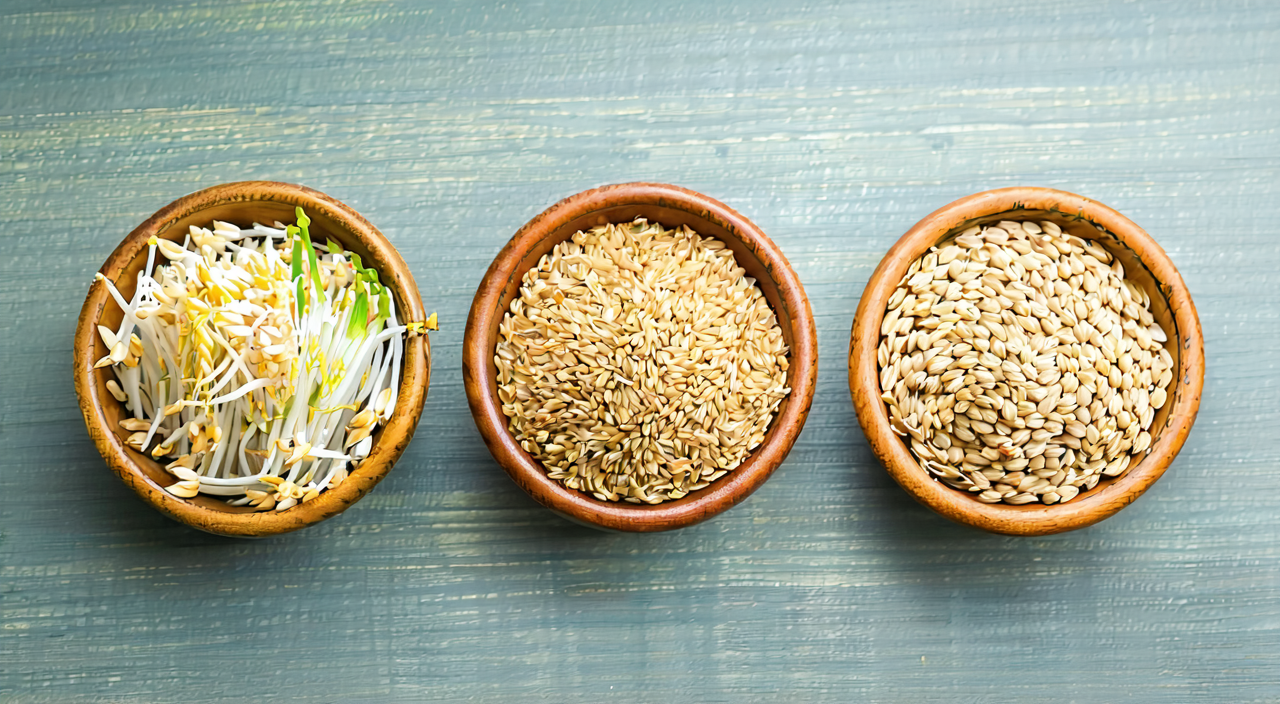
Rice sprout, barley sprout (malt), and grain sprout are easily confused in name and function, but they differ in source plant, appearance, and traditional application emphasis. Rice sprout comes from rice (Oryza sativa); the medicinal material has a pale yellow rice husk, an elongated-oval shape, and a curved sprout emerging from one end. Barley sprout comes from barley (Hordeum vulgare); the surface is a pale yellowish-brown, spindle-shaped and elongated oblong, with the husk partially or completely removed. Its sprout and root system are thicker and larger, and in traditional use it is valued for reducing lactation, relieving distension, and digesting starchy accumulations from rice, wheat, and tubers, while also having an action of soothing the liver and moving qi. In some regions, the name “grain sprout” (Gu Ya) is used interchangeably with rice sprout, but it can also refer to the sprouted fruit of millet. Millet sprout is smaller and nearly round, with a thin, pale yellow husk, and its traditional digestion-promoting action is considered more suited to accumulations of millet-type foods. In clinical practice and in the supply of medicinal materials, “Gu Ya” from different regions may correspond to different source materials. Before use, one should check the specific plant source and processing information on the product label to avoid making assumptions.
Which Formulas Contain Rice Sprout?
Rice sprout often appears as a digestion-promoting ingredient in some classical formulas and modern preparations. A representative formula is Dao Ya Tang (Rice Sprout Decoction), which is commonly used in the management of milk and food stagnation in children. It typically combines rice sprout with hawthorn, tangerine peel, poria, and other herbs, and is traditionally used for signs such as abdominal distension, crying, and reluctance to feed. In formulas related to “Jiao San Xian” (Three Charred Immortals), which usually refers to charred hawthorn, charred barley sprout, and charred medicated leaven, charred rice sprout is sometimes added to strengthen the force of digesting rice and grain stagnation. Formulas for childhood indigestion represent a category in which rice sprout appears frequently. Many traditional formulas or modern granulated products named with “childhood digestion” or “childhood stagnation” combine rice sprout with Chinese yam, chicken gizzard lining, and so on, targeting children’s constitutional tendency of spleen insufficiency and dietary stagnancy. In addition, in modern spleen-fortifying and digestion-promoting preparations, rice sprout is often combined with white atractylodes and coix seed in forms such as granules or oral liquids, providing a reference option for daily dietary management. It should be emphasized that the above formulas are only examples of traditional applications. Actual use must be based on a comprehensive assessment of individual constitution and symptoms by a professional. Self-prescribing according to a formula is not recommended.
What Precautions Should Be Taken When Using Rice Sprout?
Although rice sprout comes from a daily grain, there are still some points worth noting. First, rice sprout itself contains a certain amount of starch. For people who need strict blood glucose control, before adding a formula containing rice sprout or a tea substitute into their daily dietary management, they should understand its possible impact on blood glucose and carefully evaluate it in the context of their overall diet. Second, rice sprout is rich in nutritive substrates and is highly prone to absorbing moisture and becoming moldy during improper storage, generating aflatoxins and other substances harmful to health. If the rice sprout is found to be dark in color, moldy, or has an off odor, it should be discontinued. Furthermore, if digestive symptoms such as long-lasting loss of appetite, recurrent abdominal bloating and pain, or persistently abnormal stool consistency do not resolve, one should not rely on a single medicinal to regulate the condition, but should seek medical evaluation in time to rule out underlying digestive system issues. Finally, never use ordinary germinated rice from home as a substitute for medicinal rice sprout. The germination conditions of daily table rice are not standardized; there may be problems such as bacterial contamination and uneven sprout length, and without proper processing it is not equivalent to a prepared medicinal slice.
Summary
As a traditional medicinal derived from a grain, the key to identifying rice sprout lies in its appearance: a yellow husk, a curved young sprout, and fine rootlets. Its medicinal part is the dried germinated caryopsis. Within the TCM framework of promoting digestion and harmonizing the middle, strengthening the spleen and stimulating the appetite, it is often used to address rice and grain food stagnation, and it differs from barley sprout and millet sprout in origin and application. Although related formulas have been widely used in traditional experience, specific use still needs to be combined with individual constitution and actual circumstances and cannot blindly replace professional diagnosis. For situations where suitability is uncertain, consulting an experienced TCM practitioner or a relevant health professional is advised.