
What Is Quisqualis Fruit? Medicinal Parts, Identification, and Common Formulas
Quisqualis Fruit is a traditional Chinese medicinal herb commonly used for expelling parasites. It is derived from the dried mature fruit of the plant Quisqualis indica, which belongs to the Combretaceae family. Many people interested in traditional Chinese medicine wonder what it looks like, how to identify it, which part is used medicinally, and how it differs from other anthelmintic herbs such as Chinaberry Bark. This article will discuss its appearance, medicinal parts, traditional understanding, modern research, common formulas, and usage precautions, offering objective reference for overseas Chinese readers.
What Does Quisqualis Fruit Look Like? How to Identify It?
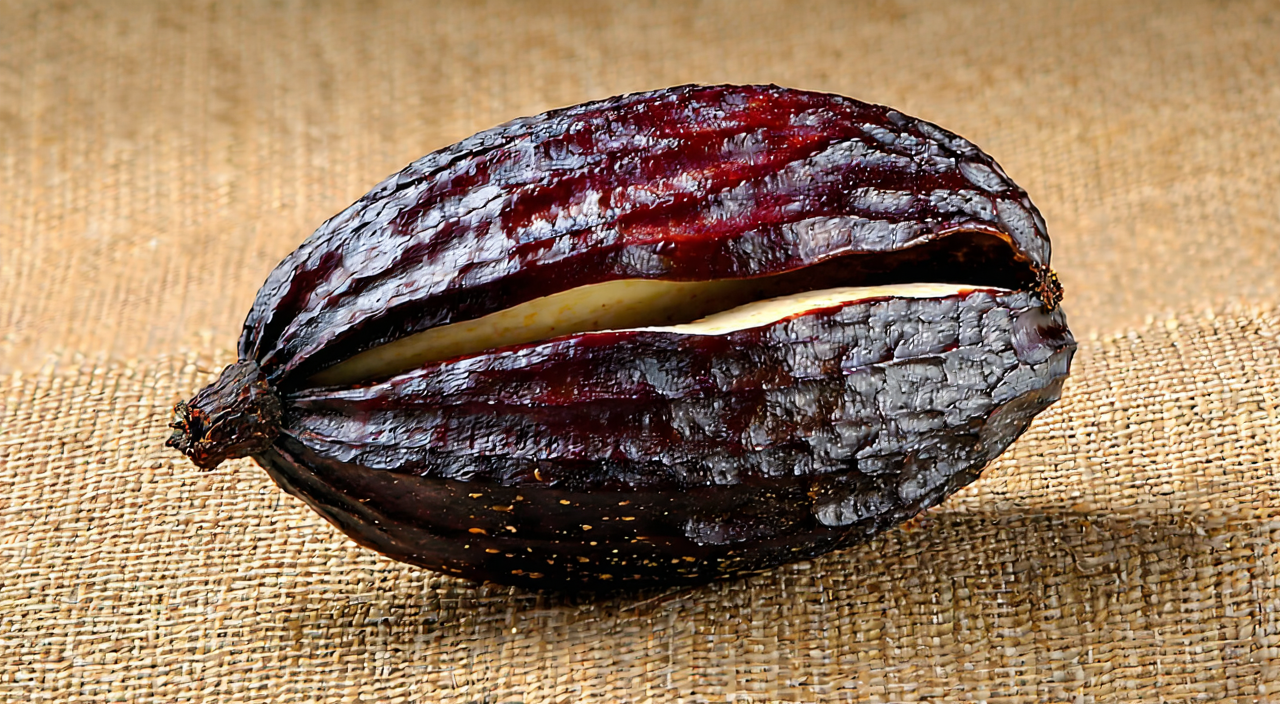
The medicinal part of Quisqualis Fruit is the dried mature fruit. It is oval or ovoid in shape, approximately 2.5 to 4 cm in length and 1.5 to 2 cm in diameter. The surface is dark brown or purplish-brown, with five prominent longitudinal ridges, which is one of its key identifying features. The fruit sometimes shows a stalk scar, with a slightly pointed tip and a blunt, rounded base. The pericarp is thin, hard, and brittle, making it easy to peel open, revealing a single white seed kernel inside. The seed kernel resembles the fruit in shape, with multiple longitudinal wrinkles on its surface; its texture is oily, its odor is faint, and chewing it yields a sweet taste that may later be accompanied by a slight oily or fishy sensation. Traditionally, Quisqualis Fruit is considered best when large, with plump kernels and a white color. When handling or purchasing, it can be identified by its shape, ridges, color, and the texture of the seed kernel to avoid confusion with other dried fruits that have a similar appearance. In some regional markets, Quisqualis kernels are sold directly, appearing as elongated ovals with a yellowish-white surface and distinct longitudinal wrinkles. These features help distinguish them from Chebulae Fructus and dried olives.
What Is the Medicinal Part of Quisqualis Fruit?
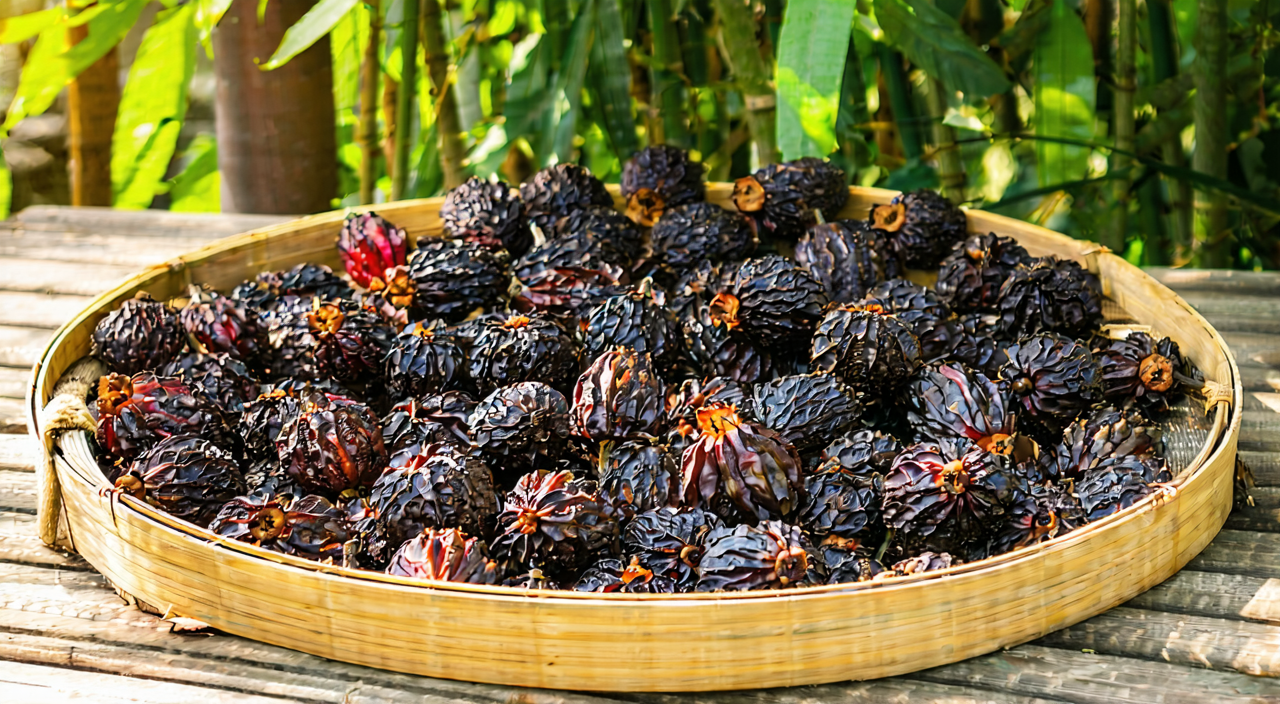
The medicinal part of Quisqualis Fruit is its dried mature fruit. It is usually harvested in autumn when the fruits are fully ripe, then dried in the sun and used directly in medicine, or the outer shell is removed to use the seed kernel. In some regions, the fruits are harvested before they are fully mature, but traditional practice holds that the active ingredients are better accumulated when the fruits are fully ripe in autumn. After processing, Quisqualis kernels can be used directly in formulas or made into patent Chinese medicines. Common processed products include clean Quisqualis kernels and stir-fried Quisqualis kernels. Stir-frying can reduce irritation to the gastrointestinal tract and make it easier to take. In some places, stir-frying with bran or honey-frying is also used to moderate the herb’s properties, but these methods are relatively uncommon. During harvesting and processing, thorough drying is important to prevent mold. In traditional use, the fruit or seed kernel is the primary part used; other parts are generally not employed as anthelmintic medicinal materials.
How Does Traditional Chinese Medicine Understand Quisqualis Fruit?
In traditional Chinese medicine theory, Quisqualis Fruit is classified as an anthelmintic herb. It is warm in nature and sweet in flavor, and it enters the Spleen and Stomach meridians. Its primary function is to kill parasites and reduce accumulation. TCM holds that unclean food or internally generated damp-heat in the Spleen and Stomach can lead to abdominal pain caused by parasitic accumulation, with symptoms such as pain around the navel, sallow complexion, emaciation, abnormal appetite, and teeth grinding during sleep. Quisqualis Fruit can expel intestinal parasites such as roundworms and pinworms, while also having the effect of reducing food stagnation. Therefore, it is often selected for children with malnutrition and abdominal distension caused by parasitic accumulation. Because Quisqualis Fruit is warm in nature and sweet and gentle in action, it is more suitable for parasitic accumulation of the Spleen-Stomach deficiency-cold type, whereas Chinaberry Bark, being bitter and cold, is more appropriate for damp-heat type parasitic accumulation. Traditional physicians believed that Quisqualis Fruit, within a certain dosage range, can “kill parasites without damaging the body’s correct qi,” but only if the dosage is appropriate. If parasitic accumulation has persisted for a long time and led to Spleen-Stomach weakness, Quisqualis Fruit can be combined with Spleen-fortifying herbs such as Codonopsis and Atractylodes, simultaneously addressing the parasites and regulating the Spleen and Stomach. It must be emphasized that the use of Quisqualis Fruit should be determined based on specific pattern differentiation and should not be used blindly for self-administered deworming.
How Is Quisqualis Fruit Viewed in Modern Research?
Modern research primarily focuses on the active constituents in Quisqualis Fruit, such as potassium quisqualate, quisqualic acid, and trigonelline. Among these, potassium quisqualate is considered the main active component for expelling roundworms. Experiments have shown that it has a paralyzing effect on the head of Ascaris suum, preventing it from adhering to the intestinal wall. In addition, Quisqualis Fruit contains approximately 25% fatty oil, as well as some amino acids, sterols, and other compounds. Despite these findings, Quisqualis Fruit also poses some risk of adverse reactions. This constituent exhibits a certain level of toxicity in mammals at higher doses. Some case reports indicate that ingesting a large amount of Quisqualis Fruit at one time can cause hiccups, vomiting, dizziness, diarrhea, and even limb convulsions. Excessive intake can also worsen diarrhea due to the fatty oil content, intertwining with the toxic reactions. Therefore, current research has not completely extracted and developed it into a purified pharmaceutical. The rational application based on traditional experience remains the key focus, and arbitrary high-dose or long-term use is inadvisable.
What Are the Differences Between Quisqualis Fruit, Chinaberry Bark, and Torreya Seed?
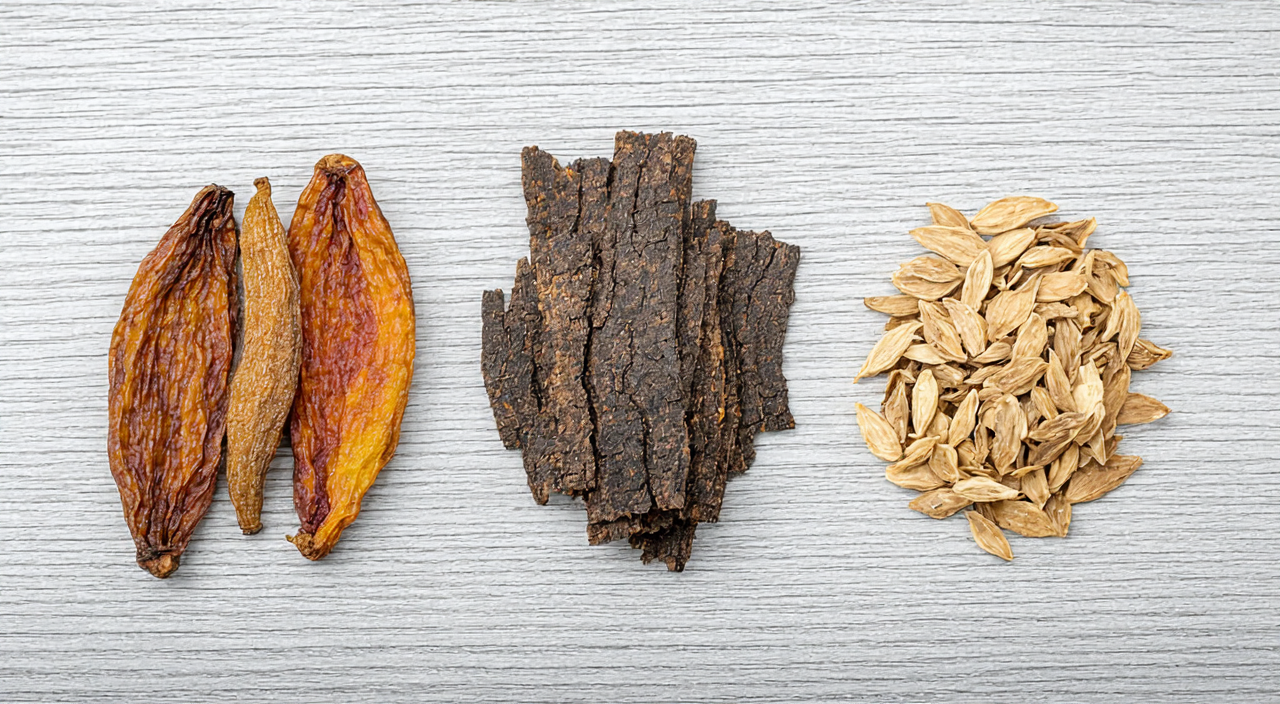
Chinaberry Bark, Quisqualis Fruit, and Torreya Seed are all traditional anthelmintic medicinal materials, but they differ in source, medicinal part, and characteristics. Chinaberry Bark is the dried stem bark and root bark of Melia toosendan or Melia azedarach, belonging to the Meliaceae family. It is cold in nature and bitter in flavor, with strong parasite-expelling action but relatively greater toxicity; improper use is more likely to cause adverse reactions, and it generally requires use under professional medical guidance. Torreya Seed is the dried mature seed of Torreya grandis, belonging to the Taxaceae family. It is neutral in nature and sweet in flavor, with relatively mild anthelmintic action, and it also moistens the Lungs to stop cough and moistens the Intestines to promote bowel movements, making it more suitable for individuals with a balanced constitution or those with parasitic accumulation accompanied by constipation. Quisqualis Fruit is warm in nature and sweet in flavor, with a relatively gentle action, and is commonly used for children with parasitic accumulation accompanied by malnutrition. These three are sometimes combined in traditional formulas, but the choice of which to use depends on a comprehensive assessment of the patient’s constitution, the type of parasitic accumulation, and the overall condition. Self-medication based on self-identification carries risks.
Which Formulas Contain Quisqualis Fruit?
Quisqualis Fruit appears in several classic formulas for expelling parasites and reducing accumulation, such as Quisqualis Pill, Fei’er Wan (Fat Infant Pill), Hua Chong Wan (Transform Parasites Pill), and Quisqualis Powder. Quisqualis Pill often uses Quisqualis Fruit as the main ingredient, combined with Areca nut and Omphalia, to treat abdominal pain and emaciation caused by intestinal parasites. Fei’er Wan commonly includes Quisqualis Fruit, Coptis, and Nutmeg, addressing both Spleen-fortifying and malnutrition-reducing, making it suitable for complex conditions of pediatric malnutrition and parasitic accumulation with Spleen deficiency. Hua Chong Wan consists of Quisqualis Fruit, Carpesium, Chinaberry Bark, and others, covering a broader spectrum of parasite expulsion. Quisqualis Powder is often Quisqualis Fruit ground into powder and used alone or combined with other anthelmintic herbs. These formulas each have their own emphasis, and their forms include pills, powders, and decoctions. Specific applications must be determined by a TCM practitioner based on pattern differentiation; they should not be selected independently based solely on the formula name. Furthermore, the composition and proportions of different patent medicine forms may vary and should be reviewed in conjunction with product instructions.
What Precautions Should Be Taken When Using Quisqualis Fruit?
When using Quisqualis Fruit, several key points require attention. First, excessive consumption can easily cause discomfort such as hiccups, vomiting, vertigo, and dizziness. Dosage should strictly follow professional advice and should not be arbitrarily increased. In particular, a single dose should not exceed the conventional range. Although there is a traditional saying to “chew Quisqualis Fruit with the shell,” consuming it with the shell is more likely to irritate the gastrointestinal tract. In modern practice, the shell is usually removed, and the kernel is stir-fried before use. Traditional experience indicates that Quisqualis Fruit should not be taken with hot tea, as this may worsen adverse reactions such as hiccups; it is recommended to drink warm water or temporarily avoid tea. When used by children, guidance from a TCM or pediatric professional is especially necessary to control the dosage. If persistent, unrelenting hiccups, severe vomiting, or marked dizziness occur after taking the herb, use should be discontinued immediately, and medical help should be sought. For cases of long-term, recurrent abdominal pain, or pain accompanied by fever, severe vomiting, abdominal masses, or blood in the stool, prompt medical evaluation is needed to rule out surgical emergencies such as intestinal obstruction or biliary ascariasis. One should not solely rely on anthelmintic herbs for treatment. Pregnant women, individuals with weak constitutions, and those with peptic ulcers should exercise even greater caution before use. Any anthelmintic medicinal material is recommended for short-term, symptom-targeted use under professional guidance and is not advisable as a preventive or long-term health product.
Summary
Quisqualis Fruit, as a traditional anthelmintic medicinal material, requires a comprehensive understanding of its appearance, medicinal parts, and proper usage methods to avoid misuse or overdose. It has different emphases compared to Chinaberry Bark and Torreya Seed, and the choice of which to use should be based on constitutional and symptomatic presentation. More importantly, Quisqualis Fruit is not an ordinary food product. Self-administration carries potential risks, especially for children and special populations, and must always be conducted under the guidance of a professional. This article is for scientific reference only and cannot replace professional diagnosis or treatment advice.