
What Is Cherokee Rose Fruit? Medicinal Parts, Identification, and Common Formulas
In daily wellness practices or when encountering traditional formulas, Cherokee rose fruit (Jin Ying Zi) is a name that comes up often. Many have heard of Cherokee rose fruit wine, but may not know what it actually is or which part of the plant it comes from. This article will sort through the basic information about this Chinese herb from multiple angles, including visual identification, medicinal parts, TCM understanding, differences from similar fruits, common formulas, and usage precautions, for overseas readers.
What Does Cherokee Rose Fruit Look Like? How to Identify It?
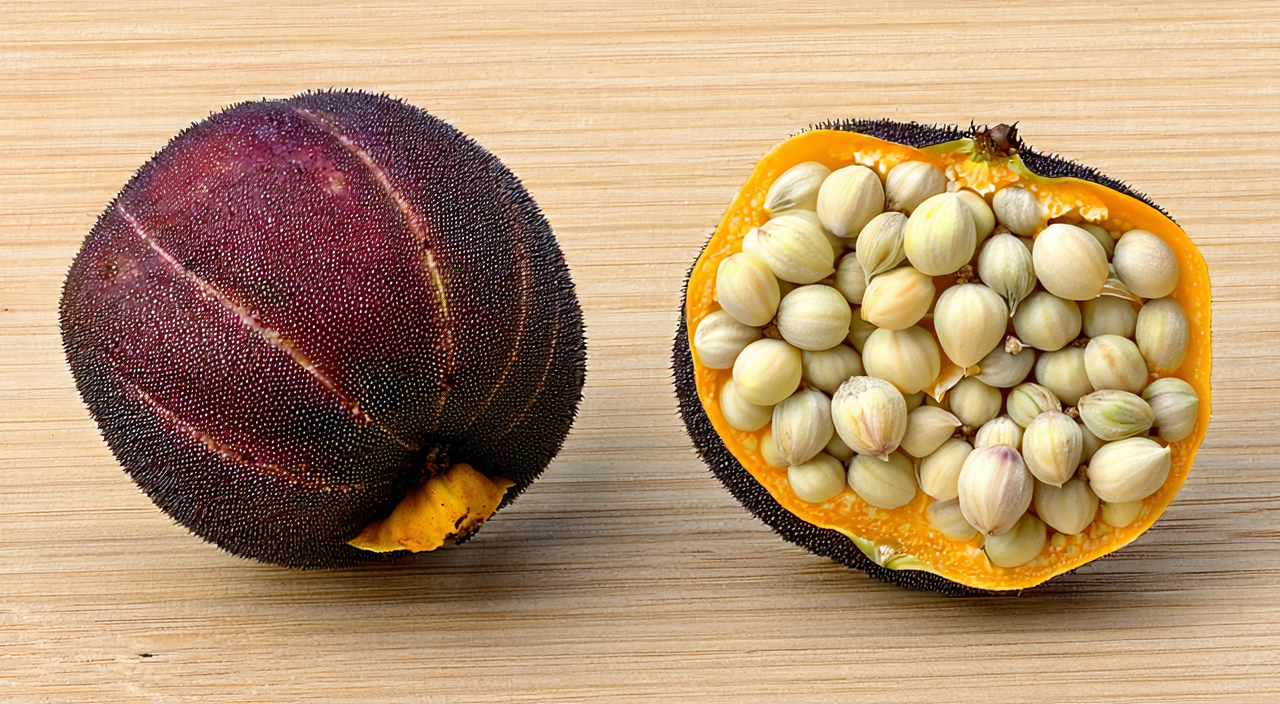
Cherokee rose fruit comes from the dried ripe fruit of Rosa laevigata, a member of the Rosaceae family. In the wild or in Chinese herbal markets, it can be quickly identified by several key characteristics.
In overall shape, the fruit is obovoid or nearly elliptical, about 2–3.5 cm long and 1–2 cm in diameter. The surface color is mostly reddish-yellow, reddish-brown, or a dark orange-red, and may vary slightly with storage time. The most distinctive identification feature is the dense prickle-like remnants on the surface—these are residual small prickle bases on the fruit skin, giving it a noticeably rough texture to the touch.
The top of the fruit often shows remnants of the calyx, appearing as a slightly depressed ring-like structure—a trace left after the flower withers. The base may sometimes have a short fruit stalk attached. When the dried fruit is cut open, numerous yellowish or light brown achenes are visible inside; these small achenes are hard in texture and are enclosed within the enlarged receptacle.
Simply put, if you see a reddish-brown fruit with a prickly surface, a calyx remnant at the top, and numerous small hard seeds inside when cut open, it is very likely Cherokee rose fruit.
What Is the Medicinal Part of Cherokee Rose Fruit?
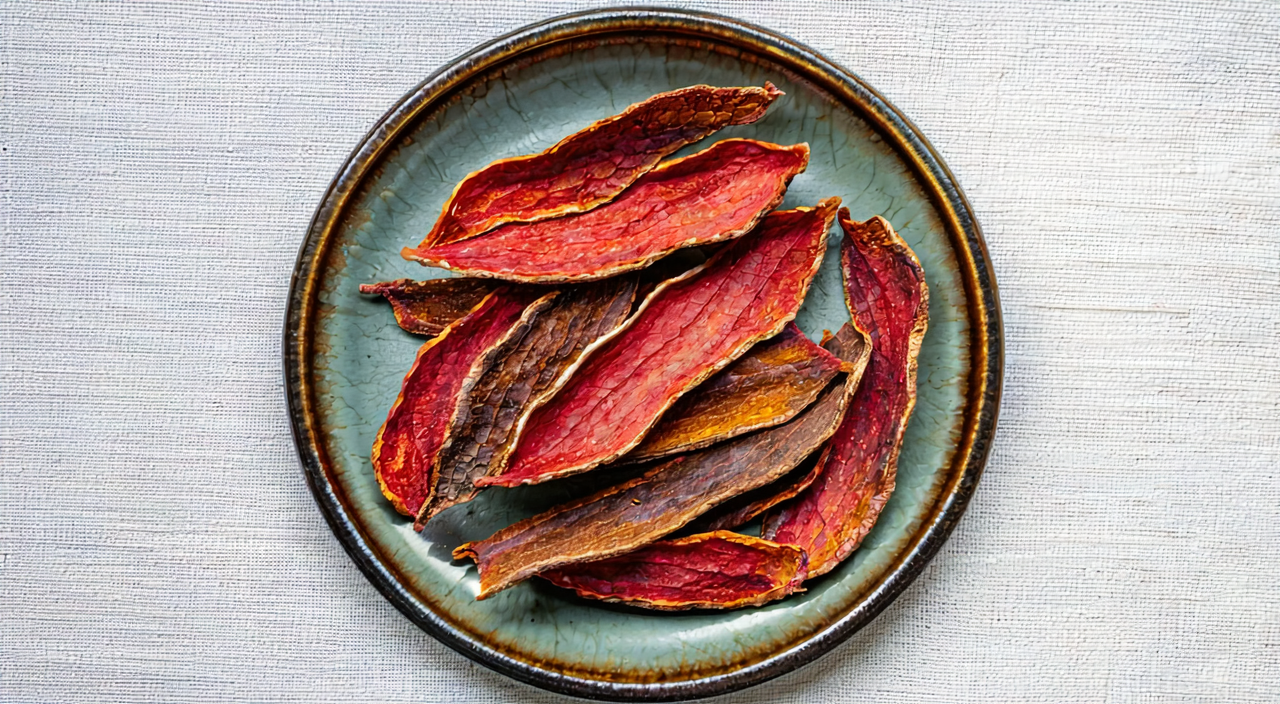
In terms of Chinese herbal medicine, the medicinal part is the ripe fruit, but it is not used whole directly; it requires specific processing.
Harvesting typically occurs in autumn when the fruits ripen and turn red, by which time they are fully developed. After harvesting, the surface prickles must be removed first, as this directly affects whether the herb will irritate the mouth or throat during later use. The traditional processing method is to briefly blanch or steam the fruits in boiling water, then scrape or brush off the surface prickles with a tool, and finally split them longitudinally.
After splitting, the inner achenes and hairs must be thoroughly removed, leaving only the flesh and the enlarged receptacle. If the achenes are not removed, they may cause discomfort when used. Afterwards, the material is dried, either by sun-drying or low-temperature baking, to produce the familiar Chinese herb Jin Ying Zi. In some regions or formulas, the term “Jin Ying Zi Rou” (Cherokee rose fruit flesh) is used, which actually refers to the clean flesh after removing prickles and seeds.
Commonly seen Cherokee rose fruit wine is often made by directly steeping whole or split fruits with seeds still inside, which differs from medicinal standards. If choosing it for health-regulating purposes, it is more advisable to understand the processing method of standardized decoction pieces.
How Does Traditional Chinese Medicine Understand Cherokee Rose Fruit?
Traditional Chinese medicine (TCM) often understands Cherokee rose fruit from the perspective of astringing and securing, viewing its action as primarily “retaining.” It is good at addressing tendencies toward “slippage” caused by deficiency failing to hold or contain.
Traditional Understanding of Securing Essence and Reducing Urination
In traditional thinking, Cherokee rose fruit is commonly used for securing essence and reducing urination. When the constitution is relatively weak and kidney qi fails to be secured, leading to conditions such as seminal emission, frequent urination, or excessive nighttime urination, some traditional formulas select Cherokee rose fruit with herbs like Euryale seed (Qian Shi) to help astringe and secure. In modern life, it is rarely used alone; it more often appears as an astringent component in compound formulas.
Stopping Uterine Bleeding, Leucorrhea, and Astringing the Intestines to Stop Diarrhea
For women experiencing excessive vaginal discharge or prolonged menstrual spotting due to deficiency failing to secure, TCM may also use Cherokee rose fruit as part of an astringing strategy. Similarly, in managing long-term chronic diarrhea or persistent loose stools, Cherokee rose fruit, with its intestine-astringing and antidiarrheal property, is often combined with other spleen-fortifying or astringing herbs.
It should be noted that these approaches are based on the premise of “deficiency patterns with slippage.” If there is a significant presence of pathogenic factors such as damp-heat or stagnation, astringent herbs may instead trap the pathogenic factors—a point that will be further explained later.
What Areas Do Modern Studies Focus On?
Modern research mainly focuses on the chemical constituents of Cherokee rose fruit, and no unified clinical application standards have been formed yet. Studies suggest that it contains polysaccharides, triterpenoids, flavonoids, and other substances, with some experiments focusing on its antioxidant and astringent properties. Some in vitro studies have also attempted to observe its inhibitory effects on certain bacteria, but these are mostly preliminary explorations.
Therefore, modern research currently serves more as a reference for understanding traditional applications, and the traditional usage concepts remain the main way to understand this herb.
Differences Between Cherokee Rose Fruit, Chinese Raspberry, and Asiatic Cornelian Cherry Fruit
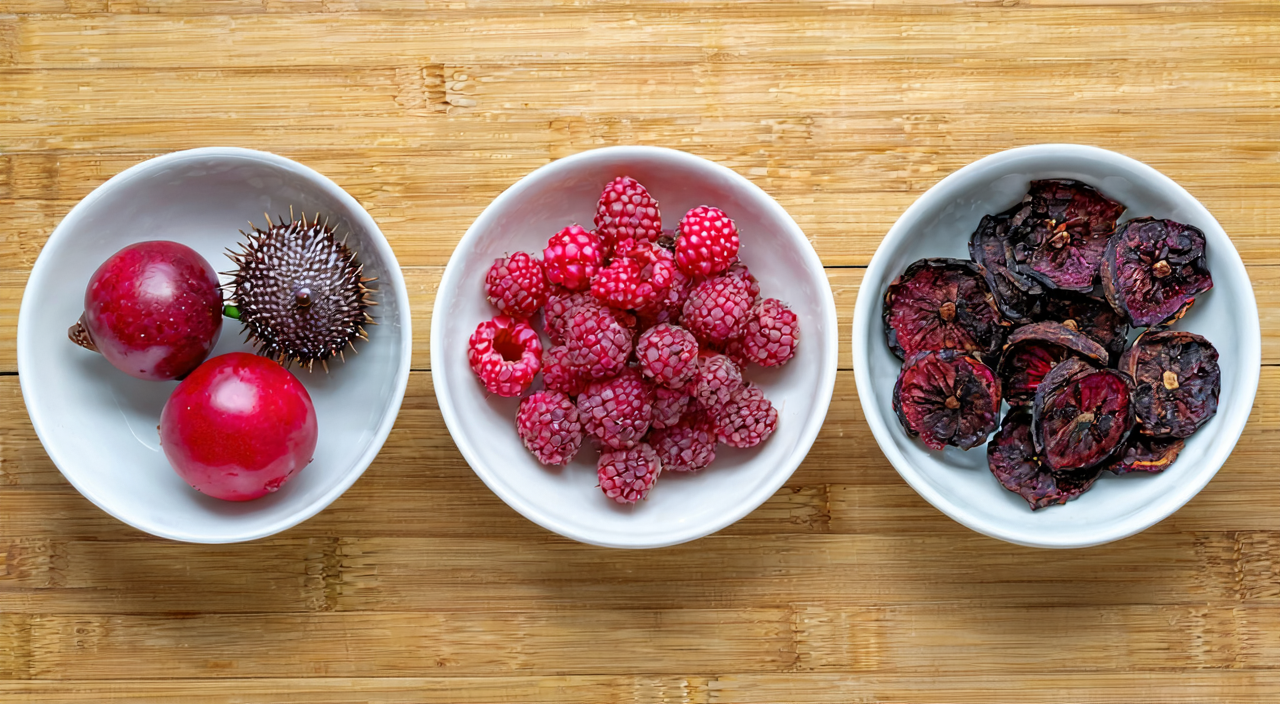
Many overseas users easily confuse Cherokee rose fruit with Chinese raspberry (Fu Pen Zi), and some also compare it with Asiatic cornelian cherry fruit (Shan Zhu Yu). Although all three have a “retaining” nature, they differ markedly in origin, appearance, and emphasis.
Chinese raspberry is the dried fruit of Rubus chingii of the Rosaceae family. It is an aggregate fruit composed of many small drupelets clustered together, resembling a small strawberry. When ripe, it is mostly red or orange-red, and its surface does not have prickle-like remnants like Cherokee rose fruit. In traditional use, Chinese raspberry tends more toward tonifying the liver and kidney and securing essence, with a slight warm-tonifying nature, while Cherokee rose fruit leans toward astringing with relatively weaker tonifying strength.
Asiatic cornelian cherry fruit comes from the dried ripe sarcocarp of Cornus officinalis of the Cornaceae family. It commonly appears as wrinkled purplish-red or dark red slices, with the pit removed. In TCM, it can both tonify the liver and kidney and astringe and secure, with relatively balanced tonifying and astringent forces, unlike Cherokee rose fruit, which mainly serves an astringent role.
Simple distinction: morphologically, Cherokee rose fruit has prickles, Chinese raspberry resembles a small strawberry, and Asiatic cornelian cherry fruit is depitted flesh slices. In terms of emphasis, Cherokee rose fruit focuses on astringing and securing, Chinese raspberry tends to tonify liver and kidney while securing, and Asiatic cornelian cherry fruit combines both tonifying and astringing.
Which Formulas Use Cherokee Rose Fruit?
Cherokee rose fruit appears as an astringent component in some traditional formulas, often combined with Euryale seed (Qian Shi), lotus seed (Lian Zi), etc. The following formulas are traditional representatives used for related health-regulating purposes, but whether they are suitable still needs to be judged according to individual conditions.
Shuilu Erxian Dan (Water and Earth Two Immortals Pill) is a very classic formula composed of only two ingredients: Cherokee rose fruit and Euryale seed—one astringent and one securing, skilled at converging. It is traditionally used for conditions such as seminal emission, thin leucorrhea, and frequent urination due to kidney deficiency failing to secure. Jin Ying Zi Gao (Cherokee Rose Fruit Paste) is a soft extract made by simmering the single herb Cherokee rose fruit, convenient for use, and commonly used for chronic nurturing of deficiency with a tendency to slippage.
Additionally, some pill formulations or astringent formulas also include Cherokee rose fruit, such as Jin Ying Zi Wan (Cherokee Rose Fruit Pill) or its modified variations. Cherokee Rose Fruit Pill often secures essence and reduces urination while combining with other herbs to address different constitutional needs. Overall, astringent formulas mostly target presentations where “slippage” is the main tendency, such as seminal emission, enuresis, chronic diarrhea or dysentery, uterine bleeding, and leucorrhea.
It is important to emphasize that each of these formulas has its own indications and is not suitable for all similar presentations. When using them, it is recommended to combine product instructions, personal constitution, and professional advice, and not to self-prescribe based on the formula alone.
What Precautions Should Be Taken When Using Cherokee Rose Fruit?
Although Cherokee rose fruit is commonly used, it is not suitable for everyone. According to traditional understanding, special attention should be paid to the following situations.
When there is pronounced damp-heat in the body, such as a yellow greasy tongue coating, bitter taste in the mouth, sticky stools, and dark scanty urine, it is generally not advisable to use the astringent Cherokee rose fruit, as it may obstruct the elimination of damp-heat pathogens. People who already have dry stools or tend to be constipated should also avoid it, because the astringent nature of Cherokee rose fruit may worsen constipation.
If there is an obvious urinary tract infection, with simultaneous frequent, urgent, and painful urination, it is also not appropriate to use Cherokee rose fruit alone for astringing; the infection should be addressed first. In addition, Cherokee rose fruit wine or other alcohol-containing preparations should be used with extra caution when the body has heat, dampness, or inflammation, as alcohol itself tends to generate heat and dampness.
For long-term, stubborn seminal emission, enuresis, chronic diarrhea, or abnormal vaginal discharge, especially when accompanied by emaciation, marked fatigue, or emotional depression, it is advisable to consult a TCM or Western medicine professional first, and not to rely solely on a single herb or formula for self-regulation. The content of this article is for informational reference only and cannot replace professional diagnosis or treatment advice.
Summary
Cherokee rose fruit is a Chinese herb whose main direction is astringing. Its medicinal part is the dried ripe fruit flesh after prickle and seed removal. For identification, note the prickle-like remnants on the surface and the calyx remnant at the top. It differs from Chinese raspberry and Asiatic cornelian cherry fruit in origin, morphology, and traditional emphasis. In traditional formulas, Cherokee rose fruit is often combined with Euryale seed for patterns of kidney deficiency failing to secure or body deficiency with slippage tendencies. However, it is not suitable for cases with damp-heat, constipation, or urinary tract infection. Appropriate use of any Chinese herb requires a clear understanding of one’s personal constitution, and professional guidance is recommended when necessary.