
What Is Lotus Stamen? Medicinal Parts, Identification, and Common Formulas
When exploring traditional Chinese medicine, many people have heard of lotus seed, lotus plumule, and lotus receptacle, but remain unfamiliar with lotus stamen. In fact, lotus stamen also comes from the well-known lotus flower, but it is not the fruit or embryo; rather, it is the dried stamens of the flower. For overseas Chinese readers seeking a deeper understanding of Chinese medicinal materials, knowing what lotus stamen looks like, how it differs from lotus plumule, and how it is traditionally used forms the foundation for identification and application. This article will elaborate from these perspectives.
What Does Lotus Stamen Look Like? How to Identify It?
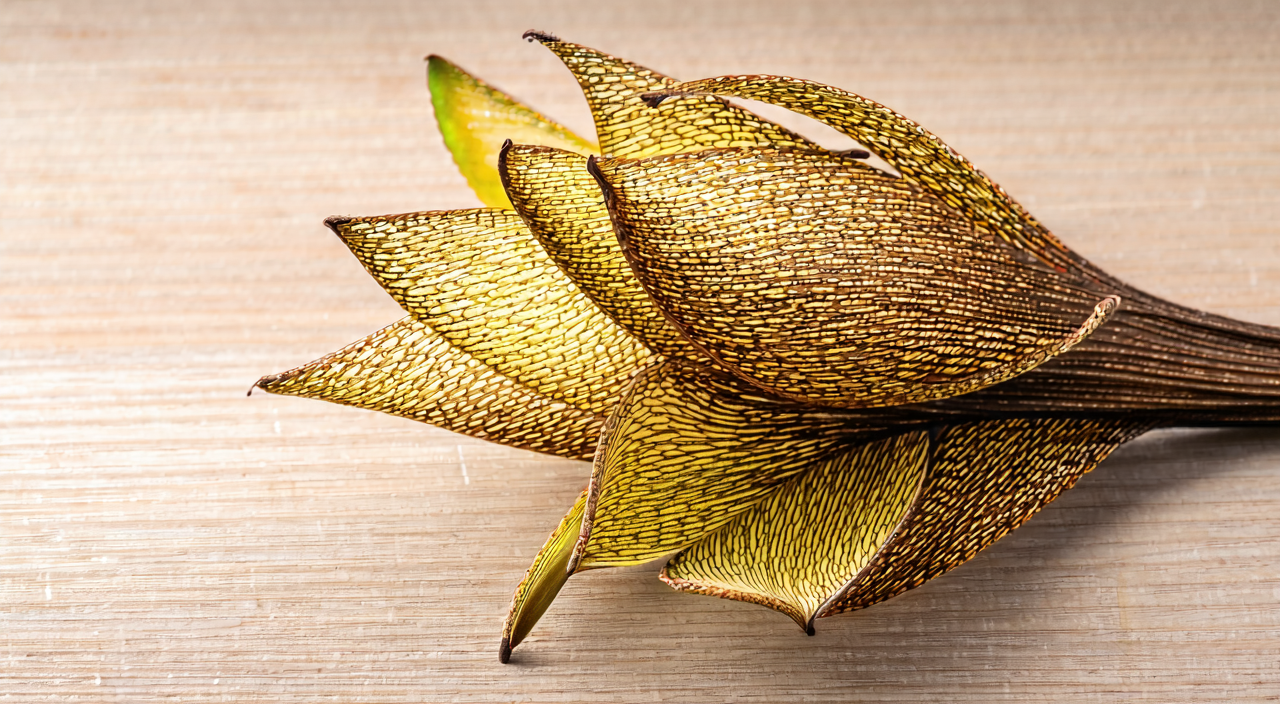
Dried lotus stamen is easy to identify once you grasp a few key characteristics. Overall, it appears as thin, thread-like strands, often curved or twisted, with a soft, light texture that may break with the slightest touch. The color is mostly yellowish-white to light brown, with a glossy surface. At the tip of each strand there is a slightly enlarged part—the remnant of the anther, which contains pollen. The anther is usually brownish-yellow or dark brown, forming a natural color transition with the lighter filament below.
When selecting lotus stamen in practice, pay attention to the following points: the dried product should be intact with few fragments, have a natural color, and be free of mold spots or off odors. Because lotus stamen is extremely light in texture, it feels almost weightless when held in the hand—a feature that distinguishes it from other thread-like medicinal materials. If you see clumps or strands that are dark or blackened, this often indicates improper storage or aging, making it unsuitable for further use.
What Is the Medicinal Part of Lotus Stamen?
The medicinal part of lotus stamen is very clear: it is the dried stamen of the lotus flower. Lotus flowers bloom in summer, with large, conspicuous blossoms. The stamens are numerous, arranged in a spiral around the receptacle. Traditionally, collection is usually done when the flower is just opening or in full bloom. The stamens are carefully picked, any impurities on the filaments are removed, and they are promptly spread out to dry in the shade or dried at low temperature to preserve the color and stability of the constituents.
Many people new to this subject easily confuse lotus stamen with lotus seed, lotus plumule, and lotus receptacle, but botanically they are different parts. Lotus seed is the mature seed; lotus plumule is the embryo within the seed; lotus receptacle is the inverted cone-shaped structure that holds the stamens and fruit; whereas lotus stamen refers specifically to the stamen part. Recognizing this distinction is important for proper selection and later understanding of traditional uses.
How Does Traditional Chinese Medicine Understand Lotus Stamen?
In traditional Chinese medicine theory, lotus stamen is often classified as an astringent or stabilizing medicinal. Through long-term practice, ancient practitioners found that the lotus stamen may have a regulating effect on certain “unstable” conditions in the body. Generally, its nature and flavor are described as sweet, astringent, and neutral, and it mainly enters the heart and kidney meridians. According to traditional thinking, the astringent taste can consolidate and hold, so lotus stamen may be considered for patterns such as insecurity of kidney qi or failure of the essence gate.
It should be noted that these understandings are based on summaries of traditional usage experience, not modern medical diagnostic classifications. Everyone’s constitution and specific conditions differ, so whether lotus stamen is suitable still requires comprehensive pattern differentiation and professional judgment; one cannot self-prescribe solely based on efficacy descriptions. In particular, for manifestations related to the reproductive or urinary system, if the underlying cause is unclear, it is not appropriate to use lotus stamen to “consolidate” on one’s own. Instead, one should first clarify what problem exists in the body.
How Does Modern Research View Lotus Stamen?
Modern research on lotus stamen is not yet extensive, but there have been some preliminary findings. For example, lotus stamen contains flavonoids, alkaloids, and polyphenols. In laboratory settings, these constituents have shown certain antioxidant potential and the ability to modulate smooth muscle activity. However, most current studies remain at the in vitro or animal experiment stage, and there is still a considerable gap before forming clear recommended uses.
Therefore, readers should remain rational when encountering overly definitive modern function claims. Lotus stamen can be a subject for further understanding and research, but it should not be regarded as a targeted regulatory product. For the most part, its value still lies within the framework of traditional usage experience.
What Are the Differences Between Lotus Stamen, Lotus Plumule, and Lotus Receptacle?
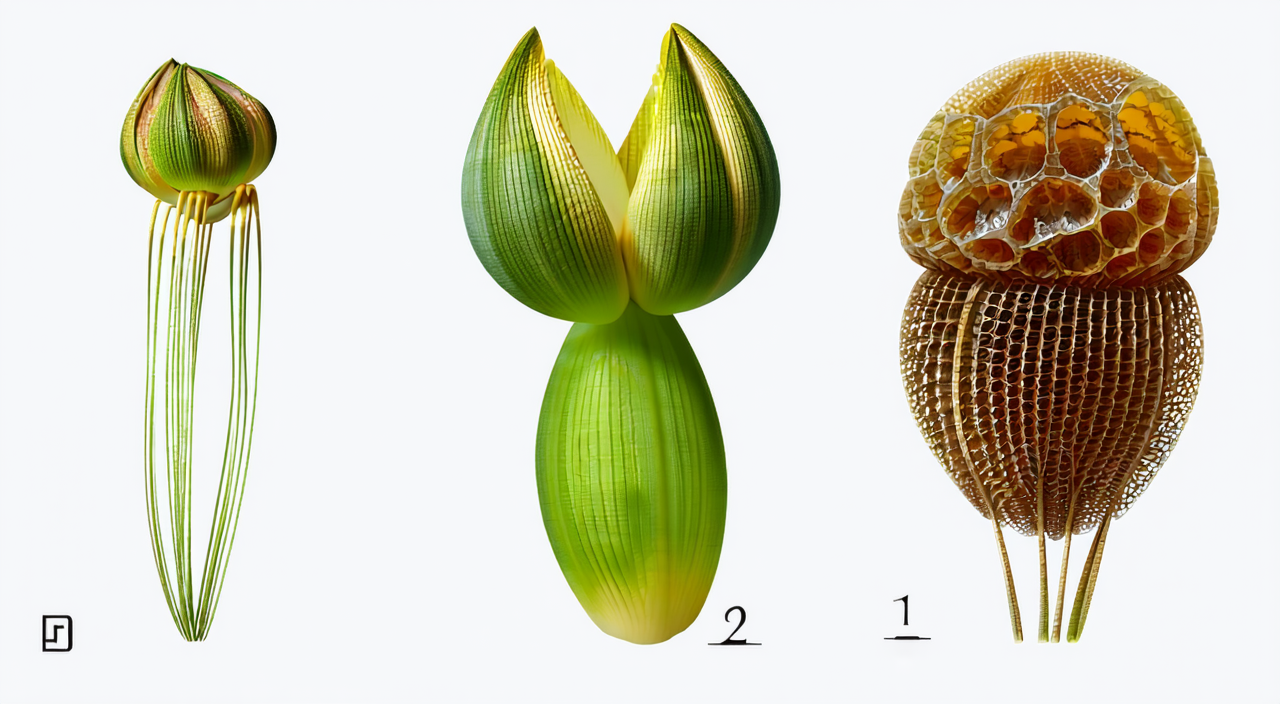
These three medicinal materials all come from the lotus plant, but their parts and traditional uses differ significantly, making them easy to compare and distinguish.
Lotus stamen is the stamen, light in color and astringent in taste, traditionally used to astringe and stabilize. Lotus plumule is the green embryo within the lotus seed; it tastes bitter and is cold in nature, traditionally used to clear the heart and calm the spirit, corresponding to patterns such as irritability, insomnia, and dry mouth with heat signs. Lotus receptacle is the dried receptacle, resembling a honeycomb, light and porous in texture; it is traditionally used to disperse stasis and astringe, sometimes appearing in external applications or gynecological regulation.
Simply put, if you keep in mind the key associations—stamen: consolidating astringent; embryo: clearing the heart; receptacle: dispersing stasis and astringing—you are unlikely to confuse them again. Visually, they are also easy to tell apart: lotus stamen appears as thread-like strands with anthers at the tips; lotus plumule is a short, small green sprout; and lotus receptacle is mostly a spongy, honeycomb-like lump, each with distinct characteristics.
Which Formulas Use Lotus Stamen?
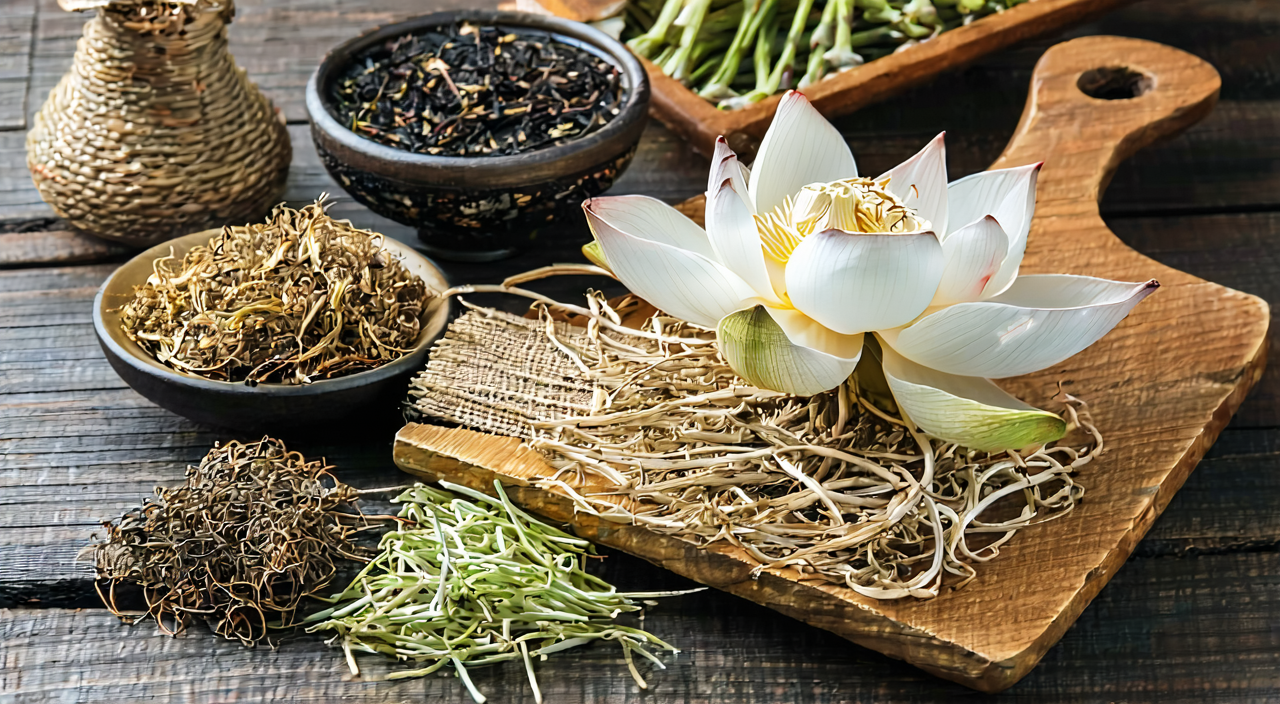
In traditional formulas, lotus stamen is used as an astringent medicinal, often combined with herbs such as dragon bone, oyster shell, Euryale seed, and flatstem milkvetch seed to reinforce the body’s “dike.” A well-known example is Jinsuo Gujing Wan (Golden Lock Essence-Securing Pill), which includes lotus stamen. The entire formula is designed around securing kidney essence and is traditionally used for conditions like spermatorrhea, nocturnal emission, or leukorrhea due to kidney deficiency with insecurity. In addition, some essence-stabilizing formulas, such as Lianxu San (Lotus Stamen Powder), also feature lotus stamen as a key ingredient, combined with mantis egg case, Poria, and others to form an astringent-stabilizing structure.
These formulas should be seen as traditional options for specific patterns. Individual constitutions and symptoms vary greatly, so comprehensive assessment is needed based on actual presentations. While ready-made medicines such as Jinsuo Gujing Wan and Lianxu San may have suitable populations in traditional use, you should not self-select based on just one or two symptoms. Especially for recurrent conditions or those accompanied by other discomforts, first seek a systematic evaluation rather than directly applying a stabilizing approach.
What Precautions Should Be Taken When Using Lotus Stamen?
Although lotus stamen is a plant-derived medicinal, there are still some precautions to observe when using it. Traditionally, if there is a predominance of damp-heat in the body—such as burning urination, thick yellow discharge, a yellow greasy tongue coating—it is not advisable to use an astringent like lotus stamen alone, because the classical concept of “trapping the enemy by closing the door” suggests it may aggravate the retention of damp-heat.
For those with urinary abnormalities or reproductive system symptoms, it is not recommended to use lotus stamen when the cause is unclear. For example, recurring frequent urination, painful urination, spermatorrhea, or abnormal vaginal discharge should first be evaluated for possible infection, structural issues, or other pathological changes, rather than relying solely on an astringent approach to relieve symptoms. In addition, people with pollen allergies need to be particularly cautious, because lotus stamen is itself a stamen, and residual pollen may trigger a hypersensitivity reaction. When purchasing, also pay attention to whether the source is clean, and avoid products that are contaminated or excessively sulfured. If you plan to use it long-term or in large doses, it is best to first undergo a professional syndrome differentiation assessment.
Summary
As the dried stamen of the lotus flower, lotus stamen is a medicinal characterized by astringing and stabilizing actions in traditional Chinese medicine. It appears as thread-like strands with anthers and differs markedly from lotus plumule and lotus receptacle in both part and usage. It frequently appears in astringent formulas such as Jinsuo Gujing Wan, but its specific suitability must be determined based on individual constitution and actual conditions—especially it should not be self-used when damp-heat is predominant or when the cause is unclear. The information provided in this article is for general educational reference only and cannot replace professional TCM pattern differentiation or the diagnostic and treatment recommendations of modern medicine.