
What Is Mugwort Leaf? Medicinal Parts, Identification, and Common Formulas
Many people know mugwort from moxibustion, Dragon Boat Festival sachets, or mugwort rice cakes, but they may not be clear on what medicinal mugwort leaf really is or which part of the plant is used. In Chinese medicine, the mugwort leaf used in prescriptions follows specific standards and is not exactly the same as the mugwort products used in daily life. This article outlines the appearance, identification, medicinal part, traditional understanding, differences from similar plants, and common formulas to help readers form a clearer picture.
What does mugwort leaf look like? How to identify it
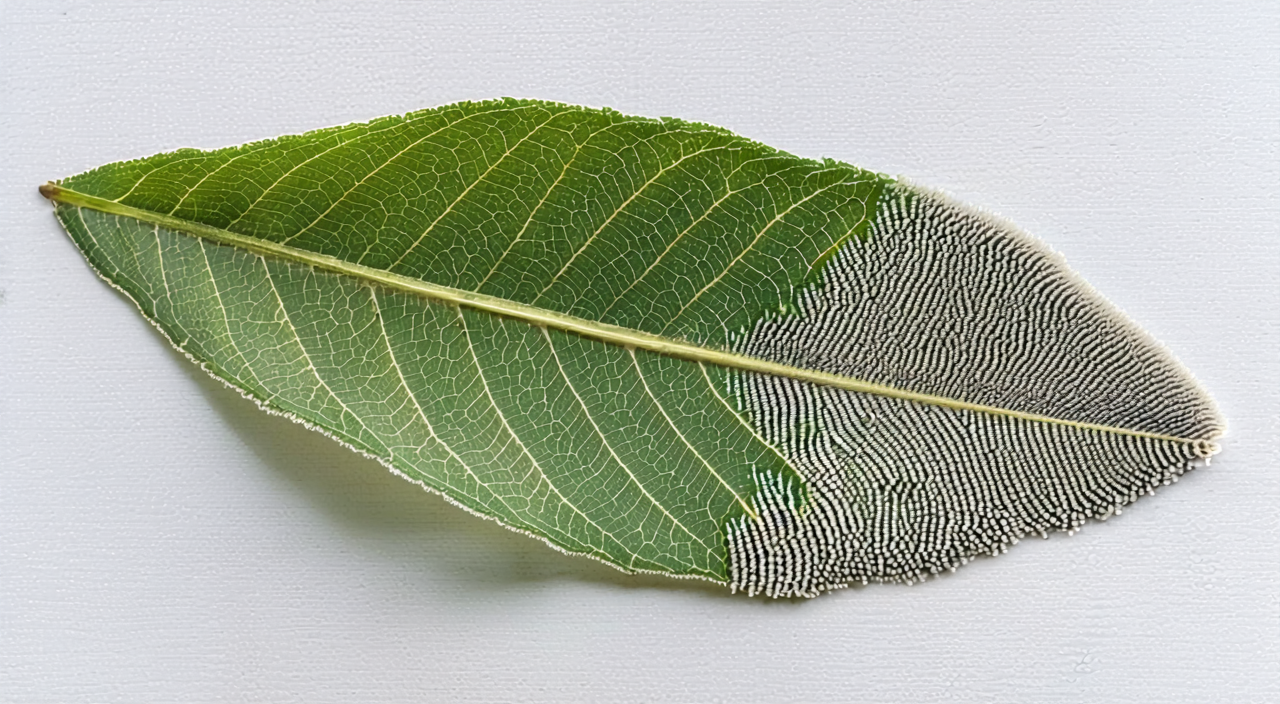
The plant source of mugwort leaf is Artemisia argyi, a member of the Asteraceae family. The medicinal part is the dried leaf. To identify mugwort leaf, pay attention to leaf shape, upper surface colour, lower surface fuzz, and aroma.
Mugwort leaves are often crumpled, broken, or occasionally whole. When a complete leaf is flattened, it shows a pinnately divided shape with elliptic-lanceolate lobes and irregular coarse serrations along the margin. The upper surface is greyish green or deep yellowish green, sometimes with sparse spider-web-like soft hairs; the lower surface is densely covered with greyish-white fuzz, which is a key identifying feature. To the touch, the lower surface feels soft, like a fine felt.
As for odour, mugwort leaf has a strong and distinctive aromatic smell, which intensifies when rubbed. The taste is slightly bitter. Dried mugwort leaf pieces are brittle, crumble easily, and are darker in colour than fresh leaves. Fresh mugwort leaves are greener and full of moisture, while the dried herb shrinks and changes colour, but the greyish-white fuzz on the under surface remains clearly visible. By noting these characteristics, you can make a preliminary judgement when purchasing or using this herb.
What is the medicinal part of mugwort leaf?
The medicinal part of mugwort leaf is the dried leaf of Artemisia argyi. It is usually harvested before flowering in summer, cleaned, and dried in the sun to obtain raw mugwort leaf. Raw mugwort leaf can be further processed into different products for various uses:
- Mugwort leaf pieces: Clean leaves that have been sun-dried or shade-dried; this is the common form used in Chinese medicine prescriptions.
- Charred mugwort leaf: Clean mugwort leaf is processed into charcoal by stir-frying until the surface becomes scorched black, which strengthens its action of warming the channels and stopping bleeding. It has traditionally been used in approaches for cold-deficient bleeding tendencies.
- Moxa floss: Dried mugwort leaves are stripped of stems and impurities and pounded into a soft, cotton-like fluff. Moxa floss is mainly used in moxibustion, where burning it generates warm stimulation to acupoints; it is a common form found in household health practices.
“Mugwort products” mentioned in daily life, such as mugwort sachets, mugwort bath bags, and mugwort foods, also use the aerial parts of mugwort, but they are often not the standard medicinal mugwort leaf pieces and their production standards and uses differ. Understanding these distinctions helps avoid mistaking ordinary mugwort products for clinical herbal medicines.
How does Chinese medicine understand mugwort leaf?
In traditional Chinese medicine theory, mugwort leaf is commonly understood in terms of warming the channels and stopping bleeding, dispersing cold and relieving pain, and for external use, drying dampness and relieving itching. Its nature and flavour are acrid, bitter, and warm, and it enters the Liver, Spleen, and Kidney channels.
For problems such as heavy menstrual bleeding, prolonged periods, or period pain arising from cold congealing in the uterus and instability of the Chong and Ren channels, mugwort leaf is often used together with other herbs, working from the perspective of warming the channels, dispersing cold, and regulating menstruation to stop bleeding. Charred mugwort leaf is also frequently selected in approaches for cold-deficient flooding, spotting, or threatened miscarriage. However, any specific application must be based on an individual’s constitution and symptom presentation.
Used externally, mugwort leaf decoctions are employed for steaming or washing, or processed into moxa sticks for moxibustion. Traditionally, this is used for joint pain caused by cold-dampness and damp skin itching conditions. That said, moxibustion is not suitable for everyone; factors such as a heat-leaning constitution, yin deficiency or excess heat still need to be considered, and it should not be treated as universally applicable.
In summary, Chinese medicine values mugwort leaf primarily for its warming and unblocking power, but whether this warming-unblocking action suits a given individual requires a comprehensive pattern differentiation and should not be deduced by the patient alone.
What areas have modern studies explored?
Modern research on mugwort leaf mainly focuses on its volatile oils, flavonoids, tannins, and other components. Experimental studies show that mugwort volatile oil exhibits certain antibacterial and antiviral activity in vitro, and some compounds have been found to have anti-inflammatory, analgesic, and haemostatic effects. These findings provide some modern scientific perspective on its traditional uses, but most are at the cellular or animal experiment stage and cannot yet be directly equated to effects in humans.
Regarding the mechanisms of moxibustion, research is also exploring its thermal effect, infrared radiation spectrum, and the bioactivity of combustion products. Such lines of inquiry help to understand why moxibustion has been valued in traditional health care, but conclusions are still accumulating. Therefore, this information can serve as supplementary knowledge and should not be interpreted as a promise of treatment for any disease.
What are the differences between mugwort leaf, sweet wormwood, and motherwort?
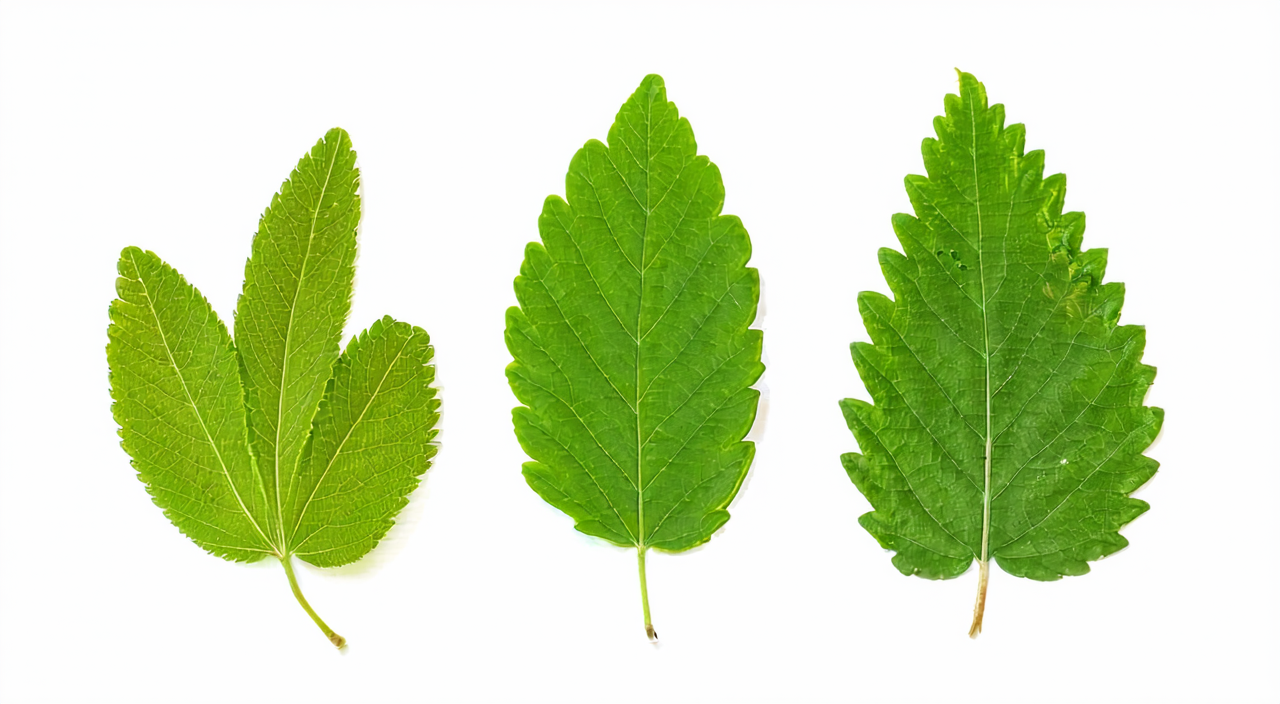
Sweet wormwood (Artemisia annua) and motherwort (Leonurus japonicus) are two other Chinese medicinal herbs that are easily confused with mugwort leaf, especially as fresh plants, but the three are distinctly different in leaf shape, odour, and traditional uses.
In terms of leaf shape, mugwort leaves are pinnately divided with relatively wide lobes and a lower surface densely covered in greyish-white fuzz. Sweet wormwood leaves are two to three times pinnately divided, the lobes are fine and narrow, thread-like, giving a more open, sparse appearance, and both surfaces are hairless or nearly hairless. Motherwort’s basal leaves are palmately divided, while stem leaves are often three-lobed or pinnately divided, but the shape clearly differs from mugwort, and the lower surface lacks the dense fuzz of mugwort.
In terms of odour, mugwort leaf has a strong, intense fragrance, which becomes heavier when rubbed. Sweet wormwood has a clear, penetrating special aroma typical of the Artemisia species, lighter and more ethereal than that of mugwort. Motherwort has a much fainter smell, even slightly grassy.
In traditional use, mugwort mainly warms the channels to stop bleeding and disperses cold to relieve pain. Sweet wormwood is traditionally used to clear deficiency heat, relieve summerheat, and interrupt malaria; its nature is cool. Motherwort is more oriented toward invigorating blood and regulating menstruation, commonly used for irregular menstruation and persistent lochia after childbirth. The three differ greatly in their applications and therapeutic reasoning, so they should not be used interchangeably.
Which formulas use mugwort leaf?
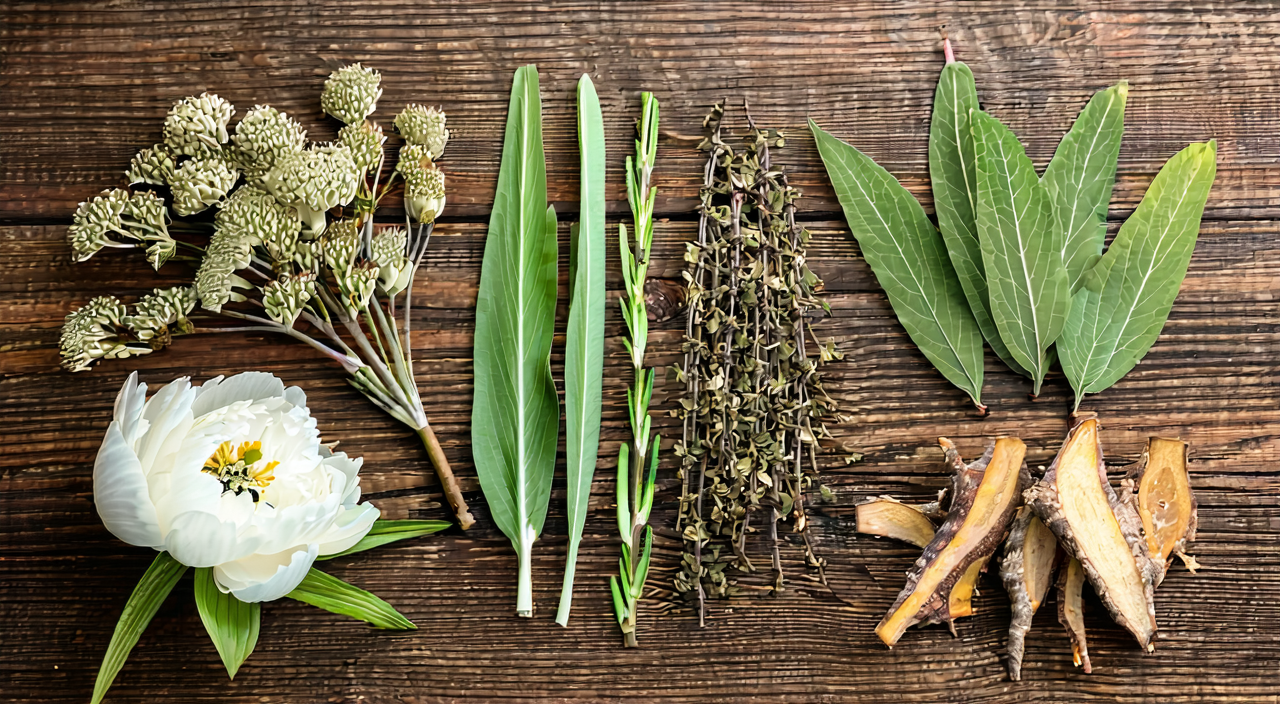
Mugwort leaf appears as an important ingredient in several classic formulas. A few traditional formulas are introduced below as points of reference, but this does not constitute a usage recommendation.
Xiong Gui Jiao Ai Tang (Chuanxiong and Angelica Gelatin Mugwort Decoction): This formula is recorded in the Essentials from the Golden Cabinet and consists of chuanxiong rhizome, Chinese angelica root, donkey-hide gelatin, mugwort leaf, white peony root, dried rehmannia root, and liquorice. It is traditionally used for flooding and spotting, bleeding during pregnancy, and abdominal pain due to blood deficiency with cold congealing and damage to the Chong and Ren channels. In this formula, mugwort leaf works together with Chinese angelica root and donkey-hide gelatin to warm the channels, stop bleeding, nourish blood, and regulate menstruation.
Ai Fu Nuan Gong Wan (Mugwort and Cyperus Palace-Warming Pill): With mugwort leaf, nutgrass galingale rhizome, evodia fruit, and cinnamon bark as main herbs, this formula is often used in approaches for cold congealing in the uterus, menstrual irregularities, period pain, and cold-womb infertility, emphasizing warming the uterus, dispersing cold, regulating qi and nourishing blood. This formula also exists in modern pre-prepared patent medicine products, but whether it is suitable still depends upon an individual’s constitution and symptom assessment.
Si Sheng Wan (Four Fresh Pill): This is composed of fresh lotus leaf, fresh mugwort leaf, fresh biota leaf, and fresh rehmannia root; its main therapeutic idea is cooling the blood and stopping bleeding. Here, fresh mugwort leaf does not primarily warm the channels; instead, it is used together with blood-cooling herbs to address bleeding tendencies caused by blood heat acting recklessly, illustrating how mugwort leaf’s role changes in different combinations.
Mugwort Leaf Decoction (Ai Ye Tang): This refers to a category of channel-warming, cold-dispersing formulas built around mugwort leaf, often modified according to specific needs and used for cold-deficient abdominal pain, menstrual irregularities, and related directions.
The formulas mentioned above are all traditional empirical combinations. Specific application must be guided by a Chinese medicine practitioner based on pattern differentiation, and should not be used solely by matching a list of symptoms.
What precautions should be taken when using mugwort leaf?
Although mugwort leaf is widely used, several points merit attention:
- Use with caution in yin deficiency with blood heat: Mugwort leaf is warm and drying by nature. For people who already lack yin fluids or who have deficiency-fire or excess-heat presentations, using it alone in large amounts or over a long period may worsen discomfort, such as dry mouth, restlessness, or changes in bleeding tendency.
- Pregnancy requires consideration under professional guidance: Mugwort leaf has been used traditionally to calm the fetus, but not every pregnancy situation is suitable. Particularly when there is a risk of miscarriage, a heat-leaning constitution, or other complex factors, it must be evaluated by a professional doctor. Do not use mugwort-containing formulas or moxibustion on your own.
- Prevent burns and smoke irritation during moxibustion: When practising moxibustion on your own, avoid direct contact of burning moxa with the skin to prevent burns, and pay attention to controlling the distance and duration. The smoke produced by burning moxa may cause respiratory tract irritation or discomfort for some people, especially those with asthma or allergies; ensure good ventilation and take special care.
- Mugwort essential oil must not be taken internally: Mugwort essential oil products available on the market are sometimes labelled for aromatherapy or topical application, but they are not suitable for oral use. Accidentally ingesting mugwort essential oil may entail a risk of toxicity; in particular, keep it away from children.
If severe or recurrent pain, abnormal bleeding, pronounced mood disturbance, or accompanying weight loss and black stools occur, one should not solely rely on mugwort-related products for management, but should consult a doctor promptly and obtain a clear diagnosis.
Summary
Mugwort leaf is a traditional Chinese herb derived from the dried leaves of Artemisia argyi, characterized by pinnately divided leaves, a densely greyish-white fuzzy lower surface, and a strong aromatic odour. Its different processed forms—raw, charred, and moxa floss—extend its applications, including warming the channels and stopping bleeding, dispersing cold and relieving pain, and moxibustion for health care. However, it clearly differs in appearance and use from sweet wormwood and motherwort, and should not be confused with them. When using mugwort leaf, it is important to pay attention to constitutional tendencies and safety boundaries; those with yin deficiency and blood heat, pregnant women, and other special populations should be especially cautious. This article is for informational reference only and is not a substitute for professional diagnosis or treatment advice. For specific therapeutic approaches, please consult a qualified Chinese medicine practitioner.