
What Is Peach Kernel? Medicinal Part, Identification, and Common Formulas
Peach kernel (Taoren) is the dried ripe seed of the peach or mountain peach, a plant in the Rosaceae family, and is a widely used traditional Chinese herbal medicine. When encountering it for the first time, many people living abroad may confuse peach kernel with walnut kernel, almond, or the similarly used bitter apricot kernel. In fact, peach kernel differs clearly in appearance, therapeutic direction, and safety. This article starts with visual identification and then reviews the medicinal part, processing methods, traditional understanding, modern research, and common formulas, to help you understand this herb more comprehensively.
1. What Does Peach Kernel Look Like? How to Identify It?
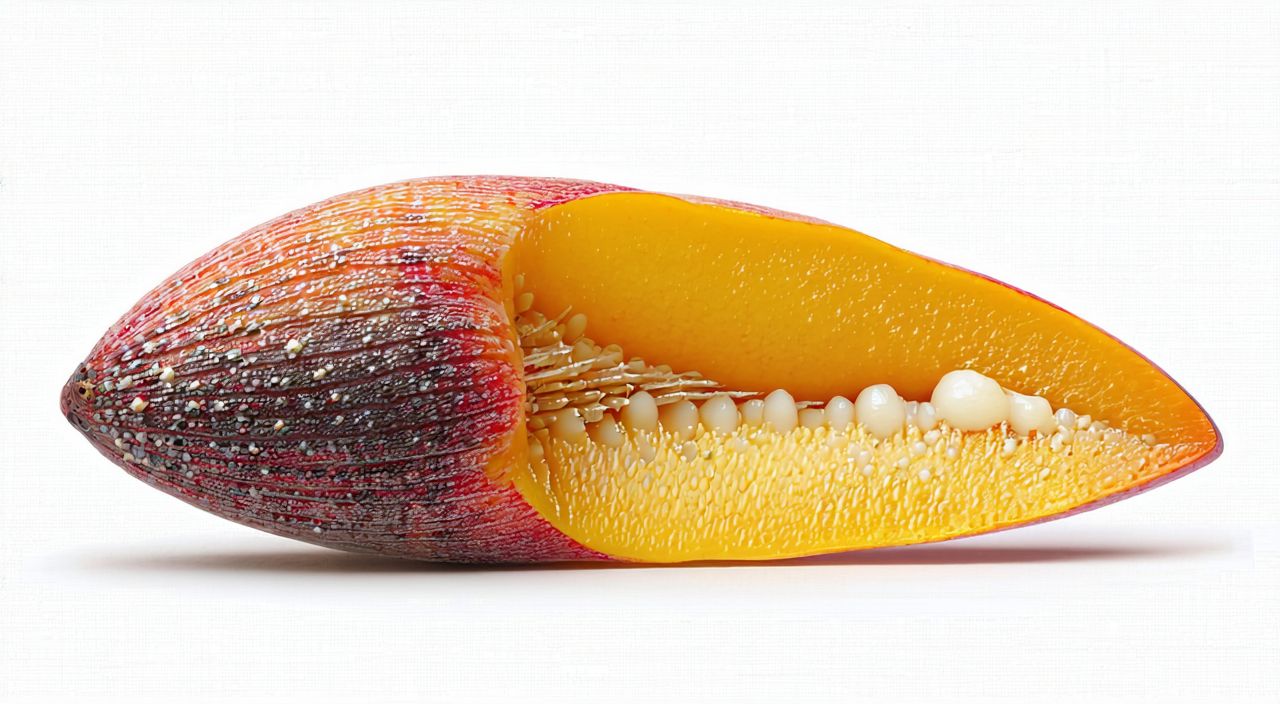
Medicinal peach kernel is flattened, oblong-ovoid, mostly about 1.2–1.8 cm long and 0.8–1.2 cm wide. The surface is yellowish-brown or reddish-brown, with a fine granular texture. One end is relatively pointed, while the other is blunt and slightly oblique, and the edge is thin. Although the seed coat is thin, it is relatively tough. After peeling it open, two milky-white, oil-rich cotyledons can be seen, which is an important identifying feature of peach kernel. In comparison, bitter apricot kernel is more flattened and heart-shaped, with more obvious left-right asymmetry; walnut kernel is large and has brain-like convolutions, differing greatly from the flattened, elongated shape of peach kernel. If samples are available, a preliminary distinction can be made by observing seed shape, seed coat color, pointedness, and cotyledon color.
2. What Is the Medicinal Part of Peach Kernel? Why Does It Need Processing?
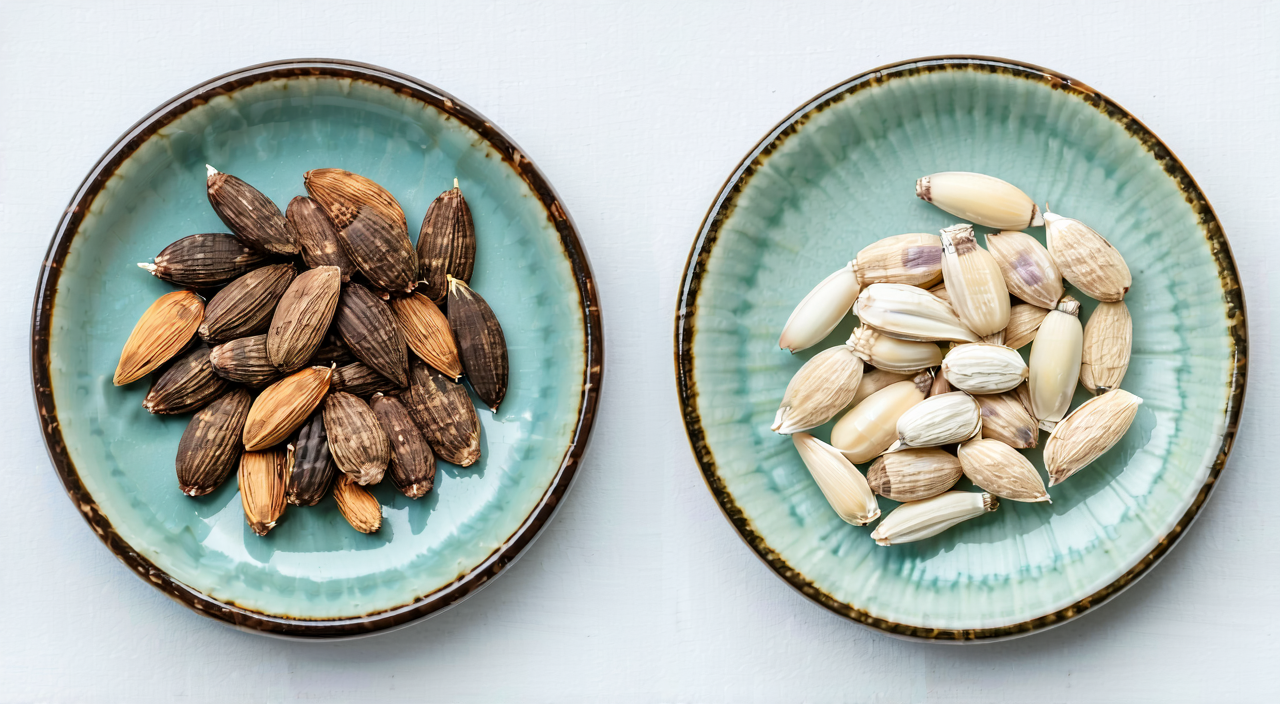
The medicinal part of peach kernel is precisely the ripe seed of the peach or mountain peach. After the ripe fruit is harvested, the pulp and the hard endocarp (the hard shell of the peach pit) are removed, and the intact seeds inside are taken out and dried in the sun. In traditional processing, there is also “blanched peach kernel” (Chan Taoren), which is made by briefly boiling clean peach kernels in water until the seed coat wrinkles, removing them while hot, rubbing off the seed coat, and then drying. Blanched peach kernel has a milky-white surface, and the oily cotyledons are directly exposed, which helps release some active constituents during decoction and reduces the bitter and astringent taste from the seed coat. However, when handling it at home, attention should be paid to the method to avoid damaging the seeds through over-boiling or improper shelling.
3. How Does Traditional Chinese Medicine View Peach Kernel?
From the perspective of traditional Chinese medicine (TCM), peach kernel is usually classified as a blood-activating and stasis-dispelling herb. TCM regards it as neutral in nature, bitter and sweet in flavor, and mainly entering the Heart, Liver, and Large Intestine meridians. According to classical records, peach kernel is good at breaking up blood stasis and can be used for amenorrhea due to blood stagnation, dysmenorrhea, postpartum abdominal pain due to blood stasis, as well as traumatic injuries, bruising, and swelling with blood stasis. In addition, peach kernel is rich in oils and can moisten the intestines, so it is also commonly used in approaches for dry-intestine constipation. In traditional use, peach kernel is also believed to have a certain cough-suppressing and panting-relieving effect, and it may be chosen as a companion herb for some cases of cough and asthma caused by stasis obstruction and qi counterflow. It should be noted that these understandings are based on pattern differentiation and cause assessment; whether an individual is suitable must still be judged by a professional according to constitution and symptoms.
4. What Has Modern Research Found?
Modern pharmacological research has noted that peach kernel contains amygdalin, fatty oils, various steroidal components, and more. Among them, amygdalin can decompose in the body to produce trace amounts of hydrocyanic acid, which is regarded as both a source of some of its pharmacological activities and a point requiring particular caution. If consumed raw in excess or processed improperly, large-scale decomposition of amygdalin may cause poisoning, with severe reactions such as respiratory depression. In addition, anticoagulation-related studies on peach kernel suggest that it has a tendency to affect platelet aggregation, so it poses certain risks for people taking anticoagulants, those with bleeding tendencies, or those with heavy menstrual bleeding. At present, these studies are mostly basic experiments and animal studies and cannot be directly equated with clinical effects, so caution is still needed in use.
5. How Does Peach Kernel Differ from Bitter Apricot Kernel and Bush Cherry Kernel?
Peach kernel, bitter apricot kernel, and bush cherry kernel (Yu Li Ren) are all seeds of Rosaceae plants and are easily confused in appearance. Morphologically, peach kernel is flattened and oblong-ovoid; bitter apricot kernel is eccentrically heart-shaped and asymmetrical; bush cherry kernel is clearly smaller, ovoid or oblong-ovoid, with a smooth or finely textured surface, and their tastes also differ. Bitter apricot kernel is bitter and is traditionally used mainly to direct qi downward, relieve cough, and moisten the intestines to promote bowel movements, tending toward the Lung and Large Intestine. Bush cherry kernel is commonly used to moisten the intestines, promote bowel movements, and promote urination to reduce edema. In contrast, the core feature of peach kernel is activating blood and dispelling blood stasis, and it is often combined with safflower, Chinese angelica root (Dang Gui), and Sichuan lovage root (Chuan Xiong). Generally, for regulating menstruation or managing stasis-related constitutions, practitioners tend to choose peach kernel; if the focus is dry-intestine constipation, peach kernel, bush cherry kernel, or bitter apricot kernel may be selected according to specific manifestations, and this is where the differences arise.
6. Which Formulas Contain Peach Kernel?
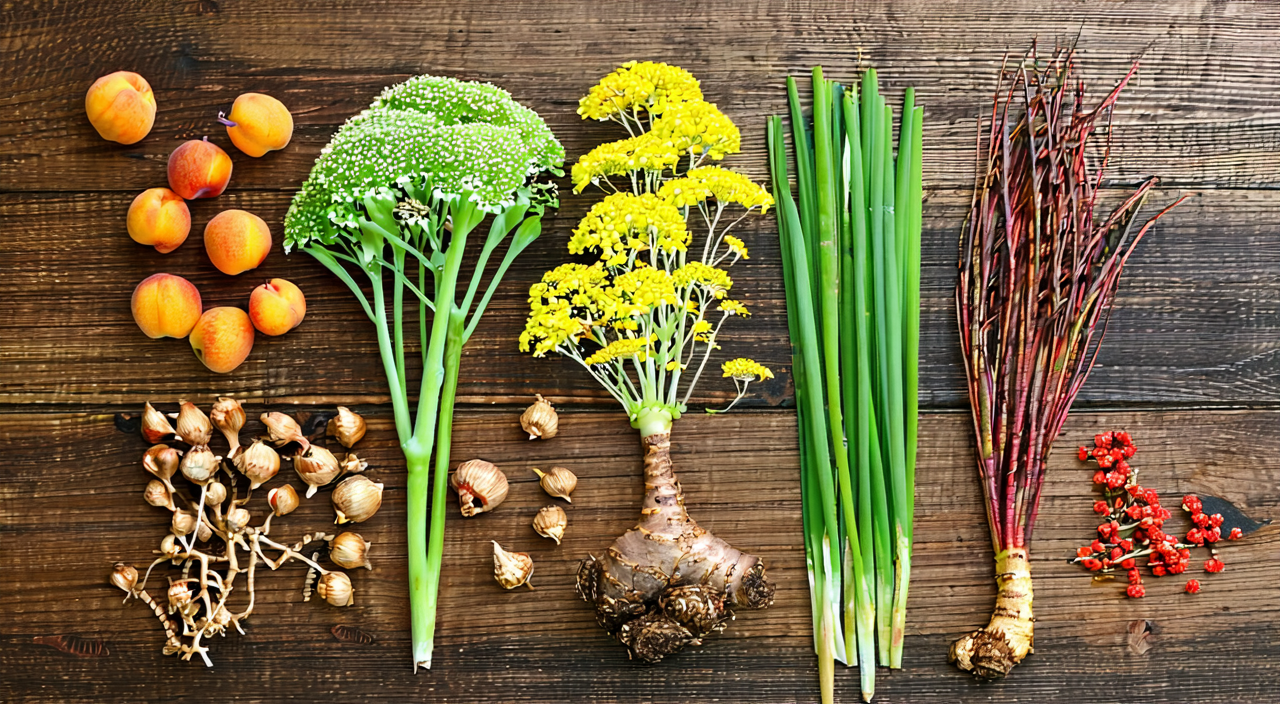
Peach kernel is often an important blood-activating and stasis-resolving component in some classical formulas. For example, “Tao He Cheng Qi Tang” (Peach Kernel Qi-Guiding Decoction) combines peach kernel with rhubarb and cinnamon twig, and is traditionally used for lower abdominal pain, restlessness, and other conditions caused by stasis and heat binding together. “Xue Fu Zhu Yu Tang” (Blood Mansion Stasis-Expelling Decoction) combines peach kernel with safflower, Chinese angelica root, and Sichuan lovage root, and is suitable for chest pain and prolonged headache caused by blood stasis in the chest and inhibited qi movement. “Tao Hong Si Wu Tang” (Peach Kernel and Safflower Four Substances Decoction) adds peach kernel and safflower to the blood-nourishing base of Siwu Tang, focusing on activating blood and regulating menstruation, and is often used as an auxiliary approach for menstrual irregularities and menstrual discomfort caused by blood stasis with blood deficiency. “Gui Zhi Fu Ling Wan” (Cinnamon Twig and Poria Pill) is composed of cinnamon twig, poria, tree peony bark, white peony root, and peach kernel, and is traditionally used for gynecological masses and difficult menstruation, reflecting the characteristics of blood stasis combined with fluid stasis. Any formula should be used under the guidance of a TCM practitioner based on pattern differentiation, and one should not simply apply it based on a single symptom.
7. What Precautions Should Be Taken When Using Peach Kernel?
First, peach kernel should clearly not be used during pregnancy, because its blood-activating effect may adversely affect pregnancy. Second, when menstrual flow is already heavy or prolonged, or in those with bleeding disorders or bleeding tendencies, it should be avoided. Patients taking anticoagulant or antiplatelet drugs should also avoid using peach kernel on their own, as it may increase the risk of bleeding. It is especially important to remind readers that raw peach kernel contains high levels of amygdalin and must never be eaten as a snack; excessive consumption may cause dizziness, nausea, rapid breathing, or even suffocation. It is even more dangerous to crack open peach pits and eat the kernels directly, because the content is uncertain among different varieties and parts. Even properly processed blanched peach kernel should be used within the usual decoction dosage range, and bodily reactions should be closely monitored. Before use, one must consider individual circumstances and consult a professional.
Summary
Peach kernel is a traditional Chinese herb whose main feature is activating blood and dispelling blood stasis. It is flattened and oblong-ovoid in appearance, its medicinal part is the ripe seed, and processing can improve its decocting properties and safety. It is common in formulas such as Tao He Cheng Qi Tang and Xue Fu Zhu Yu Tang, and it should also be carefully distinguished from bitter apricot kernel and bush cherry kernel. It must be emphasized that peach kernel contains amygdalin and other constituents, and raw consumption or overdose poses a risk of poisoning; pregnant women, those with heavy menstrual bleeding, and those taking anticoagulants should avoid it. This article is for objective educational reference only. Any specific use must be based on professional pattern differentiation and guidance; do not make judgments on your own.