
What Is Motherwort? Medicinal Parts, Identification, and Common Formulas
In traditional health practices, motherwort (Yimucao) is a frequently mentioned medicinal herb, especially because of its association with the female menstrual cycle. Many overseas readers who encounter Chinese herbal formulas or products wonder what motherwort actually is, what it looks like, and how it differs from plants such as bugleweed. Using both the original plant and the dried crude herb as references, this article introduces motherwort’s identifying features, medicinal parts, traditional usage concepts, common formulas containing motherwort, and important precautions, helping readers build a clearer general understanding.
What Does Motherwort Look Like? How Is It Identified?
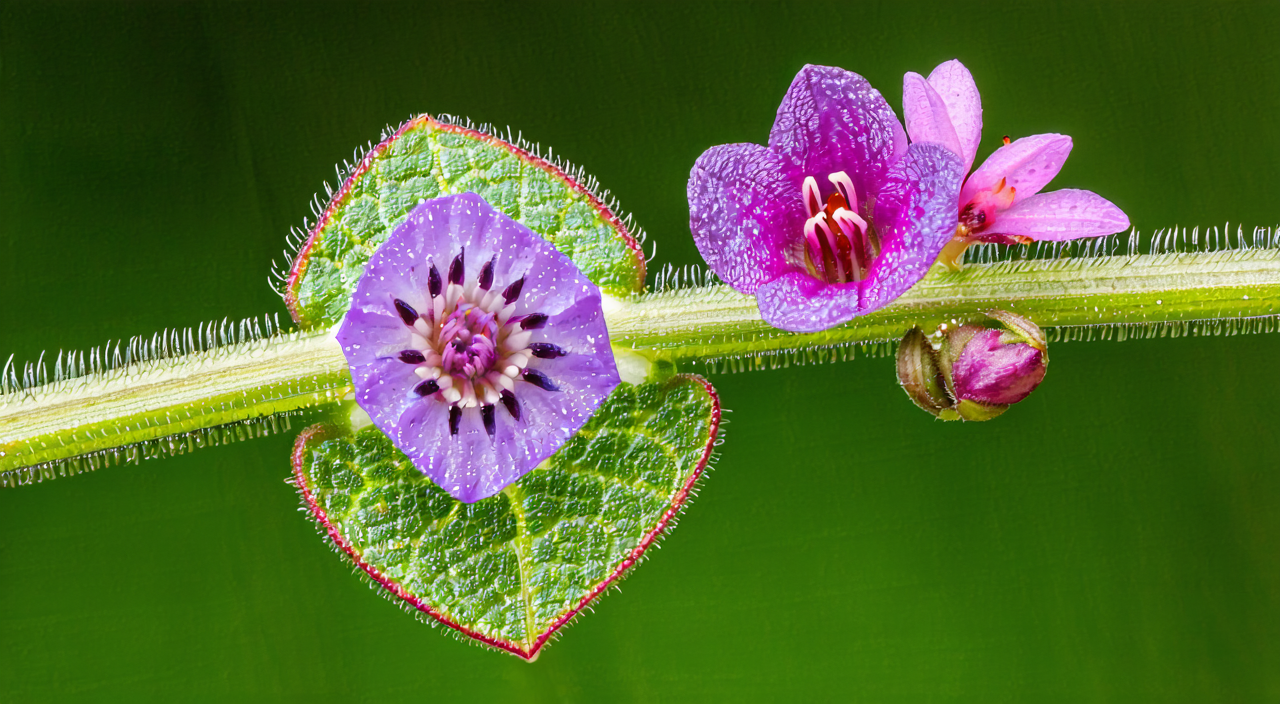
Motherwort is an annual or biennial herb in the Lamiaceae (mint) family. Traditionally, it is usually harvested before flowering or at the early flowering stage. The original plant has several very distinctive features that make it easy to recognize in the field or in the herbal market.
First is the stem. The stem of motherwort is erect and four-angled, often described as square, with obvious longitudinal grooves and a light covering of fine hairs. The angles can be felt when gently touched. This is a shared characteristic of many Lamiaceae plants, but it is particularly noticeable in motherwort.
Next is the leaf shape. The leaves vary considerably. Basal leaves are ovate-cordate or round, but the leaves commonly seen around the flowering period are palmate or pinnately divided. The typical feature is that the blade is often divided into three lobes, and these lobes are further divided into smaller lobes, with coarsely serrate or crenate margins and short hairs on both surfaces. This palmately or pinnately deeply divided leaf shape helps distinguish motherwort in the field from plants with linear or entire leaves.
Then there is the inflorescence and flower shape. Motherwort has axillary verticillasters, with many small flowers densely arranged in whorls in the leaf axils. The corolla is pale purple-red or pink, rarely white. The bilabiate corolla has an upright upper lip and a three-lobed lower lip, and the corolla tube often has a pale ring inside. During the flowering period, rings of pale purple inflorescences can be seen along the stem, which is a highly recognizable feature.
In most cases, the combination of a square stem, palmately or pinnately divided leaves, and pale purple-red verticillasters is enough to distinguish motherwort from similar-looking plants. Of course, if identification in the wild is uncertain, self-collection for medicinal use should still be avoided.
What Is the Medicinal Part of Motherwort?
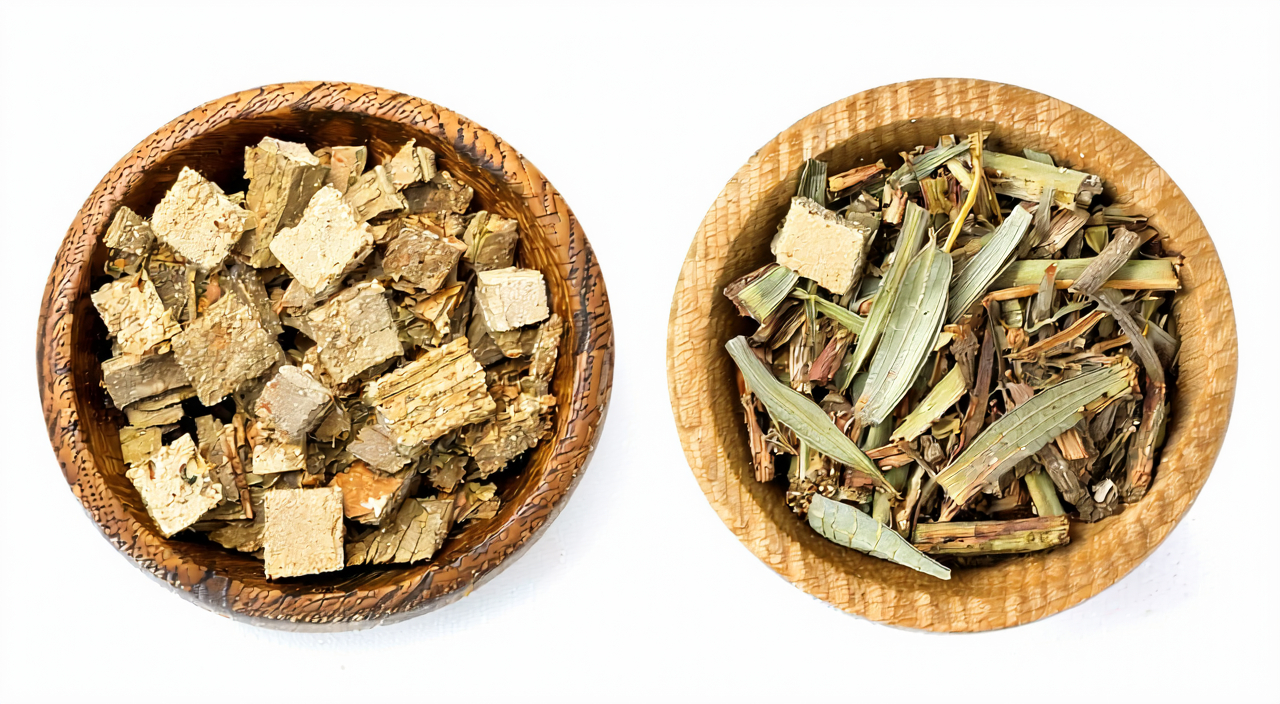
The main medicinal part of motherwort currently used is the dried aerial part harvested before flowering or at the early flowering stage. The aerial parts include the stems, leaves, and a small amount of flowers and young infructescences. After harvesting, impurities are removed, and the material is cut into sections and dried. The dried crude herb is yellow-green or gray-green, with square stems that are mostly hollow in cross-section, leaves that are mostly wrinkled and broken, and occasionally pale purple flowers or small fruits.
In practice, fresh motherwort is also used. The fresh product refers to the aerial parts used directly after harvesting without drying. Traditionally, the fresh product is considered to have stronger heat-clearing and blood-activating effects, but it is difficult to store and transport, so dried motherwort is more common in everyday formulas.
It should be noted that motherwort seeds, known as Chongweizi, are sometimes also used medicinally, but their actions differ from those of the aerial parts. They are often used for patterns involving wind-heat in the liver meridian or red eyes. They should not be considered equivalent to motherwort. In this article, motherwort mainly refers to the dried aerial parts.
How Does Traditional Chinese Medicine Understand Motherwort?
Traditional Chinese medicine does not regard motherwort simply as a gynecological herb. Instead, it is understood through its nature, taste, meridian tropism, and functional classification. Motherwort is acrid and bitter in taste and slightly cold in nature, and it enters the liver, pericardium, and bladder meridians. Classical materia medica texts generally discuss it under categories such as activating blood and regulating menstruation, promoting urination and reducing swelling, and clearing heat and resolving toxins.
For activating blood and regulating menstruation, motherwort is especially effective at promoting blood circulation. It is often used for delayed menstruation, poor menstrual flow, and dark-purple menstrual blood with clots caused by blood stasis. Traditional thinking holds that because it both activates blood and promotes urination, it can also address accompanying symptoms such as menstrual edema and lower abdominal distension. However, this type of use requires a clear pattern diagnosis and is not suitable for problems caused by qi and blood deficiency.
For promoting urination and reducing swelling, motherwort can be used for inhibited urination and edema caused by internal retention of water-dampness. Because it is slightly cold and can clear and drain, and because it is also related to the blood aspect, it is sometimes used for blood in the urine and bloody strangury. However, these uses must be based on the individual’s constitution, and motherwort is not suitable for all types of edema.
Ancient texts also mention external use of motherwort, such as for sores, swellings, toxic swellings, and itchy skin eruptions, drawing on its ability to clear heat, resolve toxins, activate blood, and reduce swelling. However, external use should also be based on distinguishing cold and heat patterns and should not be applied indiscriminately.
Overall, the traditional use of motherwort has always centered on the two themes of blood and water. It activates blood without breaking blood and promotes urination without damaging yin. This is the basic summary of its functions in Chinese medicine, but clinical use still requires pattern differentiation as the key principle.
How Does Motherwort Differ from Bugleweed and Selfheal?
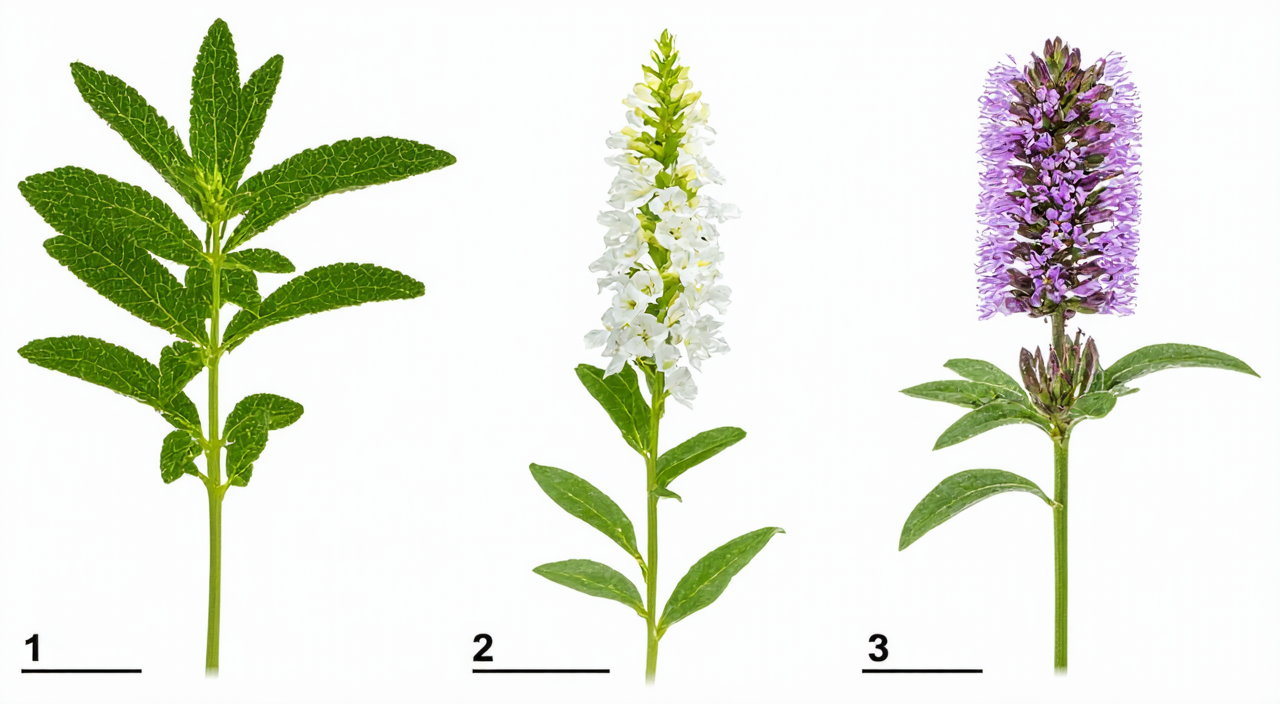
Motherwort, bugleweed, and selfheal are all Lamiaceae plants. They share some similarities in appearance and can be easily confused, but clear differences can be found by observing the leaves, stems, and inflorescences.
The main differences between motherwort and bugleweed lie in the leaves and inflorescences. Bugleweed leaves are generally lanceolate or linear-lanceolate, with serrate margins but without palmate division, whereas motherwort leaves are mostly palmately or pinnately deeply divided. Bugleweed verticillasters are arranged into terminal spikes or panicles with white flowers, while motherwort has pale purple-red flowers and axillary inflorescences that do not form large terminal clusters. In addition, bugleweed stems are also square, but its leaves are not divided, which is a good distinguishing feature.
The differences between motherwort and selfheal are even more obvious. Selfheal has dense terminal spikes with purple-red or dark purple flowers. The cylindrical inflorescence looks like a small club. By contrast, motherwort has axillary verticillasters arranged in rings in the upper leaf axils along the stem. Selfheal leaves are mostly ovate-oblong or lanceolate and are not palmately divided. After flowering, the entire selfheal inflorescence becomes withered and brownish-yellow, which is also very different from motherwort.
By mastering these key features, one can generally distinguish motherwort from the other two herbs even in dried crude herbs or decoction pieces.
Which Formulas Contain Motherwort?
Formulas and Chinese patent medicines containing motherwort are relatively common in traditional gynecological care. A few representative examples are listed here as references for understanding its combination strategies, rather than as direct recommendations.
Yimucao Gao (Motherwort Paste): This is a thick extract preparation made by decocting and concentrating motherwort alone, then adding honey or brown sugar. The paste has a thick texture and has traditionally been used for postpartum blood stasis, prolonged lochia, or poor menstrual flow in people with a clear tendency toward blood stasis. The dosage and timing of the paste should be determined according to individual circumstances, and it should especially not be self-administered after childbirth.
Yimu Wan (Motherwort Pill): Yimu Wan usually combines motherwort with Chinese angelica (Danggui), Sichuan lovage root (Chuanxiong), and costus root (Muxiang), placing greater emphasis on regulating qi and activating blood. Compared with motherwort paste used alone, it strengthens the actions of regulating qi and harmonizing blood. It may be relevant for menstrual abdominal pain and premenstrual breast distension caused by blood stasis with qi stagnation.
Bazhen Yimu Wan (Eight-Treasure Motherwort Pill): This formula is based on Siwu Tang combined with Sijunzi Tang, which together form Bazhen Tang, with motherwort added. It addresses both qi-blood nourishment and blood-activating menstruation regulation. It is suitable for qi and blood deficiency accompanied by mild blood stasis, such as delayed periods, scant menstrual flow, sallow complexion, and fatigue. This type of formula is intended for mixed deficiency and stasis, and should not be used in people with excess patterns or obvious bleeding tendencies.
Xinshenghua Granules: Xinshenghua Granules are based on Shenghua Tang with motherwort and other herbs added, and they focus on promoting lochia discharge and uterine recovery after childbirth. Shenghua Tang itself is traditionally used for postpartum cold congealing and blood stasis. The addition of motherwort enhances its blood-activating action. However, because the postpartum state is special, these products should not be self-administered when lochia is abnormal or bleeding is heavy; a professional assessment is necessary.
The selection of the above formulas always depends on comprehensive differentiation of constitution, symptoms, cold, heat, deficiency, and excess. The combination and dosage of motherwort vary considerably according to different stages and patterns. It is advisable to make decisions based on product instructions, individual circumstances, and professional advice.
What Precautions Should Be Taken When Using Motherwort?
Although motherwort is widely used in traditional practice, there are also some clear cautions and contraindications to understand.
The first is pregnancy contraindication. Motherwort can stimulate the uterus and promote contractions, so it is generally contraindicated during pregnancy. Whether used alone or in compound preparations containing motherwort, it should be avoided to reduce the risk of miscarriage or preterm labor. If menstrual cycles are irregular while trying to conceive, pregnancy should be ruled out before considering its use.
Second is the situation of heavy menstrual bleeding or bleeding tendency. Motherwort has a relatively strong blood-activating effect. For people who already have heavy menstrual flow, prolonged periods, or irregular bleeding, it may worsen bleeding. People with bleeding disorders or those taking anticoagulant medications should decide whether to use it only after evaluation by a physician.
Caution is needed when kidney function is markedly abnormal. Motherwort has been associated with kidney injury in some reports. Although most cases are related to excessively high doses or long-term unreasonable use, people with serious kidney disease or reduced kidney function are generally advised not to use it on their own and should follow professional medical advice.
Self-use after childbirth also carries risks. Some families self-administer motherwort paste or similar products after delivery to help expel lochia, but the amount, color, and smell of lochia, as well as uterine recovery, vary from person to person. If there is retained tissue in the uterine cavity, infection, or abnormal coagulation, blind use may delay necessary treatment. Therefore, any medication after childbirth should preferably be used under the guidance of a physician or qualified professional.
In addition, if persistent menstrual irregularities, severe dysmenorrhea, unexplained lower abdominal heaviness or pain, or heavy bleeding occur, one should not rely solely on motherwort products for management. Instead, prompt medical evaluation is needed to identify the cause.
Summary
Motherwort is a traditional medicinal herb with relatively distinctive identification features. It is used in the form of the dried aerial parts and is known for activating blood and regulating menstruation, as well as promoting urination and reducing swelling. However, its nature is slightly cold and it tends to act on the blood aspect, so it must be used according to individual constitution and specific circumstances. Safety requires special attention during pregnancy, in cases of heavy menstrual bleeding, in abnormal kidney function, and in the special postpartum period. Any formula or Chinese patent medicine containing motherwort is only one possible direction for supportive care and cannot replace necessary clinical evaluation and standard treatment.