
What Is Chuan Niuxi? Medicinal Parts, Identification, and Common Formulas
When it comes to niuxi (ox knee), many people interested in Chinese medicine may think of activating blood and improving joint mobility. However, in herbal medicine there is actually a distinction between Chuan Niuxi and Huai Niuxi. Many people ask what Chuan Niuxi is, what it looks like, exactly which medicinal part is used, and how it differs from the more commonly seen Huai Niuxi. This article starts with these questions and systematically explains the identification of Chuan Niuxi, its understanding in traditional Chinese medicine, common formulas, and important precautions.
What Does Chuan Niuxi Look Like? How Is It Identified?
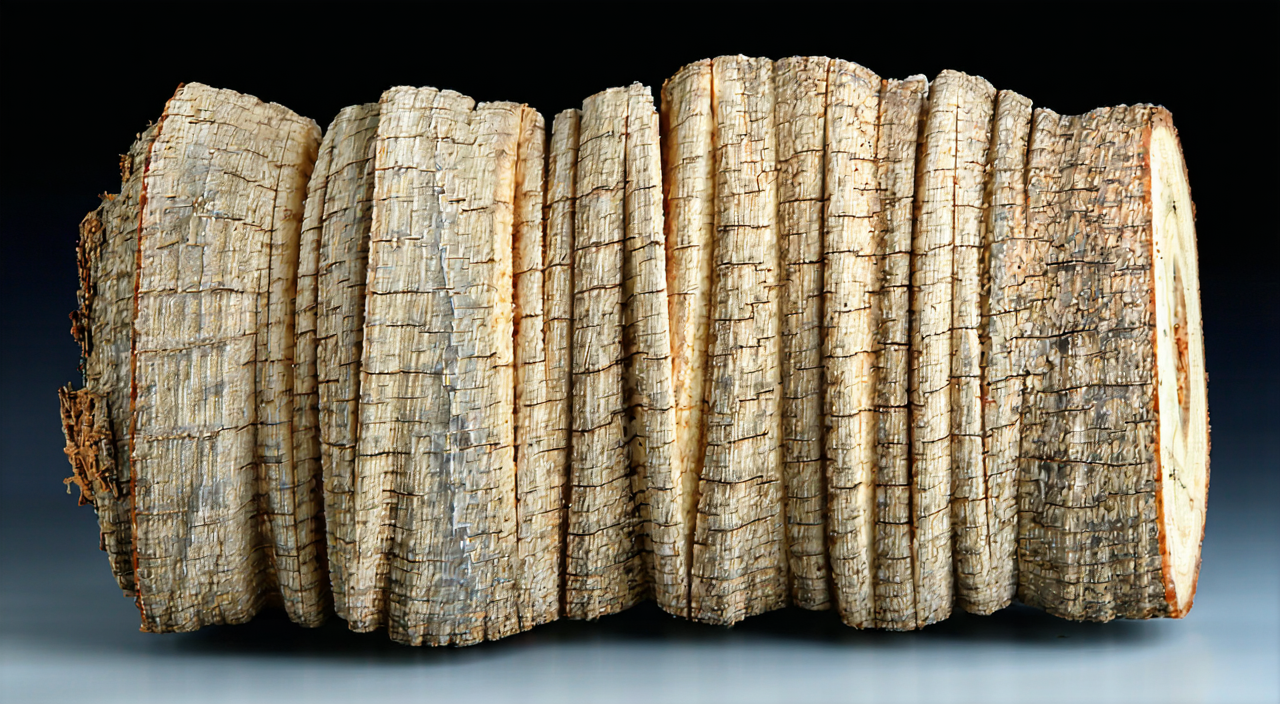
Typical processed Chuan Niuxi pieces are mostly long cylindrical root segments, often slightly twisted, generally 30–60 cm long and about 0.5–3 cm in diameter. The surface is usually yellowish-brown, grayish-brown, or dark brown, with visible twisted longitudinal wrinkles, raised lenticel-like scars, and marks left by branch roots after they have fallen off. The texture is tough and not easy to break. The cut surface shows a light brown or yellowish-white xylem, with vascular bundles arranged in several concentric rings, which is an important identifying feature of Chuan Niuxi.
In addition, compared with some root and rhizome herbs of similar appearance, Chuan Niuxi has relatively clear concentric rings on the cut surface and no obvious powdery texture. It has a slight, characteristic odor and a slightly sweet taste followed by a mildly bitter aftertaste. Mastering these points can help with a preliminary judgment of whether a herb sample is Chuan Niuxi.
What Is the Medicinal Part of Chuan Niuxi?
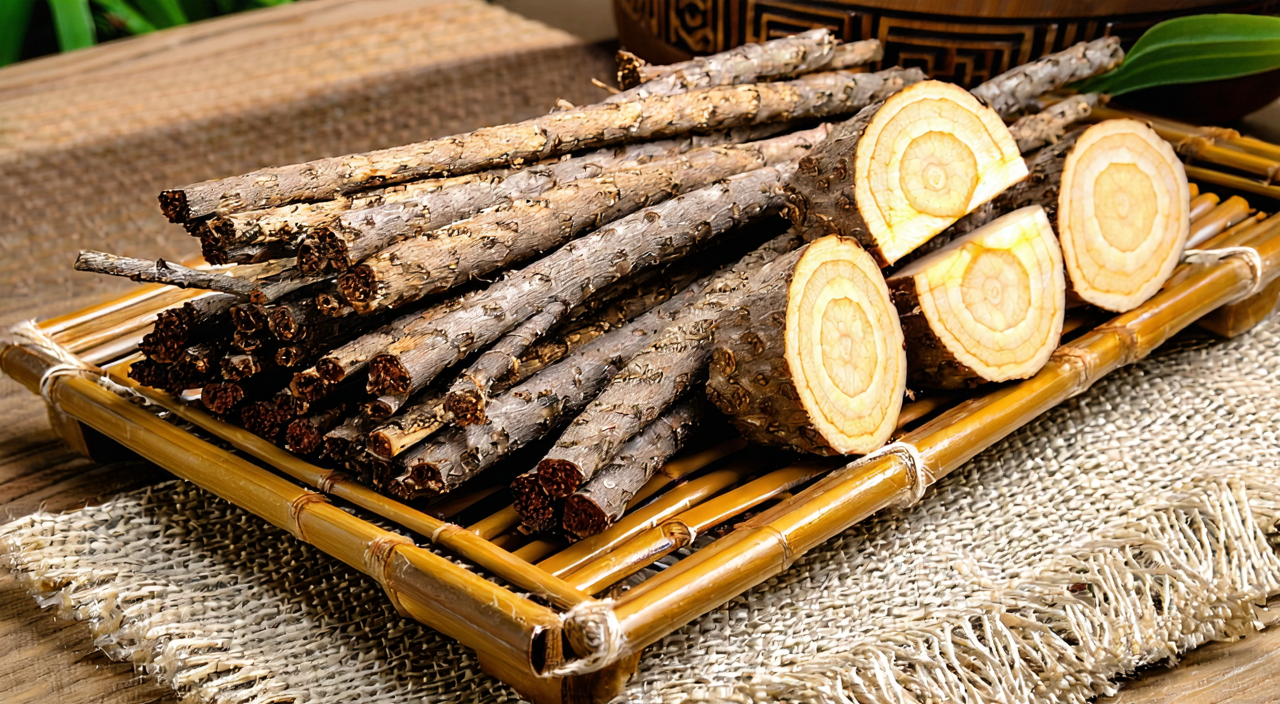
The medicinal part of Chuan Niuxi is its dried root. The plant source is the root of Cyathula officinalis Kuan, a plant in the amaranth family (Amaranthaceae). It is generally harvested in autumn and winter. After the roots are dug up, the root crowns, fibrous roots, and attached sediment are removed, and then the roots are sun-dried or dried at low temperature. Sometimes they are cut into thick slices while fresh and then dried for later use.
In prepared herbal forms, both uncut long cylindrical whole roots and transversely or obliquely cut thick slices are considered the medicinal part of Chuan Niuxi. Harvesting time and processing methods affect the appearance and texture of the herb, and they are also among the factors considered when evaluating quality in later use.
How Does Traditional Chinese Medicine Understand Chuan Niuxi?
Within the theoretical framework of traditional Chinese medicine, Chuan Niuxi is neutral in nature, sweet and slightly bitter in flavor, and enters the liver and kidney meridians. Its main functions are summarized as removing blood stasis and promoting menstruation, easing joint movement, promoting urination and relieving strangury, and guiding blood downward. These aspects correspond to different types of body discomfort.
For example, in blood stasis-related conditions such as amenorrhea, dysmenorrhea, and prolonged postpartum lochia, Chuan Niuxi is often regarded as an option for guiding stagnant blood downward. For traumatic injuries, wind-damp painful obstruction, and limited joint flexion and extension, it may act by freeing the vessels and joints. For edema and difficult urination, Chuan Niuxi has a certain diuretic and strangury-relieving effect, and traditionally it is added to corresponding formulas. In conditions such as headache, dizziness, toothache, and nosebleed caused by deficiency fire or liver yang rising, Chuan Niuxi is often used to guide blood downward, directing qi and blood from the upper body downward as part of an overall regulating strategy.
Of course, these traditional understandings are empirical summaries formed under the premise of syndrome differentiation and treatment; they do not mean that Chuan Niuxi can simply be used by matching a disease name.
Modern Research on Chuan Niuxi
Modern research has analyzed some components of Chuan Niuxi and found that it contains phytosterols, polysaccharides, ecdysterone, and other substances. Experimental studies have shown trends toward anti-inflammatory effects, improved microcirculation, and diuresis. These findings can provide some perspectives for understanding the traditional functions of Chuan Niuxi, but they are still mainly at the experimental stage and cannot be directly equated with clinical efficacy.
At the same time, it should be noted that research results for different extraction parts of Chuan Niuxi are not entirely consistent. Therefore, when using it as part of daily health regulation, it is still necessary to rely on traditional usage and professional judgment.
What Is the Difference Between Chuan Niuxi and Huai Niuxi?
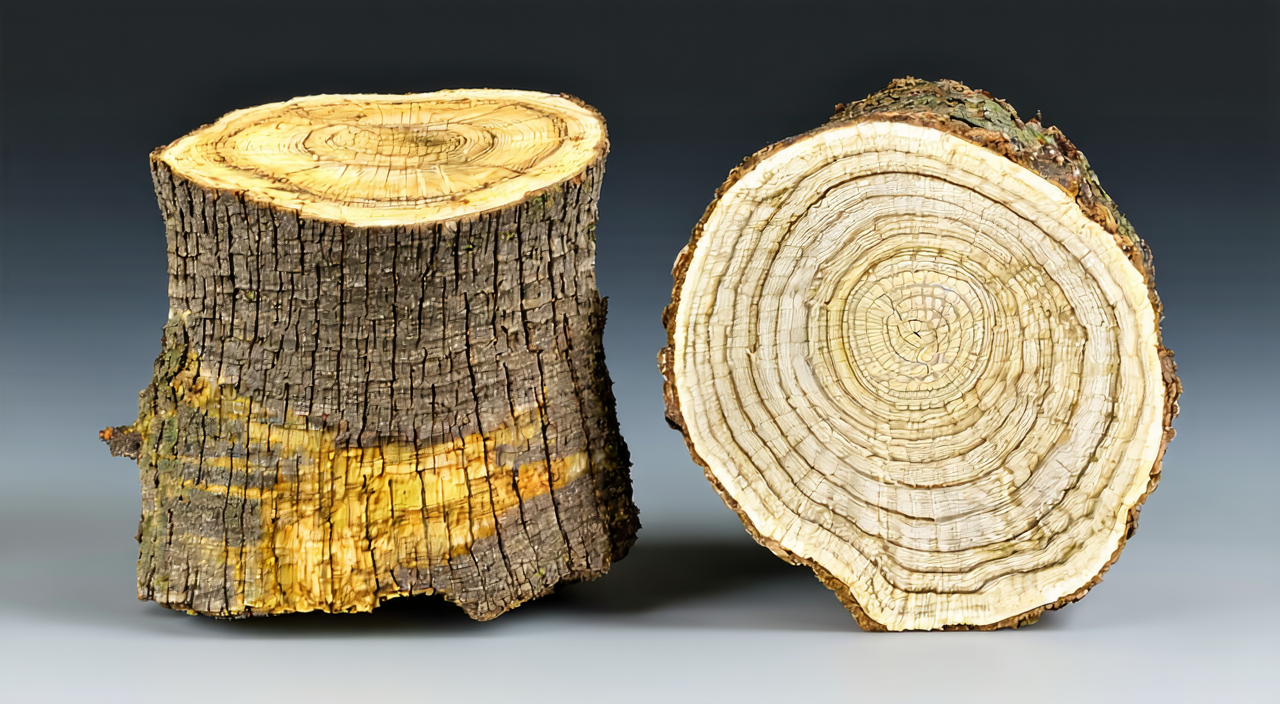
Huai Niuxi comes from the dried root of Achyranthes bidentata Bl., a plant in the same family. Although both belong to the amaranth family, their plant sources are different, and there are differences in appearance and traditional application emphasis.
In appearance, Huai Niuxi is generally more slender, usually about 0.5–1 cm in diameter, with a grayish-yellow or light brown surface and relatively fine, dense longitudinal wrinkles. The vascular bundle points on the cut surface are not obvious, and it lacks the several concentric rings seen in Chuan Niuxi. Chuan Niuxi, by contrast, is thicker and stouter, with a diameter up to 3 cm, a darker surface, obvious longitudinal wrinkles, and concentric ring-like vascular bundles.
In terms of traditional functions, Huai Niuxi leans more toward nourishing the liver and kidneys and strengthening the sinews and bones, and is often used for soreness and weakness of the lower back and knees and lack of strength in the sinews and bones. Chuan Niuxi leans more toward removing blood stasis and promoting menstruation, easing joint movement, and guiding blood downward, and is more often used for blood stasis amenorrhea, joint impediment pain, and liver yang rising. There is a saying, “Huai Niuxi nourishes, Chuan Niuxi moves,” which, although not absolute, roughly reflects the traditional differences between the two. Therefore, when choosing formulas or products containing niuxi, knowing whether Chuan Niuxi or Huai Niuxi is used can provide useful reference for judging the intended regulatory direction.
Which Formulas Commonly Use Chuan Niuxi?
In traditional Chinese medicine formulas, some classic combinations clearly use Chuan Niuxi, taking advantage of its characteristics of guiding blood downward and invigorating blood to promote menstruation. Here are a few common directions.
Tianma Gouteng Yin is a formula used to calm internal wind, clear heat, and invigorate blood. It uses Chuan Niuxi to guide blood downward, combined with Tianma (Gastrodia rhizome), Gouteng (Uncaria stem), Shijueming (abalone shell), and others, to address headaches, dizziness, insomnia, and other problems caused by ascendant liver yang and wind yang disturbing the upper body. The formula as a whole mainly calms the liver and extinguishes wind, and Chuan Niuxi plays the role of guiding qi and blood downward.
Zhengan Xifeng Tang similarly embodies the idea of guiding blood downward. Its original formula mostly uses Huai Niuxi, but in clinical practice Chuan Niuxi may be substituted depending on the situation, especially when signs of blood stasis are relatively pronounced, to strengthen the blood-invigorating and vessel-freeing effects. However, whether to use Chuan Niuxi and how to modify the formula must be determined by a professional based on the specific presentation.
Chuan Niuxi Tang is used in some gynecological classics as a blood-invigorating and menstruation-promoting formula, mainly for menstrual irregularities, amenorrhea, and abdominal pain caused by blood stasis. It is often combined with Danggui (Chinese angelica root), Chuanxiong (Ligusticum rhizome), Taoren (peach kernel), Honghua (safflower), and others. This formula directly features Chuan Niuxi as the main herb, highlighting its characteristics of invigorating blood and guiding downward.
In addition, among blood-invigorating and menstruation-promoting formulas, when modified, Taohong Siwu Tang may sometimes include Chuan Niuxi to enhance the menstruation-promoting effect, for dysmenorrhea or amenorrhea with relatively obvious stasis. It should be emphasized that these formulas each have their own scope of application and contraindications. Whether they are suitable for an individual must be comprehensively considered based on constitution, symptoms, and product instructions, and the advice of a professional should be sought.
What Should Be Noted When Using Chuan Niuxi?
Although Chuan Niuxi is a common herb, there are clear precautions for its use. It should be avoided during pregnancy because its actions of guiding blood downward and invigorating blood may affect pregnancy. For heavy menstrual bleeding or abnormal uterine bleeding not caused by blood stasis, it is generally not recommended, to avoid aggravating bleeding.
If there is a bleeding tendency, if you are taking anticoagulant or antiplatelet drugs, or if low blood pressure is present, extra caution is needed. The blood-guiding-downward action of Chuan Niuxi may have some effect on blood pressure, so people with low blood pressure should consult a doctor or pharmacist before use.
In addition, if symptoms such as long-term, recurrent, or clearly worsening headache and dizziness, joint swelling and pain, abnormal bleeding, black stools, or unexplained weight loss are present, you should not rely on Chuan Niuxi or formulas containing Chuan Niuxi on your own. Instead, seek medical diagnosis as early as possible to avoid delaying the condition.
Summary
Chuan Niuxi is an herb characterized mainly by removing blood stasis to promote menstruation and guiding blood downward. For identification, the main points are the thick, long cylindrical root, the yellowish-brown or grayish-brown surface, and the obvious concentric rings on the cut surface. It differs from Huai Niuxi in source, appearance, and functional emphasis, and there is a traditional rough distinction that “Huai Niuxi nourishes, Chuan Niuxi moves.” The formulas and usages mentioned above are only examples of traditional application; actual choice should still be based on individual circumstances and professional advice. This article is for informational reference only and cannot replace professional diagnosis or treatment advice.