
What Is Spatholobus Stem? Medicinal Parts, Identification, and Common Formulas
When it comes to spatholobus stem, many people first think of the bright red liquid that oozes from it when cut, resembling chicken blood. This is actually the reddish-brown resinous secretion seen on the cut surface of the Spatholobus suberectus vine stem, and it is also the reason for its name. As a vine-stem medicinal widely used in clinical Chinese medicine, spatholobus stem is often mentioned for regulating menstruation, relaxing the sinews, and nourishing blood. For overseas Chinese readers who want to understand it, figuring out what it looks like, which part is used, and how it differs from herbs with similar appearances or names is the first step to avoiding confusion.
What Does Spatholobus Stem Look Like? How to Identify It?
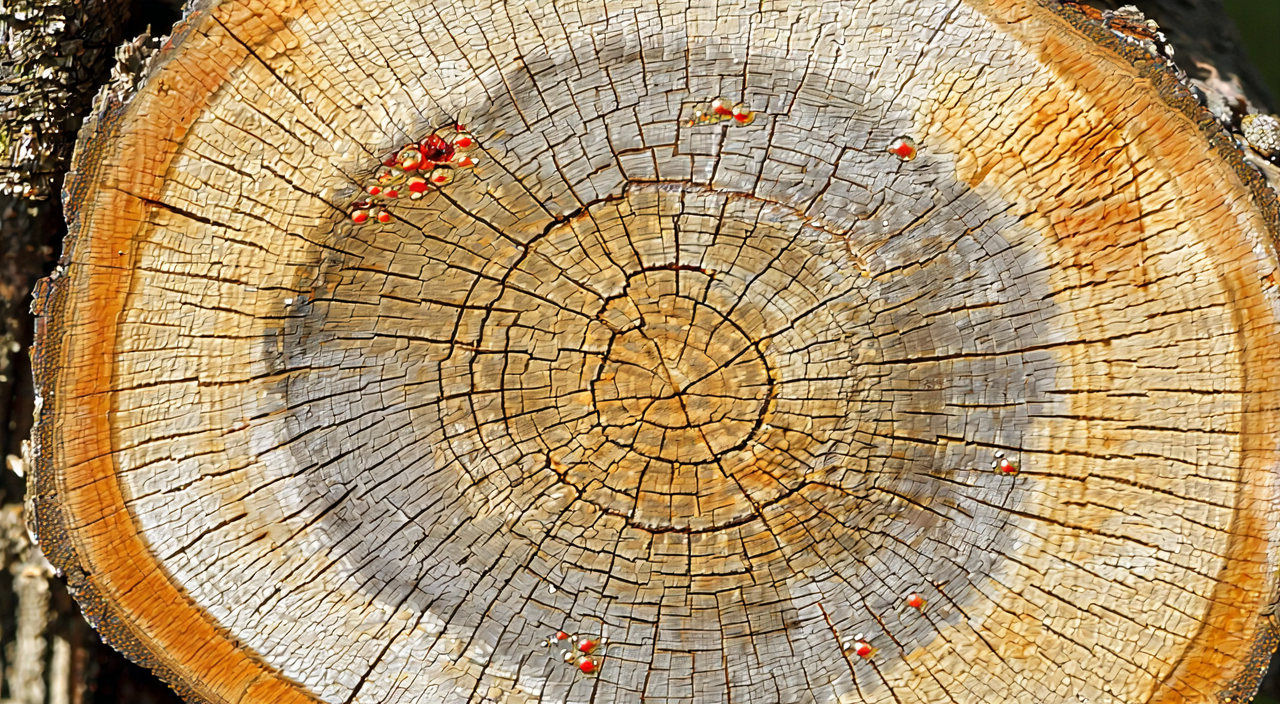
Commercially available spatholobus stem decoction pieces are mostly oblique or transverse thick slices, elliptical or irregularly flattened-round in shape. The slice thickness varies slightly between batches, but the overall appearance is generally stable.
When identifying it, you can look at three key points from the outside inward. The outermost layer is a grayish-brown or gray-brown outer bark, and sometimes residual grayish-white or dark green lichen patches can be seen. After cutting, the bark is very narrow, accounting for only a fraction of the radius, while the wood is quite broad, predominantly reddish-brown or light brown, sometimes tending toward yellowish-brown. The most distinctive detail is the obvious eccentric rings visible on the cut surface; these rings are not centered but shift to one side, forming several irregular concentric rings. Between the rings are densely packed many fine pores the size of pinholes, which become clearer under magnification.
Another characteristic feature is that reddish-brown or dark brown resinous secretions are often present on the cut surface. These secretions are more visible in fresh slices or when damp, while in the dry state they may settle as dark spots or streaks. During transport or storage, the cut surface of some decoction pieces may also show a dark red color resembling chicken blood because of resin exudation, which is an important reference for distinguishing authenticity.
What Is the Medicinal Part of Spatholobus Stem?
The medicinal part of spatholobus stem is clearly defined: it uses the dried vine stem of the legume plant Spatholobus suberectus. Harvesting is seasonal, traditionally mostly carried out in autumn and winter, when nutrient accumulation in the vine stem is relatively sufficient. After the vine stem is cut, thin branches and leaves are removed, and it is sliced into thick pieces while fresh or after slight remoistening, then dried in the sun or at low temperature.
It should be noted that, among regional customary varieties, the vine stems of other Spatholobus species are sometimes mixed in, but the authentic origin recorded in the Chinese Pharmacopoeia is Spatholobus suberectus. Therefore, whether for formula use or general understanding, confirming the exact source is very important. If the cut surface texture of the spatholobus stem you encounter is unclear, the eccentric rings are not obvious, or there is almost no reddish-brown secretion, it is necessary to carefully distinguish its species.
How Does Chinese Medicine Understand Spatholobus Stem?
In traditional Chinese medicine theory, the nature, flavor, and meridian entry of spatholobus stem are often summarized as warm in nature, bitter and sweet in flavor, and entering the liver and kidney meridians. In terms of functional direction, it is a typical “blood-aspect” medicinal with both blood-moving and blood-nourishing properties. Many classical texts summarize its actions as moving blood and nourishing blood, regulating menstruation and relieving pain, and relaxing the sinews and activating the collaterals.
Based on this understanding, spatholobus stem is commonly used to regulate certain problems caused by blood deficiency or poor blood circulation. For example, irregular menstrual cycles, obstructed menstrual flow, and dull abdominal pain during periods have traditionally been treated with it as one option for regulating qi and blood. It is also often used for joint soreness, limb numbness, and difficulty bending or extending the hands and feet, especially in cases of blood deficiency accompanied by wind-damp impediment. In addition, for some cases of sallow complexion or dry skin caused by blood deficiency, spatholobus stem may be included in the formula.
However, it should be emphasized that these are general overviews of traditional usage directions. Each person’s constitution and symptom combination are different, so suitability should be assessed based on individual circumstances and professional judgment. It is not advisable to use it on your own based solely on one or two symptoms.
Modern Research Focus on Spatholobus Stem
Modern research interest in spatholobus stem mainly focuses on its constituents and possible biological activities. Substances isolated from spatholobus stem include flavonoids, catechins, phenolic acids, and some terpenoids. Some experimental studies have observed that spatholobus stem extracts have certain effects on hemorheological parameters in vitro and may also have some regulatory effects on red bone marrow hematopoietic function, with additional reports on anti-inflammatory and antioxidant activities. However, most of these findings are based on experimental models and are still far from being directly translated into definitive conclusions for daily regulation. Therefore, this information is better used as background knowledge for further understanding rather than as a basis for guiding specific use.
What Are the Differences Between Spatholobus Stem, Fevervine, and Sargentodoxa Stem?
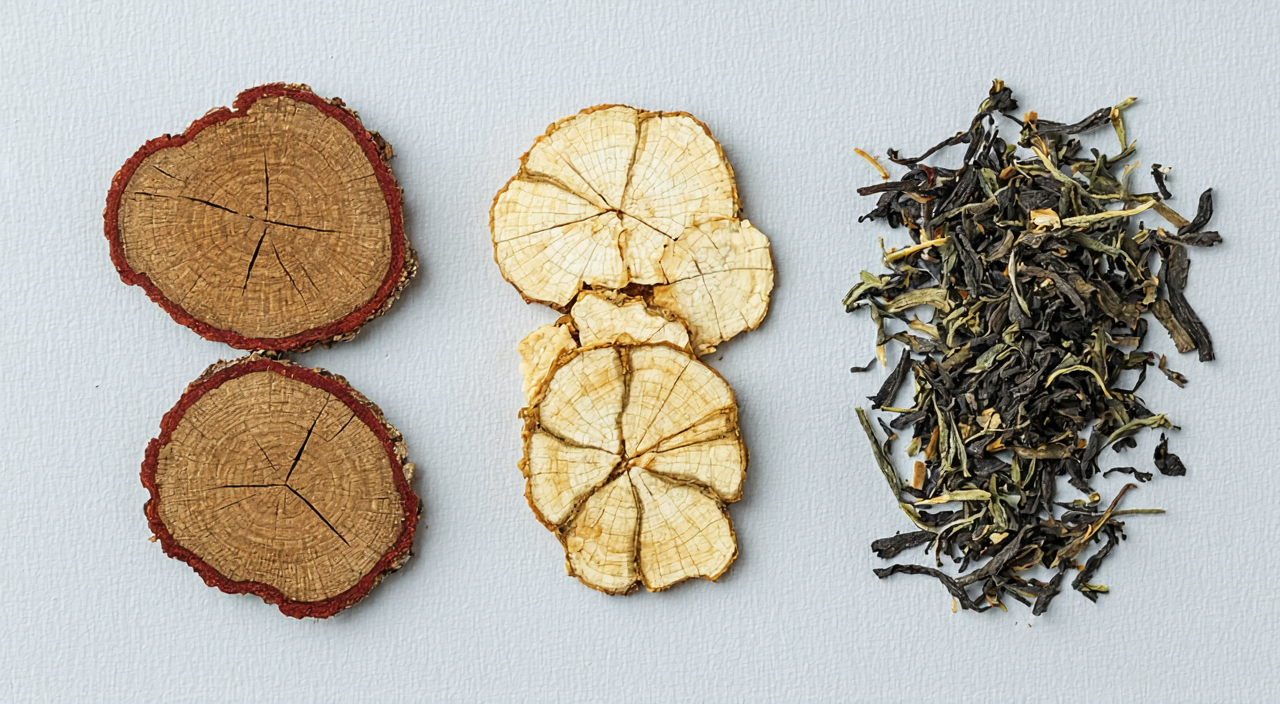
These three medicinal herbs are often confused because their names all contain the character “teng” (vine) and some pronunciations are similar. In fact, their sources, appearances, and traditional uses are very different.
Fevervine is the dried aerial part of the madder family plant Paederia foetida, sometimes including the root, and is usually a herbaceous mixture of segments and broken leaves. It has a very distinctive unpleasant odor that becomes more obvious when rubbed, so in some places it is also called “stinking vine.” Traditionally, fevervine tends to promote digestion and strengthen the stomach, dispel wind and remove dampness, and is completely different from spatholobus stem.
Sargentodoxa stem is the dried vine stem of the Lardizabalaceae plant Sargentodoxa cuneata. Although it is also a vine-stem medicinal like spatholobus stem, its cut surface features are completely different. The transverse cut surface of sargentodoxa stem has obvious radial striations, with reddish-brown bark and yellowish-white wood. Multiple radiating yellowish-white stripes are embedded within the reddish-brown bark, forming a pattern resembling a wheel or chrysanthemum center. Traditionally, sargentodoxa stem tends to clear heat and resolve toxins, invigorate blood and relieve pain, and is often used for intestinal abscess with abdominal pain, traumatic injuries, and related conditions.
By contrast, the key identifying features of authentic spatholobus stem are eccentric rings, reddish-brown resinous secretions on the cut surface, and broad reddish-brown wood. As long as you focus on these points, you can generally distinguish it quickly from fevervine and sargentodoxa stem.
Which Formulas Use Spatholobus Stem?
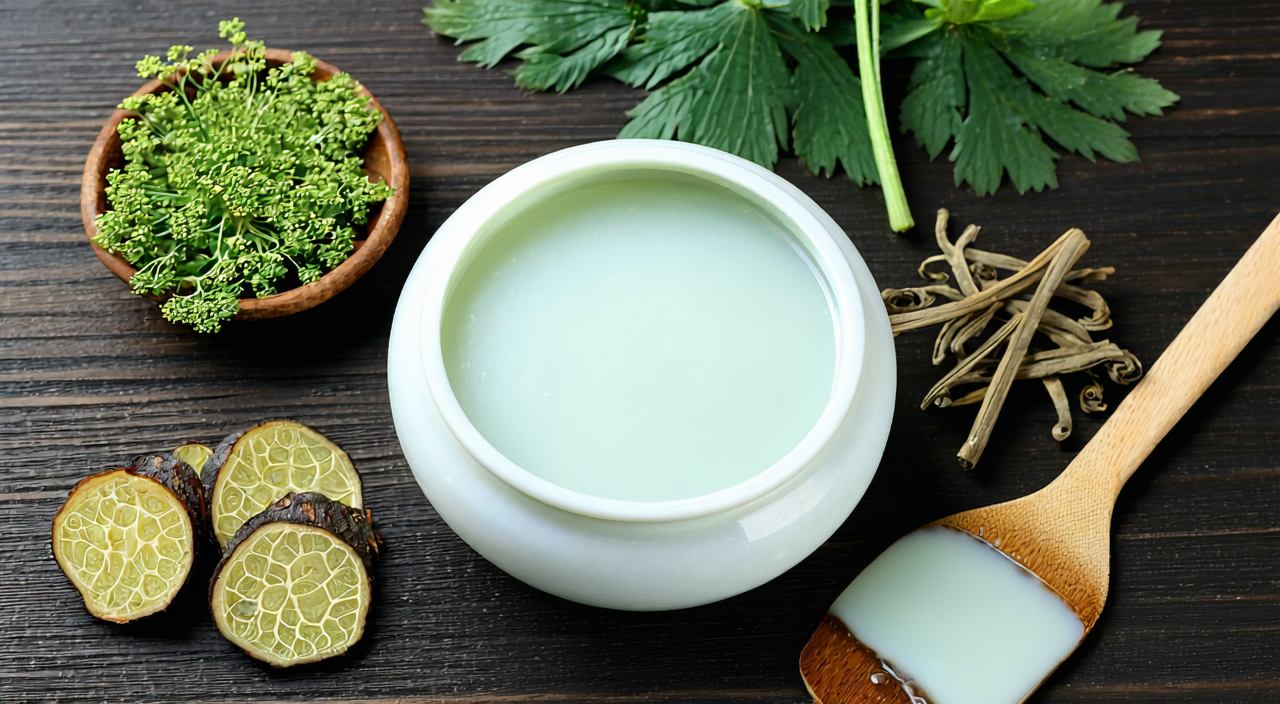
Spatholobus stem appears quite frequently in formulas throughout history, especially as an important ingredient in some blood-nourishing and collateral-unblocking combinations. Understanding these formulas helps clarify its traditional role from the perspective of formula composition.
A representative example is Spatholobus Stem Paste. This is a thick extract preparation made by decocting and concentrating spatholobus stem as the main ingredient. Sometimes spatholobus stem is used alone to make the paste, while at other times other blood-nourishing and blood-activating herbs are added to form a compound spatholobus stem paste. This type of paste formula is often used for blood deficiency, obstructed menstrual flow, and limb numbness. Because it is convenient to take after dissolving in water, it is relatively popular in restorative applications.
Spatholobus stem is also included in the classic Da Huoluo Wan (Great Collateral-Activating Pill). This formula brings together many herbs that dispel wind, unblock the collaterals, invigorate blood, and resolve stasis, and spatholobus stem acts synergistically within it. It is often introduced to those who need long-term recuperation. In addition, some blood-nourishing and collateral-unblocking empirical formulas or patent Chinese medicines may include spatholobus stem according to the specific pathogenesis, often combined with Dang Gui, Chuan Xiong, Bai Shao, Shu Di, Niu Xi, and others.
However, each formula has its specific indications and composition logic, and not all blood-activating or blood-nourishing conditions are suitable. Whether to consider these formulas should still be based on specific constitutional presentations and the deficiency-excess nature of the condition. You should carefully read the product instructions or consult an experienced Chinese medicine practitioner, and avoid choosing a formula solely by its name.
What Precautions Should Be Taken When Using Spatholobus Stem?
Although spatholobus stem is relatively mild in traditional use, there are still some clear precautions to understand in advance.
First, it is generally not recommended during pregnancy. Its blood-activating and collateral-unblocking properties may have adverse effects on sensitive individuals during pregnancy. People with excessive menstrual bleeding without blood stasis should also use it cautiously to avoid aggravating bleeding tendency. Patients taking anticoagulant or antiplatelet drugs should consult a doctor before use to avoid affecting drug efficacy or increasing risks.
Second, there are some vine-stem adulterants on the market that resemble spatholobus stem in appearance, such as slices of certain legume plant stems. They look similar but lack the typical eccentric rings and reddish-brown secretions. Medicinal materials of unclear origin may not only fail to achieve the intended purpose but may also bring unnecessary trouble. Therefore, it is recommended to choose reputable channels and clearly labeled products when purchasing or using it.
A small number of people may experience stomach discomfort or mild digestive disturbance after using spatholobus stem. If this occurs, it is advisable to stop using it and adjust in a timely manner. In short, before incorporating spatholobus stem into daily care, it is safer to make a comprehensive judgment based on individual constitution, current health status, and professional advice.
Summary
Spatholobus stem is a vine-stem medicinal used in traditional Chinese medicine both to move blood and to nourish blood. Its distinctive eccentric rings and reddish-brown resinous secretions are key features that distinguish it from other vine medicinals. Understanding its medicinal part, identification features, and differences from fevervine and sargentodoxa stem can help avoid species confusion. At the same time, before use, one should fully consider factors such as pregnancy and childbirth, bleeding tendency, and anticoagulant medications, and treat it cautiously according to personal circumstances. This article is for cultural and educational reference only and cannot replace professional diagnosis or treatment advice.