
What Is Myrrh? Medicinal Parts, Identification, and Common Formulas
If you have been looking into injury care or traditional formulas, you may have come across myrrh. It often appears together with frankincense, but its appearance and aroma are distinctive. For those who value traditional Chinese medicine health practices, understanding the basic characteristics of myrrh can help in choosing related products more sensibly. This article starts from myrrh’s basic features, medicinal source, TCM understanding, and common formulas to help readers unfamiliar with it form a clearer impression.
What Does Myrrh Look Like? How Is It Identified?
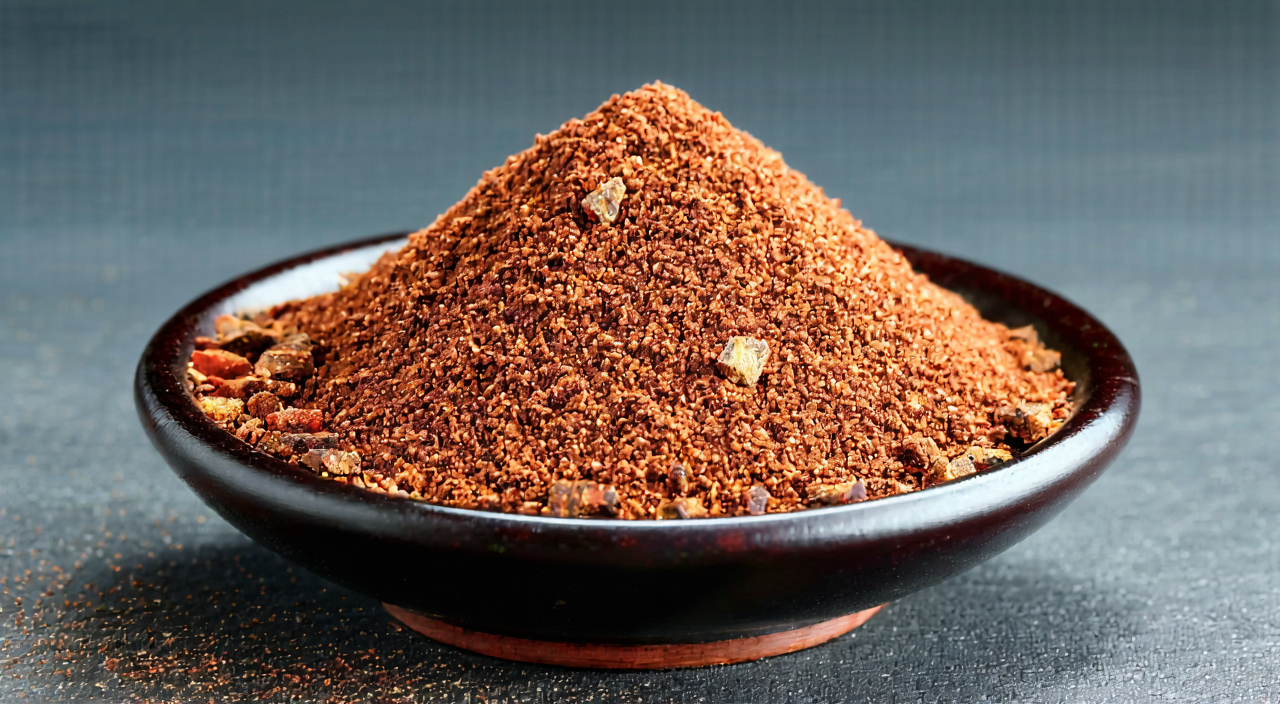
The medicinal appearance of myrrh is usually irregular granules or lumps of varying sizes, generally about 0.5 to 2 cm in diameter, though some may be seen as adhered masses. Natural myrrh is mostly reddish-brown, yellowish-brown, or brownish-brown on the surface, some with uneven texture. The surface often carries a fine layer of powder, which is normal and related to its resinous nature. When identifying it, myrrh can be compared with frankincense: myrrh leans reddish-brown to brown, while frankincense is mostly pale yellow to yellowish-white, which can serve as a preliminary distinction. The texture is brittle and breaks easily; the fractured surface is irregular, with a visibly granular feel and sometimes an oily sheen. When smelled, myrrh has a distinctive and lasting aroma, with a bitter and slightly acrid taste. When chewed, it may feel slightly sticky to the teeth and soften easily. On the market, myrrh is available in different commercial grades, such as natural myrrh and gum myrrh, depending on origin and processing. Gum myrrh mostly appears as irregular lumps with a darker color and relatively stronger stickiness.
What Is the Medicinal Part of Myrrh?
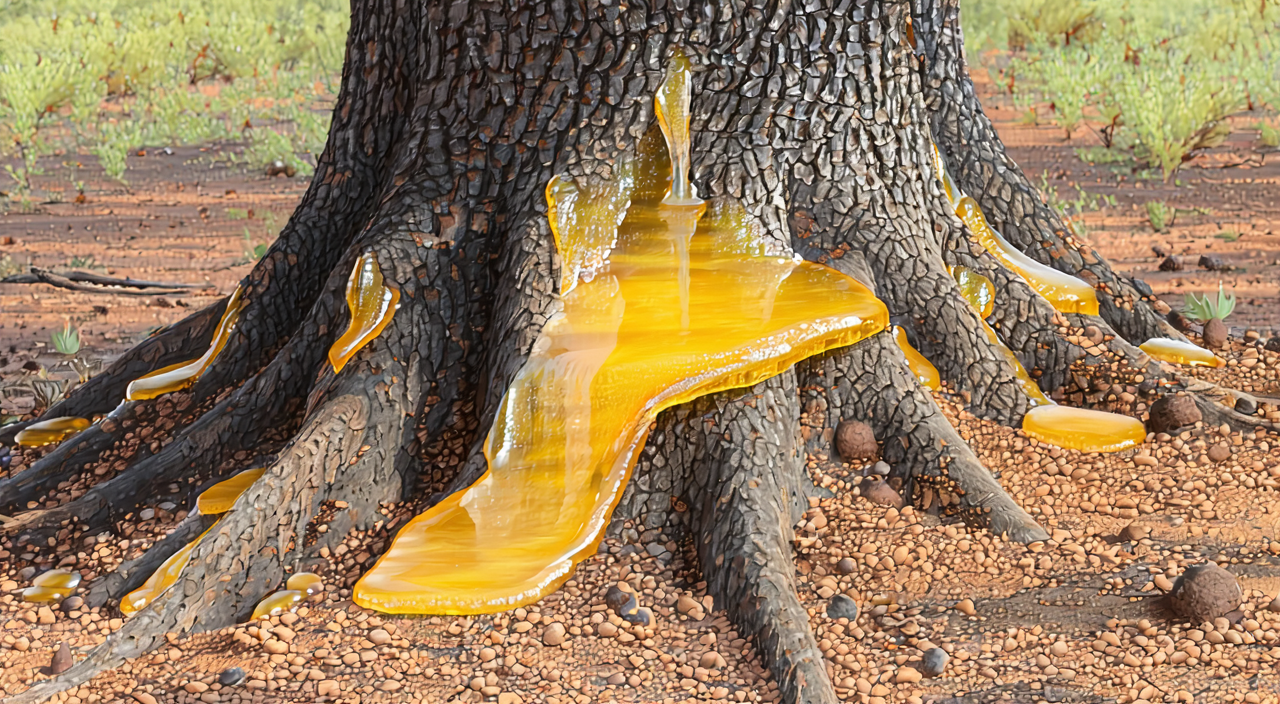
Myrrh is an oleo-gum resin exuded from the bark of plants such as Commiphora myrrha Engl. or Commiphora molmol Engl. in the Burseraceae family. These plants are mainly distributed in arid regions such as northeastern Africa and the Arabian Peninsula, where the hot climate favors resin formation and secretion. When the bark is damaged naturally or artificially, it secretes a yellowish-white viscous liquid that gradually solidifies into reddish-brown or brown resin lumps after contact with air; this is the original form of myrrh. During harvesting, these dried resin lumps are usually collected and impurities such as bark and sand are removed. Because myrrh contains volatile oil, it should be stored tightly sealed in a cool, dry place to prevent sticking and deterioration caused by heat or moisture. In TCM use, besides raw myrrh, there is also vinegar-processed myrrh. Vinegar-processed myrrh is prepared by mixing clean myrrh with vinegar and stir-frying it over gentle heat until the surface slightly melts or darkens. Traditionally, vinegar processing is believed to guide the medicinal action to the liver, enhance its effects of invigorating blood, dispersing stasis, and relieving pain, and reduce irritation to the stomach and intestines. Therefore, in many formulas, especially those taken orally, the vinegar-processed form is often preferred.
How Does TCM Understand Myrrh?
From the perspective of traditional Chinese medicine, myrrh is acrid and bitter in flavor and neutral in nature, entering the heart, liver, and spleen meridians. Its core actions center on “dispersing stasis and relieving pain” and “reducing swelling and generating flesh.” The Bencao Gangmu records that it “disperses blood, reduces swelling, relieves pain, and generates flesh.” Traditionally it has also been used for conditions such as postpartum abdominal pain due to blood stasis, but only under syndrome-based guidance. In terms of dispersing stasis and relieving pain, it is traditionally used for various pains caused by stagnation of qi and blood, such as local bruising and swelling after traumatic injury, stabbing pain in the chest and hypochondrium, or epigastric pain. Such conditions are often considered related to poor blood circulation, and myrrh can help promote the movement of qi and blood, thereby relieving discomfort. For reducing swelling and generating flesh, it is mostly used when sores have broken open and fail to heal for a long time, or when local swelling is obvious, often combined with herbs such as frankincense to help astringe the wound and promote new tissue growth. These interpretations are not aimed at one specific disease, but reflect a regulatory approach based on the overall state of qi and blood. In clinical use, myrrh is rarely used alone; it is often combined with qi-moving and blood-activating herbs such as frankincense, corydalis, and Chinese angelica root to enhance its effects.
What Has Modern Research Found?
Modern research on myrrh’s components mainly focuses on its volatile oil, resin, and gum fractions. The volatile oil contains various terpenoids, such as elemene and eugenol; the resin portion includes compounds such as myrrholic acid and myrrhinic acid. Some experimental studies suggest that myrrh extracts show certain anti-inflammatory, analgesic, and antioxidant potential in vitro and in animal experiments, which corresponds to its traditional use for stasis pain and swelling. Based on these findings, myrrh extracts have been used in some topical patches or mouthwashes, but they still cannot replace standard treatment for related diseases. However, most of these studies are at preliminary stages, and more evidence-based data are needed to fully clarify its mechanisms of action and safety in the human body. Therefore, these modern findings can be used as a reference for understanding myrrh, but should not be equated with clinical efficacy verification.
How Does Myrrh Differ from Frankincense and Dragon’s Blood?
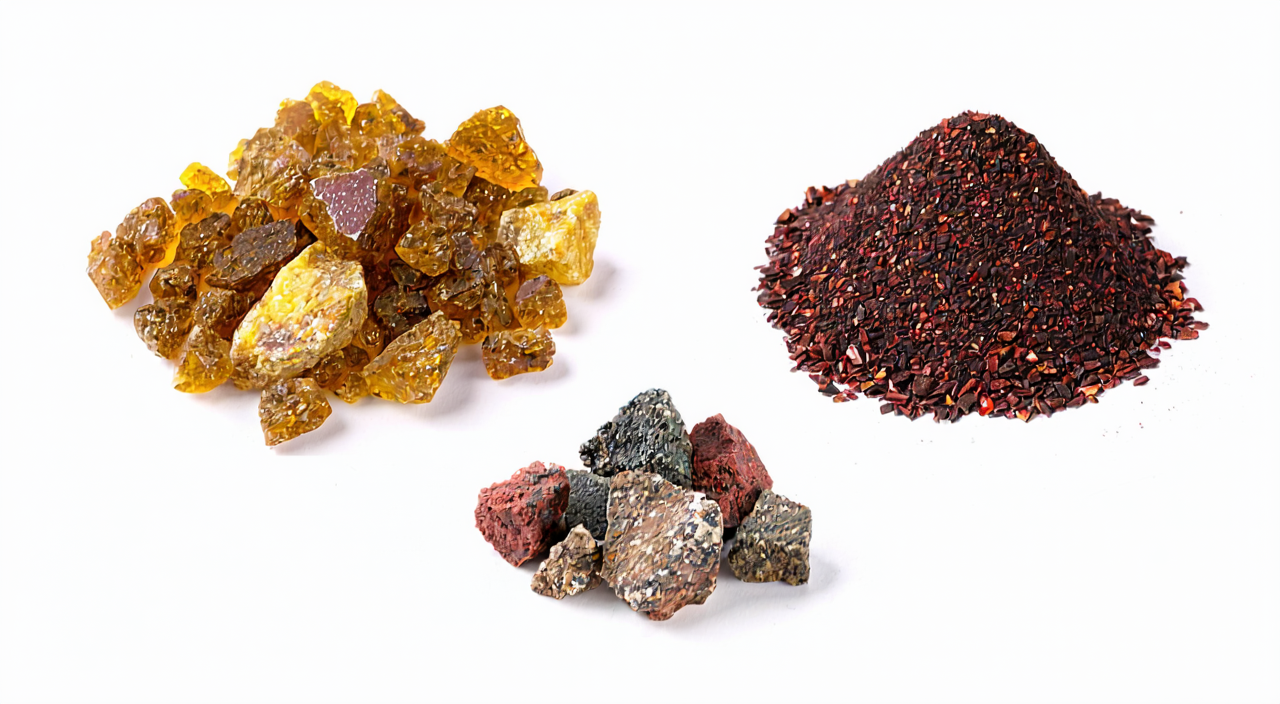
Myrrh, frankincense, and dragon’s blood are all resin-derived medicinal substances, but their sources and characteristics are clearly different. Myrrh comes from plants such as Commiphora myrrha in the Burseraceae family, frankincense comes from plants such as Boswellia carterii in the same family, and dragon’s blood is the resin exuded from the fruit of Daemonorops draco, a palm family plant. For identification, a small amount can be burned: myrrh gives off black smoke and a strong resinous smell when burned; frankincense gives off white smoke with a lighter aroma; and dragon’s blood produces a pungent, irritating smoke. In appearance, myrrh mostly occurs as reddish-brown or yellowish-brown irregular granules; frankincense is mostly pale yellow or yellowish-white, shaped like drops or nipples, brittle, and often has a glassy luster; dragon’s blood is generally dark reddish-brown to blackish-brown, hard and brittle, with a shiny fractured surface. In terms of odor, myrrh has a strong, distinctive aroma; frankincense has a mild, light fragrance; dragon’s blood has almost no aroma, a weak taste, and a gritty feel when chewed. In traditional use, myrrh tends to disperse stasis and relieve pain; frankincense tends to move qi, invigorate blood, and relax sinews; dragon’s blood excels at transforming stasis, stopping bleeding, and astringing sores and generating flesh. Although the three often appear in the same formula, their emphases differ and should be distinguished.
Which Formulas Commonly Use Myrrh?
Myrrh appears in many classical formulas. The following are some common examples. Huoluo Xiaoling Dan comes from the modern physician Zhang Xichun’s Records of Chinese Medicine with Reference to Western Medicine. It contains myrrh, frankincense, Chinese angelica root, and salvia root, and has traditionally been used for limb pain, chest and abdominal pain, and similar conditions caused by qi and blood stasis, as one reference formula for transforming stasis and unblocking collaterals. Qili San originates from the Qing dynasty Liangfang Jibi. It is composed of myrrh, frankincense, dragon’s blood, safflower, catechu, borneol, and musk. It is mainly used externally, traditionally for traumatic injuries, stasis swelling, and bleeding, and may also be taken orally in small amounts. Xianfang Huoming Yin comes from Jiaozhu Furen Liangfang and is often used for early-stage sores, swelling, and toxicity. It contains myrrh, frankincense, honeysuckle flower, and trichosanthes root, and acts to invigorate blood, disperse masses, reduce swelling, and break hardness. Xiao Huoluo Dan is recorded in Taiping Huimin Heji Jufang and contains myrrh, frankincense, Chuanwu, Caowu, and earthworm, among others. It traditionally targets bi pain caused by wind, cold, and dampness lodging in the meridians, such as numbness in the limbs and difficulty bending and extending the joints. It should be noted that these formulas have different properties, and people’s constitutions and syndrome types differ. Whether they are suitable should be determined by a professional based on individual circumstances; do not apply them on your own based only on symptoms.
What Precautions Should Be Taken with Myrrh?
Although myrrh is common, it is not suitable for everyone. First, it should be avoided during pregnancy because myrrh can invigorate blood and disperse stasis, and is traditionally considered to potentially affect pregnancy stability. Second, myrrh can irritate the gastrointestinal tract, so people with weak digestion or who are prone to nausea or diarrhea should use it with caution. It is generally recommended to take it after meals or use vinegar-processed myrrh to reduce discomfort. People with bleeding tendencies, low platelets, or who are taking anticoagulant drugs such as warfarin or aspirin should be cautious, because myrrh may affect blood coagulation and increase bleeding risk. In addition, myrrh essential oil is occasionally used in aromatherapy, but it should be diluted for external use and is not recommended for oral use; pregnant women and children should especially avoid it. If applied directly without dilution or taken by mistake, it may cause skin allergy or toxic reactions, so misuse should be avoided. If persistent pain, unresolved swelling, fever, or a wound that festers and does not heal occurs, seek medical attention promptly rather than relying only on a single herb or formula.
Summary
As a traditional medicinal substance derived from oleo-gum resin, myrrh is easy to recognize by its reddish-brown irregular appearance and distinctive aroma. It is often combined with frankincense and other herbs to improve blood stasis, traumatic swelling, and pain. Understanding its appearance, medicinal source, and differences from frankincense and dragon’s blood can help form a clearer judgment when encountering related formulas. However, the use of myrrh requires full attention to individual differences and potential contraindications. Pregnant women, people with bleeding tendencies, and those with sensitive digestion should be especially cautious. This article is for informational reference only and cannot replace professional diagnosis or treatment advice.