
What Is San Leng? Medicinal Part, Identification, and Common Formulas
In traditional materia medica, many herbs are named directly after their appearance, and “San Leng” is one of them. Many overseas Chinese-speaking users encounter this herb when looking at formulas for invigorating blood and resolving stasis or reducing accumulations, but they may not know exactly what it is, what it looks like, or which part is used medicinally. It is also easily confused with other herbs that look similar or have related actions. This article provides a clear overview of San Leng, covering its identification, medicinal part, traditional Chinese medicine understanding, common formulas, and precautions for use.
What Does San Leng Look Like? How to Identify It
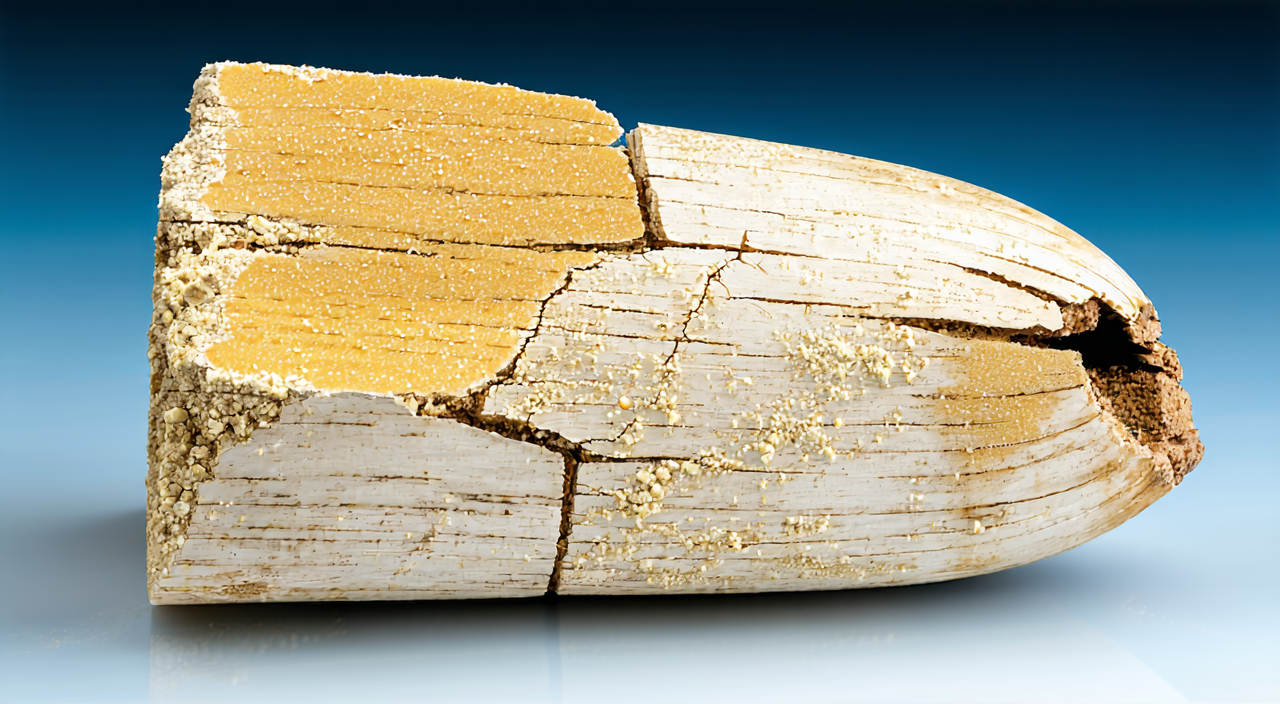
The typical shape of San Leng is conical or slightly flattened ovoid, with a somewhat thicker upper end and a gradually tapering lower end; the overall shape is irregular. The surface color is mostly yellowish-white to grayish-yellow, with fairly obvious knife-cut marks. This is because during processing at the place of origin, the outer skin and fine rootlets are scraped away, leaving a somewhat rough cut surface.
The texture is firm and heavy, giving a noticeable sense of weight in the hand, and it does not break easily. If forcefully broken, the fractured surface shows a starchy character, appearing grayish-white or yellowish-white, fine and without obvious fibers. The odor is relatively mild, and the taste is slightly bitter, with some numbing sensation in the tongue after prolonged chewing. These characteristics can help users initially distinguish it from Ezhu, which has a similar appearance.
When purchasing or learning about it, pay attention to whether the whole tuber is plump and straight, and whether the knife-cut marks appear natural. According to traditional experience, San Leng of better quality is generally uniform in size, heavy and firm in texture, and highly starchy on the fractured surface.
What Is the Medicinal Part of San Leng?
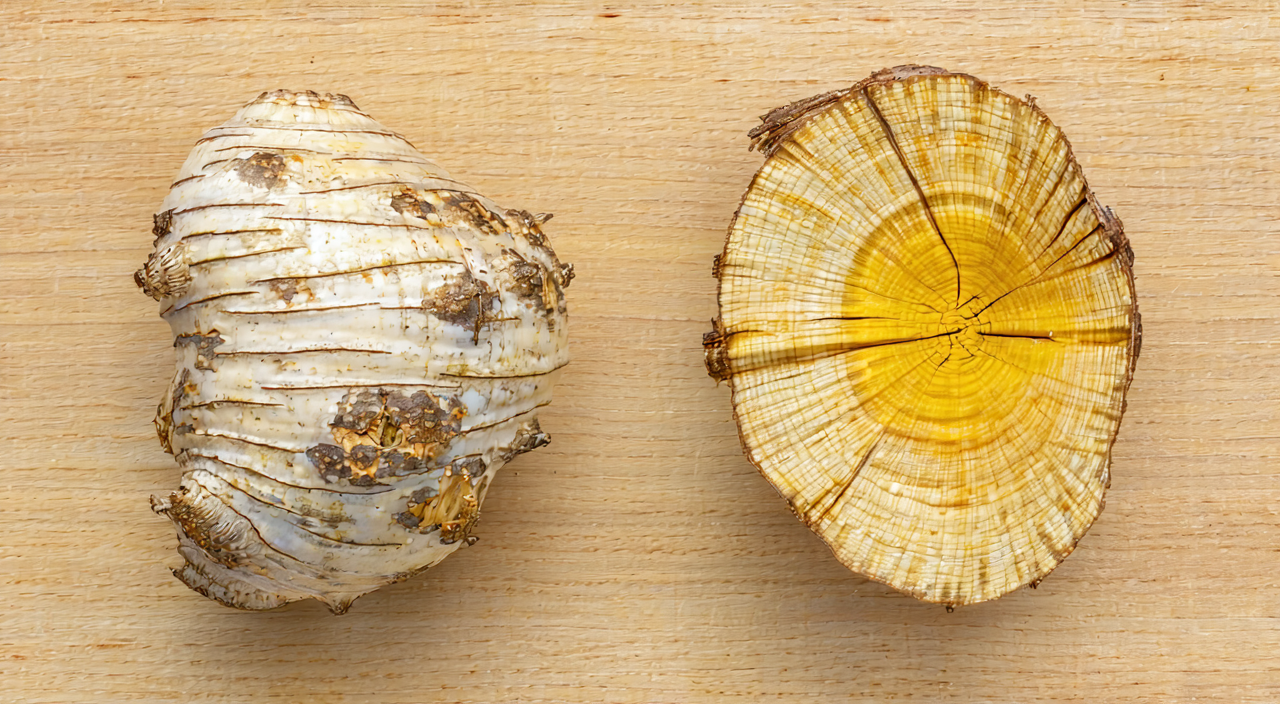
The medicinal part of San Leng is the dried tuber of Sparganium stoloniferum (family Sparganiaceae) with the outer skin removed. It should be noted that “San Leng” in the herb name refers to the processed form of the tuber, not to the stem or rhizome. After harvesting, the aerial parts and rootlets are removed, the rough outer skin is scraped off, and the tuber is then dried to become the herb we see.
In Chinese herbal formulas, San Leng can be used raw or after processing. Among the processed forms, “vinegar-fried San Leng” (cu san leng) is a relatively common prepared product. During processing, it is mixed thoroughly with vinegar, allowed to sit briefly, and then stir-fried until slightly yellow. Traditionally, vinegar processing is believed to moderate the herb’s relatively strong nature and enhance its action on the liver meridian, helping to reduce accumulations and disperse masses, so it is often used in approaches related to stasis and accumulations.
Therefore, when you see “San Leng” or “vinegar-fried San Leng” mentioned in a formula name or product description, you can understand that the same medicinal material—the tuber—is being used after different types of processing.
How Does Traditional Chinese Medicine Understand San Leng?
Traditional Chinese medicine’s understanding of San Leng focuses mainly on two aspects: breaking blood stasis and moving qi, and reducing accumulations and relieving pain. It is often classified as a blood-invigorating and stasis-resolving herb, and it is also frequently combined with herbs that enter the qi aspect for conditions in which qi stagnation and blood stasis affect each other.
In classical texts, San Leng is considered to have a strong action and is said to be able to “break the qi within the blood.” This means it acts not only on the blood aspect but also promotes the movement of qi, thereby improving distension, pain, and masses caused by qi stagnation and blood stasis. For problems such as food stagnation, abdominal distension, and pain that tend more toward food accumulation and qi stagnation, it can also be used as a reference direction for reducing accumulation and guiding out stagnation.
In clinical practice, San Leng is rarely used alone. It is often combined with Ezhu, Xiangfu, Danggui, Chuanxiong, and other herbs to form a comprehensive treatment strategy. For example, for liver qi depression and qi stagnation accompanied by blood stasis and accumulation, San Leng may be used together with herbs that soothe the liver, regulate qi, nourish blood, and invigorate blood. Whether it is suitable still depends on the individual’s constitution and specific presentation, and should be judged by an experienced professional.
Modern Research Overview
In modern research, interest in San Leng has mostly focused on its chemical constituents and pharmacological activities. Preliminary studies indicate that San Leng contains volatile oils, flavonoids, organic acids, and other components. Some experimental observations suggest that San Leng may have certain activities in influencing hemorheology, inhibiting platelet aggregation, and regulating uterine smooth muscle. These findings overlap in concept with the traditional use of “breaking blood.”
However, most current research is still in the laboratory or animal experiment stage. It serves as a supplementary reference to traditional understanding but cannot be directly equated with clinical efficacy. If an individual needs to use San Leng as a direction for health regulation, it is advisable to combine this information with traditional pattern differentiation and modern professional assessment.
What Are the Differences Between San Leng, Ezhu, and Xiangfu?
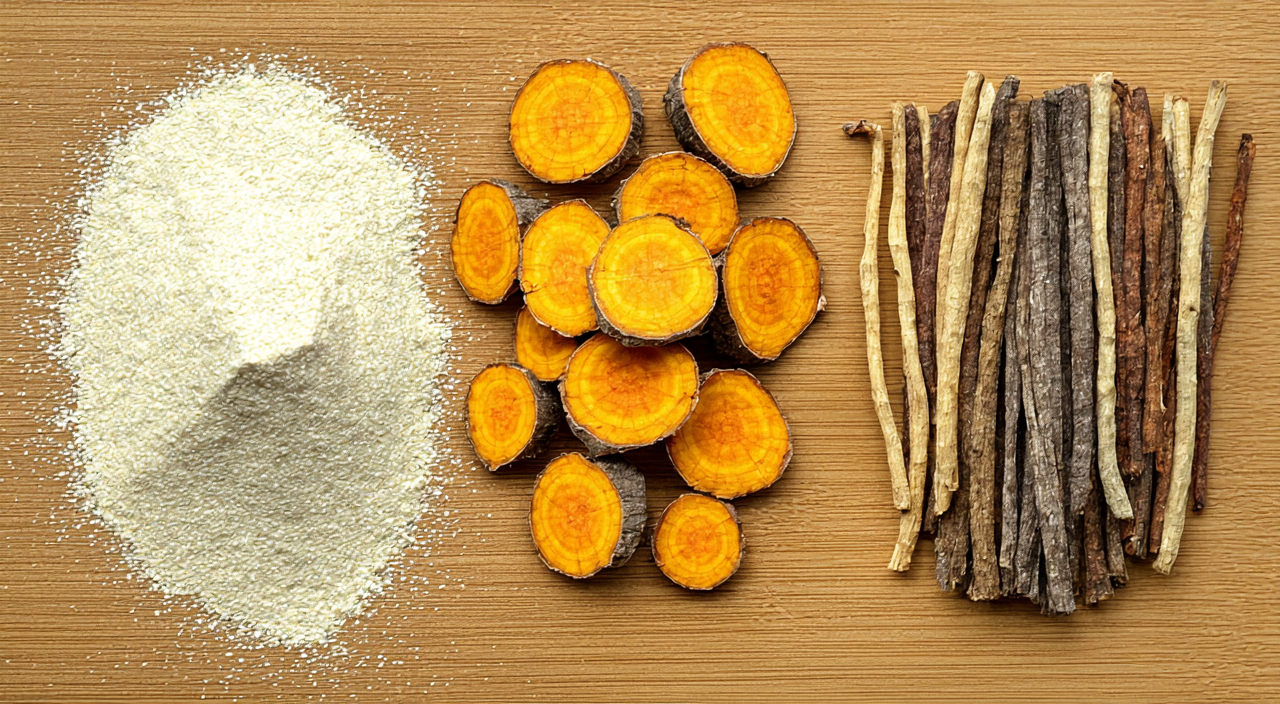
San Leng, Ezhu, and Xiangfu are often compared because their functions overlap to some extent and their appearances can cause confusion.
The difference between San Leng and Ezhu lies first in their medicinal parts and plant sources. San Leng uses the tuber of Sparganium stoloniferum. Its appearance is mostly conical or flattened ovoid, with obvious knife-cut marks, a firm texture, and a fracture surface that tends to be starchy. Ezhu usually comes from the rhizomes of plants in the Zingiberaceae family, such as Curcuma species. It is larger and often has ring-like transverse striations; its fractured surface is darker and has a waxy luster, and its odor is stronger. Traditionally, San Leng and Ezhu are often used together as complementary herbs. San Leng is considered more effective for breaking blood stasis, while Ezhu is considered more effective for breaking qi, but each has its own emphasis and should be chosen according to the specific situation.
Xiangfu is the rhizome of Cyperus rotundus (family Cyperaceae). It is smaller, often spindle-shaped, and has obvious nodes and remnant fibrous hairs on the surface. Xiangfu is more oriented toward soothing the liver and regulating qi, regulating menstruation, and relieving pain. For problems involving emotional depression and wandering distension and pain that tend toward qi stagnation, its use is more focused.
When these herbs are combined in a formula, the aim is often to address both qi and blood simultaneously, disperse stagnation, and reduce accumulations. Understanding the basic appearance and directional differences of these herbs can help make traditional formulas easier to navigate.
Which Formulas Commonly Contain San Leng?
Formulas containing San Leng are mostly related to breaking blood stasis, reducing accumulations, regulating qi, and dispersing masses. Here are a few traditional formulas for reference.
Xiangleng Wan is a commonly used formula for regulating qi and invigorating blood. It mainly contains Muxiang, Dingxiang, San Leng, Ezhu, and other herbs, and is traditionally used to address abdominal pain and masses caused by qi stagnation and blood stasis, as well as some cases of irregular menstruation and pain due to stasis. Biejia Jian Wan is a more complex formula with a larger composition. In addition to San Leng and Ezhu, it contains Biejia, Dahuang, Taoren, and others. It is often used for chronic and stubborn problems related to stasis and accumulation, and traditionally for abdominal masses and chronic malaria with spleen enlargement. San Leng Wan tends to have a simpler composition, mainly containing San Leng, Ezhu, Qingpi, Banxia, and others, and is commonly used to reduce accumulation, guide out stagnation, and relieve distension. In addition, some other formulas for reducing accumulation and resolving stasis may also include San Leng to strengthen the action of invigorating blood and dispersing masses.
The use of these formulas has specific indications and combination principles, and their application varies greatly among individuals with different constitutions. If you are interested in any of these formulas, you should consider your own condition and the product instructions, and ideally seek guidance from a professional familiar with these formulas. Do not choose them on your own based only on the name or simple symptoms.
Precautions for Using San Leng
San Leng is a strong-acting herb. When learning about it, pay special attention to the following precautions.
Pregnancy is a clear contraindication for the use of San Leng, because its blood-breaking nature may be harmful to the pregnant state. People with heavy menstrual bleeding, early periods, or a general tendency to bleed are also generally not advised to use it casually, to avoid worsening existing problems. Those with a weak constitution, shortness of breath, fatigue, and no obvious signs of stasis need to be even more cautious and should not treat San Leng as a daily health product.
In addition, people who are taking anticoagulant or antiplatelet medications or who are about to undergo surgery should fully consider the potential effect of San Leng on blood coagulation and avoid using it together with these drugs. In general, for severe, prolonged, or recurrent discomfort—especially when accompanied by obvious pain, abnormal bleeding, abdominal masses, or weight loss—you should not rely solely on formulas containing San Leng for self-treatment. Instead, consult a doctor or professional promptly for a comprehensive evaluation.
Summary
San Leng is an herb whose medicinal part is the tuber. It has typical knife-cut marks and a starchy fractured surface. In traditional Chinese medicine, it is commonly used to break blood stasis, move qi, reduce accumulations, and relieve pain. It differs from Ezhu and Xiangfu in terms of source and directional emphasis. Formulas containing San Leng, such as Xiangleng Wan and Biejia Jian Wan, are mostly used in strategies related to stasis and accumulation. When using it, special attention should be paid to contraindications such as pregnancy, bleeding tendency, weak constitution, and anticoagulant medication. This article is for educational reference only and cannot replace professional diagnosis or treatment advice. Whether it is suitable for an individual’s situation should be determined with professional judgment.