
What Is Huarui Stone? Medicinal Part, Identification Methods, and Common Formulas
Huarui stone is a Chinese medicinal material that is usually classified among mineral medicines. Unlike plant-based herbs, it cannot be identified by leaf shape, flower color, or root and stem features; instead, it is used as irregular lumps of mineral. Many readers who are new to mineral medicines may wonder: What exactly is huarui stone? What does it look like? How should its medicinal part be understood? In traditional formulas, names such as Huarui Stone Powder and Huarui Stone Pill also appear frequently, but they do not simply correspond to one fixed use. This article covers the visual identification, medicinal source, traditional Chinese medicine understanding, modern quality control, differences from similar minerals, and precautions for use of huarui stone, as a basic science reference for overseas readers.
What Does Huarui Stone Look Like? How to Identify It
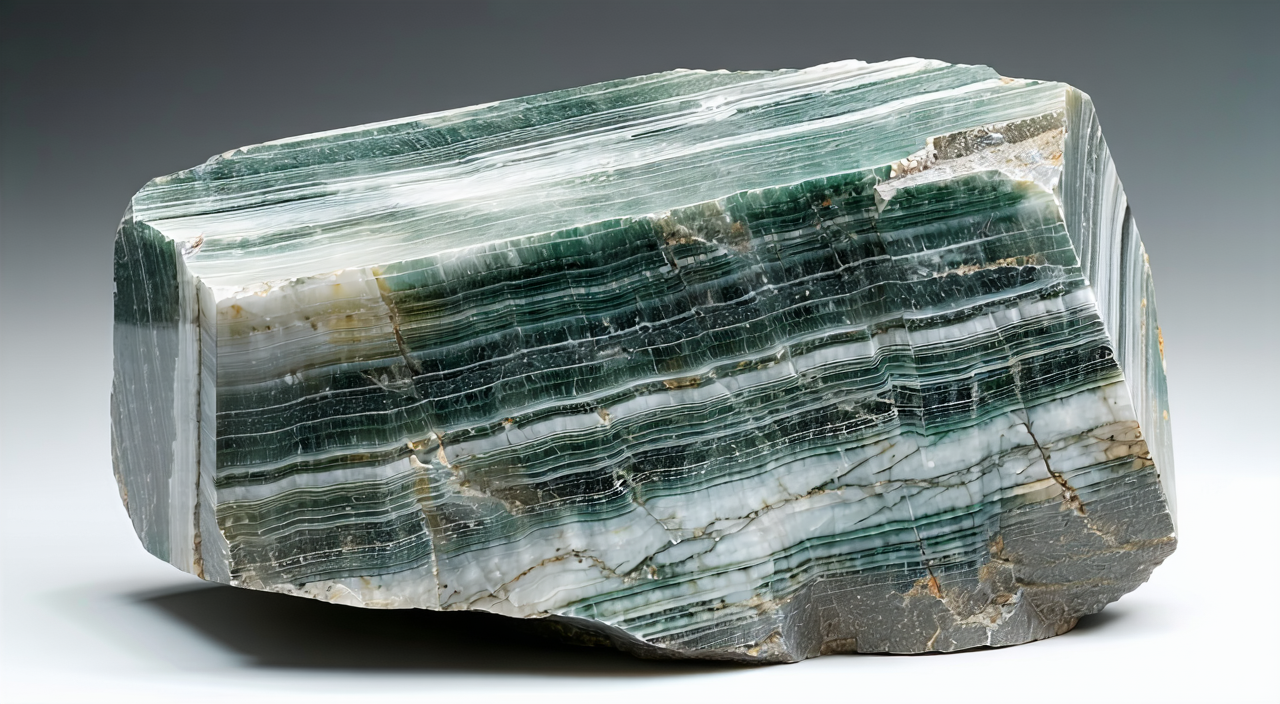
The typical appearance of huarui stone is usually irregular lumps or fragments. Unlike plant-based medicines, its surface does not have a uniform shape. According to traditional experience, the color of huarui stone is mostly between grayish-white, grayish-green, or grayish-yellow. Some lumps show mottled markings, and some appear dotted, banded, or cloud-like, making the whole piece look like a stone containing layers of different colors. Its texture is generally relatively heavy, and it feels noticeably weighty in the hand.
On the fractured surface, huarui stone is often uneven and may appear granular or slightly fibrous. Sometimes a faint crystalline quality can be seen, but it generally does not have the strong metallic luster of pyrite. Different origins and batches of huarui stone may differ in appearance, so judgment based only on color and texture is not entirely reliable. For medicinal identification, standardized herb criteria, professional identification institutions, or comparison with genuine reference samples should remain the main basis. People without experience are advised not to judge it on their own based only on online images or color descriptions.
Details That Are Easy to Overlook During Identification
Some samples may have dust or fine particles adhering to the surface. This does not necessarily indicate a quality problem, but it may affect observation. When examining it, you can first tap lightly or clean off surface dust, and then look at the fracture. Under light, the fractured surface of huarui stone may sometimes show a weak silky or glass-like luster, but this luster is clearly different from the brassy, strong metallic luster of pyrite. Heaviness is a relatively noticeable feature, but it is not the only basis for identification, because many mineral-based medicinal materials can also be relatively heavy.
What Is the Medicinal Part of Huarui Stone?
Huarui stone belongs to the category of mineral medicines. Unlike plant-based medicines, its “medicinal part” is usually not the flower, leaf, root, or stem, but a specific mineral mass that meets medicinal material standards. For huarui stone, the traditional medicinal source is often related to ores containing serpentine and other components. Before actual use as medicine, it generally needs to be cleaned or processed.
The purpose of cleaning is to remove surface dirt, foreign stones, and obvious impurities so that the medicinal material is relatively clean. A common processing method is calcined huarui stone, which means the cleaned huarui stone is subjected to calcination. Traditionally, it is believed that after calcination the texture becomes relatively friable, making it easier to grind or decoct, and it may also change certain mineral properties. Modern processing research also pays attention to the effects of temperature and time on mineral composition and extracts. It should be noted that calcination is a professional processing step and is not suitable for home operation, nor should a similar-looking stone be casually used as a substitute.
Therefore, understanding the medicinal part of huarui stone is not just knowing that “it is a stone.” More importantly, it means understanding its source and the requirements for cleaning and processing. When learning about this type of medicinal material, overseas users should pay attention first to information from proper channels that indicates the source and processing method, and avoid mistaking ornamental stones, ordinary building stone, or unidentified ores for medicinal materials.
How Does Traditional Chinese Medicine Understand Huarui Stone?
In traditional Chinese medicine theory, huarui stone is often understood from the perspective of resolving stasis and stopping bleeding. Ancient medical texts classify it among mineral medicines related to blood disorders, and consider that it may be suitable for complex situations involving both bleeding and blood stasis, which is sometimes called “bleeding due to blood stasis.” This is because simply astringing bleeding may sometimes hinder the resolution of stasis, while only invigorating blood may worsen bleeding. The traditional application of huarui stone is centered on the simultaneous regulation of resolving stasis and stopping bleeding.
In traditional records, huarui stone is sometimes used for manifestations such as coughing up blood, nosebleeds, traumatic bleeding, and abnormal uterine bleeding, but it usually appears as one ingredient in a compound formula and is rarely used alone. The formula is usually combined with other medicinals to balance the overall effect. For modern readers, this information is mainly meant to help understand the reasoning behind Chinese medicine use, and it does not mean that one can directly apply it to a certain symptom and use it on one’s own.
It should be emphasized that whether huarui stone is suitable for use, whether the raw or calcined product should be selected, and what dosage should be used must all be determined comprehensively based on individual constitution, specific manifestations, tongue and pulse conditions, and other factors. The traditional concept of “resolving stasis and stopping bleeding” should not be simplistically understood as “it can both stop bleeding and invigorate blood.” Behind it are strict syndrome differentiation premises and formulation logic.
Modern Research Focus: Mineral Composition and Impurity Control
From a modern research perspective, the mineral composition, source stability, and safety control of huarui stone receive more attention. Elements such as calcium, magnesium, and silicon can often be detected in huarui stone samples. Some research suggests that it is related to serpentine-type minerals and may also contain small amounts of other associated mineral components. These components vary depending on the place of origin and the environment in which the ore formed, so it is very important to establish a stable medicinal source and testing indicators.
In modern quality control, impurity limits for mineral medicines are a key issue. Natural ores may be associated with elements such as arsenic, lead, cadmium, and mercury. If they have not undergone standardized testing and processing, they may bring unnecessary exposure risks. Therefore, proper medicinal material standards usually include limit tests for heavy metals and harmful elements, as well as require control of the material’s characteristics, identification, ash content, and extractives. In other words, whether huarui stone is suitable for medicinal use depends not only on whether it looks like “huarui stone,” but also on whether its source is traceable and whether its testing is qualified.
This research approach also reminds general readers that mineral-based medicinal materials are not suitable for self-collection or self-grinding and consumption. Even if the appearance is similar, differences may exist because of different associated mineral components. When purchasing or learning about related products, overseas users can pay attention to whether there is source information, testing information, and standardized packaging, rather than looking only at the name.
What Are the Differences Between Huarui Stone, Pyrite, and Halloysite?
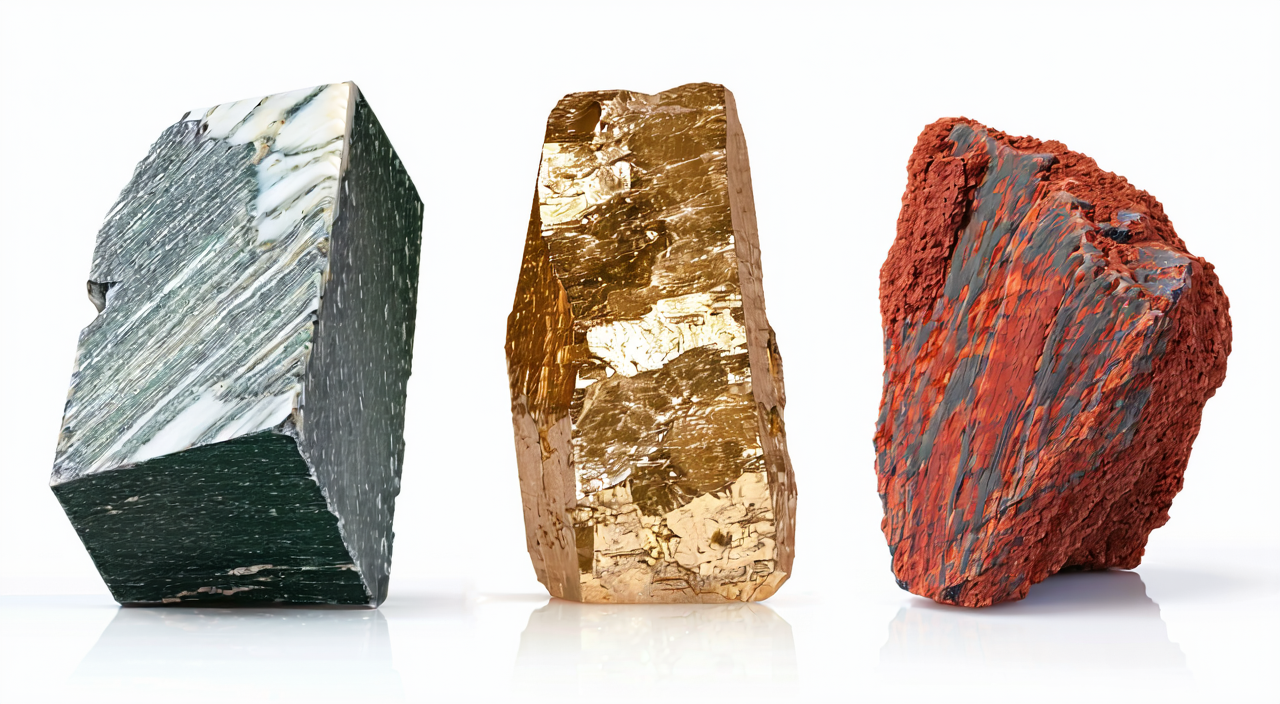
Huarui stone, pyrite, and halloysite are all mineral-based medicinal materials, but they differ clearly in appearance and texture.
Pyrite is often brassy or metallic yellow in color, usually has a strong metallic luster on the surface, and is also relatively heavy, looking more like a metallic ore. Halloysite is mostly red, reddish-brown, or purplish-red, with a relatively fine texture. Some samples may feel slightly smooth to the touch. Its overall color is redder than the grayish-white and grayish-green tone of huarui stone.
Huarui stone usually has more color layers, mainly grayish-white, grayish-green, and grayish-yellow, often with mottled markings. Its fractured surface is generally uneven, and its luster is weaker and not as obvious as that of pyrite. However, samples from different origins may overlap or look similar, especially when the surface is covered with dirt, making misjudgment more likely.
To identify these three medicinal materials, one cannot rely only on simple ideas such as “red means halloysite” or “yellow means pyrite.” It is also necessary to combine texture, fractured surface, luster, streak, and professional microscopic or physicochemical analysis. General readers should treat these characteristics as a preliminary guide, and specific identification should still refer to standardized medicinal material standards and the opinions of professional institutions.
Which Formulas Contain Huarui Stone?
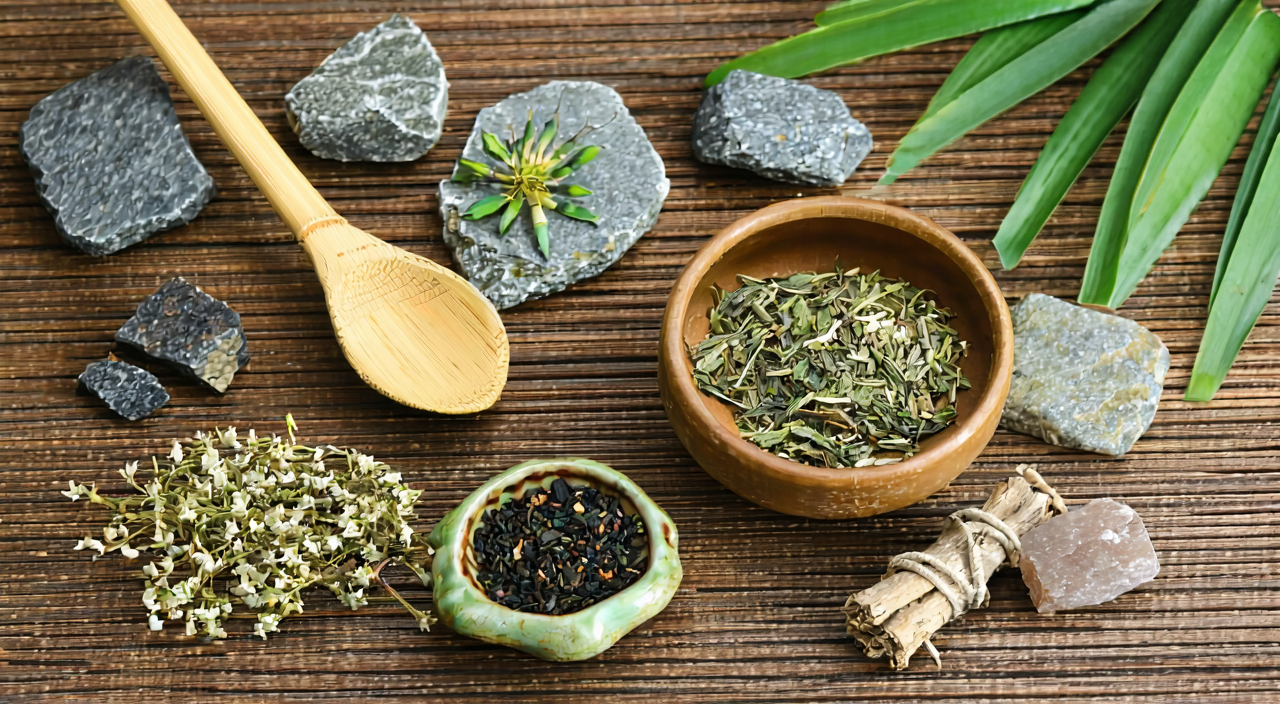
In traditional formula records, Huarui Stone Powder, Huarui Stone Pill, and some compound formulas oriented toward stopping bleeding and resolving stasis may contain huarui stone. Although formula names in different texts may be the same or similar, their compositions, dosages, and preparation methods may differ. Therefore, one cannot simply assume that a certain “Huarui Stone Powder” is a single unified formula.
For example, some Huarui Stone Powder formulas are more oriented toward external use to stop bleeding, while others are recorded for internal use, often combined with child’s urine, wine, or other mineral and herbal medicines. Huarui Stone Pill is not widely common in ancient texts, and different versions may be used for different blood disorders or trauma-related regulation. Some modern literature also discusses huarui stone within formulas classified as stasis-resolving and hemostatic.
These formulas are more suitable as a direction for understanding traditional medication ideas, rather than as a basis for individuals to prepare prescriptions on their own. If you are interested in a certain type of formula, it is advisable to make a comprehensive judgment based on the original source, modern research, and the opinions of pharmacists or Chinese medicine practitioners. In particular, one should not increase the dosage or use it long term on one’s own simply because the formula name contains “stop bleeding” or “resolve stasis.”
What Precautions Should Be Taken When Using Huarui Stone?
As a mineral medicine, huarui stone requires particular caution in several respects during use.
First, the source and processing method should be clear. Natural ores may contain impurities or harmful elements, and self-collection, calcination, or pulverization carries relatively high risk. Traditional processing methods should not be imitated at home. Second, pregnant women, breastfeeding women, children, or people with underlying liver or kidney problems should generally be more conservative about using mineral-based medicinal materials. Suitability must be assessed by a professional before deciding whether to use them. Third, acute bleeding should not be managed by relying on a single mineral medicine. If heavy bleeding, persistent bleeding, black stools, coughing up blood with breathing difficulty, abnormal consciousness, or other serious conditions occur, seek medical attention immediately rather than attempting to stop bleeding on your own.
In addition, huarui stone should not be casually replaced with similar-looking stones. Ordinary ornamental stones or building stones have not undergone cleaning and testing, and may contain unknown components. Even standardized medicinal materials should be used under clear syndrome differentiation and appropriate combination, and are not suitable for long-term self-administration. For any mineral-based medicinal material, it is advisable to make a comprehensive judgment based on product information, individual constitution, and professional advice, rather than relaxing safety precautions simply because of traditional records.
Summary
Huarui stone is a medicinal material used in the form of mineral masses. Identification should focus on its grayish-white to grayish-green color, mottled markings, heaviness, and uneven fractured surface, but standardized medicinal material criteria should still be followed. In traditional Chinese medicine, it is mainly understood from the direction of resolving stasis and stopping bleeding, and it commonly appears in some hemostatic and stasis-resolving formulas, although specific use must be judged according to individual circumstances. Mineral source, calcination method, impurity testing, and warnings about acute bleeding are key points for safely understanding huarui stone. This article is for general science reference only and cannot replace professional diagnosis or treatment advice.