
What Is Sang Ji Sheng? Medicinal Parts, Identification, and Common Formulas
Many people encounter the name “Sang Ji Sheng” when exploring traditional Chinese herbal medicine, but easily confuse it with mulberry branches or mistletoe. Sang Ji Sheng is not an ordinary mulberry branch; it is the dried leafy stems and branches of Taxillus chinensis, a plant in the Loranthaceae family. In different regions, the same name may be applied to different species, which makes identification and selection more complicated. For readers who want to understand the appearance, medicinal parts, and common formulas of Sang Ji Sheng, clarifying these basic concepts first is helpful.
What Does Sang Ji Sheng Look Like? How to Identify It?
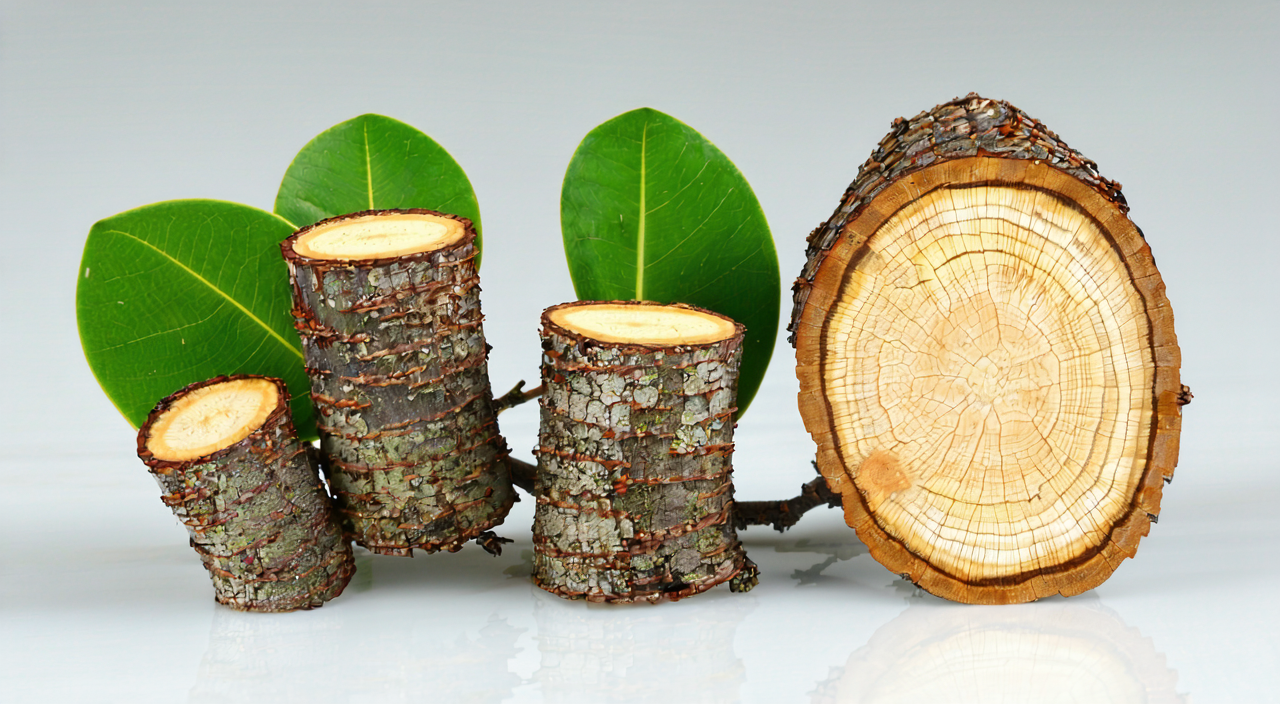
The medicinal part of Sang Ji Sheng is mostly the leafy stems and branches, which are usually cut into small sections or thick slices after drying. In traditional herbal identification, the stems are cylindrical and may branch; the surface is mostly reddish-brown or grayish-brown, sometimes with fine longitudinal striations and dot-like lenticels. The texture is relatively hard, and the fractured surface often shows a yellowish-white wood portion; some prepared slices also reveal a small pith. Under different storage conditions, the surface color may vary in depth, but overall it is still predominantly reddish-brown or grayish-brown.
The leaves are usually opposite or nearly opposite; intact leaves are ovate or elliptical, with a blunt apex, a rounded or broadly cuneate base, and entire margins. The veins are relatively visible on the underside, and the leaf surface is sometimes covered with short hairs. After drying, the leaves break easily, so commercially prepared slices often consist of stems mixed with a small amount of broken leaf fragments. When observing intact leaves, pay attention to the opposite arrangement and vein pattern.
When identifying Sang Ji Sheng, you cannot rely only on the fact that it grows parasitically on trees. It can parasitize mulberry, elm, birch, and various other trees, and different hosts may affect its appearance. To reduce confusion with mistletoe and other plants, you need to consider the branching pattern of the stems, leaf shape, surface color, and fracture surface characteristics together. Ordinary consumers should buy prepared slices through reliable channels, pay attention to the product name and origin information, and not judge the herb merely by the word “parasitic.”
What Is the Medicinal Part of Sang Ji Sheng?
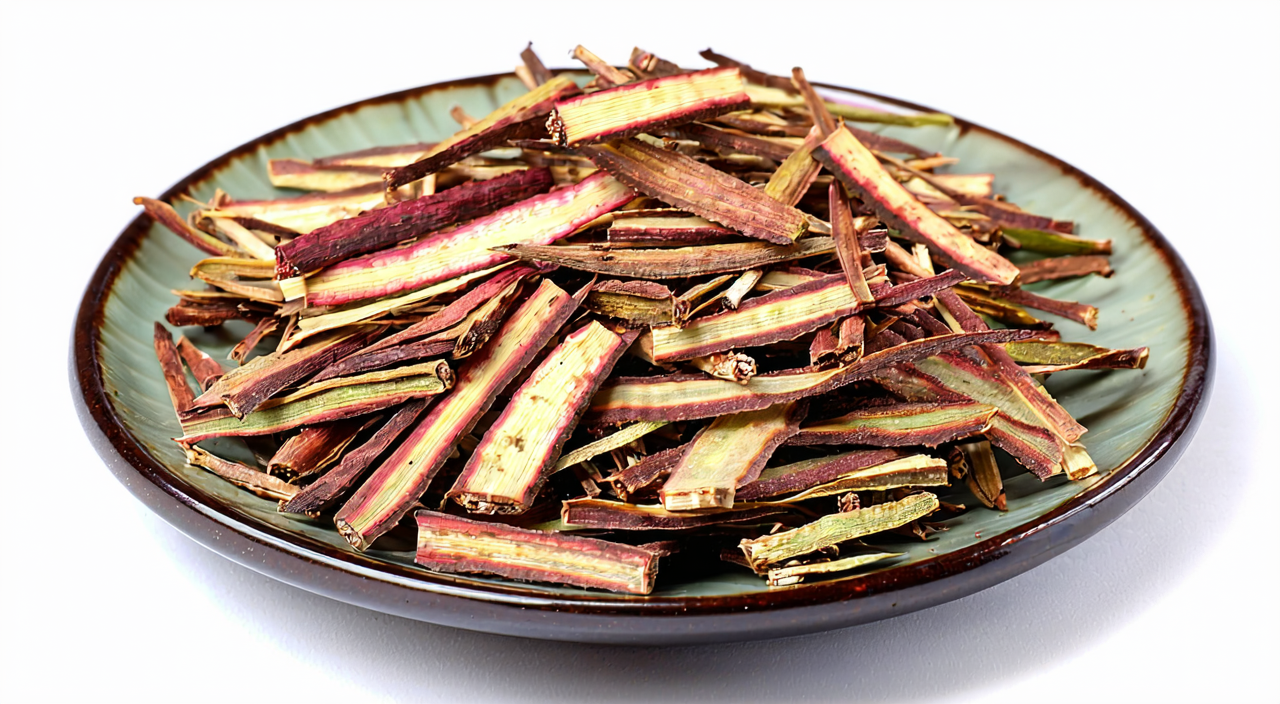
The traditional medicinal part is the dried leafy stems and branches of Sang Ji Sheng, not the leaves alone, nor the branches, trunk, or root bark of the host tree. Harvesting usually occurs from winter to the following spring, when the leaves are still retained or only partially retained. After collection, thick stems and impurities are removed; the material is cut into sections and dried. Low-temperature drying can sometimes reduce excessive leaf loss.
The use of leafy stems and branches determines the appearance of Sang Ji Sheng prepared slices. The slices are mainly stems and branches, sometimes with a small amount of leaves. Different production areas and processing conditions may affect color and integrity, but the core characteristics should still center on reddish-brown to grayish-brown stems, a yellowish-white wood portion, and opposite leaves. If a product contains almost no leaves or looks quite different from common Sang Ji Sheng, you should verify the botanical origin more carefully.
Because the same name is often applied to different species, some regions use mistletoe or other parasitic plants as Sang Ji Sheng. If you need to purchase or learn more about it, confirm the botanical origin and medicinal part before making a judgment based on the name alone.
How Does Traditional Chinese Medicine Understand Sang Ji Sheng?
Traditional Chinese medicine has long understood Sang Ji Sheng from the perspectives of dispelling wind-dampness, tonifying the liver and kidneys, strengthening sinews and bones, and calming the fetus. It is often used in patterns related to liver and kidney deficiency combined with wind-dampness, such as soreness and weakness of the lower back and knees, weakness of the lower limbs, and difficulty bending and extending the joints. Here, “wind-dampness” does not refer to rheumatic disease in modern medicine, but is a traditional concept of disease cause and mechanism that emphasizes the combined effect of external pathogenic factors such as wind, cold, and dampness with the body’s internal condition.
In terms of calming the fetus, Sang Ji Sheng often appears in traditional approaches related to threatened miscarriage and recurrent miscarriage risk. Ancient texts frequently list it as an important component of formulas for stabilizing pregnancy, but this does not mean it can be used on one’s own during pregnancy. Pregnancy conditions vary greatly, and whether it is suitable and what dosage to use must be evaluated by a professional TCM practitioner based on the individual’s constitution and pregnancy status.
Overall, the traditional role of Sang Ji Sheng leans toward “tonifying with a moving effect”: it may help supplement the liver and kidneys while also helping to dispel wind-dampness pathogens. People with different constitutions may respond differently to this type of herb, so it is not appropriate to simply copy another person’s usage.
What Does Modern Research Say About Sang Ji Sheng?
Modern research mainly focuses on components such as flavonoids, organic acids, and polysaccharides in Sang Ji Sheng. Some experimental studies have explored its potential effects on anti-inflammatory responses, immune regulation, bone metabolism, or blood pressure. However, these are mostly in vitro experiments, animal studies, or small-sample observations, and cannot yet be directly translated into clinical efficacy in humans. Readers may regard modern research as background information, but laboratory results should not be equated with therapeutic effects for certain diseases. More systematic clinical evidence is needed to support the mechanisms of action of this single herb.
How Is Sang Ji Sheng Different from Mistletoe and Mulberry Branch?
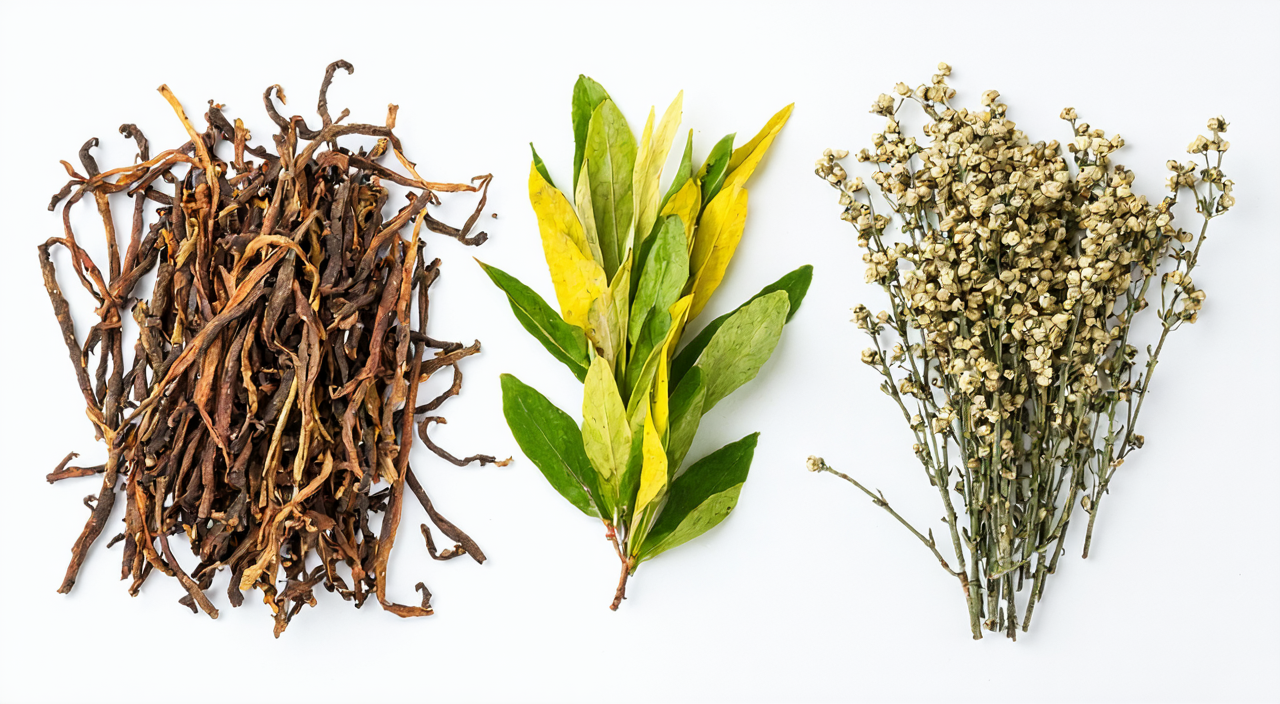
Sang Ji Sheng and mistletoe are often confused, but they differ in source and morphology. Mistletoe also belongs to the Loranthaceae family and is usually a species of Viscum; its stems and branches often divide in a forked pattern, the leaves are opposite, and the fruit is mostly a white or pale yellow berry. In traditional use, mistletoe also has directions such as dispelling wind-dampness and tonifying the liver and kidneys, but it should not be regarded as exactly the same medicinal substance as Sang Ji Sheng.
Mulberry branch is completely different: it is the young branch of the mulberry plant (Morus alba), a member of the Moraceae family, and is not a parasitic plant. The surface of mulberry branch is mostly grayish-yellow or yellowish-brown, and the fractured surface is relatively fibrous. Traditionally, it is used more for dispelling wind, freeing the collaterals, and benefiting the joints, and is often used for discomfort in the upper limbs and joints. Compared with Sang Ji Sheng, mulberry branch does not emphasize tonifying the liver and kidneys or calming the fetus.
Simply put, whether the plant is parasitic, its host, and its overall morphology are key to distinguishing Sang Ji Sheng from mulberry branch; distinguishing Sang Ji Sheng from mistletoe requires further attention to botanical classification and specific characteristics. When purchasing, rely on the medicinal material name and botanical origin, and do not judge only by the word “parasitic.”
Which Formulas Commonly Include Sang Ji Sheng?
Duhuo Jisheng Tang is a traditional formula often mentioned alongside Sang Ji Sheng. It is commonly used for patterns such as wind-cold-dampness bi syndrome and dual deficiency of the liver and kidneys, with symptoms like cold pain in the lower back and knees and difficulty bending and extending. In this formula, Sang Ji Sheng is combined with other herbs that dispel wind-dampness and tonify the liver and kidneys, with a focus on addressing a condition of root deficiency and branch excess.
Shoutai Wan is traditionally used for threatened miscarriage, recurrent miscarriage, and other patterns related to insecure kidney qi. Sang Ji Sheng is often combined with herbs that tonify kidney qi and secure the Chong and Ren vessels. Whether this formula is suitable during pregnancy must be evaluated by a professional TCM practitioner; it should not be used by oneself. Women with a history of miscarriage or bleeding during pregnancy should especially avoid self-administering any pregnancy-stabilizing formula.
Formulas named Sang Ji Sheng Tang may have different compositions in the literature, but most still center on patterns such as soreness and weakness of the lower back and knees, dizziness, tinnitus, and liver and kidney deficiency. Pregnancy-stabilizing formulas also often use Sang Ji Sheng as an auxiliary herb, but dosage and combination should vary according to the individual. Pregnant women should not use Sang Ji Sheng as an ordinary health herb over the long term.
These formulas are only examples of traditional application directions and do not constitute a recommendation. Whether they are suitable should be determined by considering the individual’s constitution, symptoms, formula composition, and product instructions.
What Should You Pay Attention to When Using Sang Ji Sheng?
People with low blood pressure need to be especially cautious. Some studies mention that Sang Ji Sheng may have certain effects on blood pressure. Although the evidence is not sufficient, individuals with low blood pressure should consult a professional before use.
Use during pregnancy requires great caution. Although Sang Ji Sheng is commonly found in traditional pregnancy-stabilizing formulas, pregnancy is a special state, and risks vary by stage. It should not be self-administered simply because it has been traditionally used to calm the fetus. A TCM practitioner or physician must evaluate the specific situation, especially for those in early pregnancy or with a history of miscarriage.
Misidentification of the source is a real risk. When collecting wild Sang Ji Sheng, it is easy to gather mistletoe or other parasitic plants by mistake. Some plants look similar, but their safety has not been fully verified. Using self-collected material directly may pose health risks. In addition, wild-harvested herbs may be affected by pesticide residues, heavy metals, or toxic components from the host plant. It is recommended to prioritize medicinal materials from reliable channels and to check the origin, botanical source, and processing information.
For long-term or recurrent lower back and knee pain, joint discomfort, pregnancy abnormalities, or symptoms related to low blood pressure, seek medical attention promptly rather than relying only on a single herb for regulation.
Summary
The core feature of Sang Ji Sheng is that its botanical source is a plant in the Loranthaceae family, and its medicinal part is the dried leafy stems and branches. When identifying it, pay attention to external characteristics such as stem color, opposite leaves, and the yellowish-white wood portion on the fractured surface. It is easily confused with mistletoe and mulberry branch, but their sources and traditional uses are not the same. Common formulas such as Duhuo Jisheng Tang and Shoutai Wan can be understood as examples, but whether they are suitable still needs to be determined based on individual circumstances and professional advice. This article is for informational reference only and cannot replace professional diagnosis or treatment advice.