
What Is Chinese Chive Seed? Medicinal Parts, Identification, and Common Formulas
When looking up traditional formulas in the categories of securing essence and reducing urination or warming and supplementing the liver and kidney, many people repeatedly see the medicinal ingredient “Chinese chive seed” or “chive seed.” Because the name contains “chive,” it is easy to think of the chive leaves used in everyday cooking. In traditional medicinal use, however, Chinese chive seed usually refers to the mature seed of Chinese chives, not the tender chive leaves commonly seen in markets. This article explains what Chinese chive seed looks like, what its medicinal part is, how to distinguish it from flatstem milkvetch seed and onion seed, common formulas, and precautions. It is intended for overseas Chinese readers who want to build a basic understanding.
What Does Chinese Chive Seed Look Like? How Is It Identified?
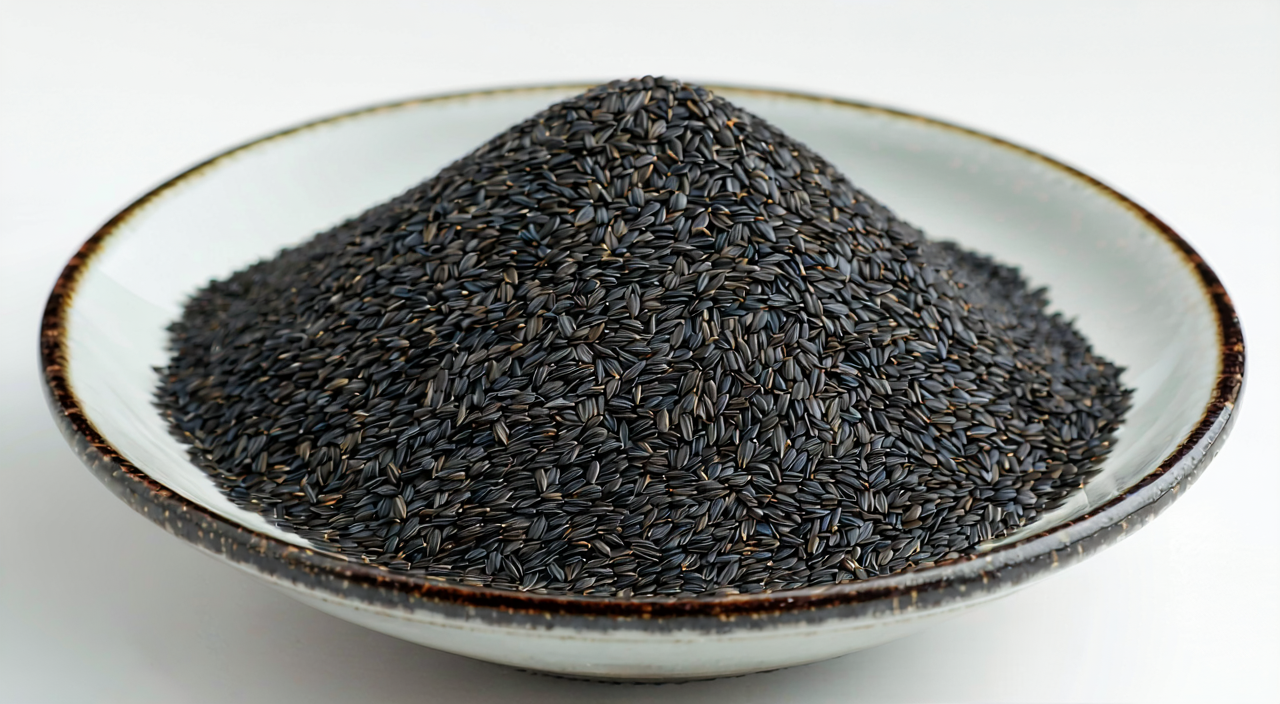
Chinese chive seed is a relatively small seed-type medicinal. When encountering it for the first time, it is best to observe it with good lighting or magnification. The common Chinese chive seed in traditional medicinal materials is generally semi-ovoid or triangular-ovoid in shape, predominantly black in color, and some surfaces may lean grayish black or dark brown. Unlike some seeds with smoother surfaces, Chinese chive seed usually shows fine, dense wrinkled texture, and its surface is not very smooth and glossy.
Shape and Color
In terms of shape, one side of Chinese chive seed is relatively flat and the other side is slightly raised; overall it is not full and plump. The color is mostly black or grayish black, and the shade may vary slightly depending on processing or storage conditions. During inspection, if the seeds appear too light in color, too uniform in size, or overly glossy, it is worth paying extra attention to whether other seeds have been mixed in.
Hilum and Surface Texture
The hilum of Chinese chive seed is usually located at one end or slightly to one side and is an important reference for identification. The fine surface wrinkles are more obvious under light. Some samples may look somewhat smoother due to different degrees of dryness, but they still retain certain fine, dense texture. The odor is mild, and the taste is bland or slightly pungent. It should not have a rancid or unusual smell.
What Is the Medicinal Part of Chinese Chive Seed?
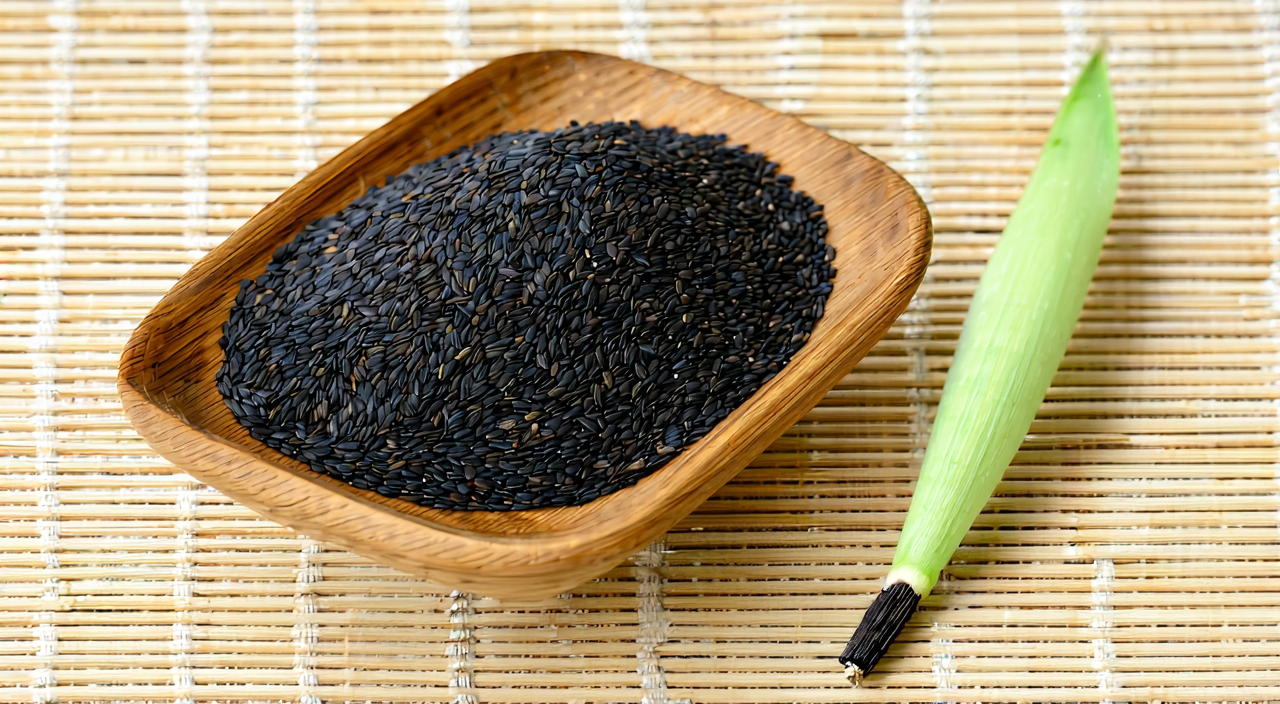
When Chinese chive seed is used as a medicinal, the medicinal part is the mature seed of Chinese chives, not the leaves, roots, or flowers. In the later growth stage, Chinese chives bolt and flower, and then produce seeds. The traditional harvesting method is generally to cut the fruiting stalks after the seeds mature, dry them in the sun, and then obtain the seeds by rubbing, threshing, and removing impurities. Finally, the seeds are further dried to a state suitable for storage.
The dried mature seeds obtained after these steps are what common formulas refer to as “Chinese chive seed” or “chive seed.” Although the chive leaves eaten daily also have certain nutritional value, their part used, harvesting time, and traditional action are all different from those of Chinese chive seed, so they cannot simply replace it in formulas or dietary regulation.
How Does Traditional Chinese Medicine Understand Chinese Chive Seed?
In traditional Chinese medicine theory, Chinese chive seed is often classified under the action directions of warming and supplementing the liver and kidney, strengthening yang, securing essence, and reducing urination. Traditionally it is considered warm in nature, pungent and sweet in flavor, and mainly enters the liver and kidney meridians. In Chinese medicine, the “kidney” does not only refer to the kidney in modern anatomy, but to a functional system involving reproduction, urination, the lower back and knees, vitality, and other aspects. Therefore, concepts such as “kidney deficiency” and “insecurity of the essence gate,” for which Chinese chive seed is used, also need to be understood within the framework of Chinese medicine pattern differentiation.
Common Traditional Directions of Use
From traditional literature and clinical thinking, Chinese chive seed is more commonly seen in regulating patterns related to kidney yang insufficiency and deficiency cold of the liver and kidney. For example, some people present with soreness and weakness of the lower back and knees, aversion to cold, mental fatigue, or conditions such as seminal emission, spermatorrhea, frequent urination, and increased nighttime urination. Traditionally, Chinese chive seed may be considered in a compound formula for these cases. However, this does not mean that all lower back soreness, frequent urination, or seminal emission is suitable for Chinese chive seed; the tendency of cold, heat, deficiency, or excess still needs to be assessed.
Why It Should Not Be Used on Your Own Without Care
Chinese chive seed is warm in nature and is more suitable for certain constitutions leaning toward deficiency cold or yang deficiency. If the body constitution tends toward heat, or if there is yin deficiency with exuberant fire, or if the symptoms are caused by other reasons, self-use of warming and supplementing medicinals may not be appropriate. Therefore, whether to use it and how to combine it should be based on individual constitution, specific manifestations, and professional judgment.
How Does Modern Research View Chinese Chive Seed?
Modern research on Chinese chive seed mainly focuses on its components, such as fatty acids, saponins, and flavonoids. Some experimental studies suggest that Chinese chive seed extracts may show certain activity in antioxidant, antibacterial, or certain physiological regulation aspects. However, most of these studies remain at the stage of in vitro or animal experiments, and there is still a distance from forming clear conclusions for human use.
In addition, modern research and traditional Chinese medicine theory belong to different discourse systems. Traditional Chinese medicine places more emphasis on combined use based on pattern differentiation rather than extracting a single type of component. Therefore, when learning about Chinese chive seed, general readers may take modern research as background reference on its components, but should not directly equate experimental conclusions with specific effects or therapeutic actions.
How Does Chinese Chive Seed Differ from Flatstem Milkvetch Seed and Onion Seed?
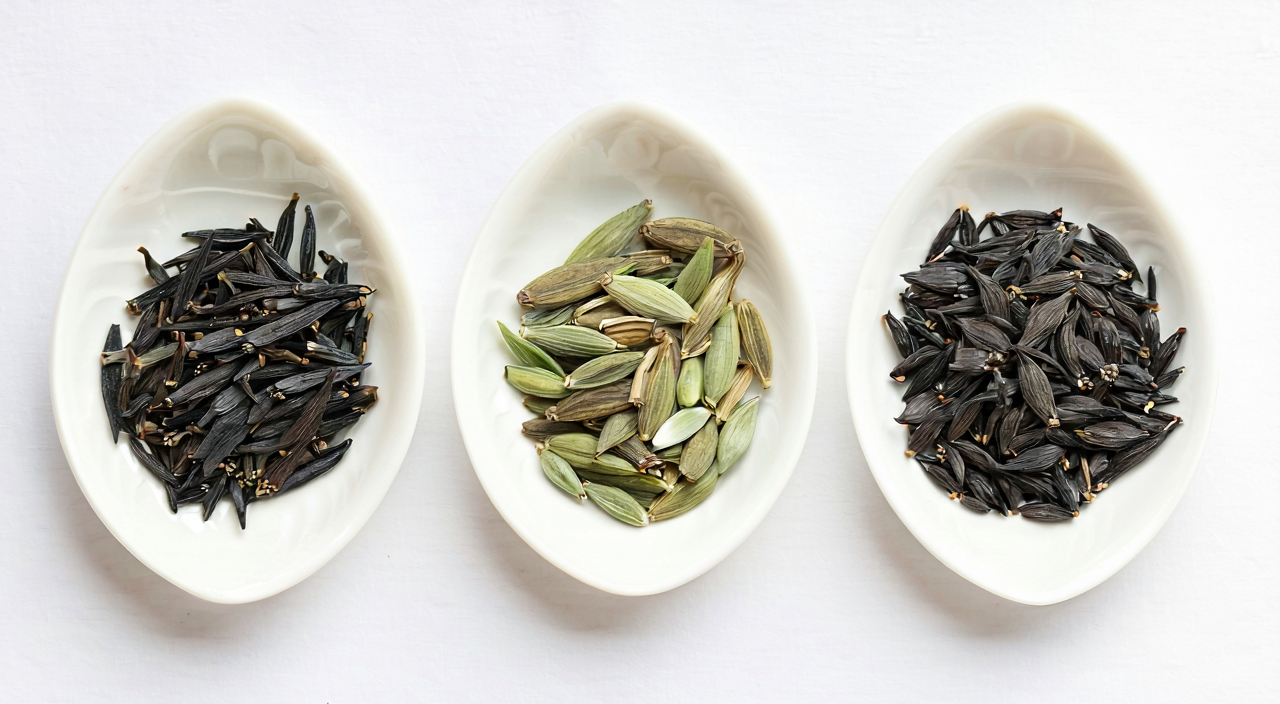
Chinese chive seed, flatstem milkvetch seed, and onion seed are all relatively small seed-type medicinals. They can be visually confused, but their sources and appearance characteristics are different.
Chinese Chive Seed
Chinese chive seed comes from the mature seeds of Chinese chives. It is mostly semi-ovoid or triangular-ovoid, black or grayish black in color, with fine wrinkles on the surface, one side relatively flat and the other slightly raised. Its odor is relatively mild. Traditionally it is mostly associated with warming and supplementing the liver and kidney, securing essence, and reducing urination.
Flatstem Milkvetch Seed
Flatstem milkvetch seed comes from the mature seeds of the legume plants Astragalus complanatus or Astragalus chinensis. It is mostly kidney-shaped or flattened-round, with a grayish brown, greenish brown, or yellowish brown surface, and a relatively obvious smoothness and luster. Its traditional use is different from Chinese chive seed. It is mostly related to supplementing and benefiting the liver and kidney, securing essence, and reducing urination, but the specific source, nature, flavor, and meridian tropism need to be distinguished.
Onion Seed
Onion seed comes from the mature seeds of onion. Its shape is more triangular or shield-shaped, with a black or dark surface, and fine dense texture is sometimes visible. Onion seed has an Allium plant odor and also differs from Chinese chive seed in traditional use. If these names appear in formulas, it is not recommended to replace them on your own based only on color and size. They should be distinguished according to labels and professional advice.
Which Formulas May Use Chinese Chive Seed?
In traditional formulas, Chinese chive seed is commonly seen in directions such as securing essence and reducing urination, and warming and supplementing the liver and kidney. Representative examples include Chive Seed Pill, Chive Seed Powder, and some formulas for securing essence and reducing urination.
Chive Seed Pill
In traditional literature, Chive Seed Pill is mostly used for regulating patterns such as kidney yang insufficiency and insecurity of the essence gate, often involving seminal emission, spermatorrhea, turbid urine, and frequent urination. The specific combinations, dosages, and suitable populations may vary by version.
Chinese Chive Seed Powder
Chinese Chive Seed Powder traditionally leans toward securing and stabilizing the lower origin. It is often used for conditions such as deficiency cold of the lower origin and insecurity with seminal slippage. In the formula, it is often combined with other warming and supplementing or astringent medicinals to strengthen the overall effect.
Formulas for Securing Essence and Reducing Urination
Formulas for securing essence and reducing urination often combine Chinese chive seed with medicinals such as dodder seed, psoralea fruit, mantis egg case, dragon bone, and oyster shell. They are used in traditional pattern differentiation for directions related to insecurity of kidney qi and deficiency cold of the lower origin. This type of formula does not simply target a single symptom, but emphasizes overall pattern differentiation.
It should be noted that the above formulas are only an introduction to traditional directions of use and should not be understood as permission to self-prescribe or fill these formulas. Whether they are suitable and how they should be modified must be determined by a qualified Chinese medicine practitioner or professional based on individual constitution and symptoms.
What Precautions Should Be Taken When Using Chinese Chive Seed?
Chinese chive seed is warm in nature and traditionally leans toward deficiency cold or yang deficiency, so people with yin deficiency with exuberant fire or pronounced internal heat should be cautious. Common manifestations of yin deficiency with exuberant fire may include heat in the palms and soles, dry mouth, night sweating, irritability, and relatively dry stools. In such cases, self-use of warming and supplementing medicinals may not be appropriate.
Special populations such as pregnant women, breastfeeding women, and children should consult a doctor or professional before using Chinese chive seed. If there are symptoms such as frequent urination, urgent urination, painful urination, difficulty urinating, prostate-related discomfort, or urinary system symptoms, they should not be assumed to be “kidney deficiency” and self-regulated. Instead, a professional diagnosis should be made first to clarify the cause.
Long-term and recurrent issues such as seminal emission, premature ejaculation, frequent urination, or sexual function-related concerns may involve multiple factors including emotions, endocrine regulation, neurological regulation, and urogenital system diseases. It is not advisable to rely only on a single medicinal. If symptoms persist without relief, or are accompanied by anxiety, depression, lower abdominal distension, painful urination, or other manifestations, medical attention should be sought promptly. Eating Chinese chives in daily life cannot replace medicinal Chinese chive seed.
Summary
The core information about Chinese chive seed can be summarized in three points: it comes from the mature seeds of Chinese chives, and its key identification features are a semi-ovoid or triangular-ovoid shape, black color, one relatively flat side, and fine wrinkles on the surface; traditional Chinese medicine mostly understands it from the perspectives of warming and supplementing the liver and kidney, strengthening yang, securing essence, and reducing urination, and it often appears in formulas such as Chive Seed Pill and Chinese Chive Seed Powder; when using it, attention should be paid to conditions such as heat-predominant constitution, pregnancy, and urinary system symptoms, and professional judgment should be combined. This article is for general informational reference only and cannot replace professional diagnosis or treatment advice.