
What Is Fenugreek? Medicinal Parts, Identification, and Common Formulas
The name ‘Huluba’ sounds like ‘hulu’ (gourd), but fenugreek is not a plant in the gourd family. In traditional Chinese medicine, Huluba usually refers to the mature seeds of the legume plant Trigonella foenum-graecum. Many overseas Chinese-language users searching for ‘what is Huluba’ may confuse it with gourd, fennel seed, or Chinese chive seed, or may misunderstand the difference between dietary supplements and Chinese herbal decoction pieces. This article summarizes fenugreek’s plant origin, seed appearance, medicinal part, traditional uses, differences from similar herbs, common formulas, and precautions to help readers build a basic understanding.
What Does Fenugreek Look Like? How to Identify It
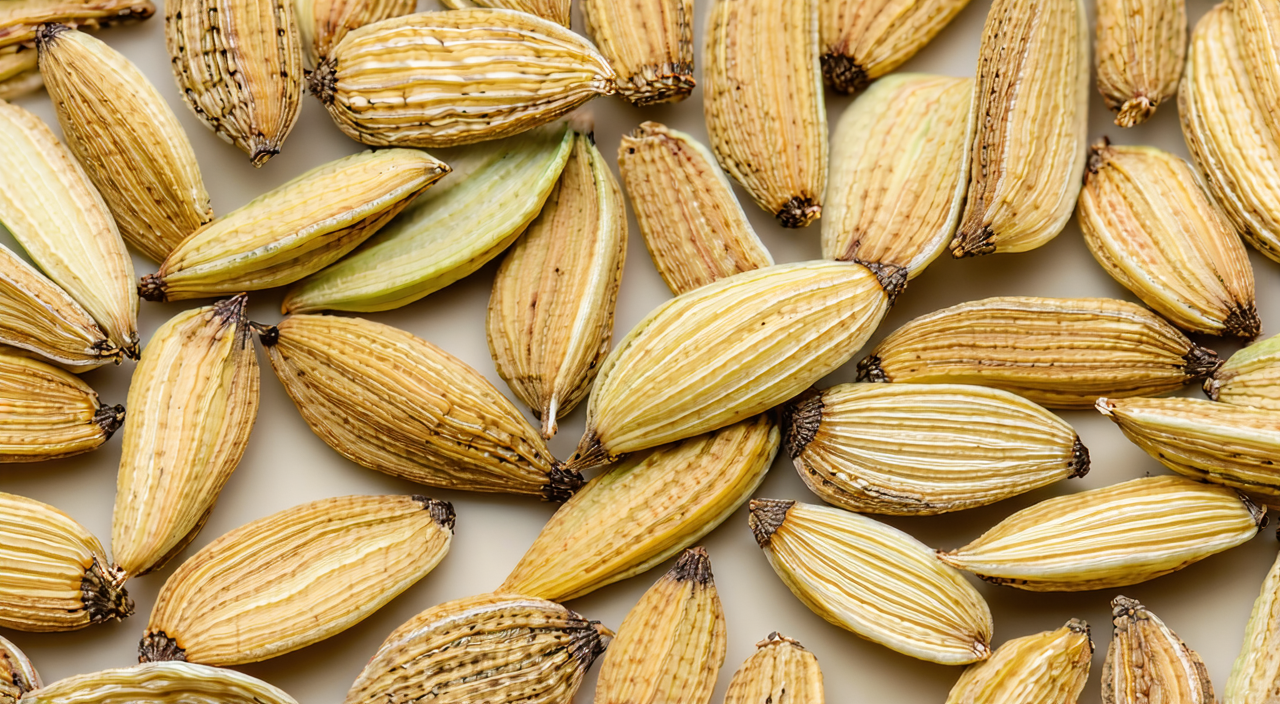
The source plant of fenugreek belongs to the legume family and is an annual or biennial herb. Its stems are much branched, the leaves are trifoliate compound leaves, and the leaflet tips have fine serrations. The flowers are relatively small, usually pale yellow or white. The fruit is a slender pod containing multiple seeds.
Fenugreek that is actually circulated as a medicinal material is the mature, harvested, and dried seed. The seeds are slightly rhombic or rectangular, mostly about 3–5 mm long and about 1–2 mm thick. The surface is usually yellow-brown or brownish-red, sometimes with fine dense texture. A relatively obvious oblique groove is often visible on one side of the seed, which is one of the important features for identifying fenugreek. The texture is hard and not easily crushed with the fingers. When cut open, the inner kernel is usually yellowish-white. It has a distinctive odor, with a mixed aroma similar to caramel, maple sugar, or roasted grains; some people also detect a slight bitterness.
In traditional experience, seeds that are plump, naturally colored, with a clear oblique groove and obvious aroma are usually regarded as better quality. When identifying, first check whether the shape is somewhat rhombic or rectangular, then whether it is yellow-brown and has an oblique groove, and finally smell the aroma. Fennel seed, Chinese chive seed, and other medicinal materials have some similar appearance, but their sources and details differ, so they should not be judged simply because they are all small granular seeds.
What Is the Medicinal Part of Fenugreek?
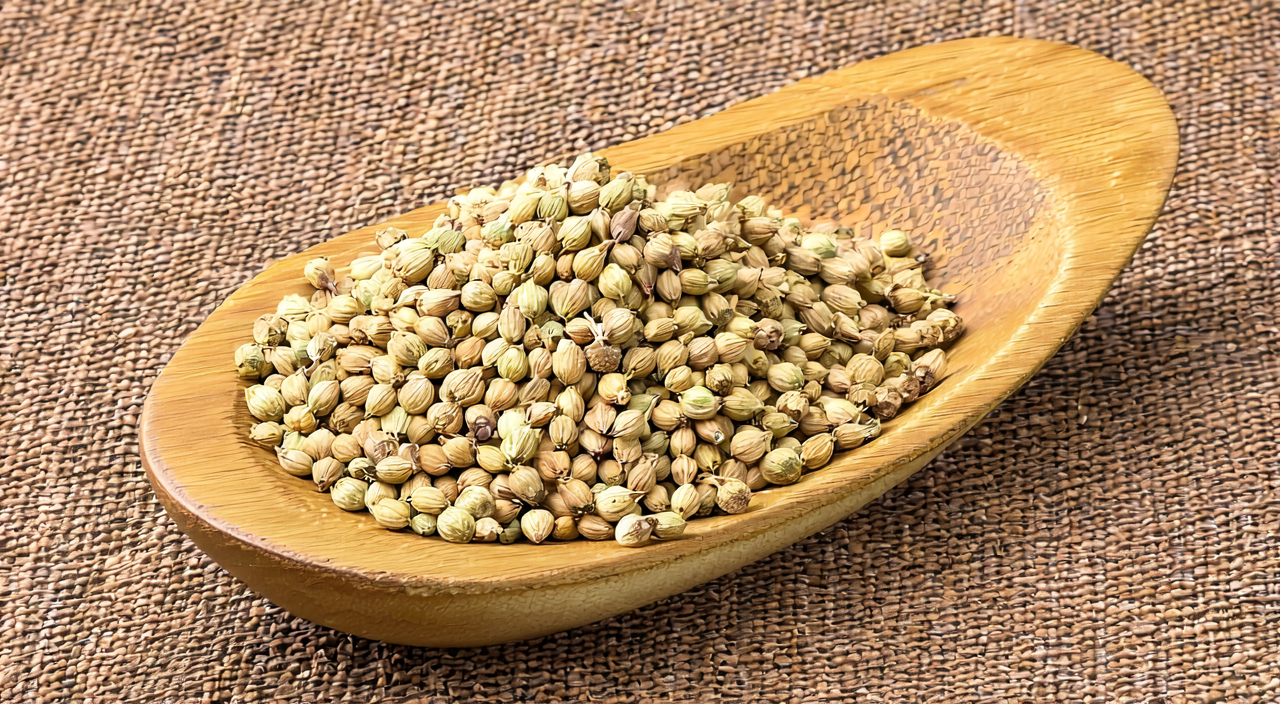
The medicinal part of fenugreek is the mature seed. The legume plant is harvested after the pods mature; the seeds are threshed, impurities are removed, and then they are dried. The aerial stems and leaves are not the main medicinal part of traditional fenugreek decoction pieces, so when referring to the ‘medicinal part,’ it should be clearly understood as the mature seed.
In processing, raw fenugreek and salt-processed fenugreek are commonly seen. Salt-processed fenugreek is generally made by mixing clean fenugreek with salt water or moistening it with salt water and then stir-frying until dry, giving the surface a salty taste. Traditionally, salt processing is thought to guide the herb to the kidney, making it more suitable for warming the kidneys and dispelling cold. Processing methods may vary by region, so users should check product labels or consult professionals when purchasing.
In addition, fenugreek powder and fenugreek extract in dietary supplements are not the same concept as fenugreek decoction pieces in Chinese medicine. They may differ greatly in processing methods, dosage, and use, so supplements should not be directly used as prescription medicinal materials.
How Is Fenugreek Understood in Traditional Chinese Medicine?
Traditional Chinese medicine generally understands fenugreek from the perspective of warming the kidneys, assisting yang, dispelling cold, and relieving pain. Its nature is warm, and it is commonly used for cold pain in the lower back and knees, a cold sensation in the lower abdomen, heaviness in the lower limbs, and symptoms that worsen with cold caused by deficiency cold in the lower jiao or stagnation of cold-dampness. In classical formulas, fenugreek is also seen in cold patterns such as cold pain due to hernia and cold pain in the lower abdomen during menstruation.
‘Warming the kidneys and assisting yang’ is a traditional pattern differentiation term. It should not be understood as a hormone-like effect in modern medicine, nor does it mean that fenugreek alone can improve any specific disease. Whether it is suitable to use depends on a comprehensive assessment of individual constitution, cold and heat, deficiency and excess, and specific symptoms. For example, people with a dry-heat constitution, yin deficiency with hyperactivity of fire, or obvious dry mouth and bitter taste often need to be more cautious when using warm herbs.
How Does Modern Research View Fenugreek?
Modern research on fenugreek has mostly focused on dietary supplements and phytochemistry. Some studies have observed the effects of fenugreek extract on blood glucose, blood lipids, appetite, and dietary support during lactation, but the study conditions, extraction processes, and dosages vary widely, so the results cannot be directly equated with daily use of fenugreek as a medicinal herb.
Medicinal herb use and supplement research need to be viewed separately. Chinese herbal decoction pieces are often used after formula combination or processing, while supplements usually use highly concentrated extracts. Users should not choose high-dose products on their own based on a single study title, and even more importantly should not replace a physician’s diagnosis or standard treatment with supplements. If blood glucose, blood coagulation, or other health issues are involved, they should consult a professional before use.
How Does Fenugreek Differ from Fennel Seed and Chinese Chive Seed?
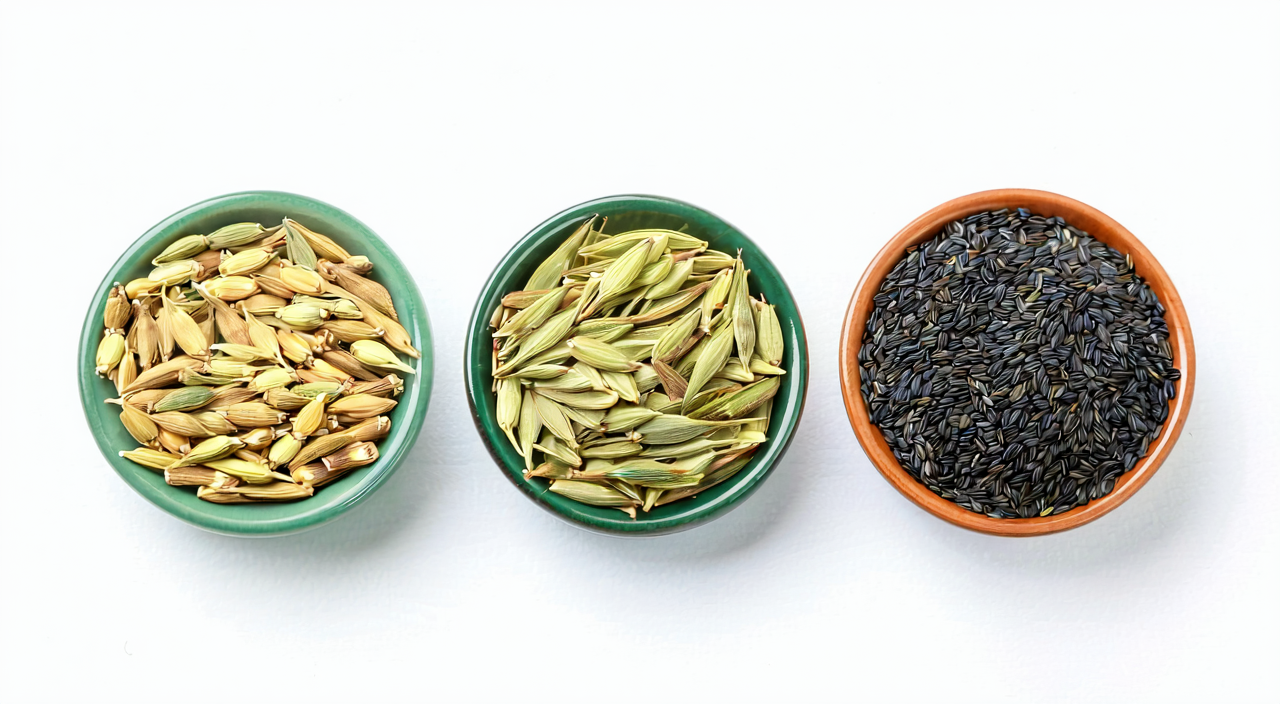
Fenugreek, fennel seed, and Chinese chive seed are all common seed-type medicinal materials, but they have different sources, shapes, colors, and odors.
Fenugreek comes from a legume plant. Its seeds are slightly rhombic or rectangular, the surface is yellow-brown or brownish-red, the central oblique groove is obvious, the texture is hard, and the odor tends to be caramel-like or roasted grain-like.
Fennel seed comes from an umbelliferous plant. The seeds are relatively small, elongated oval or cylindrical and slightly curved, with a yellow-green or pale yellow surface and obvious longitudinal ribs. Its aroma is pungent and sweet, with a fennel-like odor.
Chinese chive seed comes from the mature seeds of Allium tuberosum in the lily family. It is flattened oval or semicircular, with a black or gray-black surface and fine dense wrinkles, and its odor tends to be chive-like.
In daily identification, start with color and odor: yellow-brown seeds with an obvious oblique groove and a caramel-like smell are more likely fenugreek; yellow-green seeds with obvious longitudinal ribs and a pungent, sweet, aromatic smell are more like fennel seed; black, flattened oval seeds with a chive-like odor are more like Chinese chive seed. Actual identification should still be confirmed with reference samples, and professional confirmation should be sought when necessary.
Which Formulas Contain Fenugreek?
In traditional formulas, fenugreek is mostly used in those aimed at warming the kidneys, dispelling cold, and relieving pain. Common related formulas include Huluba Wan (Fenugreek Pill), Heixi Dan (Black Tin Pill), and some formulas that warm the kidneys and dispel cold.
Huluba Wan-type formulas are traditionally used for cold-dampness in the lower jiao, hernia pain with cold, and related conditions, and are often combined with herbs such as evodia fruit and nutgrass rhizome. Heixi Dan is a traditional formula for warming and descending; there are many historical versions, and some versions may contain fenugreek. It is mainly used for complex patterns such as deficiency below with excess above and wheezing and breathlessness due to deficiency cold. Kidney-warming and cold-dispelling formulas often combine fenugreek with psoralea fruit, eucommia bark, morinda root, and fennel seed, and are used for cold pain in the lower back and knees, clear and abundant nighttime urination, aversion to cold, and cold limbs, which tend to be deficiency-cold presentations.
These formulas tend to be warm in nature and are not suitable for everyone. Whether and how to use them, and how to modify them, should be determined by an experienced TCM professional based on actual constitution and symptoms. Users should not self-prescribe a formula based on a single symptom, nor should they simply treat formulas containing fenugreek as everyday health teas.
What Precautions Should Be Taken When Using Fenugreek?
Although fenugreek is a common Chinese medicinal herb, several risks should still be noted before use.
First, people with hypoglycemia or those using glucose-lowering medications should be cautious. Fenugreek may affect blood glucose levels, and when used together with glucose-lowering drugs, it may increase the risk of hypoglycemia. Second, people taking anticoagulant or antiplatelet drugs should consult a doctor or pharmacist in advance, because fenugreek may affect coagulation-related indicators. Third, women who are pregnant or breastfeeding should avoid self-use and must consult a professional before use. Fourth, people allergic to legume plants should be aware that fenugreek belongs to the legume family and may pose a risk of cross-allergy. Fifth, dietary supplement doses are not equivalent to medicinal doses, and active ingredient content can vary greatly among products, so they cannot be directly converted based on experience with Chinese herbal decoction pieces.
If symptoms such as dizziness, palpitations, cold sweats, itchy skin, or gastrointestinal discomfort occur after use, stop using it and consult a professional promptly. For long-term, recurrent, or accompanying symptoms such as obvious pain, chest tightness, palpitations, or weight loss, seek medical evaluation as soon as possible.
Summary
Fenugreek is a legume whose mature seeds are used medicinally. The seeds can be initially identified by their rhombic or rectangular shape, yellow-brown color, central oblique groove, and distinctive aroma. Traditional Chinese medicine mostly understands it from the perspective of warming the kidneys, assisting yang, dispelling cold, and relieving pain, and it is commonly seen in warm, dispersing formulas such as Huluba Wan and Heixi Dan. Before use, special attention should be paid to blood glucose, blood coagulation, pregnancy, legume allergy, and dosage differences among supplements. This article is for general educational reference only and cannot replace professional diagnosis or treatment advice.