
What Is Tortoise Shell Glue? Medicinal Part, Identification Methods, and Common Formulas
Tortoise shell glue is not unfamiliar among traditional Chinese medicinal gelatin-type substances, but many overseas users often confuse it with tortoise shell, deer antler glue, and donkey-hide gelatin when looking at Chinese patent medicines or tonic products. Understanding “what tortoise shell glue is” is not just about remembering a name; it also includes how it is made from tortoise shell into glue blocks, how to identify it by appearance, and the situations in which traditional Chinese medicine uses it as one of the regulating approaches. Following the logic of a medicinal materials page, this article introduces the identifying features, medicinal source, traditional understanding, overview of modern research, differences from other gelatins, common formulas, and issues to note when using tortoise shell glue.
What Does Tortoise Shell Glue Look Like? How to Identify It?
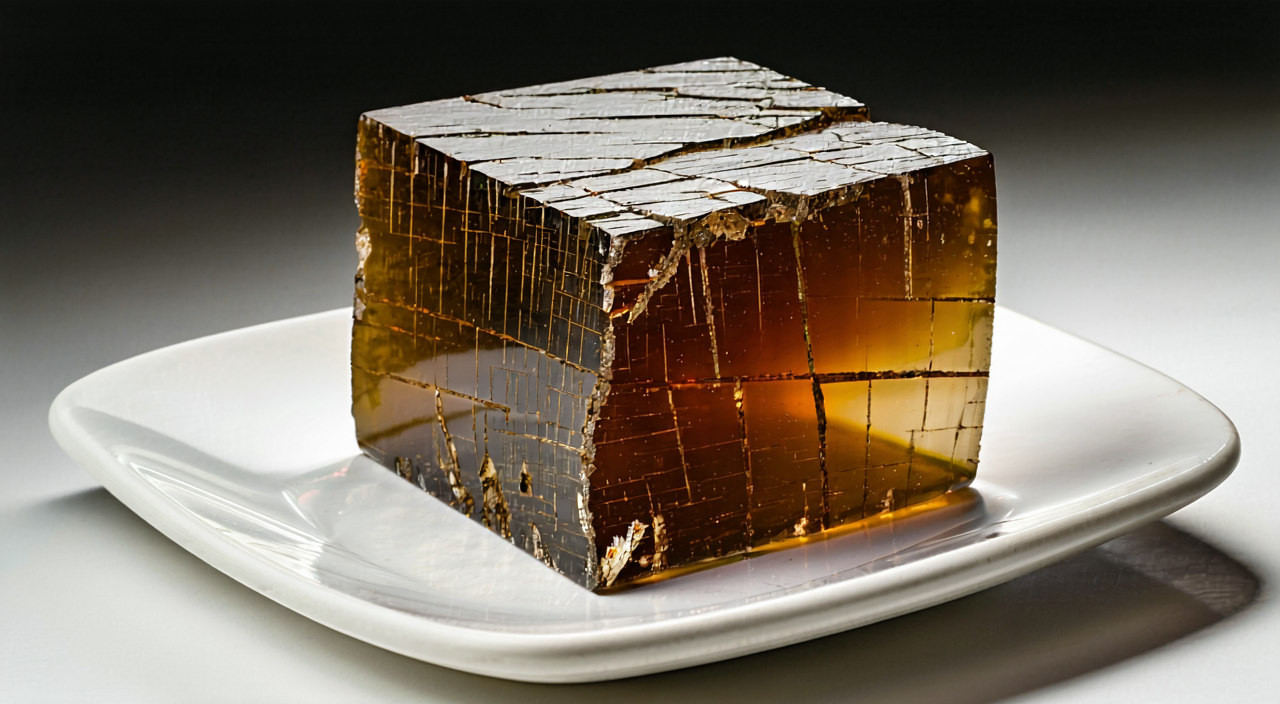
Typical Glue Block Characteristics
The most common form of traditional tortoise shell glue on the market is a square or roughly square glue block, although some specifications are granular or flaky. The classic appearance is usually brown to dark brown, with a relatively smooth surface or slight fine lines, and a certain translucent quality when held up to light. The texture is hard and brittle, and it breaks relatively easily when bent by hand or struck; the broken surface is often rather glossy. In some samples, the fractured surface is brownish-black or dark brown with a glass-like luster.
Differences That Are Easy to Overlook During Identification
Because processes and batches differ among manufacturers, glue blocks may vary in color depth, brittleness, and glossiness of the fractured surface. If the color is too dark, too light, or the texture is unusually soft, or if there is an off odor, it may indicate inconsistent quality or poor storage conditions. Appearance alone cannot fully equate to a quality judgment, but it can serve as an initial identification guide. If you intend to use tortoise shell glue for daily regulation, it is advisable to also pay attention to the source of raw materials, production information, and product instructions on the packaging.
What Is the Medicinal Part of Tortoise Shell Glue?
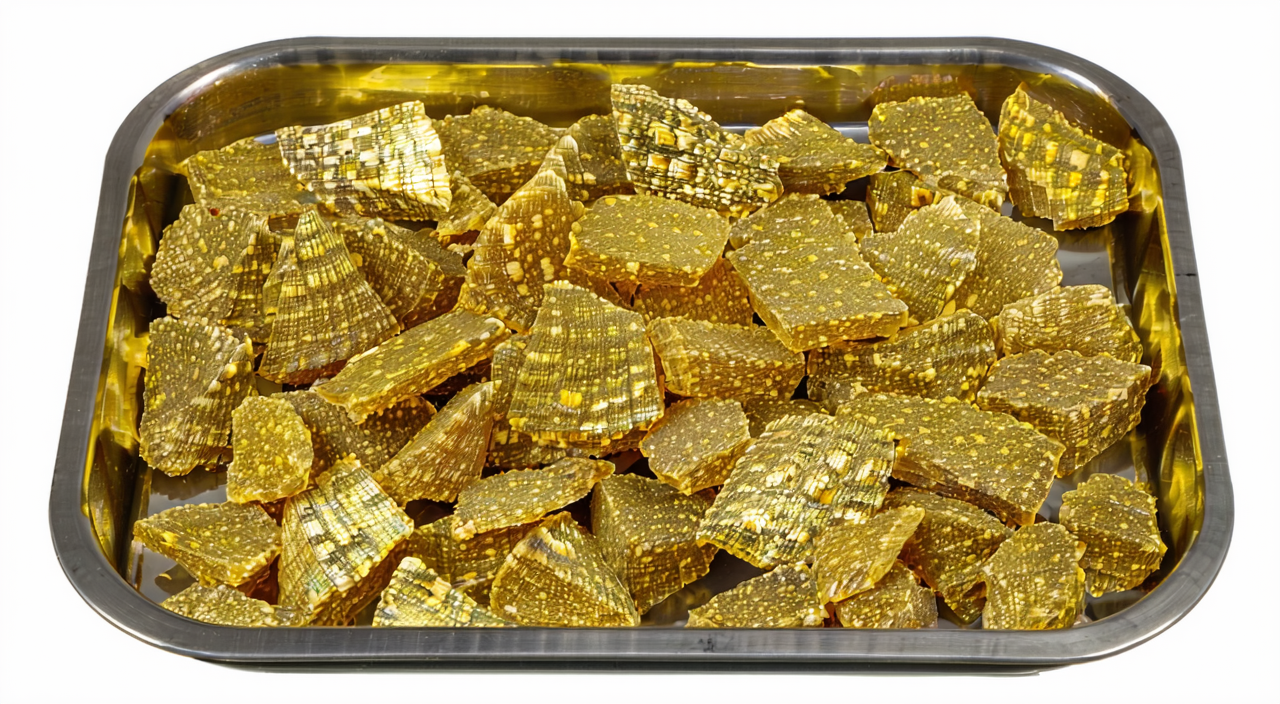
Tortoise shell glue is not an ordinary decoction made directly from tortoise shell. Instead, it is an animal shell processed glue made from regulated-source tortoise shell through steps such as decocting, concentrating, collecting the glue, and molding. Its medicinal part essentially comes from tortoise shell, but the finished product is no longer the raw medicinal material itself.
In traditional processing, tortoise shell is usually cleaned, rinsed, and decocted to obtain a concentrated glue liquid, which is then dried or shaped. Modern production generally controls the source of raw materials, processing temperature, microbial indicators, and finished product characteristics. For overseas users, choosing tortoise shell glue products with clear sourcing and complete label information is more meaningful than simply looking at color or place of origin.
How Does Traditional Chinese Medicine Understand Tortoise Shell Glue?
In traditional Chinese medicine (TCM) thinking, tortoise shell glue is often classified among gelatin-type medicinal materials used for nourishing yin, nourishing blood, and stopping bleeding. It does not correspond to a single modern disease. Instead, it is mostly used as one of the regulating approaches from traditional syndrome differentiation perspectives such as “yin-blood deficiency” and “internal disturbance of deficiency heat.” For example, in some traditional formulas it is combined with qi-tonifying, essence-supplementing, or astringing medicinal materials, with the aim of achieving both nourishment and consolidation.
It should be emphasized that terms such as “nourishing yin,” “nourishing blood,” and “stopping bleeding” used in TCM are traditional theoretical terms and are not equivalent to any modern medical diagnosis or promise of efficacy. Whether it is suitable depends on a person’s overall constitution, specific manifestations, and possible interactions with other medicinal materials or medications. If there are prolonged discomfort, recurrent bleeding, pale complexion, dizziness, palpitations, or marked emotional abnormalities, a doctor or qualified professional should be consulted first.
What Does Modern Research Say About Tortoise Shell Glue?
Modern research has explored tortoise shell glue more from the perspectives of gelatin components, amino acids, trace elements, and collagen, with some studies focusing on how different processing methods affect finished product characteristics and compositional changes. This information helps in understanding the quality control of tortoise shell glue, but it does not mean that the content of a particular component can directly infer clinical efficacy.
For ordinary users, modern research information can serve as a reference for understanding differences among gelatin-type products, but it cannot replace traditional syndrome differentiation or professional medical advice. If health problems arise, a clear diagnosis should still be obtained before discussing whether related products are suitable.
What Are the Differences Between Tortoise Shell Glue, Tortoise Shell, Deer Antler Glue, and Donkey-Hide Gelatin?
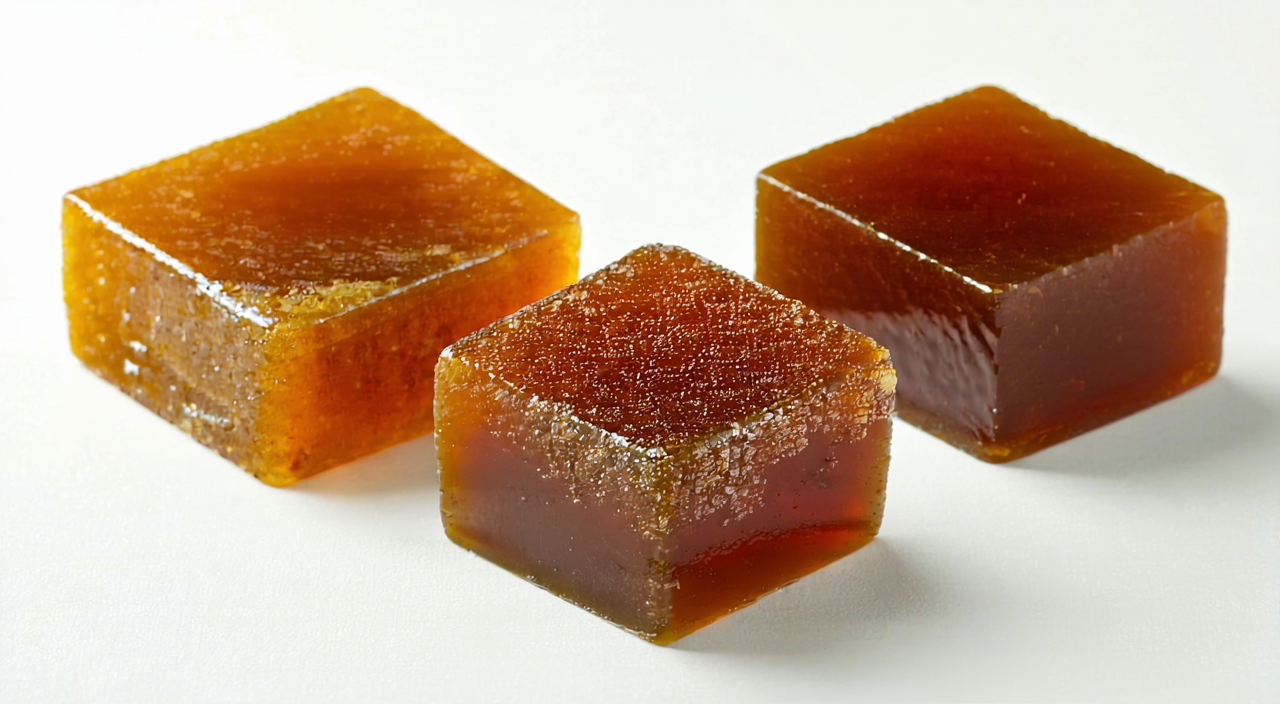
The four are easily confused by name, but their sources and traditional application emphases are somewhat different.
Tortoise shell is the raw medicinal material, usually the plastron or carapace of a tortoise; tortoise shell glue is the glue block made by processing and concentrating tortoise shell. Simply put, tortoise shell is more of a raw medicinal material, while tortoise shell glue is more of a finished gelatin-type product.
Deer antler glue comes from deer antler and is traditionally more often associated with warming supplementation, assisting yang, and replenishing essence. Donkey-hide gelatin is mostly derived from donkey skin and is traditionally associated with nourishing blood and moistening dryness. In traditional understanding, tortoise shell glue is more inclined toward nourishing yin, nourishing blood, and stopping bleeding, and is related to the concepts of “subduing and descending” and “consolidating and retaining” associated with shell-type medicinal materials.
Therefore, although they may all appear in tonic-type formulas, they cannot simply be substituted for one another. Different gelatin-type medicinal materials often play different roles in traditional formulas. Whether and how to combine them needs to be judged according to the formula structure and individual constitution.
Which Formulas Use Tortoise Shell Glue?
In traditional formulas and Chinese patent medicines, tortoise shell glue may appear as a gelatin-type excipient or as one of the main ingredients. A common example is Guilu Erxian Jiao (Tortoise Shell and Deer Antler Gelatin), which is traditionally classified as a formula that simultaneously supplements yin and yang and nourishes essence and blood. Tortoise shell glue granules are a modern Chinese patent medicine preparation form that is convenient for dissolving, and their scope of use should still be determined according to the product instructions and professional judgment. Formulas for nourishing yin and nourishing blood that contain tortoise shell glue are also commonly seen in traditional regulating approaches, mostly used as auxiliary support for yin-blood deficiency, consumptive damage, and related conditions.
It should be specially noted that the above formulas and products are only provided as a way to understand “which formulas use tortoise shell glue” and should not be directly interpreted as recommended treatment plans. Individual constitutions vary greatly, and formula composition also affects suitability. If considering using a Chinese patent medicine or formula containing tortoise shell glue, it is advisable to read the product instructions first and make a comprehensive judgment based on your own situation and professional advice.
What Precautions Should Be Taken When Using Tortoise Shell Glue?
As a gelatin-type medicinal material, tortoise shell glue is traditionally considered relatively cloying and greasy, and it may place a certain burden on people with weak digestive function. Those with spleen-stomach weakness, poor appetite, loose stools, or obvious abdominal distension usually need to be more cautious. If stomach bloating, nausea, diarrhea, or decreased appetite occurs after use, it is advisable to stop and consult a professional.
Second, tortoise shell glue comes from animal shell, so whether the animal source is compliant and whether there is adulteration or substitution of raw materials are key concerns for overseas users. It is recommended to choose products with clearly labeled sources and complete production information. People with a history of allergy to animal gelatin products, those taking other medications, and those who are pregnant or breastfeeding should not use it casually on their own.
In addition, gelatin-type products are prone to moisture, mold, or off odors if stored improperly. Before use, observe the appearance and smell, and stop using if any abnormality is found. Do not increase the dosage or use it continuously for a long time simply because it is considered a “gelatin-type tonic.”
Summary
What tortoise shell glue is can be understood from three aspects: appearance, source, and traditional application. It is a glue block made by processing and concentrating tortoise shell from regulated sources. Traditional Chinese medicine mostly understands it from the perspectives of nourishing yin, nourishing blood, and stopping bleeding, and it appears in formulas or preparations such as Guilu Erxian Jiao. When identifying it, pay attention to the color, texture, and fractured surface of the glue block, but quality judgment should also combine source and product information. Before use, pay special attention to the state of the spleen and stomach, compliance of the animal source, allergy history, and the risk of adulteration in gelatin products. This article is for general educational reference only and cannot replace professional diagnosis or treatment advice.