
What Is Gecko (Ge Jie)? Medicinal Parts, Identification, and Common Formulas
Gecko (Ge Jie) is a traditional animal-derived Chinese medicine, and many readers wonder at first whether it is the same as the common house gecko and how to understand its medicinal parts. In the context of increasing attention to source compliance for Chinese medicines, understanding the animal source, appearance, common formulas, and precautions for gecko can help build a clearer foundational understanding.
What Does Gecko Look Like? How Is It Identified?
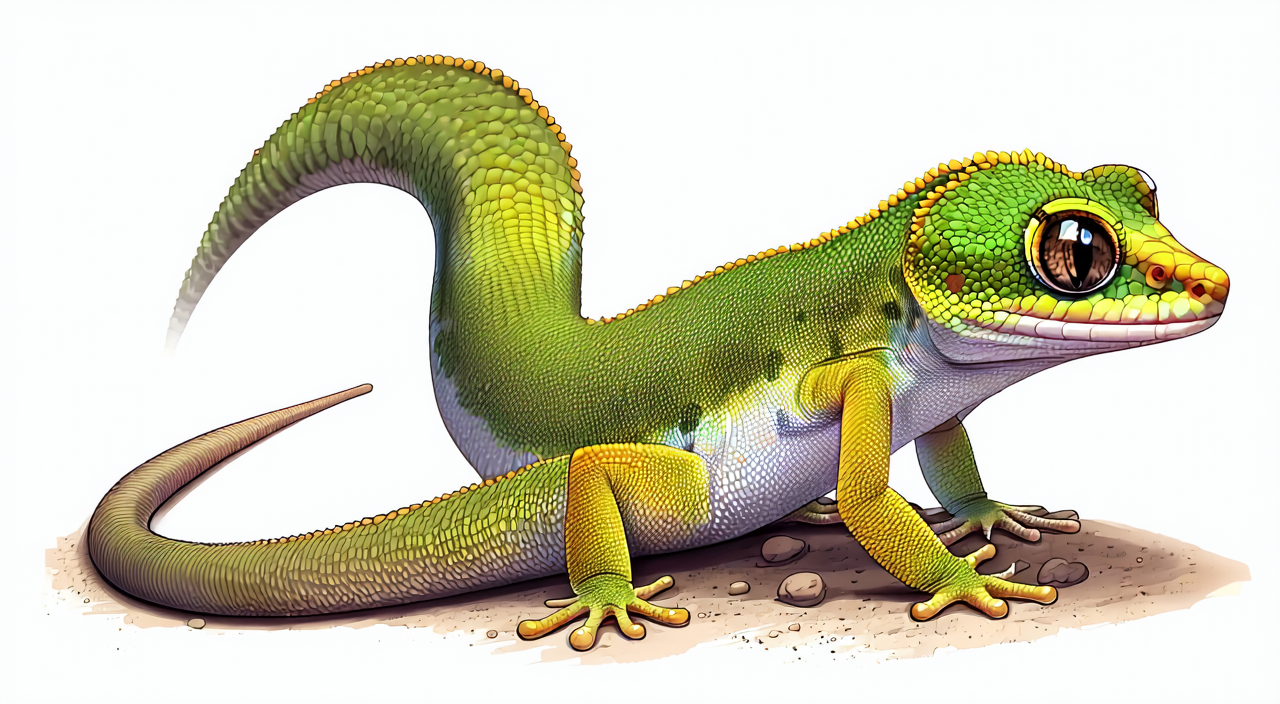
Gecko (Ge Jie) comes from the tokay gecko, not the common small house gecko. In traditional materia medica, gecko generally refers to the dried whole body of the tokay gecko after removal of the internal organs. For general readers, identification can begin with several external features: the head is relatively flat, the snout is blunt and rounded, and the eyes are large and prominent; the trunk and limbs are covered with granular or wart-like scales, and the back is mostly gray-brown, gray-blue, or brown with scattered spots of varying shades; the limbs are relatively well developed, with expanded toe tips and often visible webbing between the toes; the tail is long and has obvious ring-like markings on the surface. Dried medicinal material is often curled due to processing, and the total length can reach around a dozen to over twenty centimeters, but the exact size varies by individual, origin, and processing. These descriptions only represent common morphological characteristics of standard medicinal material. It is difficult for ordinary consumers to accurately determine authenticity and source based on appearance alone, so understanding the appearance is mainly to recognize the form of properly dried medicinal material, not to encourage self-collection.
What Are the Medicinal Parts of Gecko?
The traditional medicinal part is the dried body of the gecko after removal of the internal organs, which can also be understood as the properly processed dried whole body. During processing, the internal organs are usually removed, the surface is wiped clean, and the body is held open with bamboo strips or suitable materials to keep the medicinal material flat, then dried at low temperature or by an appropriate method. In traditional experience, the tail is often considered to have stronger medicinal action, so preserving the intact tail is often valued in medicinal material specifications. However, in modern practical use, gecko is mostly used as the dried whole body, not only the tail or a single organ. For readers concerned about source compliance, the understanding of medicinal parts should be considered together with wildlife protection. Gecko faces resource pressure in some distribution areas, and international and regional regulations may restrict its trade, transport, and use. It is safer to choose farmed sources or medicinal materials with legal documentation. Understanding the medicinal parts helps assess the integrity of the material, but it cannot replace verification of source legality and quality.
How Does Traditional Chinese Medicine Understand Gecko?
In traditional Chinese medicine (TCM) theory, gecko is often classified as a tonic animal-derived medicine. The traditional view holds that it is salty in flavor and neutral in nature, and mainly enters the lung and kidney meridians. The TCM understanding of gecko mainly revolves around supplementing the lung and kidney, grasping qi to relieve wheezing, and assisting yang and benefiting essence. The concept of grasping qi to relieve wheezing does not mean that it directly relieves wheezing; rather, in traditional theory, the lung governs exhalation and the kidney governs the grasping of qi. If the lung and kidney are both deficient and the kidney fails to grasp qi, symptoms such as chronic deficiency wheezing and more exhalation than inhalation may appear. Gecko may be used as a medicinal ingredient to regulate and supplement the lung and kidney and help qi descend. In addition, it is traditionally used in directions related to insufficient kidney yang and deficiency of essence and blood. These statements are empirical summaries within the framework of TCM theory and do not equal proof of efficacy in modern medicine. Whether it is suitable to use should be determined by a TCM practitioner or professional doctor based on syndrome differentiation, considering the individual’s constitution and specific manifestations.
What Does Modern Research Say About Gecko?
Modern research on gecko mainly focuses on animal source identification, component analysis, and some experimental studies. In terms of components, gecko contains proteins, peptides, amino acids, lipids, trace elements, and other substances, among which some animal proteins and peptides are often studied as key components. Some experimental studies may observe its effects on respiratory-related indicators, immune regulation, or the reproductive system, but most remain at the level of basic research or small-scale observation, with limited evidence that cannot be directly translated into clinical effects. In addition, animal-derived medicinal materials may have practical issues such as allergens, processing quality, and microbial contamination, so quality control is more important than simply focusing on efficacy. At present, gecko is more like a traditional medicinal material with rich empirical use, and its modern pharmacological effects still need to be confirmed by higher-quality research.
What Are the Differences Between Gecko, Common House Gecko, and Seahorse?

Although gecko and common house gecko both belong to gecko-like animals, they differ greatly in source and body size. Gecko comes from the tokay gecko, which is significantly larger, with an adult total length often reaching over twenty centimeters. Its body surface has more prominent granular scales, clearer toe webbing, and distinct ring markings on the tail. The common house gecko is smaller, generally between several centimeters and a dozen or so centimeters, with finer body scales and a more slender overall appearance. Confusing the two can easily lead to misunderstandings in medicinal material identification and source understanding. Seahorse, on the other hand, is an animal of the Syngnathidae family that lives in the marine environment and has features such as a horse-like head, curled tail, and tubular snout, which are completely different from gecko. In traditional use, gecko and seahorse also differ in nature, flavor, meridian tropism, and use direction. Gecko is more oriented toward the lung and kidney and grasping qi to relieve wheezing, while seahorse is often classified under the ideas of warming the kidney, activating blood, and dispersing masses. Understanding the differences in source and appearance among the three can help avoid misidentification and misuse, but final identification should still rely on information provided by professional institutions or proper channels.
Which Formulas Commonly Use Gecko?
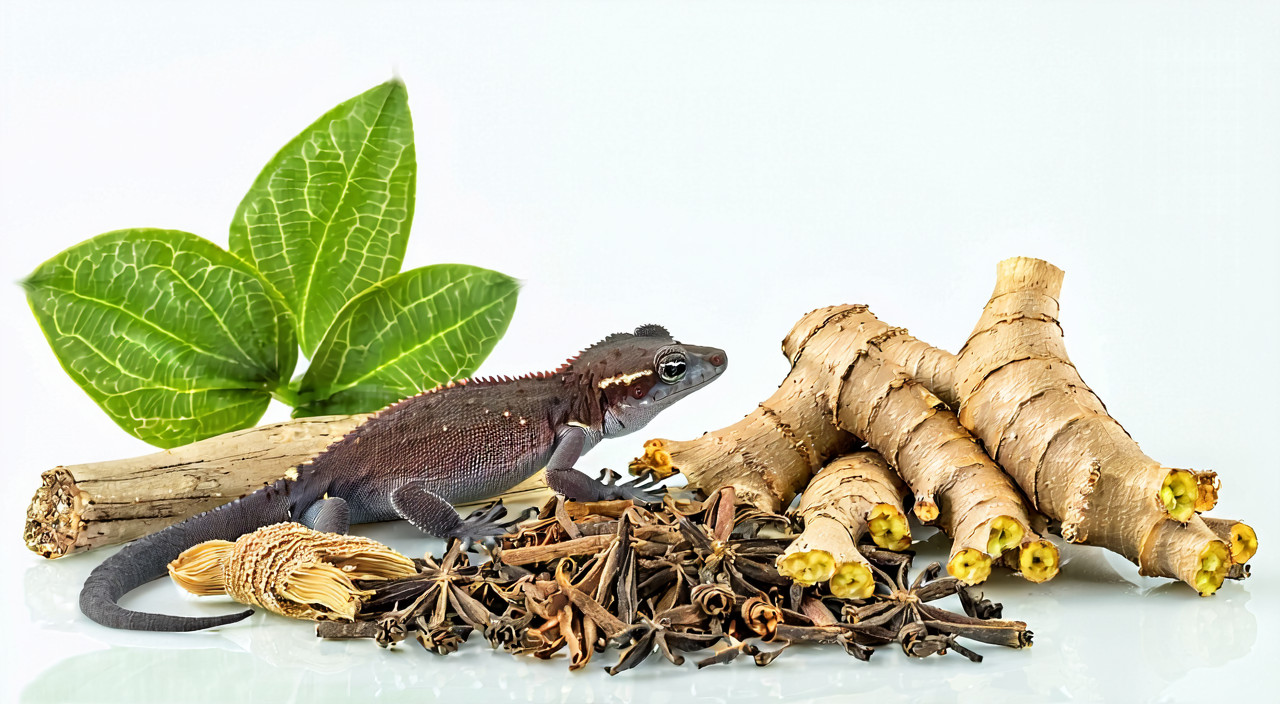
In TCM formulas and patent medicines, gecko is often combined with other tonic, cough-relieving, and wheezing-relieving medicinal ingredients. Common examples include Renshen Gecko Powder, Gecko Dingchuan Pills, and Gecko Bufei Pills. The traditional approach of Renshen Gecko Powder leans toward boosting qi and grasping qi, relieving cough and wheezing, and it is often used for patterns such as deficiency of both lung and kidney, chronic cough, and deficiency wheezing. Gecko Dingchuan Pills are often used in the regulating approach for wheezing, chronic cough, and other manifestations caused by deficiency of both lung and kidney and failure of the kidney to grasp qi. Gecko Bufei Pills focus more on the combination of supplementing the lung and kidney and grasping qi to relieve wheezing. It should be noted that the wheezing corresponding to these formulas or patent medicines mostly belongs to deficiency wheezing or lung-kidney insufficiency in TCM syndrome differentiation. They are not suitable for all cough and wheezing problems, nor can they replace modern medical diagnosis and treatment for acute asthma, chronic obstructive pulmonary disease, or other conditions. Whether they are suitable should be judged comprehensively based on individual constitution, symptoms, product instructions, and professional medical advice.
What Precautions Should Be Taken When Using Gecko?
Before using gecko, first confirm that the source is legal. Wildlife protection regulations and trade restrictions vary by region, so when purchasing or carrying it, understand local requirements and give priority to legal farming or proper channels. Second, gecko is an animal-derived medicinal material. People allergic to animal proteins may experience allergic reactions such as rash, itching, and gastrointestinal discomfort. If discomfort occurs, stop use and consult a professional. Traditional Chinese medicine holds that warming and tonic animal-derived medicines should be used more cautiously in states such as damp-heat, yin deficiency with fire hyperactivity, or fever due to external contraction, and should not be used in large doses on one’s own. Pregnant women, breastfeeding women, children, and people with chronic diseases should consult a doctor or pharmacist before use. It is especially important to remind that if symptoms such as cough, wheezing, dyspnea, chest pain, palpitations, hemoptysis, or persistent fever are obvious or recurrent, one should not rely only on gecko or related formulas for regulation, but must go to a regular medical institution for standard diagnosis and treatment. The quality, authenticity, and processing degree of medicinal materials also affect safety, and obtaining them from unknown sources is not recommended.
Summary
Gecko (Ge Jie) is an animal-derived medicinal material with a long history of use. To understand it, attention should be paid to its animal source, dried whole body as the medicinal part, appearance identification, and legal source. It differs clearly from common house gecko and seahorse. Common formulas such as Renshen Gecko Powder and Gecko Dingchuan Pills have their traditional application ideas, but whether they are suitable for an individual must be judged based on constitution, symptoms, and professional advice. If obvious discomfort such as dyspnea occurs, seek medical attention promptly. This article is for informational reference only and cannot replace professional diagnosis or treatment advice.