
What Is Wei Ling Xian? Medicinal Parts, Identification, and Common Formulas
Wei Ling Xian is a medicinal herb that frequently appears in Chinese herbal formulas and herbal wellness practices. Many overseas Chinese readers encounter the name “Wei Ling Xian” when learning about joint discomfort, heaviness in the limbs, or traditional formulas for unblocking the channels. What plant does it actually come from? Is the root or the whole plant used medicinally? How is it different from Qin Jiao and Du Huo? This article organizes basic information about Wei Ling Xian around these common questions.
What Does Wei Ling Xian Look Like? How Is It Identified?
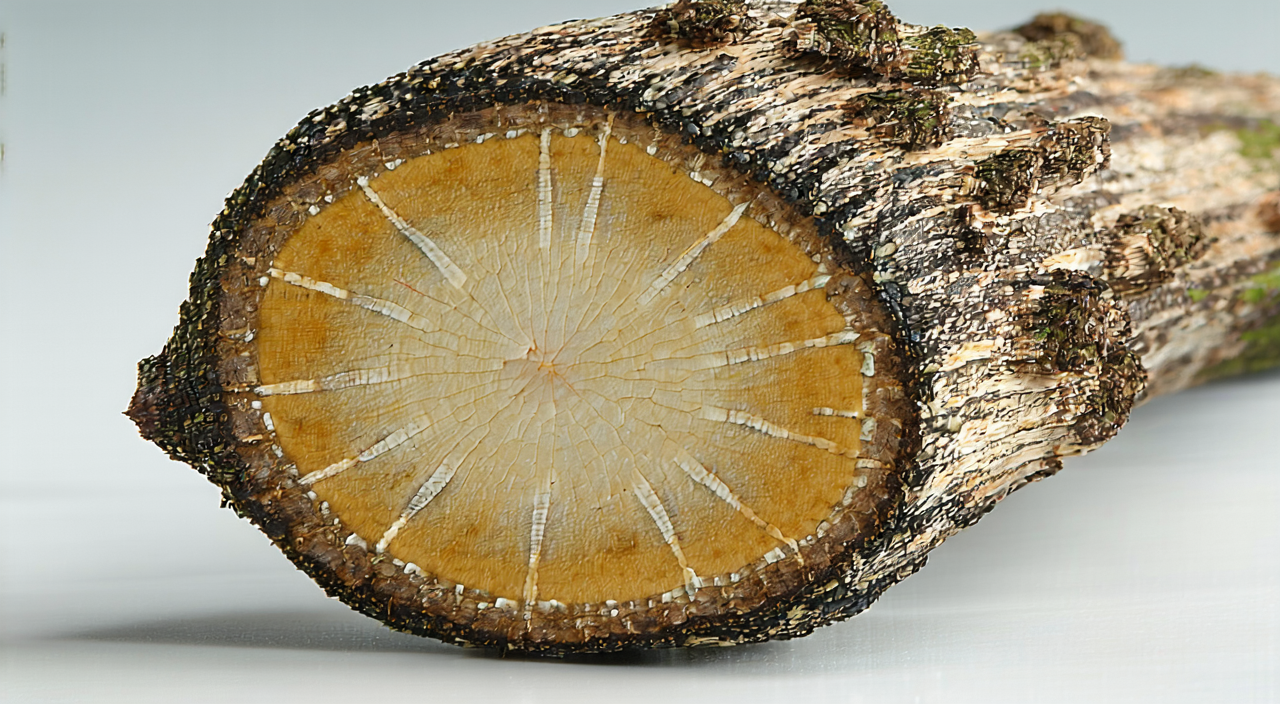
Wei Ling Xian does not correspond to only one plant species. The Wei Ling Xian medicinal material listed in the Chinese Pharmacopoeia is usually derived from the dried roots and rhizomes of Clematis chinensis, Clematis hexapetala, or Clematis manshurica in the Ranunculaceae family. In other words, the medicinal name and the plant name are not always exactly the same.
Based on the appearance of the medicinal material, the rhizome of Wei Ling Xian is relatively short, shaped like a short column or lump, and residual stem bases may sometimes be seen at the top. Below the rhizome are many slender roots arranged in clusters, like a bundle of fine fibers. Each root is a slender cylindrical shape, slightly curved, with a relatively small diameter. The surface is blackish brown or brownish, with fine longitudinal wrinkles. The texture is hard and brittle but also somewhat flexible, so it does not break cleanly all at once. The cut surface often shows a yellowish-white woody core that contrasts with the darker outer layer. The odor is generally mild, and the taste is slightly pungent and bitter, sometimes with a mild numbing sensation on the tongue.
For general readers trying to identify it on their own, it is recommended to compare it with reliable samples or professional references. Relying only on color or thickness can easily cause confusion with other root-type medicinal materials.
What Is the Medicinal Part of Wei Ling Xian?
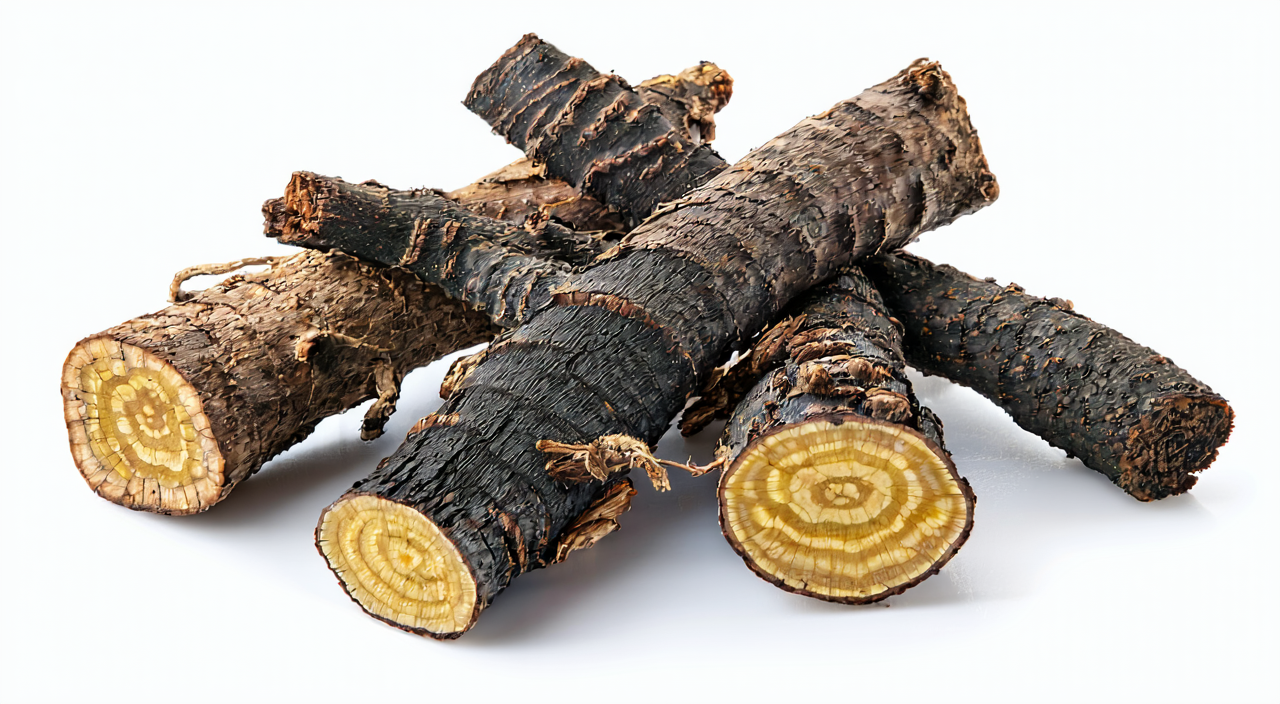
The medicinal parts of Wei Ling Xian are the dried roots and rhizomes, not the stems, leaves, flowers, or fruits. This should be confirmed when reading formula compositions or purchasing the medicinal material.
Harvesting and processing are usually carried out in autumn. Traditionally, the plant is dug up when the above-ground parts are about to wither or after they have withered. Non-medicinal parts such as silt and residual stems are removed, and the material is then dried. After drying, the roots and rhizomes are thin, long, and clustered, so they easily tangle and break; a certain degree of intactness needs to be maintained during processing and packaging.
Common Wei Ling Xian medicinal material on the market may consist of root segments or a mixture of roots and a small amount of rhizome. A relatively dark surface and a yellowish-white woody core visible on the cut surface are common characteristics. Understanding the medicinal parts also helps distinguish Wei Ling Xian from other root-type medicinal materials that look similar.
How Does Traditional Chinese Medicine Understand Wei Ling Xian?
Traditional Chinese medicine mainly understands Wei Ling Xian from the perspectives of dispelling wind-dampness, unblocking the channels and collaterals, relieving bi pain, and resolving bone lodged in the throat. Its nature and flavor are usually summarized as acrid, salty, and warm, and it enters the Bladder meridian. These are expressions within the TCM theoretical system and should not be directly equated with modern pharmacological conclusions.
“Dispelling wind-dampness” is one of the traditional core uses of Wei Ling Xian. According to TCM, wind-damp bi pain is often related to wind, cold, dampness, and other external pathogenic factors obstructing the channels and collaterals. Wei Ling Xian is considered warm in nature and strongly moving and penetrating, so it may be suitable for wind-damp bi pain, numbness of the limbs, and difficulty bending or extending the joints. For this reason, many traditional formulas combine it with other herbs.
“Unblocking the channels and collaterals” and “relieving bi pain” are often understood together. In traditional experience, Wei Ling Xian may be used for roving pain in the lower back, knees, joints of the limbs, and muscles. However, whether it should be used depends on the pattern of cold, heat, deficiency, or excess. It should not be used on one’s own simply because joint pain is present.
“Resolving bone lodged in the throat” is a more specialized direction in folk experience. Traditional materia medica records mention using Wei Ling Xian for fish bones stuck in the throat. However, a fish bone or other bone lodged in the throat is an acute condition. If the foreign object is large, located deep, associated with obvious bleeding, or causing abnormal breathing, medical attention should be sought immediately. Do not try to swallow herbs or force down food by yourself. In such cases, Wei Ling Xian can only be understood as a traditional folk experience.
What Does Modern Research Say About Wei Ling Xian?
Modern research on Wei Ling Xian mostly focuses on constituents such as saponins, flavonoids, and volatile oils. Some experimental studies have observed the performance of Wei Ling Xian extracts in inflammation- and pain-related models, providing some reference for the traditional experience of “dispelling wind-dampness and relieving bi pain.” However, there is a large gap between experimental research and human use, so one cannot conclude from this that Wei Ling Xian can treat a certain type of disease. A more appropriate approach is to regard modern research as background information rather than as a basis for self-medication.
What Are the Differences Between Wei Ling Xian, Qin Jiao, and Du Huo?
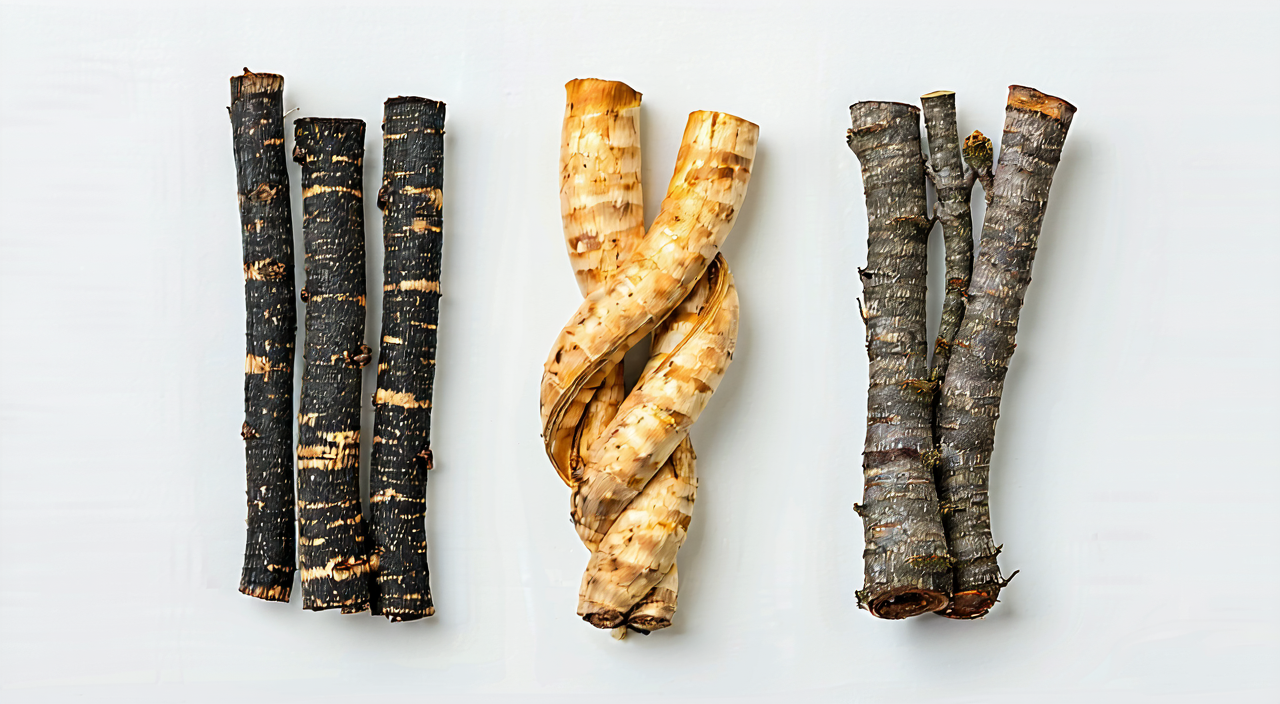
Wei Ling Xian, Qin Jiao, and Du Huo are all commonly seen in formulas for wind-damp bi pain, but they differ in source and appearance.
In terms of root morphology, Wei Ling Xian consists of many slender roots with a blackish-brown or brownish surface and a relatively small diameter; the yellowish-white woody core is clearly visible on the cut surface, and the odor is mild. Qin Jiao roots are often thicker and twisted in shape, with a yellowish-brown or grayish-yellow surface and a relatively hard texture, sometimes with a distinctive bitter taste. Du Huo roots are generally somewhat thicker and larger, with a grayish-brown or brownish surface, a firm texture, and a more noticeable aroma.
In traditional application, Wei Ling Xian is more associated with “roving and penetrating” action and is often used for difficulty bending or extending the limbs and joints and for roving pain. Du Huo tends to be used for wind-cold-damp bi in the lower body. Qin Jiao more often appears for wind-damp bi pain and for clearing deficiency heat. These are only general summaries within traditional theory, and actual formula combinations must be based on individual conditions.
Which Formulas Use Wei Ling Xian?
There are quite a few traditional formulas and prepared Chinese medicines that contain Wei Ling Xian. The following are provided only as directions for understanding and do not mean they are suitable for everyone.
Wei Ling Xian Pill is one of the more representative names. The composition of different versions of Wei Ling Xian Pill may vary. Traditionally, it is often designed around poor joint mobility, heaviness in the limbs, and wind-damp bi obstruction. In the formula, Wei Ling Xian often plays a synergistic role in unblocking and promoting flow through the channels. Before use, check the specific product composition and instructions.
Shufeng Huoluo Pill may also be seen by overseas users. Its approach usually centers on combinations for dispelling wind, unblocking the collaterals, and invigorating blood. Wei Ling Xian is often used together with herbs that dispel wind, invigorate blood, and unblock the collaterals. Whether it is suitable must be judged comprehensively based on the product instructions, individual conditions, and advice from a professional.
Formulas for relieving bi and unblocking the collaterals (Juanbi Tongluo) are not a single fixed formula name but a category of prescriptions aimed at dispelling wind and eliminating dampness, unblocking the collaterals, and relieving bi. In such formulas, Wei Ling Xian is often used as an auxiliary herb to unblock the channels and relieve bi pain. For chronic joint discomfort that worsens with cold and poor limb mobility, these approaches may traditionally be considered, but specific use must be based on pattern differentiation. One should not simply obtain and take herbs according to a formula on one’s own.
What Precautions Should Be Taken When Using Wei Ling Xian?
Wei Ling Xian is not suitable for everyone. Special attention should be paid to the following points.
People with a weak constitution should use caution. Traditionally, Wei Ling Xian is considered warm in nature and relatively strong in its moving and penetrating action. In people with insufficient qi and blood or prolonged illness with a weakened body, its use may increase the burden on the body or irritate the stomach and intestines. Those with spleen-stomach deficiency cold or who are prone to diarrhea should also be careful.
Some people may experience stomach discomfort, nausea, abdominal pain, or similar symptoms after use. Traditionally, processing and formula combination are often used to reduce irritation, but individual differences still exist. If noticeable gastrointestinal discomfort occurs, stop use and consult a professional.
People who are pregnant, breastfeeding, or trying to conceive are not advised to use Wei Ling Xian or formulas containing Wei Ling Xian on their own. The risks during these special physiological stages are not clear, and a conservative approach is safer.
Acute conditions such as fish bones or other bones lodged in the throat cannot be managed by relying on Wei Ling Xian alone. Even though traditional records mention “resolving bone lodged in the throat,” a fish bone stuck in the throat or a bone fragment lodged in the esophagus may cause tissue damage or even more serious consequences, and immediate medical attention is required.
Summary
Wei Ling Xian is a traditional Chinese medicinal herb whose roots and rhizomes are used medicinally. Its common sources are Clematis chinensis, Clematis hexapetala, or Clematis manshurica. Its appearance is characterized by a short rhizome, numerous slender roots, a blackish-brown outer skin, and a yellowish-white woody core. Traditional Chinese medicine mostly understands it from the perspectives of dispelling wind-dampness, unblocking the channels and collaterals, and relieving bi pain. Formulas or prepared Chinese medicines containing Wei Ling Xian can provide reference for health regulation approaches, but whether they are suitable must be judged based on constitution, symptoms, and professional advice. This article is for general informational reference only and cannot replace professional diagnosis or treatment advice.